






Spanning from the sun-scorched sands of the Sonoran Desert to the brightest windowsills of our homes, cacti stand as nature's most resilient hydraulic architects. Across arid landscapes where they may endure months without a single drop of rain, they survive by sequestering gallons of water within accordion-like, pleated cellular reservoirs. That charming Echinopsis or Mammillaria on your windowsill carries this exact evolutionary memory inherited from its desert ancestors. We often assume cacti are silent; yet they whisper their hydration needs continuously through the micro-movements of their cells, the posture of their spine areoles, and the flexing of stem turgor.
Many devoted plant lovers fall into a persistent dilemma: 'Is my plant thirsty, or are its roots rotting?' Watering cacti frequently is not an act of affection; it suffocates the subterranean root zone by stripping away vital oxygen. Conversely, abandoning a cactus under the myth that 'it is a desert plant that never needs water' causes its delicate feeder root network to desiccate and collapse. Truly understanding when a cactus requires hydration lies in accurately reading its internal hydraulic equilibrium and the drop in cellular pressure within its photosynthetic tissues.
1. Taxonomic Identity, Areole Architecture, and Spine Morphology
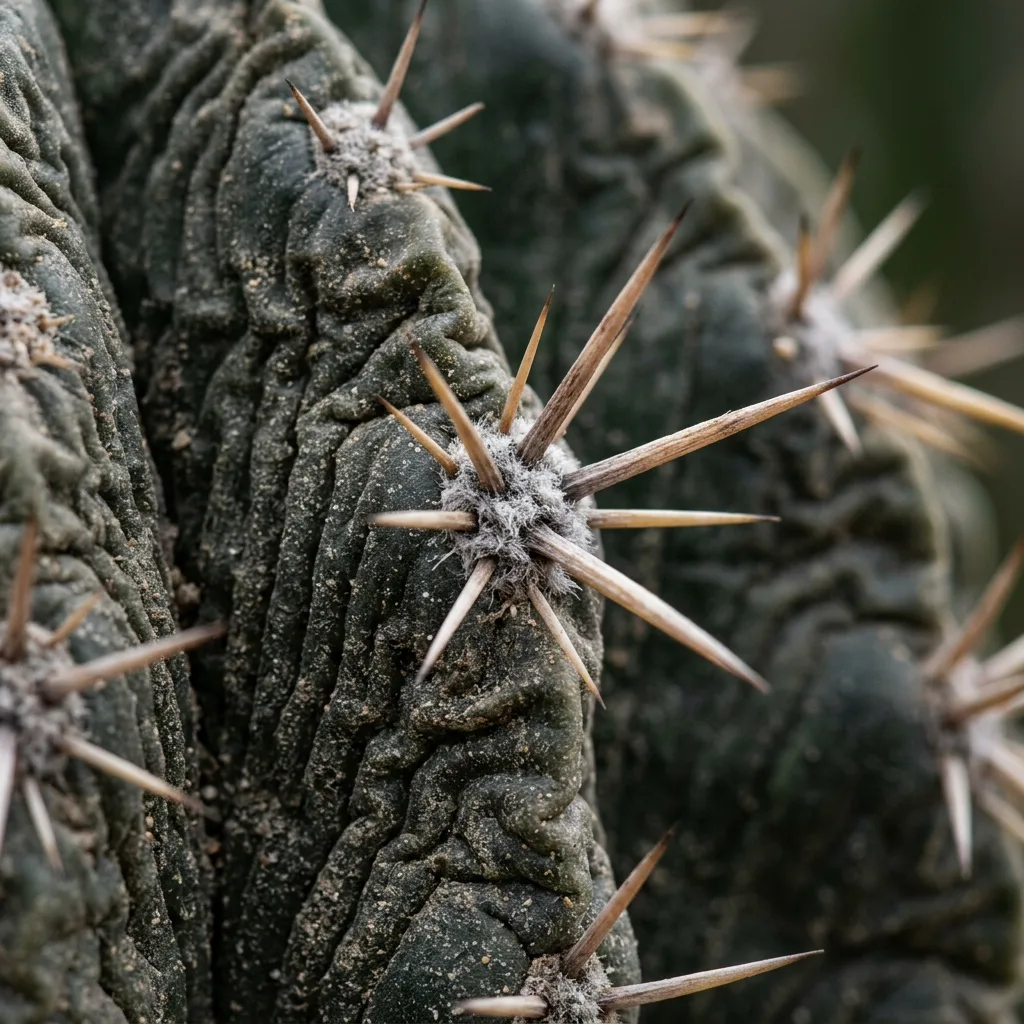
The defining anatomical characteristic separating the cactus family (Cactaceae) from all other succulent plant lineages is the presence of specialized meristematic cushions called 'areoles'. Areoles are condensed, modified bud centers scattered across the stem epidermis from which spines, glochids, branches, and floral buds emerge. When a cactus stem is fully hydrated (operating under peak turgor pressure), the areoles sit far apart, the vertical ribs expand firmly, and the spines thrust outward in an erect, defensive posture.
As the plant's metabolic machinery gradually consumes its internal water reserves, the hydraulic volume within the cortical parenchyma cells contracts. This volume loss draws the areoles closer together and causes the spines to tilt slightly inward. In ribbed species such as Ferocactus, Gymnocalycium, and Stenocactus, this shrinkage manifests almost immediately as the vertical valleys between ribs deepen significantly. Furthermore, cactus spines do not merely provide herbivore deterrence; they function as micro-condensers, collecting morning atmospheric mist and funneling precious droplets directly down to the root collar.
2. Light Standards, Solar Intensity, and Aeration Dynamics
The primary driver dictating the rate at which a cactus metabolizes and transpires water is ambient photon density combined with active air circulation. Cacti utilize Crassulacean Acid Metabolism (CAM) photosynthesis; to prevent catastrophic moisture loss under blistering daytime temperatures, they seal their stomata tightly throughout the day and open them during cool night hours to capture carbon dioxide. A cactus deprived of adequate light down-regulates its metabolism dramatically, reducing its biological demand for water virtually to zero.
Cacti receiving at least 5 to 6 hours of unfiltered direct sunlight daily process and cycle water vigorously through transpiration. In stagnant, poorly ventilated, and humid indoor spaces, applied water cannot evaporate efficiently from the substrate; this leaves the subterranean roots submerged in anoxic moisture, triggering rapid asphyxiation and dieback. Consequently, before diagnosing a cactus as thirsty, you must carefully evaluate the light levels and airflow dynamics of its growing environment.
3. Hydration Cycles and the Critical Winter Dormancy Regime
The most unmistakable physical indicators that a cactus requires water include: a subtle dulling of the epidermis, noticeable inward retraction of the vertical ribs, the potting mix pulling away from the container rim, and the pot feeling feather-light when lifted. However, the decision to irrigate must always harmonize with the plant's seasonal biological rhythm.
From mid-spring through early autumn, cacti reside in their active vegetative phase. During this window, once the substrate has dried out entirely, provide a thorough, drenching soak without hesitation. In contrast, from November through March, cacti enter winter dormancy and must rest in a cool environment (8–12°C / 46–54°F). A dormant cactus should never be watered, no matter how visibly shriveled it appears! This cellular contraction and moisture reduction serve as a vital natural antifreeze mechanism, lowering the freezing point of the plant's internal sap and preventing ice crystals from rupturing cell walls.
4. High-Mineral Cactus Substrate and Potting Requirements
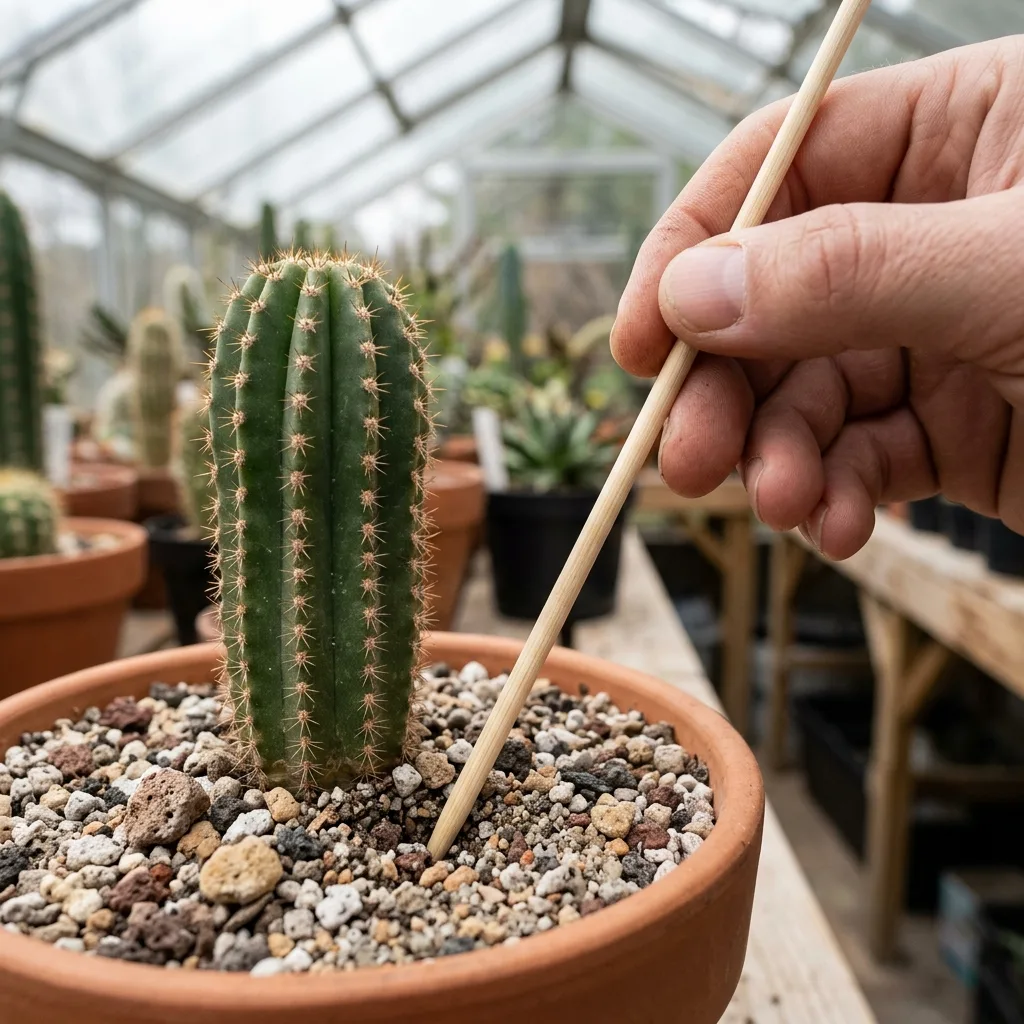
For a cactus to satisfy its moisture needs safely, water must hydrate the root zone and evacuate promptly without lingering. Heavy organic substrates high in standard peat moss hold moisture like a sponge, quickly dissolving delicate capillary roots. The xylem vessels in cactus roots evolved specifically to absorb flash-flood mineral water in rapid pulses before the surrounding earth returns to bone-dry conditions.
| Component Type | Material Name | Recommended Ratio (%) | Botanical Function |
|---|---|---|---|
| Inorganic Mineral | Pumice (3–6 mm) | 35% | Superior porosity and root zone oxygenation |
| Inorganic Mineral | Lava Rock & Zeolite | 25% | Structural root anchorage and cation exchange |
| Inorganic Mineral | Coarse Horticultural Grit / Perlite | 15% | Creates rapid gravity drainage channels |
| Organic Fraction | Sifted Coco Coir / Mature Compost | 25% | Delivers baseline moisture retention and micronutrients |
When selecting containers, prioritize unglazed terracotta pots equipped with generous drainage holes. The porous clay walls allow moisture to evaporate laterally through the sides of the vessel, minimizing the risk of fungal pathogens taking hold in the lower soil strata.
5. Inducing Blooms and Nutrient Management
For many desert genera (such as Mammillaria, Rebutia, and Parodia), floral bud initiation depends entirely on an uninterrupted period of cool, controlled winter drought followed by properly timed spring hydration. Kept cold and bone-dry throughout dormancy, the cactus responds to rising spring temperatures and the shock of its first thorough watering by shifting into high gear to produce flowers and propagate its genetics.
Once visible floral buds swell from the areoles, the plant's hydration demand rises slightly; inflating petals and sustaining blooms requires continuous fluid support. During this active flowering window, supplementing with a specialized low-nitrogen, high-potassium, and high-phosphorus cactus fertilizer reinforces the vascular system and significantly prolongs blossom longevity.
6. Propagation, Offset Division, and Grafting Dynamics
A cactus receiving balanced, well-timed moisture cycles will frequently produce healthy offsets (pups). Avoid detaching these vegetative offsets when the parent plant is fully swollen with fresh water; instead, wait approximately one week after watering when tissues have settled into balanced turgor, then slice cleanly using a sterilized scalpel. Allow the offset's severed wound to cure in a dry, shaded area for 4 to 7 days until a firm, calloused layer forms before potting.
In grafting practices (commonly seen with chlorophyll-deficient Gymnocalycium mihanovichii cultivars), the vascular cambium bundles of both the rootstock and the scion must align seamlessly. The absolute prerequisite for a successful vascular union is robust, well-hydrated turgor pressure inside the rootstock prior to cutting.
7. Defending Against Pathogenic Rot and Fungal Infections
Over 90% of cactus fatalities stem not from protracted dehydration, but from opportunistic fungal pathogens (such as Fusarium and Phytophthora) brought on by ill-timed watering. If your cactus has wrinkled simply from dehydration, recovery is swift and straightforward: soak the pot via bottom-watering, and within 24 to 48 hours the stem will reinflate rock-hard. Recovering a waterlogged, rotting specimen, however, demands invasive surgical excision and emergency root therapy.
Whenever you are second-guessing whether your cactus is ready for a drink, follow the foundational golden rule of arid horticulture: 'When in doubt, do not water; wait three more days.' These resilient desert survivors can easily endure dry spells for weeks on end, whereas a single untimely watering can obliterate their root system forever.


Reader Reviews & Comments 4 Reviews
Eleanor Vance
Julian Thorne
Marcus Sterling
Clara Higgins
Leave a Review & Rating
Share your plant care tips, experiences, or questions with our succulent community.