






Having evolved across harsh terrains ranging from the limestone plateaus of Madagascar to the arid expanses of South Africa's Karoo Desert, succulents stand as nature's most resilient living sculptures thanks to their remarkable capacity to store water at the cellular level. When these fleshy-leaved marvels claim pride of place in our living rooms, many growers face the same anxious question: 'Is this charming plant poisonous, and does it pose a threat to my curious cat or toddler?' In the natural world, no adaptation is an accident. In parched habitats where thirsty herbivores roam, the chemical defense arsenals succulents developed to safeguard their precious internal moisture reserves can transform them into tangible risks within domestic spaces.
In the botanical world, 'succulent' does not designate a single plant family; rather, it is a morphological classification encompassing water-storing members across dozens of vastly distinct families, such as Crassulaceae, Euphorbiaceae, Apocynaceae, and Asphodelaceae. Claiming that 'all succulents are poisonous' is therefore just as misguided as assuming 'they are all completely harmless.' The needle-like calcium oxalate crystals, cardiac glycosides, or diterpene-rich white latex saps embedded within succulent tissues can trigger acute reactions upon ingestion or dermal contact. In this guide, we break down how to correctly identify your specimens, detect toxic exposure at the earliest stages, neutralize chemical risks, and safely rehabilitate plants weakened by pests without compromising household safety.
1. Early Diagnostic Signs and Microscopic / Visual Cues
The first step in assessing a succulent's toxicity lies in understanding its morphology and chemical constituents. However, if you suspect a pet or child has encountered or ingested plant material, recognizing early clinical signs at the physiological and microscopic level can save lives. Toxic succulents typically produce symptoms through two primary mechanisms: mechanical/chemical tissue irritation and systemic absorption.
Under microscopic examination, cells of species such as Sansevieria (Snake Plant) and numerous other thick-leaved succulents reveal needle-shaped calcium oxalate crystals known as 'raphides.' When a playful pet chews into a leaf, these microscopic needles penetrate the oral mucosa, causing instantaneous mechanical micro-trauma. The immediate visual markers include profuse drooling (ptyalism), pawing persistently at the mouth, and noticeable swelling (edema) of the tongue, lips, and oral tissues.
For species driving systemic toxicity, clinical presentations are significantly more severe:
- Kalanchoe Species (Bufadienolide Cardiac Glycosides): Within 2 to 4 hours following ingestion, expect acute vomiting, diarrhea, profound lethargy, dilated pupils, and, in advanced phases, life-threatening cardiac arrhythmias and fluctuating pulse rates.
- Euphorbia Species (Diterpene Ester-Rich Milky Sap): Snapping a leaf or stem releases an opaque white latex that triggers immediate dermal erythema (severe redness), microscopic vesicles (blisters), and, upon ocular contact, severe conjunctivitis and transient corneal damage.
- Crassula Ovata (Jade Plant): While its precise toxic constituent remains partially uncharacterized, mastication frequently induces vomiting, ataxia (loss of motor coordination), central nervous depression, and bradycardia (abnormally depressed heart rate).
- Aloe Vera: Although the clear inner parenchymal gel is considered safe, the yellow latex layer directly beneath the rind contains 'aloin' (an anthraquinone glycoside) that prompts severe abdominal cramping, watery diarrhea, and red-tinted urine.
2. Root Causes and Environmental Triggers
Succulents rarely present a household threat or succumb to pests and secondary toxicity spikes purely by chance. A specimen that stands sturdy on rocky desert outcrops often loses its structural integrity when subjected to incorrect indoor growing conditions, mutating into a fragile target that inadvertently invites curious household members.
Chief among these environmental stressors is insufficient lighting (etiolation). Deprived of adequate light, succulents stretch aggressively toward the sun, resulting in thin, fragile cell walls and brittle stems. This weakened cellular integrity allows domestic pets to tear foliage with minimal effort and lowers defenses against piercing-sucking pests like mealybugs (Pseudococcidae) and spider mites (Tetranychidae). Furthermore, frequent watering is never an expression of plant love; it suffocates root tissues. As root xylem pathways collapse under anaerobic saturation, the stressed plant may upregulate secondary defensive metabolites, concentrating toxic compounds inside its tissues.
3. Natural and Organic Pest Control Methods
When treating pest-infested toxic succulents in homes with pets, biological and organic remediation must always precede aggressive synthetic interventions. Our goal is to eradicate pest pressure from mealybugs, scale insects, or fungal pathogens without disrupting the plant's delicate chemical balance or creating toxic residues.
Mechanical Cleansing and Pure Cold-Pressed Neem Oil Protocol:
Mealybugs instinctively nestle within tight leaf axils and rosette centers. To remove them without causing the succulent to bleed caustic latex, touch individual pests directly using a cotton swab moistened with 70% isopropyl alcohol to coagulate their waxy armor instantly. Next, formulate an organic spray using cold-pressed virgin neem oil (Azadirachtin). Azadirachtin disrupts the pest's hormonal equilibrium—specifically targeting the ecdysone molting hormone—preventing feeding and reproduction. Blend 5 ml of pure neem oil with 2 ml of organic potassium-based castile soap into 1 liter of lukewarm, settled water. Spray exclusively after sundown; daytime sun exposure coupled with horticultural oils causes acute phototoxic leaf scorch.
Diatomaceous Earth (Amorphous Silica) Barrier:
Food-grade diatomaceous earth is composed of pulverized microscopic fossilized diatoms. Dusting a fine, dry layer onto the soil surface and the succulent's base creates a physical, non-chemical defense. The sharp microscopic silica particles slice into the outer epicuticular wax layers of crawling insects, leading to rapid dehydration and death. It leaves zero chemical residues and is entirely non-toxic to mammals once settled.
4. Chemical and Systemic Treatment Protocols
In cases of advanced vascular fungal disease (Fusarium, Rhizoctonia) or systemic mealybug invasions where organic controls fail, implementing systemic chemical agents becomes necessary. When treating potentially toxic species, always wear double-layered nitrile gloves and protective eyewear, executing treatments exclusively outdoors or in well-ventilated areas.
| Active Ingredient | Target Pest / Pathogen | Dosage (Per Liter) | Application Frequency | Safety & Toxicity Note |
|---|---|---|---|---|
| Acetamiprid (20% SP) | Mealybugs, Scale, Aphids | 0.5 - 0.75 g / L | Every 14 days (Max 2 cycles) | Systemic neonicotinoid. Applied via soil drench or foliage; toxic to beneficial pollinators. Isolate plant indoors until foliage is bone dry. |
| Copper Oxychloride | Foliar Fungi, Stem Rot, Rust | 1.5 - 2.0 g / L | Every 10-12 days | Broad-spectrum contact fungicide. Can leave visible residue on farina; dry thoroughly in shaded environments. |
| Azoxystrobin | Root Rots (Phytophthora, Pythium) | 0.5 ml / L | Every 21 days (Substrate soak) | Strobilurin systemic fungicide. Inhibits cellular respiration; invaluable for arresting collar and basal rot. |
| Potassium Silicate | Cellular Rigidity, Sucking Insects | 2.0 ml / L | Every 3rd watering cycle | Nutritional supplement. Thickens the plant cuticle, physically deterring pests from inserting stylets. |
When systemic insecticides are introduced, the active compounds translocate through xylem vessels directly into the foliar margins. This substantially elevates toxicity hazards should a pet attempt to chew the leaves. Keep chemically treated plants strictly sequestered in an inaccessible quarantine space for a minimum of 30 days before returning them to general living quarters.
5. Quarantine and Disinfection Procedures
Whether recovering from an aggressive parasite infestation or isolated following an accidental chewing incident, a compromised succulent must be separated immediately from other houseplants and family members. Quarantine is an active process of clinical decontamination, not mere passive isolation.
- Spatial Isolation: Relocate the plant to a well-ventilated room with stable airflow and bright, indirect light, ensuring pets and young children cannot gain entry. Maintain isolation for 21 to 28 days, covering the full reproductive life cycle of common indoor pests.
- Sanitization of Tools and Shears: When pruning or dividing toxic varieties (especially within Euphorbia or Adenium), sterilize pruners, forceps, and propagation knives using 70% isopropyl alcohol or flame sterilization between every single cut. Latex transfer can spread viral and fungal strains to healthy plants while causing severe chemical burns on tender plant tissues.
- Surface Decontamination: Disinfect window ledges, display tables, and plant stands with a dilute bleach solution (10% sodium hypochlorite). Always retrieve fallen leaves or broken stems using gloved hands and damp disposable towels, sealing plant debris inside airtight bags before disposal.
6. Plant Rehabilitation and Long-Term Recovery
Bringing a succulent back to vitality following pest eradication, chemical shock, or physical damage requires patience and an understanding of its metabolic pace. Avoid rushing a convalescing plant back into aggressive watering or feeding; its internal systems need time to reset.
Porous, Inorganic-Heavy Substrate Replacement:
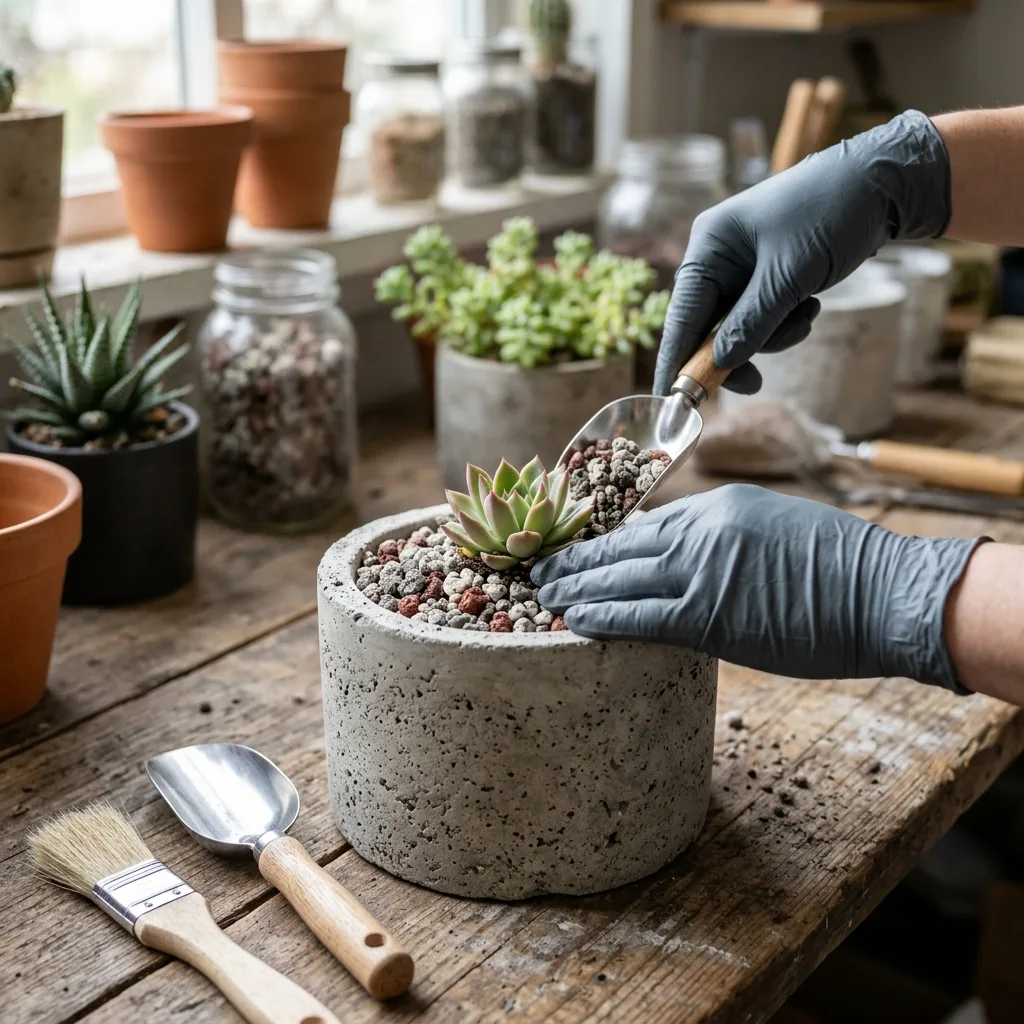
To relieve root stress and eliminate fertilizer salt accumulations, repot the plant into a fresh, highly porous, inorganic mix. An optimal formula consists of: 40% pumice (3-5 mm), 20% volcanic lava rock, 15% zeolite, 10% coarse perlite, and no more than 15% sterilized, sieved blonde peat moss. This porous matrix guarantees rapid drainage, eliminating standing moisture while ensuring root xylem structures receive ample oxygen.
Gradual Sunlight Acclimation:
Plants emerging from low-light quarantine or medicinal treatment can suffer irreversible chlorophyll breakdown if placed directly into intense ultraviolet light. Position the specimen in bright, filtered light (such as behind sheer curtains) and systematically increase its direct morning sun exposure by 30 minutes every 4 days.
Watering Discipline:
Never apply water until the root zone has dried out completely. Insert a wooden skewer deep into the substrate; if it emerges spotless and completely dry, drench the pot thoroughly until water flows freely from the drainage holes. Empty runoff trays within 10 minutes. Remember: succulents rarely perish from intermittent drought, but excessive moisture and chronic dampness destroy root networks rapidly.


Reader Reviews & Comments 4 Reviews
Marcus Thorne
Chloe Bennett
Eleanor Vance
Julian Hayes
Leave a Review & Rating
Share your plant care tips, experiences, or questions with our succulent community.