





In the botanical community, the term 'Korean succulent' does not denote a single wild botanical species; rather, it refers to extraordinary Echeveria, Pachyveria, and Graptoveria cultivars meticulously developed by master South Korean hybridizers through deliberate cross-pollination, selective breeding, and advanced tissue culture. These specimens boast exceptionally plump, jelly-like rosettes and ethereal pastel hues rarely seen in wild endemic populations. Highly sought after by dedicated collectors, these prized hybrids demand a rigorous mineral substrate discipline and nuanced microclimatic management compared to standard garden-variety species.
Shaped by advanced East Asian horticultural technology and refined aesthetic ideals, Korean hybrids store water within their leaf parenchyma cells at extraordinarily high cellular densities. While this unique morphological structure renders them remarkably drought-tolerant, it simultaneously makes them acutely vulnerable to lingering substrate moisture, stale atmospheric conditions, and poor aeration. Here, Sukulentler.com examines the scientific principles required to sustain these architectural rosettes in domestic settings without risking elongation or etiolation.
1. Botanical Identity and Morphological Characteristics
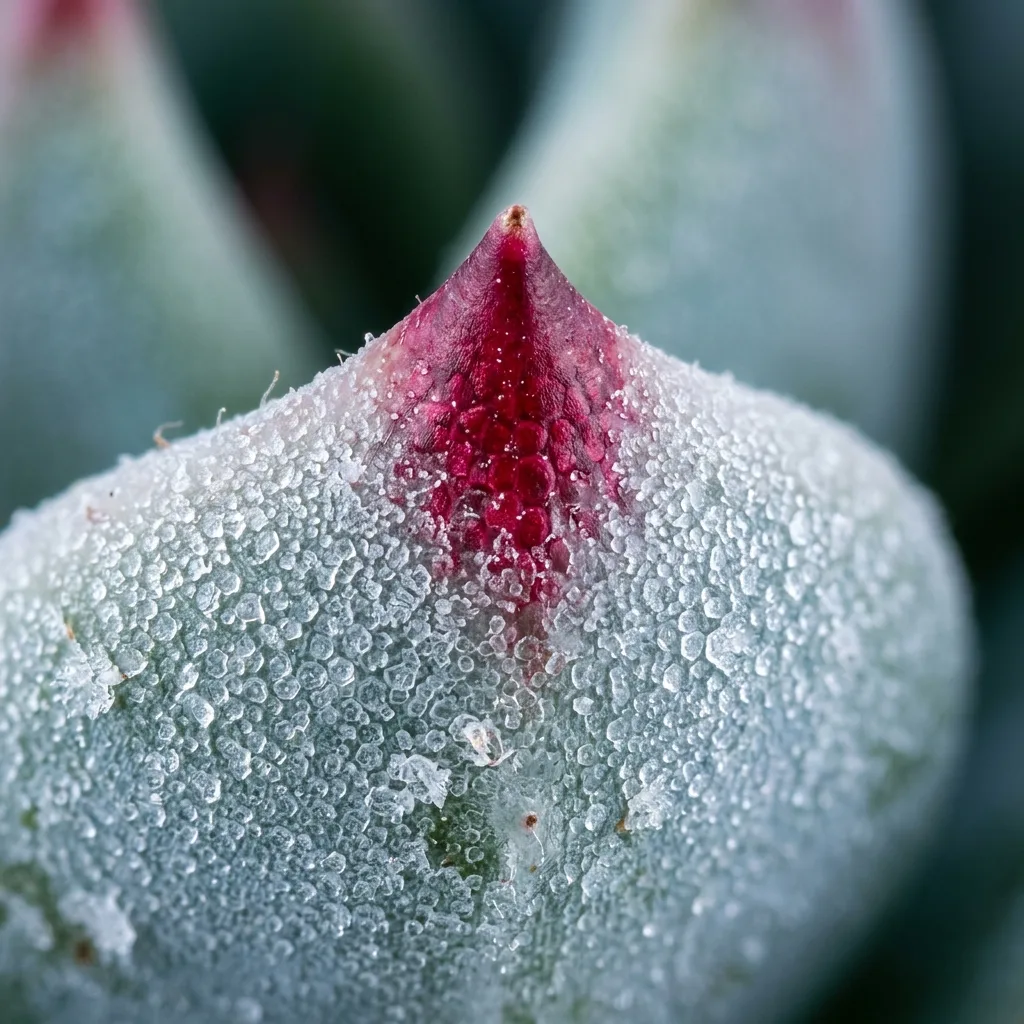
The definitive morphological hallmark of Korean hybrids is the microscopic epicuticular wax crystal layer blanketing the leaf cuticle, scientifically termed 'farina'. This crystalline coating produces a soft, powdery, matte velvet sheen. Farina serves not merely an ornamental purpose, but acts as an essential photoprotective shield that reflects harsh ultraviolet (UV) radiation while substantially minimizing cuticular transpiration under intense exposure.
At the cellular level, these plants operate exclusively via Crassulacean Acid Metabolism (CAM) photosynthesis. They open their stomata strictly during nocturnal hours, sequestering atmospheric carbon dioxide as vacuolar malic acid, and keep their stomata hermetically sealed throughout the day to conserve hydration while translocating carbon to the Calvin cycle. Because their succulent tissues are adapted to elevated turgor pressure, excessive moisture uptake can quickly rupture cellular walls, predisposing the crown and root cortex to opportunistic fungal pathogens such as Fusarium and Phytophthora.
2. Lighting Requirements and Indoor Positioning
Maintaining the coveted bubblegum pink, coral, peach, and lavender tones in Korean hybrids is directly governed by radiant light intensity. To suppress chlorophyll synthesis and stimulate photoprotective anthocyanin and carotenoid pigments, these specimens require a minimum of 6 to 8 hours of intense, unfiltered, or sheer-filtered daily sunlight.
When light levels fall below metabolic demand, the plant stretches its internodes toward the light source, losing its compact, geometric rosette form in a process known as etiolation. Indoors, an unobstructed south- or west-facing windowsill provides the most suitable natural light. If ambient daylight is insufficient, horticulturalists should install full-spectrum LED grow lights delivering 2,500 to 3,000 lumens per square foot on a structured 12-hour photoperiod.
3. Irrigation Discipline: The 'Soak and Dry' Protocol
Irrigation for Korean hybrids must never follow an arbitrary calendar schedule; it must be dictated entirely by physiological cues. Watering while foliage remains rigid and turgid invariably suffocates the fine root hairs. The optimal time to irrigate is when the lowest basal leaves lose elasticity and exhibit fine longitudinal micro-wrinkles along their margins.
When moisture is warranted, apply the rigorous 'soak and dry' method. Saturate the root zone thoroughly until water drains freely from the pot's drainage holes, then discard all standing runoff from the saucer within 10 minutes. Crucially, avoid getting water directly into the central apical meristem (growing point); trapped water droplets act as magnifying lenses under bright light, causing leaf scald, and create anaerobic conditions that trigger fatal crown rot.
4. Ideal Soil Substrate and Pot Selection
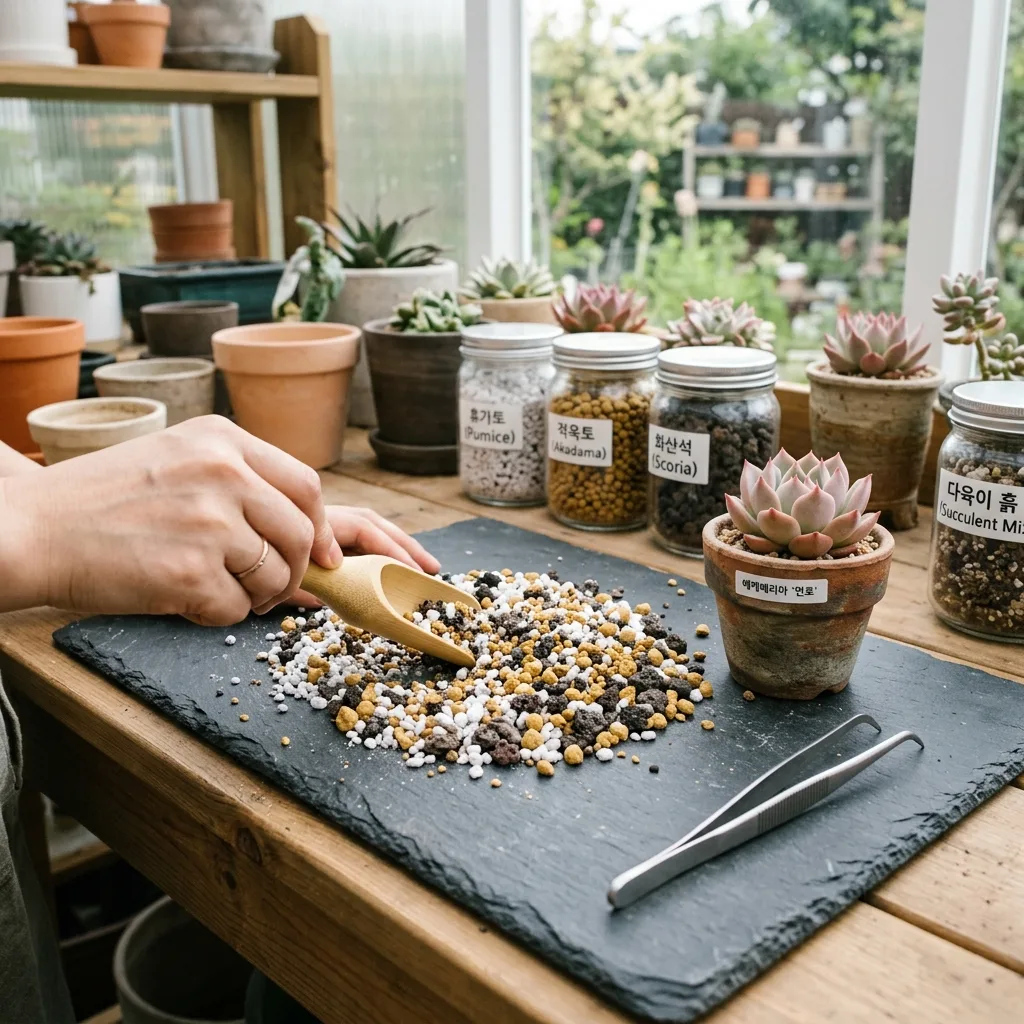
Professional South Korean nurseries cultivate these hybrids in predominantly inorganic, highly porous substrates. Conventional potting soils rich in decomposed peat moss retain excess moisture far too long, quickly suffocating and rotting the delicate capillary roots of Korean cultivars.
Container selection is equally vital: prioritize unglazed, breathable terracotta or Korean-style porous stoneware. Non-porous plastic containers impede radial moisture evaporation, dramatically increasing root-zone risks. Furthermore, choose a pot only 2 to 3 cm wider than the diameter of the rosette, and avoid excessively deep containers that harbor stagnant moisture pockets.
| Substrate Component | Ratio (%) | Botanical Function & Benefit |
|---|---|---|
| Pumice (3-6 mm) | 35% | Provides macroscopic aeration, structural stability, and superior drainage. |
| Hard Akadama or Zeolite | 25% | Enhances cation-exchange capacity (CEC) and buffers micronutrient delivery. |
| Volcanic Lava Rock (Scoria) | 20% | Supplies trace minerals and iron while keeping drainage channels open. |
| Coarse Perlite | 10% | Reduces overall bulk density and prevents substrate compaction. |
| Sterile Peat / Washed Coco Coir | 10% | Supplies the minimal organic fraction necessary for root anchoring. |
5. Step-by-Step Propagation Techniques
Because Korean cultivars are complex multi-generational hybrids, propagating them from seed rarely yields plants true to type. To preserve specific morphological characteristics, vegetative propagation is required:
- Leaf Cuttings: Gently detach a mature, plump leaf from the lower tier of the rosette using a side-to-side twisting motion, ensuring the basal meristematic tissue remains completely intact. Allow the detached leaf to callus in a dry, shaded, well-ventilated space for 3 to 4 days. Place the callused leaf on a dry bed of pure pumice and zeolite; do not apply moisture until adventitious roots visibly emerge.
- Beheading (De-topping): For mature or slightly elongated plants, sever the top crown using sterilized fishing line or a surgical scalpel, leaving approximately 2 to 3 cm of stem below the rosette. Allow the excised head to callus for 5 to 7 days before placing it over an inorganic rooting medium. The remaining rooted stump will subsequently generate multiple compact offsets around the cut margins.
6. Common Pests, Pathogens, and Treatments
Mealybugs (Pseudococcidae): These sap-sucking pests manifest as white, cottony masses nested deep within rosette crevices or along the root collar, causing stunted and distorted foliage. Spot-treat localized infestations using a fine cotton swab saturated with 70% isopropyl alcohol. For extensive infestations, apply a systemic soil drench containing acetamiprid or imidacloprid during active vegetative growth.
Black Rot and Stem Rot: Triggered by sustained overwatering and poor root aeration, this fungal infection causes leaves to turn translucent, watery, and mushy from the stem base upward. Immediately unpot the specimen, excise all necrotic tissue with a flame-sterilized blade until only healthy vascular tissue remains, treat the wound with powdered sulfur or systemic fungicide, and allow it to dry unpotted for a full week before replanting.
7. Seasonal Maintenance Calendar and Expert Tips
Spring and Autumn (Active Growth Windows): These are the peak metabolic periods for Korean hybrids. Day-to-night temperature fluctuations—ideally 22–26°C during the day and 10–14°C at night—trigger the protective stress responses that intensify their vivid pastel colors. During these windows, apply a low-nitrogen, potassium- and phosphorus-balanced succulent fertilizer at quarter-strength once monthly.
Summer (Semi-Dormancy / Aestivation): When ambient temperatures exceed 32°C, these hybrids slow their metabolic activity to conserve moisture. Protect them from harsh midday summer sun with shade cloth and restrict irrigation exclusively to cool evening hours, watering lightly around the container perimeter.
Winter (Resting Period): Keep plants indoors away from cold window drafts, ensuring temperatures do not fall below 7°C. Because CAM photosynthetic efficiency declines in low winter light, reduce watering drastically; a light substrate hydration once a month is sufficient to keep root hairs viable without encouraging rot.


Reader Reviews & Comments 3 Reviews
Marcus Holloway
Eleanor Vance
Chloe Bennett
Leave a Review & Rating
Share your plant care tips, experiences, or questions with our succulent community.