






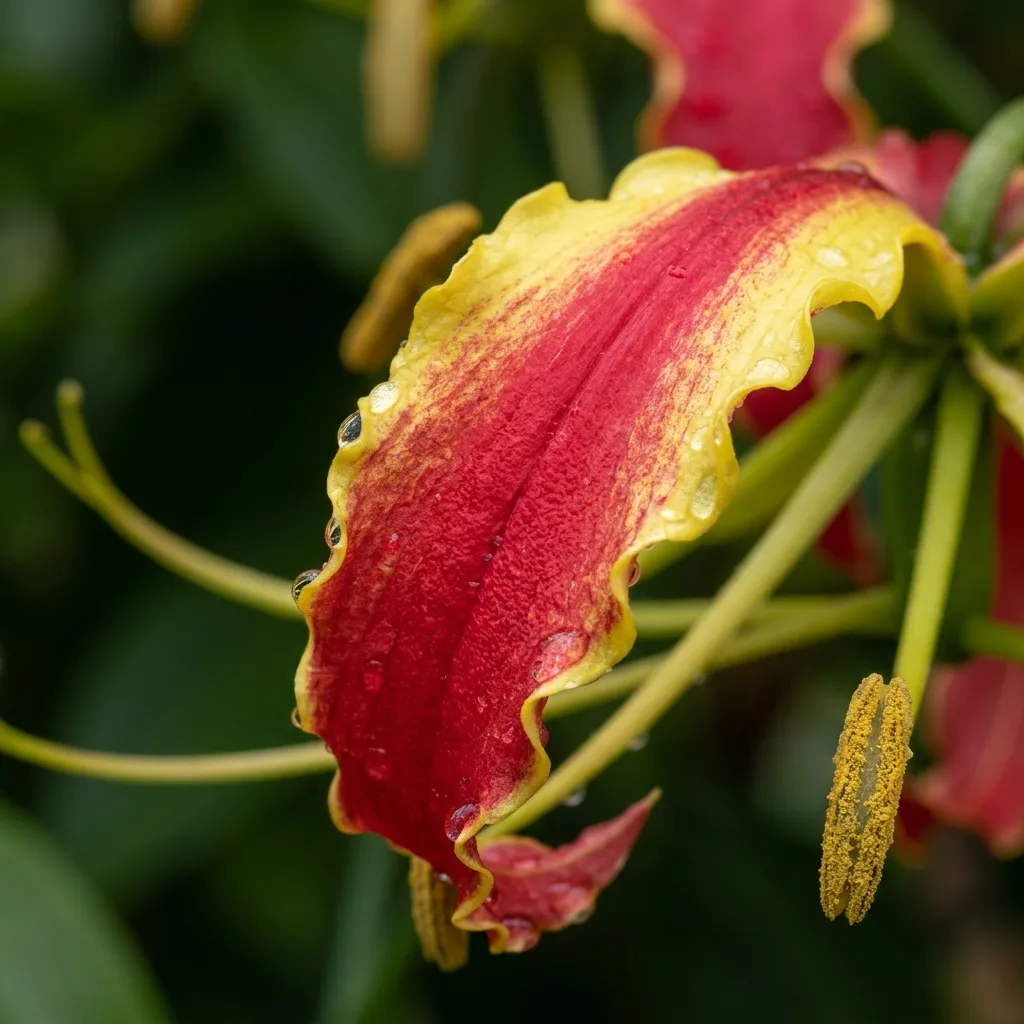
On the lush margins of monsoon forests across tropical Africa and Southeast Asia, Gloriosa superba 'Rothschildiana' ascends toward the canopy, anchoring itself gracefully to surrounding branches via delicate leaf-tip tendrils. It bears some of the most daring, flame-hued blossoms nature has ever conceived. While its reflexed, undulating red-and-yellow tepals mimic a suspended burst of pyrotechnics, this breathtaking vigor can unravel unexpectedly on your windowsill or conservatory through sudden leaf wilt and subterranean tuber melanosis. When a flame lily abruptly droops and its interveinal tissues turn chlorotic and translucent, it is almost invariably the quiet harbinger of an advancing root-zone pathogen invasion.
Subterraneally, the plant relies on a fleshy, 'V' or 'L'-shaped rhizomatous tuber as its cellular reservoir for survival; regrettably, this starch-rich reserve is also a banquet for opportunistic soil-borne fungal spores. Whenever the delicate biochemical equilibrium between its active vegetative flush and winter dormancy breaks down, the root collar and tuber parenchyma can succumb to irreversible liquefaction within hours. However, through rigorous phytopathological diagnosis and a disciplined rehabilitation protocol, even a severely compromised Gloriosa tuber can be guided back to vigorous meristematic life.
1. Early Diagnostic Symptoms and Microscopic / Visual Clues
When Gloriosa superba becomes infected or experiences severe physiological stress, initial manifestations emerge at the foliar apices and active apical growth points. As modified clinging tendrils lose cellular turgor, turn brown, and desquamate, it serves as immediate clinical evidence of xylem vascular occlusions halting acropetal water transport. Whereas a healthy specimen exhibits radiant emerald-green leaves bolstered by dynamic internal hydrostatic pressure, a fungal assault instigates interveinal chlorotic lesions progressing rapidly from basal foliage upward.
The key pathological markers to monitor closely include:
- Water-Soaked Collar Lesions: Dark brown, soft, macerated rings at the soil-stem interface. This symptom is an unambiguous hallmark of Rhizoctonia solani or waterborne Pythium species.
- Tuber Sponginess and Tissue Maceration: The firm, ivory-to-cream storage parenchyma yields to gentle thumb pressure, releasing an unmistakable sour, alcoholic fermentation odor.
- Mosaic Foliar Streaking: Chlorotic, pale-green, and yellow interveinal striations stretching along the lamina; this pattern points directly to aphid-transmitted Gloriosa stripe mosaic virus (GSMV).
- Silvery Stippling and Micro-Webbing: Minute white chlorotic punctures on abaxial leaf surfaces paired with delicate webbing in leaf axils—unmistakable signs of twospotted spider mite (Tetranychus urticae) colonization.
- Bud Necrosis and Abortion: Emerging floral buds turn jet-black, mummify, and drop prematurely, typically driven by thrips infestations or sudden root-zone anoxia.
2. Primary Etiologies and Environmental Triggers
Over eighty percent of flame lily pathologies stem directly from inappropriate irrigation regimes coupled with insufficient soil porosity. Having evolved in environments subjected to torrential summer monsoons balanced by bone-dry, well-aerated winter resting phases, this species quickly succumbs to root anoxia when restricted within standard moisture-retentive peat blends. Deprived of oxygen, root cells fail to sustain aerobic respiration; cell membranes depolarize and collapse, granting immediate entry to opportunistic Fusarium oxysporum hyphae lurking in the rhizosphere.
Key environmental triggers promoting systemic decline include:
- Saturated Substrate During Dormancy: In late autumn, foliar senescence signals the cessation of vegetative metabolism as the tuber enters complete physiological dormancy. Introducing moisture at this stage almost inevitably triggers enzymatic liquefaction of the dormant tissue within 48 to 72 hours.
- Cold and Hyper-Humid Microclimates: Ambient temperatures dropping below 16°C (61°F) alongside relative humidity sustained above 70% in stagnant air produce ideal conditions for foliar pathogens like Alternaria and Cercospora.
- Mechanical Trauma and Absence of Trellising: Stems lacking adequate structural support bend under their own hydraulic weight. Resulting micro-fractures in the epidermal tissue become wide-open pathways for bacterial soft rot (Pectobacterium carotovorum).
- Excessive Nitrogen Fertilization: Surplus nitrogen leads to rapid, poorly lignified vegetative expansion with thinned cell walls, leaving foliage defenseless against piercing-sucking pests like thrips and spider mites.
3. Organic and Biological Remediation Protocols
When intercepted at the initial stages of tissue compromise or pest colonization, balance can often be restored using targeted biological inoculants and ecological compounds, avoiding harsh chemical intervention. The most robust preventative strategy for the root zone is prophylactic colonization using beneficial soil microbiota. Strains of Trichoderma harzianum physically parasitize pathogenic hyphae, forming a protective biological sheath over vulnerable root surfaces.
Field-tested organic regimens for foliar pests and superficial wounds:
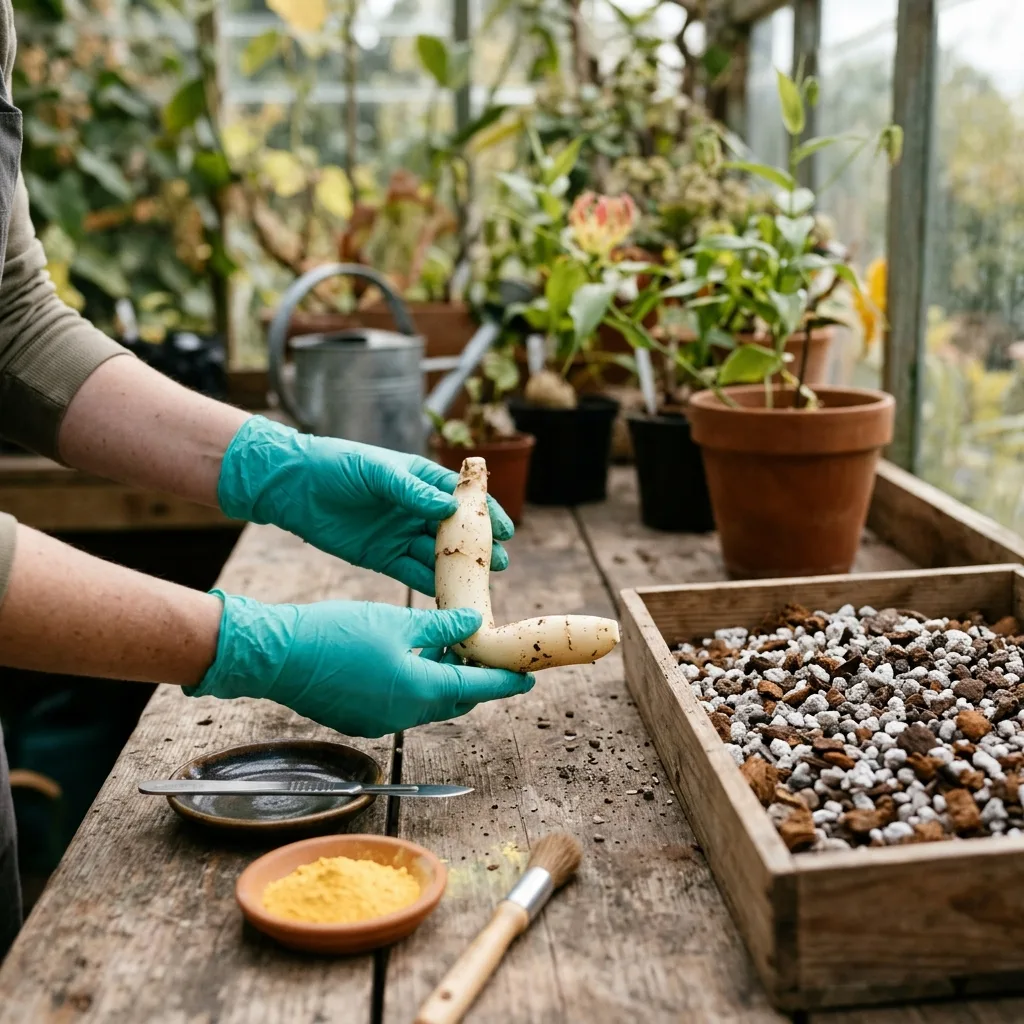
- Micronized Sulfur and Activated Charcoal Barrier: After carefully debriding early localized rot from the tuber with a sterile blade, dust the exposed flesh thoroughly with a 1:1 blend of pharmaceutical-grade sulfur and powdered activated charcoal. Sulfur stops fungal spore germination while charcoal absorbs toxic exudates and accelerates suberization (callus formation).
- Cold-Pressed Horticultural Neem Emulsion: In 1 liter of lukewarm, soft water, emulsify 5 ml of pure cold-pressed neem oil using 3 ml of potassium-based insecticidal soap. Spray the abaxial sides of leaves thoroughly at dusk every 4 days to eradicate spider mites and thrips nymphs without scorching the foliage.
- Botanical Cinnamic and Chamomile Infusion: For light surface blights, steep 2 tablespoons of organic Ceylon cinnamon powder and dried chamomile flowers in boiling water, strain through cheesecloth, and allow to cool. Spray onto foliage to leverage the natural antifungal properties of cinnamaldehyde.
4. Chemical and Systemic Fungicide Application Regimen
If rot has already ascended into the primary vascular cylinder, or if spider mite populations have bronzed significant leaf surface area, resorting to targeted systemic active ingredients becomes a horticultural necessity. Systemic chemistries translocate through both xylem and phloem, neutralizing fungal mycelium nestled deep within internal plant tissues.
| Active Ingredient | Target Pathogen / Pest | Dosage (per 1 L Water) | Application Method & Interval |
|---|---|---|---|
| Propamocarb Hydrochloride | Pythium, Phytophthora (Root & Tuber Rot) | 2.5 ml / L | Root drench; 2 applications spaced 10 days apart |
| Azoxystrobin + Difenoconazole | Fusarium, Alternaria (Stem Blight & Leaf Spot) | 0.75 ml / L | Foliar mist & light basal drench; 14-day interval |
| Abamectin | Twospotted Spider Mites (Tetranychus urticae) | 0.5 ml / L | Targeted abaxial fogging; 3 sprays every 5 days |
| Spinosad | Thrips (Bud & Foliar Meristem Vectors) | 1.0 ml / L | Evening foliar spray over all growth tips; 7-day interval |
Always execute chemical treatments in well-ventilated spaces while wearing protective nitrile gloves, eye protection, and an organic vapor respirator. Never spray under intense direct sunlight or grow lamps, which can trigger severe phytotoxic leaf scorching.
5. Quarantine Protocols and Workspace Sanitation
A pathogen-compromised Gloriosa poses an immediate biological risk to nearby aroids, succulents, and tropical collections. In particular, specimens harboring GSMV are incurable; sap-feeding vectors can transfer viral particles to adjacent pots within minutes.
Maintain these clinical sanitation steps throughout the rescue process:
- Strict Physical Isolation: Relocate the suspect container at least 3 meters away from all other plants into a designated quarantine space free from directional draft airflows.
- Thermal and Chemical Tool Sterilization: Submerge scalpels, shears, and potting knives in 70% isopropyl alcohol for at least 60 seconds, or briefly pass them through a butane flame before and between each cut.
- Safe Disposal of Contaminated Media: Never recycle compromised potting soil into home compost piles or garden beds. Seal it securely in heavy plastic bags for municipal disposal. Plastic containers must be submerged in a 10% bleach solution for 30 minutes, whereas porous terracotta pots require dry-heat baking or boiling water treatment.
- Personal and Surface Decontamination: Thoroughly scrub hands and forearms with antibacterial soap and warm water immediately after intervention, wiping all workbenches and shelves down with broad-spectrum disinfectant.
6. Rehabilitation Protocol and Post-Operative Care
Once diseased tissue has been excised and fungicidal safeguards are in place, a salvageable Gloriosa superba tuber requires a carefully modulated convalescence period. The most devastating error at this juncture is drenching the wounded tuber with water or loading it with synthetic nutrients.
Follow this step-by-step restoration workflow:
- Callus Formation (Wound Curing): Place the excised tuber in a dry, shaded location with gentle ambient airflow at 21–24°C (70–75°F) for 48 to 72 hours. Allow the raw cut surface to dry completely, forming a matte, firm protective callus.
- Porous, Inorganic-Dominant Substrate: The recovery substrate must offer rapid drainage. Mix 40% coarse horticultural pumice (3–6 mm), 20% zeolite, 20% coarse perlite, and 20% sterile, low-EC coconut coir. This matrix ensures abundant oxygen diffusion directly to healing tissues.
- Horizontal Orientation: Never plant a Gloriosa tuber vertically. Lay it completely horizontal roughly 5 to 7 cm (2–3 inches) below the soil line, ensuring the pointed apical growing eye angles marginally upward.
- Basal Heat Stimulation: Place the newly potted tuber over a thermostatically controlled seedling heat mat maintained at 22–25°C (72–77°F). Warm substrate breaks dormancy and accelerates root emergence; cold, damp soil will quickly reignite rot.
- Controlled Moisture Reintroduction: Keep the substrate practically dry for the first 10 days post-planting, misting only the top centimeter of media. Once the emerging shoot surfaces and attains roughly 5 cm of height, transition cautiously toward standard basal watering.


Reader Reviews & Comments 3 Reviews
Julian Vance
Clara Sterling
Marcus Holloway
Leave a Review & Rating
Share your plant care tips, experiences, or questions with our succulent community.