






Hailing from the mist-veiled, storm-swept Fynbos heathlands of South Africa's Cape Floral Kingdom, Protea cynaroides—the King Protea—reigns as the undisputed aristocrat of the botanical world. Crowned with monumental flower heads resembling velvet-sculpted artichokes, this prehistoric survivor brings breathtaking prehistoric drama into our living rooms and hobby conservatories. Yet, when its majestic crown suddenly droops and its thick, leathery foliage turns charcoal black, it leaves even dedicated growers heartbroken. Truly mastering King Protea care requires understanding the evolutionary marvels it forged over millions of years surviving in nutrient-deprived, intensely acidic, and virtually phosphorus-free sandstone soils.
The most devastating mistake well-meaning enthusiasts make is attempting to nurture this regal titan with standard all-purpose liquid fertilizers or suffocating, peat-heavy potting mixes. Unlike typical nursery ornamentals that rely on symbiotic mycorrhizal fungi, Protea cynaroides develops specialized 'proteoid roots'—dense, bottlebrush-like clusters of microscopic rootlets. These ultra-efficient root hairs absorb even the faintest trace of trace minerals from the substrate like a sponge. Excessive moisture, stagnant air, or even a single application of phosphorus-rich bloom booster can send this hyper-sensitive root architecture into an irreversible chemical meltdown, flinging the door wide open for lethal fungal pathogens.
If your King Protea's leaf margins are scorching inward, emerging vegetative shoots are collapsing beneath a wave of black rot, or flower bracts are mummifying before opening, every hour counts. In this guide, you will discover how to recreate the drying, refreshing breezes of the Cape winds inside your planter, eradicate the nightmare of Phytophthora cinnamomi, and nurse your sovereign specimen back to vibrant life step by step.
1. Early Diagnosis Symptoms and Microscopic / Visual Clues
Under physiological stress, King Protea declines stealthily and silently. By the time gross visual symptoms manifest in the aerial foliage, an alarming portion of the root network may already have perished. Prompt diagnostic recognition is the single most critical factor in salvaging the plant before its subterranean lignotuber (the woody basal swelling) is irretrievably lost.
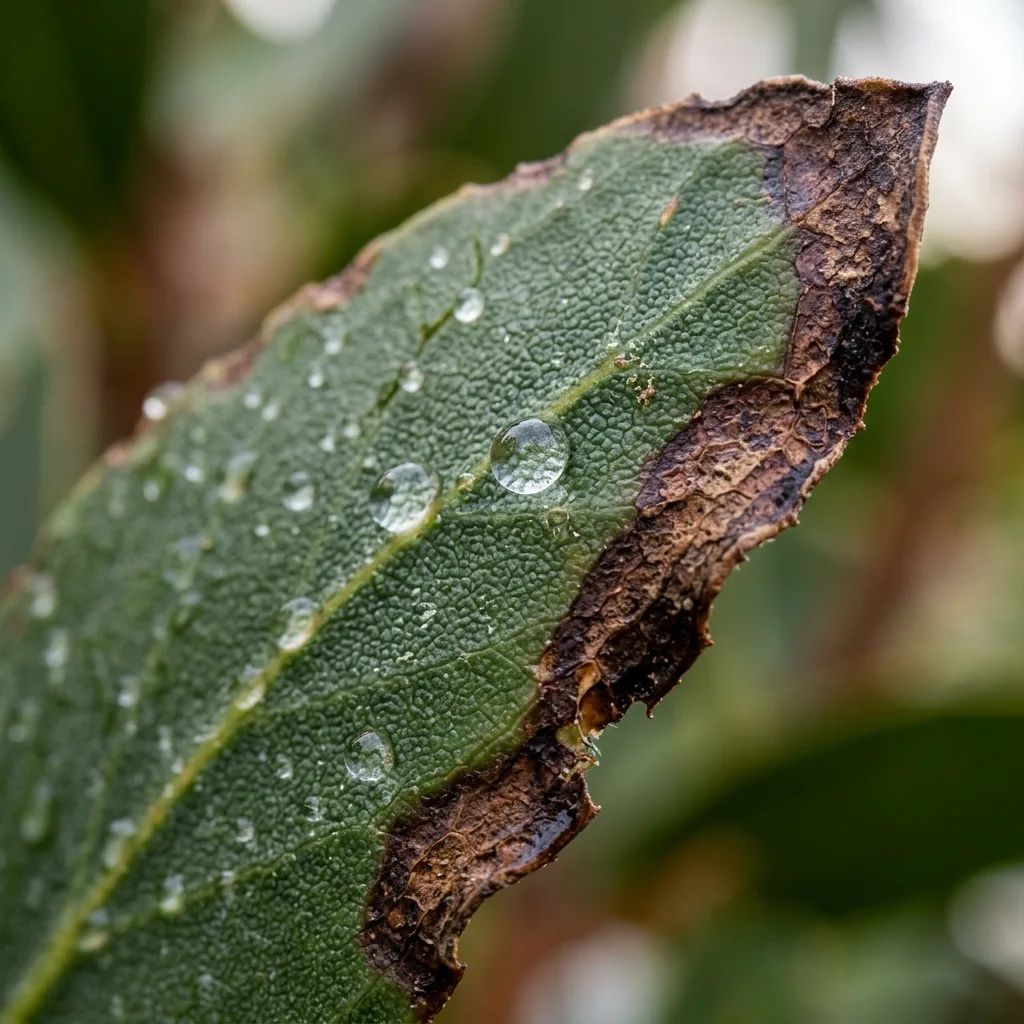
- Acropetal Leaf Necrosis (Inward Leaf Blackening): Dark brown to jet-black necrotic lesions that initiate along the margins of older basal foliage and march inward along the secondary veins in a pronounced V-shaped pattern. The Art of Scientific Stem Cuttings and Rooting">This is the classical phenotypic hallmark of phosphorus phytotoxicity, caused by hyper-accumulation of phosphate ions rupturing cell membranes.
- Sudden Vascular Wilt (Blackwater Collapse): The foliage loses its waxy lustre, turns parchment-brittle, and the apical crown bends downward despite wet substrate. This indicates that the vascular xylem vessels have been physically choked and occluded by opportunistic fungal mycelium.
- Proteoid Root Meltdown and Tissue Loss: Gently pulling back the upper surface of the root ball exposes the normally pristine, creamy-white bottlebrush clusters transformed into a slimy, foul-smelling, black sludge, exuding a sharp, fermented odor.
- Collar Canker and Bark Cracking: Saturated, dark sunken lesions encircle the stem precisely where it meets the soil line; peeling back a sliver of bark reveals that the cambium layer beneath has transformed from emerald green to dead brown.
2. Root Causes and Environmental Triggers
The tragedy behind virtually every Protea cynaroides fatality is well-intentioned human 'overcare'. When cultivation does not emulate the relentless physical dynamics of its indigenous biotope, physiological collapse is virtually guaranteed:
- Excess Substrate Phosphorus (P): Fynbos substrates are geologically ancient and severely leached of soluble minerals. Standard N-P-K chemical blends, bone meal, or commercial composts are rapidly sucked up by proteoid rootlets. Because Proteaceae lack an evolutionary down-regulatory 'switch' to halt phosphate uptake, the plant essentially suffers cellular incineration from inside out.
- Phytophthora cinnamomi Infestation: This catastrophic soil-borne oomycete (water mold) swims through warm, waterlogged, poorly aerated potting mixes using mobile, flagellated zoospores. They home in on exudates from proteoid root tips, penetrate the epidermis, and destroy the root system within days.
- Elevated Substrate pH and Calcareous Tap Water: King Protea thrives exclusively in sharply acidic substrates (pH 5.0 to 6.0). When tap water driven by calcium and magnesium bicarbonates pushes the rhizosphere above pH 6.5, rapid iron chlorosis sets in, accompanied by root cell necrosis.
- Air Stagnation and Thermal Root Stress: In its native habitat, high-velocity oceanic winds constantly vent the foliage and keep the crown cool. Trapping a pot indoors over a water-filled drainage tray creates a stagnant, warm microclimate that accelerates microbial pathogenicity exponentially.
3. Natural and Organic Mitigation Methods
During the early stages of disease or upon first suspecting fertilizer-induced root burn, restoring biological equilibrium before resorting to heavy synthetic chemistry can yield exceptional results:
1. Acidic Leaching and Mineral Flush (Phosphate Evacuation): If you suspect accidental fertilizer overdose or mineral build-up, immediately drench the root ball with at least three to four times the container's volume using pure rainwater or reverse osmosis (RO) water. Adjust the water's pH to approximately 5.2 using several drops of raw, organic apple cider vinegar; this helps dislodge and leach free-floating phosphate and mineral salts out of the porous matrix.
2. Bio-Shield Inoculation (Trichoderma harzianum): Beneficial biological fungi, especially aggressive isolates of Trichoderma harzianum, are your strongest organic allies against Phytophthora. Applied directly around the cleaned root zone, these symbiotic microbes colonize the rhizosphere, forming a protective fungal barrier that physically prevents water molds from adhering to fragile root cells.
3. Radiata Pine Bark and Needle Mulch: Top-dressing the soil with aged, coarse Monterey pine bark (Pinus radiata) continuously releases mild organic tannins and natural antifungal terpenes. This creates a disease-suppressive surface micro-environment while shielding the crown from thermal spikes.
4. Chemical and Systemic Fungicide Protocol
In advanced cases of collar rot (canker) and systemic vascular decline, chemical intervention is unavoidable. Due to the dense, woody nature of King Protea, selected active ingredients must possess true ambimobile (two-way xylem and phloem) translaminar and vascular mobility.
| Active Ingredient | Target Pathogen / Diagnostic Use | Dosage (Per 1 Liter Distilled Water) | Application Frequency & Method |
|---|---|---|---|
| Potassium Phosphite (Phosphonate) | Phytophthora cinnamomi & Root Rot | 2.5 ml | Foliar spray every 14 days (Triggers systemic acquired resistance without burning roots) |
| Metalaxyl-M (Mefenoxam) | Advanced Oomycetes & Collar Canker | 0.5 ml | Soil drench directed at root collar every 21 days |
| Azoxystrobin | Alternaria & Anthracnose Leaf Blights | 0.8 ml | Fine mist spray over foliage early in the morning |
| Iron Chelate (Fe-EDDHA) | High pH-Induced Chlorosis / Interveinal Yellowing | 1.0 g | Soil drench once monthly, delivered with acidified water |
Always wear nitrile gloves and a protective mask during preparation and application. Never spray chemical treatments in direct midday sunlight or on heat-stressed foliage.

5. Strict Quarantine and Biosecurity Protocols
An infected King Protea is an airborne and waterborne contagion hazard for other members of the Mediterranean and Fynbos collections (such as Leucadendron, Banksia, Grevillea, and Erica). The instant pathology is confirmed, implement strict biosecurity protocols:
- Complete Isolation: Move the affected pot to an isolated, shaded, yet excellently ventilated location situated at least 3 meters away from all other specimens.
- Deconstructive Pruning and Wound Cauterization: Remove all blackened, necrotized foliage and soft stem tissue using heavy-duty pruning shears sterilized in 70% isopropyl alcohol. Cut cleanly 2 cm into healthy green wood. Immediately dust all fresh wound sites with pure sublimed sulfur powder or organic cinnamon powder to seal and cauterize the vascular tissue.
- Pot Decontamination or Disposal: Plastic containers that housed infected plants should be discarded. Unlacquered terracotta pots must be scrubbed thoroughly, soaked in a 10% sodium hypochlorite (bleach) solution for 24 hours, and oven-baked or dried under intense UV sunlight.
- Substrate Water Disposal: Never allow runoff water from the drainage saucer to spill near other containers or garden soil. Discard drainage directly into sanitary sewers and sterilize the saucer with hospital-grade disinfectant.
6. Rehabilitation and Long-Term Convalescence Care
Rescuing a King Protea whose root network or canopy has been aggressively pruned requires steady patience; full biological stabilization takes 3 to 6 months. Treat your recovering plant like an intensive care patient:
Substrate Transformation and Repotting: Free the plant from standard nursery loam immediately. The ultimate Protea rescue substrate comprises: 40% coarse, acid-washed pumice, 30% coarse silica sand (0–3 mm grain size), 20% composted, aged pine bark fines, and 10% horticultural zeolite. The percolation rate must be instantaneous: water poured on the surface should exit the bottom drainage holes within 5 seconds.
Light and Ambient Dynamics: Protect the patient from scorching summer midday UV, but supply copious amounts of bright, filtered morning sun. Air movement is paramount. Placing a small, whisper-quiet oscillating fan nearby to circulate gentle ambient air across the leaves prevents micro-condensation and halts fungal reinfection in its tracks.
Watering Protocol: Water deeply only after the top 4 to 5 cm of the porous substrate has dried out completely. Ensure water freely flushes out the bottom; never irrigate using a 'little and often' regimen, as permanently damp topsoil is an open invitation for opportunistic pathogens.


Reader Reviews & Comments 3 Reviews
Julian Vance
Eleanor Brooks
Marcus Sterling
Leave a Review & Rating
Share your plant care tips, experiences, or questions with our succulent community.