






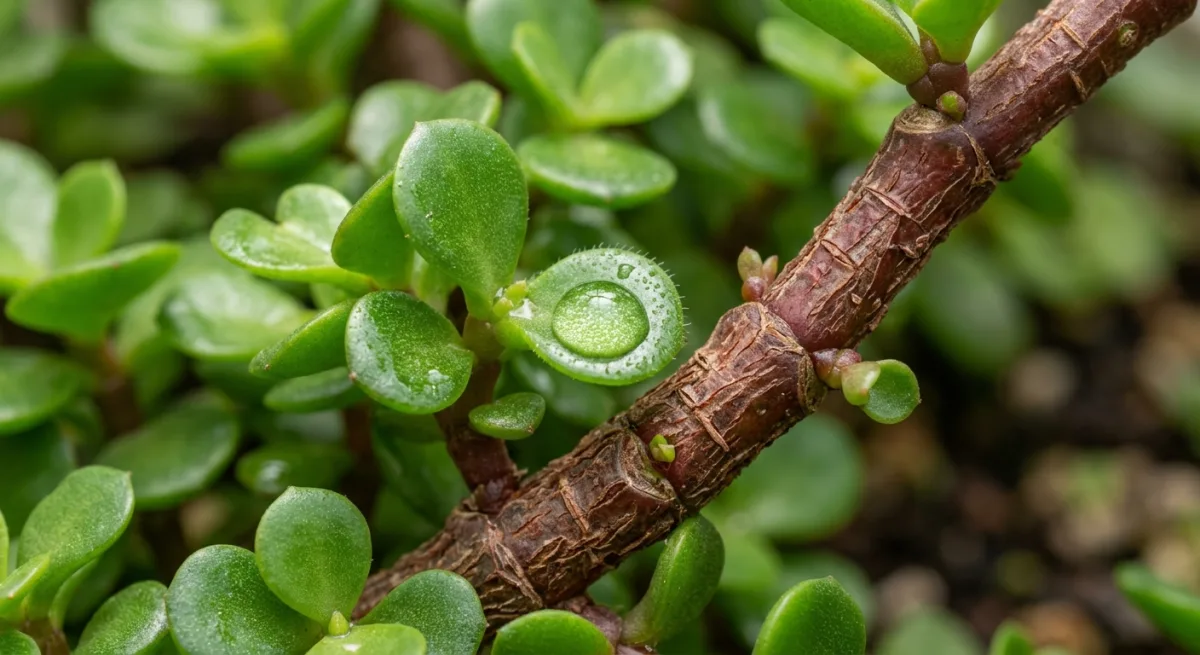
Thriving under the shadow of grazing giants across the semi-arid Karoo plains of South Africa, Portulacaria afra serves as both a rugged erosion shield and an extraordinary carbon sponge in its wild ecosystem. Known affectionately as the 'Elephant Bush', 'Dwarf Jade', or 'Spekboom', this remarkable succulent shrub brings the timeless serenity of ancient miniature forests into our living spaces through its peerless adaptability. Surviving blazing sunshine by banking moisture reserves in its fleshy, wood-like stems, it easily transforms into an evocative, centuries-old bonsai specimen when cultivated with intentional structural pruning and architectural stone craft.
Rescuing the Elephant Bush from generic plastic nursery containers and anchoring it into the weathered crevices of natural volcanic lava or porous tufa rock feels like transplanting a slice of rugged alpine escarpment straight onto your coffee table. The compact, fibrous root architecture of succulents allows them to perform wonders even inside severely restricted planting volumes. However, mastering this sculptural display is not simply an artistic hobby; it requires a precise botanical understanding of leaf cellular turgor pressure, the capillary action of porous rock, and the plant's diurnal photosynthetic rhythms.
1. Essential Materials, Tools, and Safety Precautions
Constructing an enduring 'Bonsai Living Rock Garden' demands materials inspired by wild geology yet strictly governed by botanical drainage dynamics. The vascular xylem of the Elephant Bush root system is exceptionally sensitive to prolonged moisture and anaerobic (oxygen-depleted) conditions; consequently, your chosen stone and planting substrate must permit water to percolate and exit within seconds.
- Primary Specimen: 1 mature, multi-stemmed or thick single-trunk Portulacaria afra (vigorous, with firm stems, dense foliage, and a hard root collar free of fungal softening).
- Sculptural Stone Base: Naturally pitted volcanic lava rock, vesicular tufa, or deeply furrowed dragon stone (measuring at least 20–30 cm wide, featuring natural fissures or an eroded basin).
- Porous Mineral Substrate: Equal parts agricultural zeolite (1–3 mm), calcined pumice (3–6 mm), and crushed volcanic scoria (lava grit).
- Biological Anchoring Mortar: A traditional binder paste combining fine natural bentonite or keto clay with shredded long-fiber sphagnum moss (formulated to lock the roots securely against vertical rock contours).
- Specialized Hand Tools: Bonsai concave branch cutters, annealed aluminum bonsai training wire (1.5 mm and 2.5 mm gauges), an ergonomic root rake, a misting bottle, and precision tweezers.
- Safety Precautions: Wear an N95 dust mask and protective safety goggles whenever drilling, chiseling, or brushing dry stone to avoid inhaling hazardous mineral particulates. Use fitted work gloves when handling jagged rocks and abrasive substrates.
2. Substrate Ratios and Sizing Specifications
| Component / Material | Recommended Dimension / Ratio | Horticultural Function & Purpose | Preparation / Curing Time |
|---|---|---|---|
| Natural Lava / Tufa Stone | 25–35 cm wide, 8–12 cm pocket depth | Structural foundation, miniature mountain aesthetic, and thermal ballast | Soak in water for 24 hours, then scrub clean |
| Inorganic Mineral Mix | 40% Pumice + 30% Zeolite + 20% Lava Grit | Ultra-fast drainage, root oxygenation, and rot prevention | Ready immediately (sifted clean of fine dust) |
| Organic Anchor Paste | 10% Worm Castings + Milled Sphagnum Moss | Nutrient exchange layer and initial root adhesion to rock surfaces | Hydrate with water until a malleable paste forms |
| Aluminum Bonsai Wire | 1.5 mm and 2.5 mm soft wire | Mechanical anchoring and branch silhouette training | Remains on the branches for 3 to 6 months |
| Top Dressing Matrix | River grit, crushed granite, or fine pumice | Protects fine soil particles from washing away during watering | Rinse and spread directly over root surface |
3. Step-by-Step Construction and Mounting Guide
Rather than dropping your succulent casually into a hollow, building a living rock sculpture requires mapping water flow channels, root anchoring zones, and natural aeration pathways. In nature, ancient wild shrubs invariably cling to windward, precipitous stone outcrops.
- Stone Inspection and Drainage Architecture: If your chosen rock lacks a natural drainage escape, drill 1 or 2 drainage exit channels through the deepest recess using a masonry diamond core bit. Test the balance of the stone on a flat surface; if it wobbles, grind the base flat or attach discreet non-slip silicone feet underneath.
- Securing Mechanical Anchor Wires: Thread lengths of annealed aluminum wire through the drainage holes in an inverted 'U' shape from below. These wires will serve as structural tie-downs, locking the root ball immovably against the rock. Roots that shift or vibrate in ambient drafts cannot generate delicate root hairs.
- Applying the Keto Clay Border: Roll your hydrated sphagnum and clay paste into a thin rope and apply it along the rim of the planting pocket. This acts as a living retaining dam, preventing dry mineral substrate from washing over the edges during future waterings.
- Building the Drainage Bed: Spread a foundation layer of coarse, dust-free pumice and lava scoria across the bottom of the rock depression. This critical buffer guarantees that root tips never sit in stagnant, perched moisture.
4. Root Pruning, Mounting, and Securing the Succulent
Extract your Elephant Bush gently from its nursery container. With a wooden chopstick or root rake, meticulously disentangle the dense root mass and completely dislodge old, water-retentive peat or greenhouse nursery soil. Reviewing the Kew Plants of the World Online Portulacaria afra monograph confirms that this species naturally establishes horizontal, fissure-creeping root networks rather than deep taproots. Prune back excessively long, circling tap roots by roughly one-third using sterilized shears.
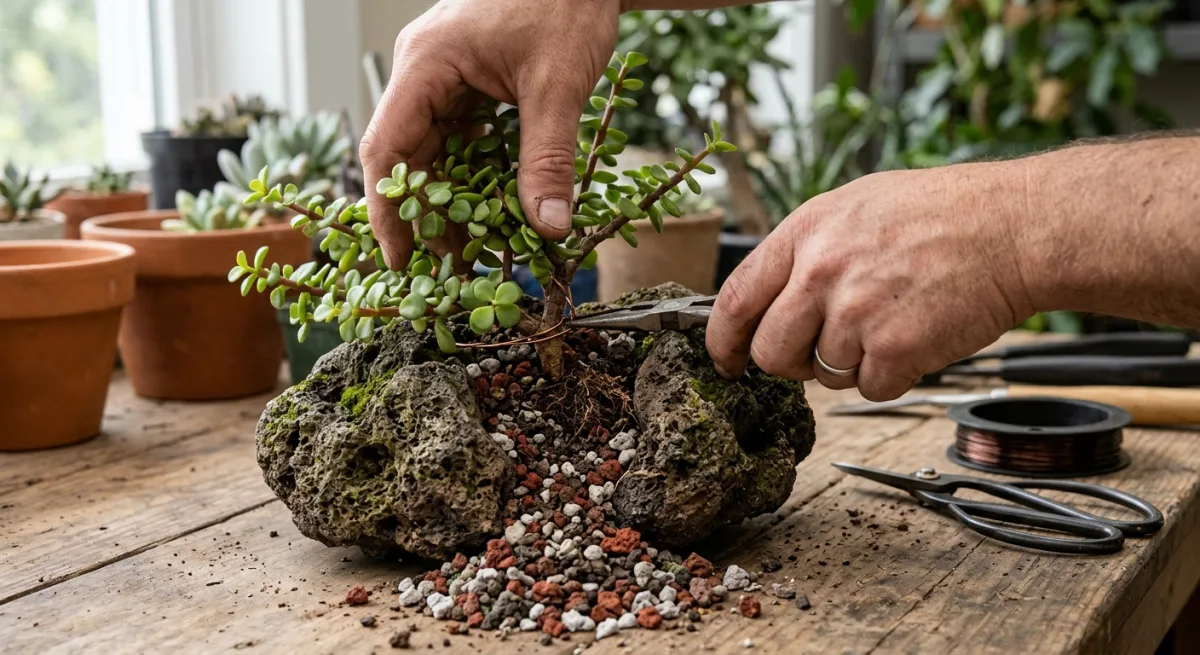
Position the plant within the stone pocket, tilting the main trunk slightly to evoke the sweeping, wind-swept silhouette of an ancient specimen. Pull the aluminum anchoring wires over the structural root flare, twisting them firmly with pliers—securing the base without cutting into the living bark. Gently work the inorganic pumice-zeolite-lava mixture into all remaining air spaces using a chopstick so no subterranean voids remain. Top-dress with washed river pebble or dark scoria to finish the composition.
5. Watering Regimens and Cultivation Dynamics in Rock Plantings
Irrigating an Elephant Bush anchored to natural stone demands a different horticultural mindset than maintaining standard containerized succulents. Dense rocks absorb ambient heat quickly, and mineral grit discharges water far faster than organic potting soils. However, this does not mean you should water continuously on a rigid calendar.
Frequent watering is not an expression of care; it is the most common cause of suffocating root zones. Instead, read the turgidity of the foliage: gently pinch the lower, mature leaves between your thumb and forefinger. If they feel firm and plump, the internal cellular turgor pressure is high, and irrigation must be withheld. If the leaves yield slightly, showing fine surface wrinkles and a soft, deflated texture, the water stored within the stem vacuoles has depleted. The safest hydration technique for rock plantings is bottom capillary soaking: place the entire stone base into a shallow basin of room-temperature water for 15 minutes, allowing moisture to wick upward uniformly, or deliver water slowly around the base using a narrow-spouted bonsai can.
Under arid conditions, Portulacaria afra relies on facultative CAM (Crassulacean Acid Metabolism)-like activity, keeping its stomata tightly closed during the heat of the day to limit evapotranspiration and opening them at night to assimilate carbon dioxide. During winter dormancy, when indoor temperatures hover around 12–15°C (54–59°F), reduce watering frequencies to once every 3 to 4 weeks. High solar irradiance is non-negotiable: provide at least 5 to 6 hours of unfiltered direct sun or exceptionally bright indirect light daily to keep the internodes tightly spaced and stain the stems with an attractive mahogany-red blush.
6. Long-Term Maintenance, Pruning, and Durability Strategies
Ensuring your living rock garden remains a pristine sculptural centerpiece over decades hinges on structural canopy maintenance and balanced nutrient supplementation. Throughout active spring and summer growth cycles, once newly emerging shoots produce 4 to 5 pairs of emerald leaves, pinch off the soft apical terminal bud using your fingertips. This simple horticultural technique disrupts apical dominance, stimulating dormant lateral nodes to break and creating a dense, compact canopy reminiscent of mature wild trees.
Inspect your structural training wires every 3 to 4 months. Because the Elephant Bush thickens its soft, cambium-rich branches rapidly during active vegetative phases, wires can quickly bite into the bark and cause irreversible scarring if left unattended. From early spring through mid-autumn, apply a low-nitrogen, potassium- and phosphorus-balanced succulent fertilizer diluted to one-quarter strength once a month during scheduled waterings. Finally, you can display your living artwork with peace of mind: according to the ASPCA Non-Toxic Plants List, Portulacaria afra is completely non-toxic and pet-safe for both cats and dogs.


Reader Reviews & Comments 1 Review
No comments yet. Be the first to share your succulent experience!
Leave a Review & Rating
Share your plant care tips, experiences, or questions with our succulent community.