






High in western Argentina, along the wind-scoured Andean foothills of Mendoza and San Juan provinces, an astonishing life form lies hidden in gravelly screes at elevations between 2,000 and 3,000 meters above sea level. From the surface, you glimpse only a cluster of grayish-brown, mushroom-like or finger-shaped segments rising mere centimeters above the stony ground. This botanical marvel is Maihueniopsis clavarioides, revered by seasoned collectors and evocatively nicknamed 'Dead Man's Fingers'.
Belonging to the Cactaceae family alongside close relatives in Tephrocactus and Opuntia, this rare alpine species has evolved remarkable adaptations against freezing winter gales, punishing ultraviolet radiation, and months of unyielding drought: it conceals more than 80% of its total biomass beneath the soil in a thick, fleshy geophytic tuber. Cultivating this architectural sculpture at home requires patience, restraint, and an understanding of its alpine rhythm, making its thriving presence a true badge of horticultural distinction.
In this comprehensive guide, you will discover how to nurture this ancient Andean mountaineer in your indoor living space or specialized cactus greenhouse without inducing rot, keeping its segments dense and maintaining its immense subterranean caudex in prime vitality.
1. Botanical Profile and Morphological Adaptations
Maihueniopsis clavarioides (formerly categorized as Opuntia clavarioides or Puna clavarioides) resides taxonomically within the subfamily Opuntioideae. The specific epithet clavarioides reflects its distinct structural resemblance to club or coral fungi of the genus Clavaria, marked by branching, finger-like segment architecture.
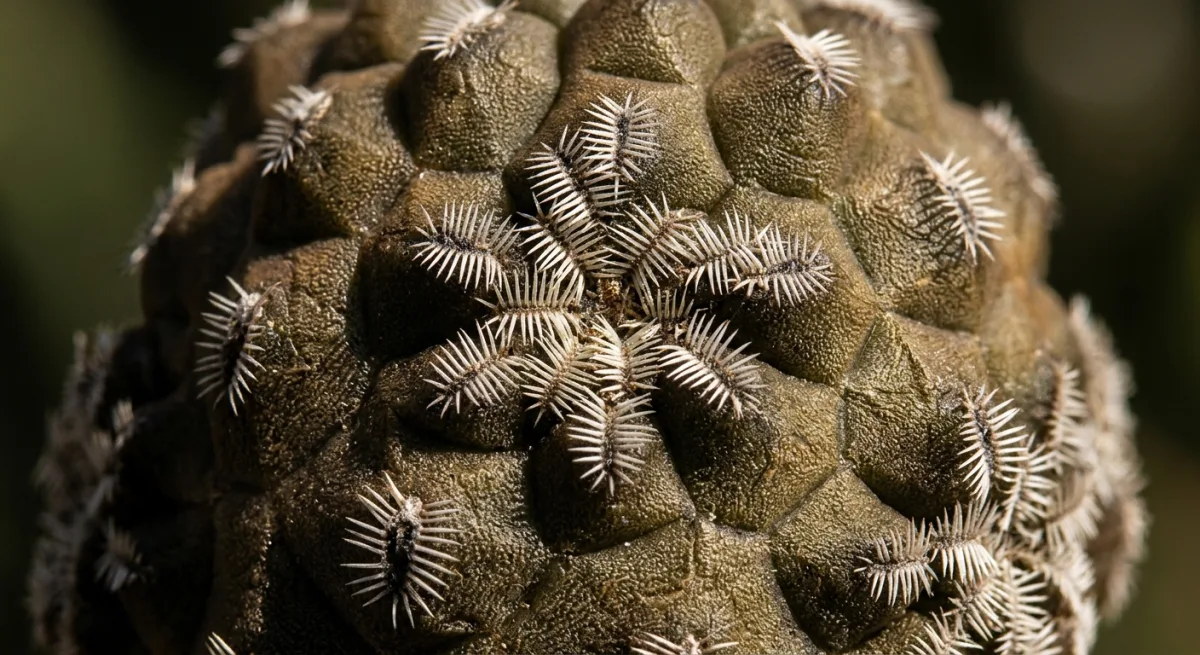
Its most fascinating biological attribute is its lifestyle as a cryptophytic or geophytic cactus. In its wild habitat, aerial segments naturally contract and retreat flush against or beneath the gravel during severe droughts. Below ground lies a massive, conical napiform taproot extending 15 to 20 cm deep and up to 10 cm across. This subterranean reservoir houses critical water and non-structural carbohydrate reserves. Above ground, the plant produces cylindrical, obconical, or truncated dome-tipped segments measuring 2 to 4 cm in length. Its spines are remarkably minimal: tiny, pectinate, soft-textured, and pressed flat against the areoles, imparting a velvety, embossed texture. In late spring, mature specimens may produce bell-shaped blossoms in muted shades of bronze, greenish-yellow, or copper.
2. Sunlight Requirements and Indoor Placement
As an alpine native accustomed to thin atmospheres and blistering UV levels, Maihueniopsis clavarioides demands full, unfiltered, and relentless sun. It simply cannot maintain its tight, sculptural habit in low-light environments.
For indoor growing, position the plant directly on the sill of your sunniest south-facing window. An unobstructed east or west exposure can suffice only if it receives long hours of direct beam sunlight clear of outdoor trees or architectural shading. In dim conditions, the characteristic 'fingers' lose their compact, flattened dome shapes, stretching into weak, pale green, pencil-thin shoots that permanently ruin the plant's natural silhouette.
From mid-spring through early autumn, moving the plant outdoors to an open, sun-drenched balcony or terrace yields stellar growth. However, beware of stagnant, unventilated glazed balconies where midsummer temperatures exceed 45°C (113°F). Andean alpines embrace radiant sun, but they fundamentally depend on continuous, cooling air movement.
3. Watering Discipline: The Rigorous 'Soak and Dry' Protocol
The most pervasive error in succulent care is delivering frequent, shallow sips of water. Watering a desert geophyte frequently is not an act of affection; it suffocates the root hairs by depleting oxygen within the substrate pores. When dealing with a species equipped with a massive underground taproot like Maihueniopsis clavarioides, improper hydration can liquefy that prized subterranean reservoir within days due to bacterial or fungal soft rot.
Always execute a strict full-cycle 'Soak and Dry' regimen:
- Active Growing Season (Spring and Early Autumn): Allow the entire soil column to dry out completely from top to bottom. Once dry, drench the pot thoroughly until water flows unhindered through the drainage holes. Promptly empty the catch tray; never allow the pot to sit in standing water for even ten minutes.
- Midsummer Dormancy: During high summer heat waves (above 35°C / 95°F), this alpine specialist enters a defensive semi-dormancy. Space out watering intervals significantly, offering just enough moisture around the pot periphery once every few weeks to keep the subterranean fine roots alive without encouraging rot.
- Winter Rest (November through March): The plant requires a cold (5°C to 10°C / 41°F to 50°F) and completely dry wintering period. Throughout winter, the substrate must remain bone dry. A single drop of water in cold soil will trigger fungal root pathogens. The segments will shrink and wrinkle slightly—this is an entirely natural desiccation defense. Do not panic, and do not water!
4. Substrate Composition and Pot Selection
The root system of this mountain geophyte cannot survive in peat-heavy commercial potting soils. Organic substrates hold moisture for days, depriving the thick primary root of the oxygen necessary for cellular respiration. You must provide a highly porous, rapid-draining, largely inorganic alpine substrate.
Coarse pumice, crushed volcanic scoria, zeolite, and sharp quartz grit form the foundation of this recipe. Pot geometry and material are equally critical: choose deep, cylindrical containers over shallow succulent bowls to accommodate the carrot-shaped taproot. Avoid plastic pots, which trap moisture; unglazed, breathable terracotta is the gold standard.
| Component | Ratio (%) | Grain Size | Horticultural Function & Benefit |
|---|---|---|---|
| Coarse Pumice | 40% | 3 - 6 mm | Ensures macro-porosity and delivers continuous oxygen to root tissue. |
| Volcanic Scoria (Lava Rock) | 25% | 2 - 4 mm | Releases trace minerals and accelerates gravity-driven drainage. |
| Zeolite (Clinoptilolite) | 15% | 2 - 5 mm | Elevates cation-exchange capacity and suppresses fungal pathogens. |
| Coarse Quartz Grit / River Sand | 10% | 1 - 3 mm | Stabilizes the substrate matrix against compaction and silt settlement. |
| Sterile Low-Peat Cactus Humus | 10% | Fine sifted | Provides the absolute minimum organic anchor for micronutrient uptake. |
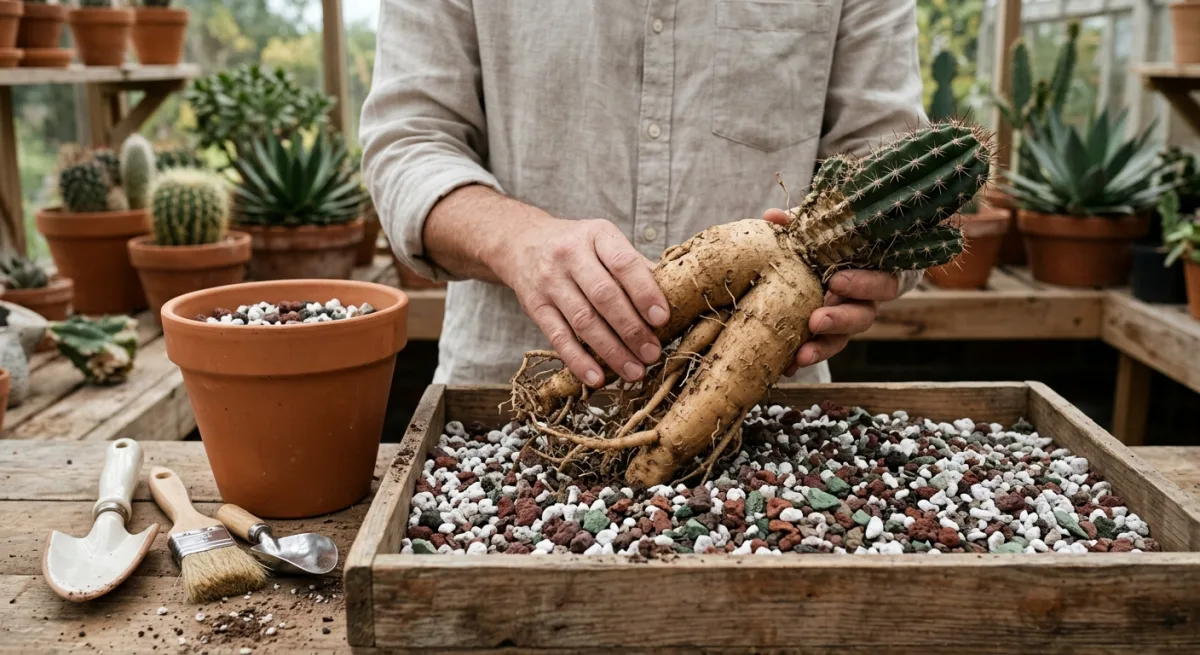
Place a 2 cm layer of coarse volcanic gravel across the bottom of the pot to prevent drainage hole blockages. After potting, top-dress the substrate with a 1 cm layer of pure pumice or crushed granite grit to ensure the delicate collar—where stem segments join the underground root—never sits directly against damp soil.
5. Step-by-Step Propagation Techniques
Maihueniopsis clavarioides can be propagated via two primary methods: Segment (Stem) Cuttings and Seed Germination. For home collectors, stem cuttings represent the most practical and reliable route.
- Select the Ideal Window: Propagate during late spring (May to June), when the plant's hormonal balance and metabolic rate are at their seasonal peak.
- Detach the Segment Carefully: Using a sterilized, razor-sharp scalpel—or by applying a gentle, twisting motion with gloved fingers—separate a mature, plump segment at its narrow articulation point. Avoid tearing the epidermal tissues; aim for a clean, minimal wound.
- Callus Development: Never insert fresh cuttings into damp potting mix! Place the detached segment in a warm, dry, shaded, and well-ventilated spot for 7 to 14 days, allowing the severed junction to form a firm, leathery, whitish callus.
- Plant in Dry Medium: Insert the callused segment into a completely dry mix of pure pumice and perlite, anchoring its base no more than 0.5 cm deep. Do not apply water.
- Patient Rooting: Keep the cutting in bright, indirect light away from direct midday sun. After 2 to 3 weeks, when tiny adventitious root tips begin to emerge at the base, begin light surface misting. Developing a substantial taproot will take several seasons of dedicated care.
6. Common Pests, Diseases, and Troubleshooting
While physically rugged against environmental extremes, this alpine cactus faces two primary adversaries in cultivation: Mealybugs and Fungal Root Rot (Fusarium / Phytophthora).
- Mealybugs in Areolar Depressions: If you spot small, white, cottony tufts tucked between the segments, mealybugs have taken hold. Spot-treat individual colonies immediately using a fine cotton swab dipped in 70% isopropyl alcohol. For extensive infestations, apply a systemic soil drench formulated with acetamiprid or imidacloprid during the active growing season.
- Root Rot and Stem Softening: If segments turn yellowish, translucent, and mushy near the soil line, subterranean rot is advancing rapidly. Unpot the specimen immediately and excise all compromised, brown, or mushy tissue with a sterile blade until you reach clean, firm vascular tissue. Dust the wound generously with micronized sulfur or activated charcoal powder, and leave the plant bare-root in dry shade for 10 to 14 days before repotting into fresh, completely mineral substrate. Sound aerial segments can also be detached and rooted as salvage cuttings.
7. Seasonal Maintenance Calendar
| Season | Watering Protocol | Light & Exposure | Fertilization & Care |
|---|---|---|---|
| Spring (March - May) | Thorough soak whenever substrate is bone dry. | Full sun; introduce to open outdoor airflow. | Low-nitrogen, high-potassium cactus fertilizer (1/4 strength, once monthly). |
| Summer (June - August) | Reduced, cautious watering during extreme heat waves. | Full sun paired with exceptional cross-ventilation. | Suspend fertilization entirely; avoid root scorch during dormancy. |
| Autumn (September - October) | Gradually taper off watering intervals. | Full sun; crisp day-night temperature swings intensify bronze tones. | Cease all watering completely by late October. |
| Winter (November - February) | ZERO WATER (Keep completely dry). | Maximum available light; cold dormancy room (5°C to 10°C). | Rest period. Do not warm the plant; cold rest is essential for future flowering. |
Dead Man's Fingers is a botanical treasure that firmly penalizes impatience while rewarding rhythmic, restrained cultivation with an extraordinary sculptural presence. By honoring its Andean heritage with intense light, crisp alpine air, and a ruggedly mineral substrate, you will enjoy a resilient, living artifact capable of thriving for generations.


Reader Reviews & Comments 3 Reviews
Clara Sterling
Julian Vance
Marcus Thorne
Leave a Review & Rating
Share your plant care tips, experiences, or questions with our succulent community.