






When ascending the windswept, desolate, and gravel-strewn high peaks of North America's Sierra Nevada and Cascade ranges, silvery rosettes tucked tightly into sheer rock fissures immediately catch the eye. Known botanically as Anelsonia eurycarpa and affectionately called 'Daggerpod' due to its characteristic dagger-shaped seed silicles, this extraordinary alpine succulent is a true marvel of evolutionary adaptation against extreme climates. In a horticultural world where succulent collectors are accustomed to arid lowland desert species, Daggerpod brings the breathtaking resilience of alpine summits—where freezing winds meet fierce, unfiltered ultraviolet radiation—straight into our curated rock gardens and alpine houses.
Forming miniature, tightly clustered rosettes clothed in a velvety blanket of stellate trichomes, this plant has evolved an exceptionally massive subterranean taproot system engineered to survive extended montane droughts. For passionate succulent enthusiasts, cultivating this species goes far beyond everyday potted plant care; it is a deeply rewarding horticultural art form dedicated to recreating the fragile, windswept balance of a subalpine scree slope within your own living space.
1. Botanical Profile and Morphological Adaptations
Anelsonia eurycarpa is classified as a monotypic genus within the Brassicaceae (mustard) family. Thanks to its thickened succulent foliage and pronounced, moisture-storing caudiciform taproot mechanism, it has earned legendary status among specialist succulent and alpine growers. While the surface rosettes rarely exceed 5 to 10 cm (2 to 4 inches) in diameter, the succulent taproot beneath can plunge 30 to 40 cm (12 to 16 inches) deep into mineral bedrock searching for cool, stable subterranean moisture.
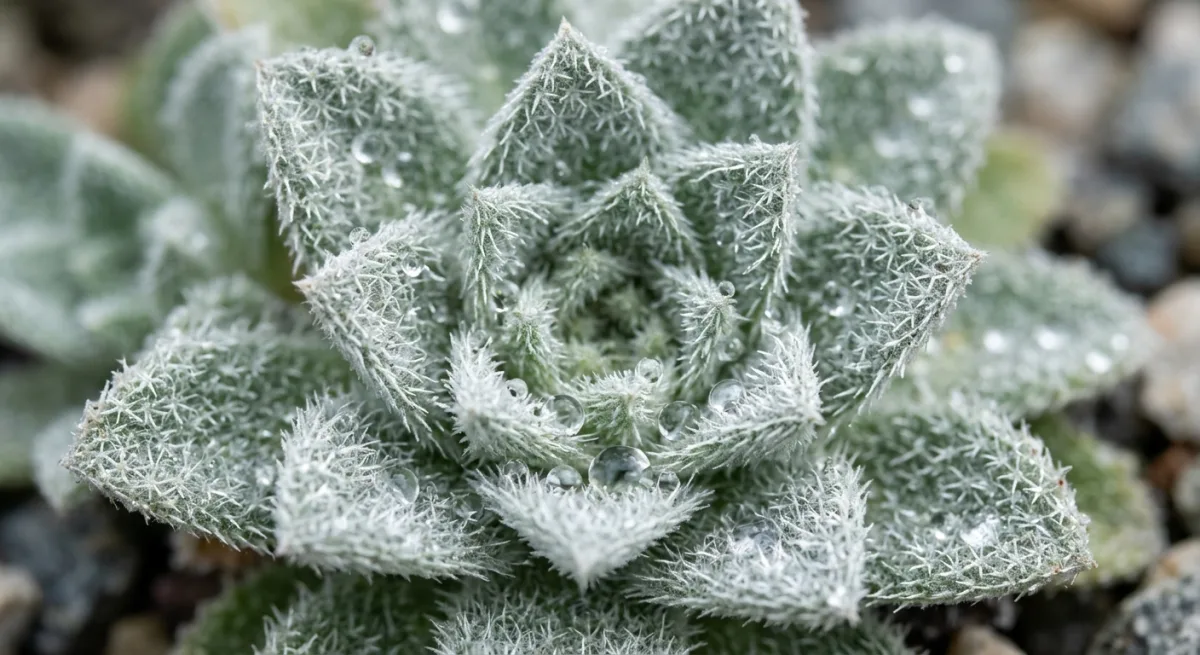
The spatulate leaves are arranged in dense spirals and blanketed by thick silvery-gray hairs. These trichomes are far from merely decorative; they serve as a microscopic physical shield reflecting intense high-altitude UV radiation while creating a still boundary layer of air that drastically cuts transpiration (water loss). Blooming from late spring into early summer, the four-petaled flowers display pristine shades of white, soft cream, and occasionally delicate lilac. Following successful pollination, the plant develops the swollen, cartilaginous, dagger- or lance-shaped pods (silicles) that give the species its memorable common name. As these pods mature and dry, they take on an exquisite, parchment-like texture designed to split open and scatter seeds on alpine gusts.
2. Light Requirements and Indoor Positioning
In its native habitat, perched above the alpine tree line on barren, windswept ridges, Anelsonia eurycarpa basks in intense, crystal-clear solar radiation. This high photon flux density is non-negotiable for maintaining photosynthetic efficiency and a dense, compact rosette morphology. Deprived of sufficient light, the plant quickly undergoes etiolation—stretching out unnaturally, loosening its tight rosette structure, and trading its signature silver sheen for a dull, sickly green.
If you cultivate this alpine gem indoors, an unobstructed southern exposure right on the windowsill is essential. It requires a minimum of 6 to 8 hours of unfiltered sunlight every single day. Throughout winter or in regions prone to persistent cloud cover, supplement natural daylight with full-spectrum LED grow lights operating on a 12-to-14-hour daily cycle. Constant, gentle air circulation is just as crucial as radiant light; stagnant, humid, and warm room conditions quickly compromise the vigor of this cold-adapted alpine.
3. Watering Discipline: The 'Soak and Dry' Protocol
The number-one cause of failure when cultivating Daggerpod is overzealous watering. With alpine succulents, frequent watering is never an expression of care; it is an unwitting sentence of suffocation for delicate root hairs. The thick taproot of Anelsonia evolved to lock away moisture for weeks at a time; if the root collar remains continuously wet, rapid cellular breakdown and irreversible black rot will set in within days.
Follow a rigorous watering discipline: never apply moisture until the substrate mix has dried out completely down to the very base of the pot. When it is time to hydrate, sub-irrigation (bottom watering by letting the pot sit in a shallow saucer of water) is the safest approach. Keep water strictly away from the crown and leaf axils. Always ensure excess water drains freely through the drainage holes, and discard any residual water from the saucer within 15 minutes.
4. Ideal Soil Substrate and Container Architecture
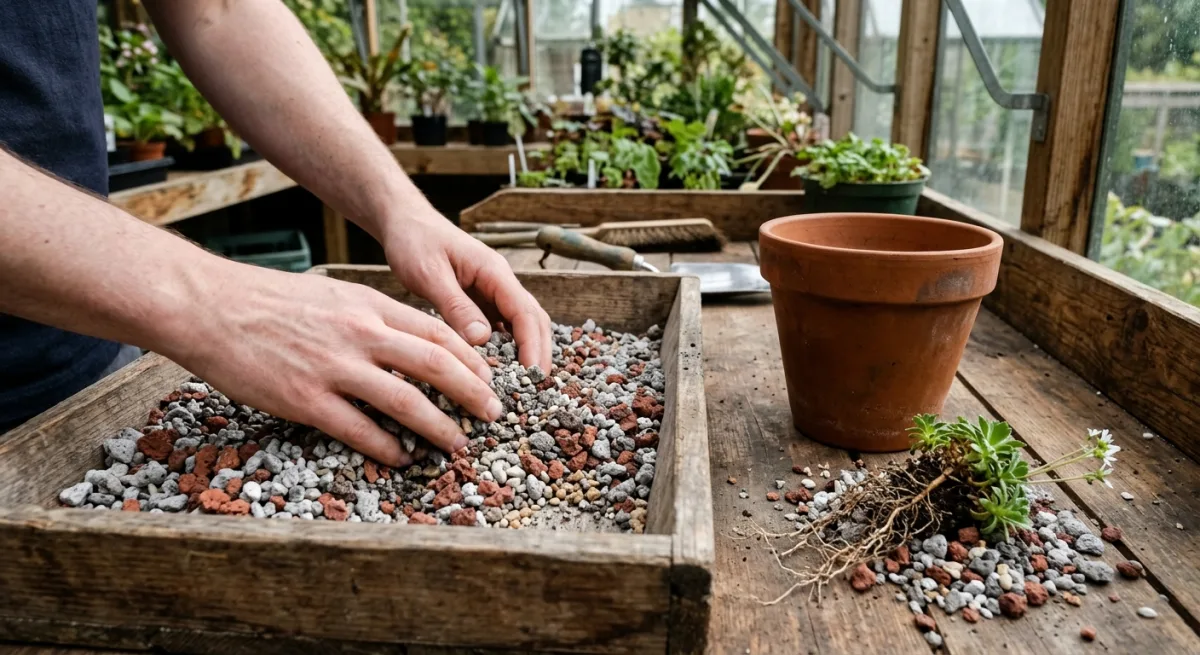
Standard peat-based potting soils or generic commercial succulent mixes are fatal for Anelsonia eurycarpa. This species demands an authentic alpine scree substrate—a gritty, fast-draining, almost purely mineral and volcanic medium that holds virtually no perched water and guarantees maximum gas exchange around the root zone.
Container choice is equally vital: prioritize depth over width. To accommodate the extensive vertical taproot without bending or circling, use a deep 'Long Tom' style unglazed terracotta pot. The porous ceramic walls allow moisture to evaporate laterally through the sides, keeping the delicate subterranean root zone cool and aerated, precisely mirroring mountain scree crevices.
| Substrate Component | Ratio (%) | Horticultural Function & Botanical Benefit |
|---|---|---|
| Pumice (2–4 mm) | 35% | Superior micro-porosity, high air porosity, and root oxygenation. |
| Lava Grit / Zeolite (3–5 mm) | 30% | Structural durability, rapid water evacuation, and cation exchange capacity. |
| Coarse Granite Grit / Quartz Sand | 20% | Replicates natural scree texture while keeping drainage micro-channels open. |
| Aged Leaf Mold / Fibrous Peat | 15% | Minimal organic buffer providing gentle micronutrient exchange. |
Finally, dress the soil surface with a 1 to 2 cm (0.5 to 0.75 inch) layer of coarse pumice or granite gravel top dressing. This top layer keeps the sensitive root collar elevated above damp soil, virtually eliminating collar rot.
5. Step-by-Step Propagation Techniques
Anelsonia eurycarpa cannot be propagated via leaf cuttings; severed leaves will not produce callus tissue or regenerate adventitious roots, even with rooting hormones. Propagation relies on two reliable methods: Germination from Seed and Careful Division of Mature Multi-Crown Clusters.
- Cold Stratification: In nature, seeds overwinter beneath a thick blanket of snow. To break physiological embryo dormancy, place seeds in moist, sterile perlite inside the refrigerator at 2°C to 4°C (35°F to 39°F) for 6 to 8 weeks.
- Seedbed Preparation: Prepare an ultra-mineral seed tray composed predominantly of fine pumice, zeolite, and a pinch of sieved sand. Scatter the cold-treated seeds across the surface and dust them with a razor-thin layer (1–2 mm) of finely crushed granite.
- Germination Conditions: Hydrate the tray from below and place it in a bright spot maintained at cool temperatures between 15°C and 18°C (59°F to 64°F). Avoid warm conditions; temperatures exceeding 22°C (72°F) can induce secondary dormancy in alpine seeds.
- Seedling Care: Germination typically occurs within 2 to 4 weeks. Once the first true leaves unfold, gradually increase ventilation and reduce moisture frequency to prevent damping-off.
6. Common Pests, Diseases, and Preventive Treatments
Hardened by millions of years of subalpine evolution, Daggerpod possesses remarkable natural resistance when grown in proper conditions; however, indoor cultivation can introduce specific vulnerabilities:
- Crown and Taproot Rot (Rhizoctonia & Phytophthora): Triggered by excessive moisture or compacted, non-porous soils. The base of the rosette softens, turning translucent and brown. Rescue is challenging; excise all decayed tissue with a sterilized scalpel, dust the clean wound generously with micronized sulfur, and repot into pure, bone-dry pumice.
- Mealybugs (Pseudococcidae): These sap-suckers conceal themselves deep within tightly packed leaf bases and around the upper taproot collar. Remove individual colonies manually using a fine artist's brush dipped in 70% isopropyl alcohol. For extensive infestations, apply an organic systemic drench suitable for alpine succulents.
- Spider Mites: Thriving in hot, dry, stagnant indoor rooms, these microscopic pests turn the luminous silver foliage a dusty, mottled yellow. Boosting air circulation around the plant and keeping ambient room temperatures moderately cool are your best lines of defense.
7. Seasonal Care Calendar and Horticultural Wisdom
To keep your Daggerpod thriving year after year, align your care regimen with its natural biological cycle:
- Spring (Awakening & Flowering): In late March, as daylight lengthens, resume careful bottom watering. Once the first flower buds emerge, apply a single feeding of low-nitrogen, high-potassium succulent fertilizer diluted to quarter-strength.
- Summer (Semi-Dormancy & Heat Management): When summer temperatures exceed 32°C (90°F), the plant enters metabolic semi-dormancy to conserve internal reserves. Provide sheer solar filtration during blistering midday hours, and restrict any supplemental watering to cool twilight evenings.
- Autumn (Tissue Hardening): Discontinue all fertilizing completely. Crisp autumn day-to-night temperature fluctuations stimulate trichome density, intensifying the brilliant silver foliage while preparing tissues for winter cold.
- Winter (Deep Alpine Rest): Relocate the plant to a cool, luminous winter garden or an unheated, bright sunroom maintained between 5°C and 10°C (41°F to 50°F). Keep watering near zero.


Reader Reviews & Comments 4 Reviews
Julian Vance
Marcus Sterling
Eleanor Brooks
Hannah Wright
Leave a Review & Rating
Share your plant care tips, experiences, or questions with our succulent community.