






Picture a windswept, high-altitude sanctuary perched above 3,000 meters in the rugged terrains of Bolivia and Argentina, enveloped by crisp morning mists and blazing under intense midday sun. It is in this extreme topography that Cleistocactus strausii—celebrated across the botanical world as the 'Silver Torch'—and its closely allied kin have donned what can only be described as a suit of shimmering silver armor. The dense mantle of fine, silky white spines embracing its columnar stem is far more than a decorative spectacle; it is a masterfully engineered natural shield against blistering high-altitude ultraviolet radiation and freezing nighttime temperatures.
It is no wonder that so many succulent and cactus aficionados dream of hosting these magnificent columns in their living rooms or sunlit balconies. Yet, if you fail to replicate the stony, aerated microclimate of their native habitats indoors, those luminous columns inevitably stretch, fade into a dull green, and succumb to subterranean root rot. Cultivating Cleistocactus requires grasping the uncompromising logic of high-desert survival and forging a bond with the plant at the root-cellular level.
If you aspire to see a stately columnar specimen standing tall on your windowsill, gleaming beneath the morning sun and erupting with ruby-red tubular flowers from its ribs during the summer months, settle in with a warm cup of coffee and delve into the botanical depths of this authoritative guide.
1. Taxonomic Identity, Areole Architecture, and Spine Morphology
The genus Cleistocactus belongs to the subfamily Cactoideae within the botanical family Cactaceae, encompassing a distinct group of slender, erect-to-scandent columnar cacti. The generic name derives from the Greek word kleistos, meaning 'closed'—a direct allusion to the peculiar nature of its blossoms, which never fully splay open. Instead, they remain narrow, cylindrical tubes with just enough of an aperture to accommodate the delicate beaks of hummingbirds, their primary evolutionary pollinators. Alongside the premier species, Cleistocactus strausii, the gracefully pendulous Cleistocactus winteri (commonly known as the Golden Rat Tail) stands as an enduring favorite among serious collectors.
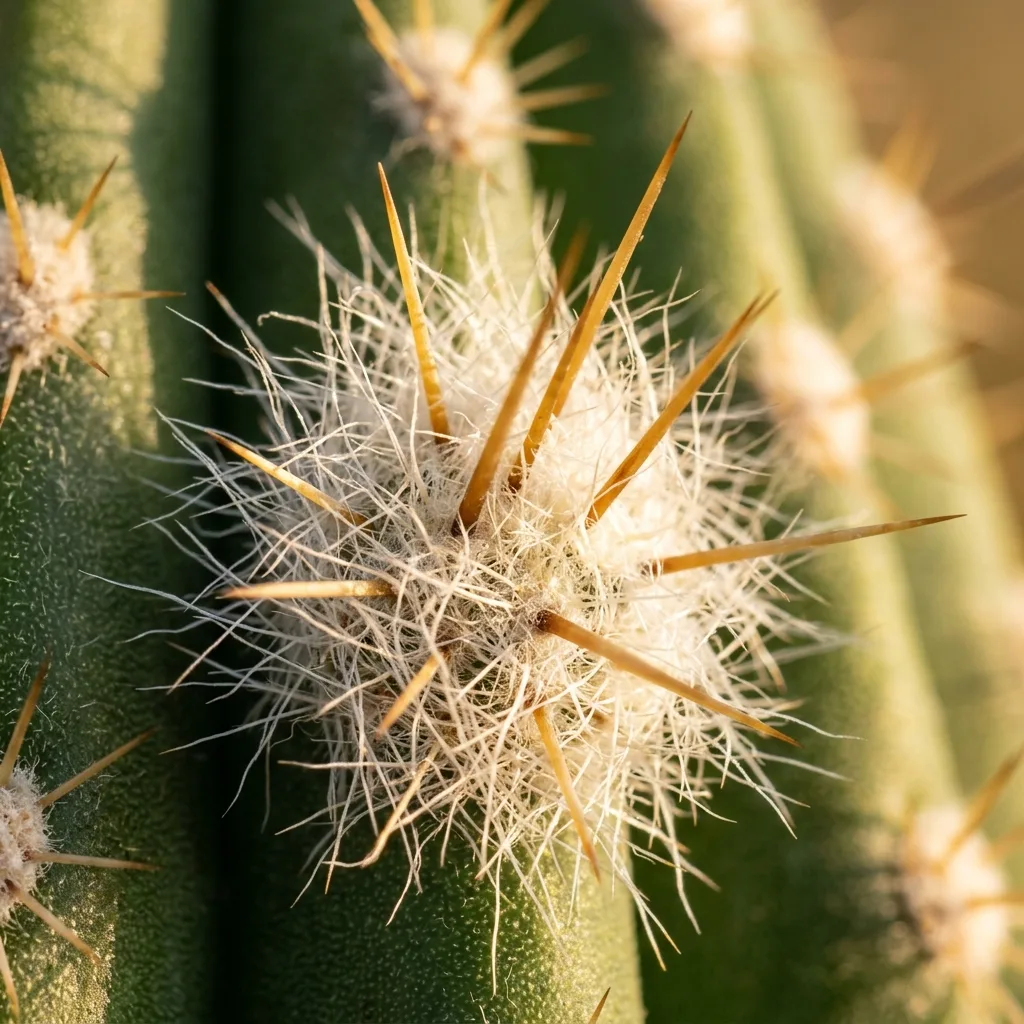
The morphological wonder of Cleistocactus lies predominantly within its areoles. Evenly spaced along the stem's numerous vertical ribs, each areole produces a dense bristling array of 20 to 30 fine, chalk-white radial spines, accentuated by up to 4 stouter, pale yellow to amber central spines. This dense fibrous weave acts as a living parasol, shading the photosynthetic epidermal tissue directly beneath from photochemical solar scorch while simultaneously creating a microscopic boundary layer of still air that significantly curbs transpirational moisture loss.
2. Light Requirements, Solar Intensity, and Ventilation Dynamics
When it comes to light, Cleistocactus is entirely uncompromising. Performing their carbon assimilation via Crassulacean Acid Metabolism (CAM), these desert denizens keep their stomata sealed tightly throughout the sweltering daytime hours to retain vital cellular hydration, opening them exclusively during the cool of night to fix carbon dioxide. High-intensity, unfiltered natural light serves as the critical biochemical trigger required to sustain dense cellular rib tissue and produce that trademark, snow-white spine density.
Specimens subjected to suboptimal light conditions promptly suffer from etiolation: the stem narrows into a weak, tapered point, spine production becomes sparse, and the silver sheen yields to an anemic, watery green. Position your plant where it will bask in at least 6 hours of direct, unfiltered sunlight daily—ideally behind an unobstructed south- or west-facing window, or better yet, in a well-ventilated outdoor courtyard or terrace. Stagnant indoor air is an open invitation for red spider mite infestations; maintaining brisk ambient airflow is every bit as essential as providing bright sunshine.
3. Watering Cycles and the Critical Winter Dormancy Regime
The most fatal pitfall in columnar cactus care is tethering your watering routine to a rigid calendar schedule. Subscribing to an unyielding 'water once a week' doctrine is the quickest way to dissolve a Cleistocactus from its root collar upward. The golden rule for Cleistocactus hydration is: Soak deeply, dry completely to the cellular core. Saturate the pot until water streams freely from the drainage holes, and then do not apply a single droplet until the potting medium has dried out thoroughly from surface to base.
From late autumn until the early warmth of spring (roughly November through March), your Cleistocactus must enter an uninterrupted period of cool winter dormancy. Without this physiological rest, floral bud differentiation will not occur, and the plant will refuse to bloom. This crucial resting phase is governed by two foundational pillars:
- Temperature Reduction: Relocate the plant to a bright, frost-free, cool space maintained consistently between 5°C and 10°C (41°F–50°F)—such as an unheated sunroom, enclosed glazed balcony, or cool greenhouse.
- Water Withholding: Cold cactus root xylem vessels cannot actively absorb and translocate water. During dormancy, irrigation must be virtually suspended. To prevent fine feeder root hairs from withering entirely, provide just two to three tablespoons of water around the inner rim of the pot every 5 to 6 weeks, wetting only the peripheral substrate.
4. High-Mineral Substrate Formulations and Container Physics
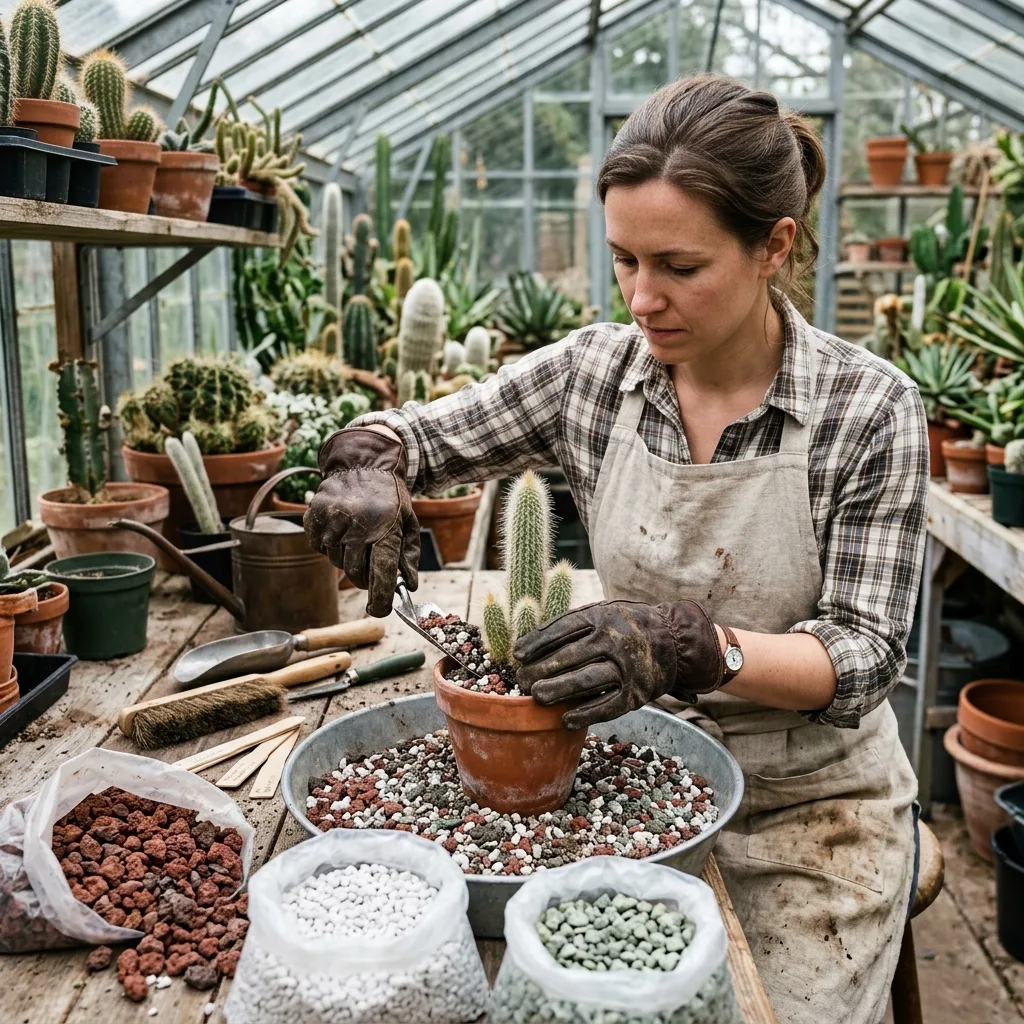
Standard peat-based potting soils and supermarket mixes are veritable death traps for Cleistocactus. In the wild, these plants anchor themselves amidst fractured granite, weathered andesite, and coarse mountain sands where water drains away within seconds. For the root network to breathe and avoid hypoxic stress, the substrate must boast exceptionally high aeration porosity and rapid percolation rates.
When choosing a container, prioritize unglazed, breathable terracotta. The porous walls of earthenware pots wick moisture outward from the root zone, evaporating surplus dampness and halving the risk of fungal root rot. Ensure your chosen container features generous drainage holes and favors lateral stability—providing a wide, heavy base that counterbalances the tall, top-heavy silhouette of the column without excessive vertical depth.
| Substrate Component | Percentage | Horticultural Function and Botanical Benefit |
|---|---|---|
| Pumice (3–6 mm) | 35% | Exceptional porosity, internal capillary drainage, and structural aeration |
| Lava Rock / Zeolite | 25% | Root anchorage, slow-release microelements, and cation exchange capacity |
| Coarse Quartz River Sand | 15% | Prevents substrate compaction and accelerates gravitational drainage |
| Sterile Fibrous Blonde Peat / Leaf Compost | 20% | Provides baseline organic fraction and controlled micronutrient holding capacity |
| Crushed Horticultural Charcoal | 5% | Natural antifungal barrier, pathogen suppression, and substrate sweetening |
5. Flowering Induction and Fertilizer Protocols
Once a Cleistocactus achieves physiological maturity—typically when individual columns reach a height of roughly 40 to 50 cm (16–20 inches)—it will begin pushing out striking, horizontal-to-suberect, ruby-red or burnt-carmine tubular flowers along its ribs from late spring through mid-summer. The absolute prerequisite for unlocking this floral display is satisfying the winter chilling and resting requirements detailed above.
During active vegetative growth (April through August), incorporate a low-nitrogen, high-potassium and phosphorus fertilizer formulation (such as an NPK 5-10-15 or a specialized cactus fertilizer with chelated trace minerals) at half the manufacturer's recommended strength into your monthly watering routine. Avoid high-nitrogen fertilizers at all costs; excessive nitrogen forces unnatural epidermal expansion, leading to unsightly stretch marks, soft watery tissue, and structural collapse instead of robust floral buds.
6. Propagation via Stem Cuttings and Offset Division
The most straightforward and dependable method for propagating Cleistocactus is via basal offsets or stem cuttings taken at the beginning of the active growing season:
- Clean Incision: Using a surgical scalpel or a sterile, razor-sharp grafting knife, sever a healthy basal offset cleanly at the narrow junction where it meets the parent column.
- Callus Formation: Never plant freshly harvested cuttings directly into the substrate. Place the cutting upright in a warm, dry, shaded spot with excellent airflow for 7 to 14 days, allowing the severed cambium to form a firm, corky callus layer.
- Dry Potting: Insert the callused cutting 2 to 3 cm deep into the bone-dry, high-mineral substrate mix outlined above, staking it gently if balance is needed.
- Moisture Management: Keep the pot completely dry for the first 10 days. From the tenth day onward, lightly mist the surface of the soil once a week to guide and stimulate new adventitious root growth downward. Vigorous root establishment typically occurs within 4 to 6 weeks.
7. Defending Against Pathogens and Pest Invasions
The preeminent threat to any Silver Torch cactus is stem and root rot caused by poor soil drainage and chronic overwatering. If the base of your cactus takes on a translucent yellowish-brown tint and gives way like a sodden sponge when pressed gently, immediate intervention is non-negotiable. Unpot the plant immediately, amputate every millimeter of infected, discolored tissue using a sterile knife until you reach crisp, immaculate green flesh, allow the cut to callus thoroughly, and re-root the remaining top section as a fresh cutting.
Keep a vigilant eye on the dense spines for mealybugs (Pseudococcidae), which favor nesting deep within areole recesses, as well as two-spotted spider mites (Tetranychidae), which thrive in dry, stagnant indoor pockets. At the first sign of mealybugs, use a cotton swab soaked in 70% isopropyl alcohol to dissolve their protective waxy secretions directly on the areoles. For broader infestations, apply systemic neem extracts or an insecticidal soap formulated safely for desert succulents.



Reader Reviews & Comments 4 Reviews
Eleanor Brooks
Julian Vance
Marcus Sterling
Clara Lindqvist
Leave a Review & Rating
Share your plant care tips, experiences, or questions with our succulent community.