






Across the windswept, stone-strewn plains of Namaqualand and the Western Karoo in South Africa, shifting dunes conceal a quiet subterranean marvel. At first glance, the Silky Feather Pelargonium (Pelargonium appendiculatum) bears a poetic resemblance to domestic balcony geraniums, yet beneath its delicate crown lies an ancient geophytic succulent impeccably evolved to survive on the razor-thin margin of hyper-arid survival. Its gossamer, finely dissect foliage—shimmering with an armor of silver trichomes—and creamy, pale-yellow blossoms have rightfully crowned this species a true holy grail among succulent and caudiciform connoisseurs.
For many indoor growers encountering this gem for the very first time, its biological rhythm presents a thrilling curveball: it operates on an inverted winter-growth clock. While standard summer succulents bask in scorching July heat, Pelargonium appendiculatum drops its foliage and retreats into absolute dormancy, resting safely inside its subterranean tuberous caudex. Only when cool autumn breezes arrive does it awaken with vigorous new growth. Caring for this plant is an inspiring lesson in aligning ourselves with nature’s most fascinating seasonal rhythms.
1. Botanical Identity and Morphological Adaptations
A distinguished member of the Geraniaceae family, Pelargonium appendiculatum is endemic to the semi-desert winter-rainfall coastal sands and rocky plains of the Karoo and Namaqualand. Its botanical epithet, appendiculatum, directly references the oversized, prominent stipules ('appendages') clasped firmly along the leaf petioles. These clasping ear-like bracts provide essential protection to nascent buds and serve as a vital morphological trait for definitive taxonomic identification.
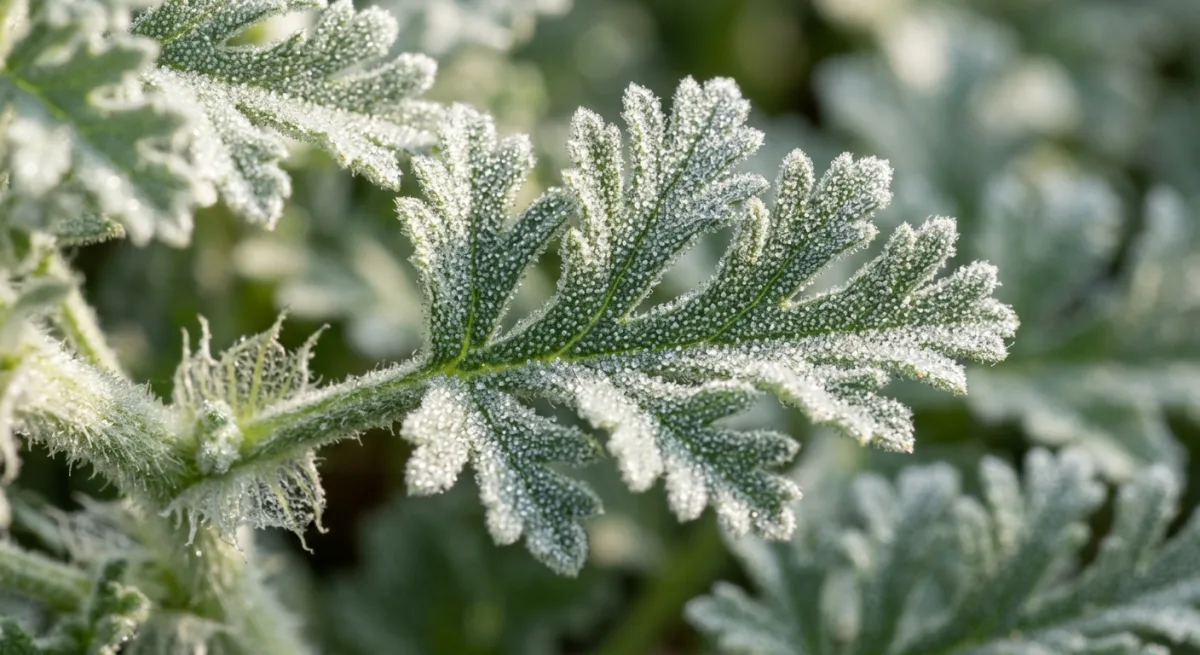
Subterraneously (or partially elevated by observant collectors), the plant anchors itself with a rugged, rough-barked, dark brown tuberous rootstock (caudex). This subterranean organ acts as a specialized reservoir, storing precious carbohydrates and water reserves through months of summer drought. In autumn, pinnatisect, feathery leaves emerge in a symmetrical basal rosette, blanketed by a dense carpet of microscopic, reflective hairs known as trichomes. These silver hairs fulfill two evolutionary imperatives: bouncing away intense desert ultraviolet radiation and condensing morning oceanic sea mists, channeling microscopic moisture droplets directly downward to the feeder root zone.
2. Light Requirements and Indoor Positioning
During its active vegetative phase across autumn and winter, Pelargonium appendiculatum demands unfiltered, direct, high-intensity sunlight. In its native Karoo dunes, it grows without shade cover; hence, inadequate light indoors triggers rapid etiolation. The petioles will stretch and weaken, the intricate rosette loosens, and the foliage surrenders its signature silvery iridescence to a dull, washed-out green.
Indoors, position your specimen on an unobstructed south- or southwest-facing windowsill that receives maximum daily sun along with ample atmospheric airflow. This plant thrives in crisp, cool air: daytime winter temperatures between 10°C and 18°C (50°F to 65°F) and brisk night drops down to 5°C to 8°C (41°F to 46°F) foster tightly stacked, intensely pubescent leaves. Keep this species far away from heating radiators, ducted vents, or stifling microclimates; excessive ambient indoor warmth in midwinter tricks the plant into premature dormancy, causing sudden and unnecessary leaf yellowing.
3. Watering Discipline: The Winter 'Soak and Dry' Protocol
Irrigation for this winter-active geophyte must strictly mirror its natural rainfall cadence. Overwatering succulents is not an act of love—it suffocates cellular roots by depriving them of oxygen. With Pelargonium appendiculatum, the rule of thumb is straightforward: provide thorough, drenching hydration when active, followed by complete drying periods.
- Active Growth Phase (October to April): Water thoroughly once the substrate has dried out approximately 80% to 90%. Always dump excess drainage runoff sitting in drip trays after 15 minutes.
- Post-Bloom Transition (May): Following flowering, the foliage naturally turns yellow and desiccates. This is a normal, healthy transition into dormancy—not an illness. Taper off watering progressively.
- Summer Dormancy (June to August): Once the leaves have fully dried, cease regular watering entirely. Store the pot in a cool, bright, dry, and well-shaded location. At most, trickle a tablespoon of water along the pot’s outer perimeter once a month strictly to prevent excessive root-hair desiccation.
- Autumn Awakening (September): As nighttime ambient temperatures drop, deliver a gentle baseline watering to stimulate waking root meristems. As soon as the first emerald feathery shoots emerge from the caudex crown, resume the winter watering routine.
4. Ideal Soil Matrix and Pot Selection
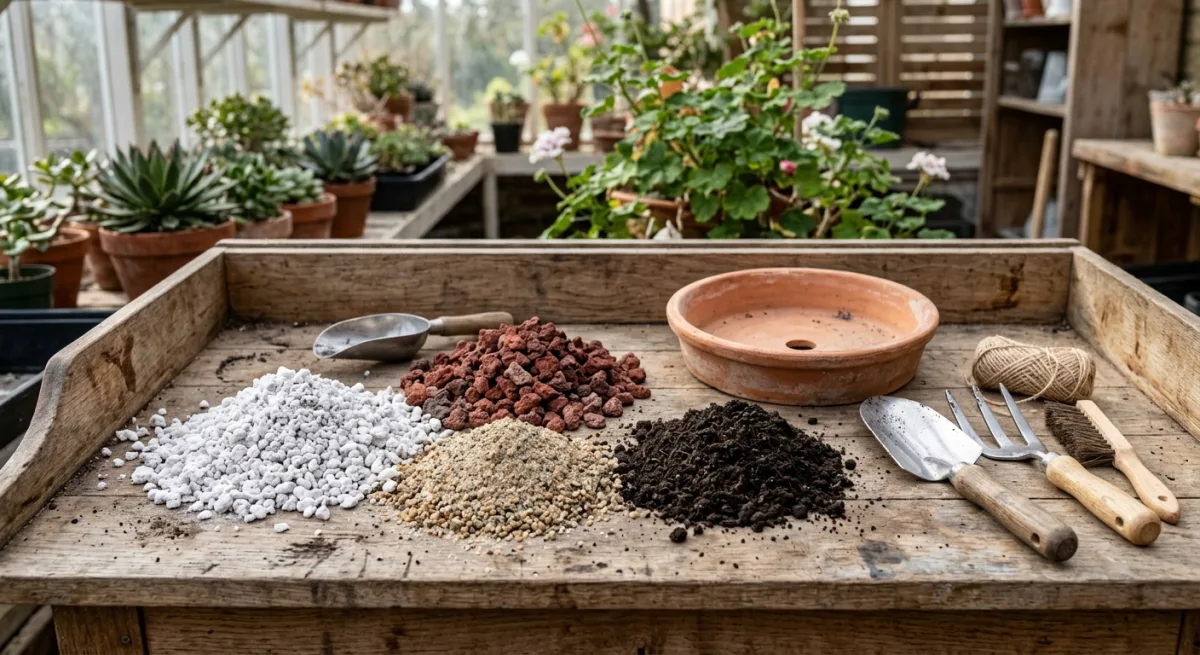
Tuberous desert pelargoniums will not tolerate soggy, compacted soil even for forty-eight hours. Their native growing medium consists of fragmented quartzite, weathered granite, and coarse mineral sands. Therefore, your custom potting mix must contain at least 70% gritty, inorganic materials to maintain pore aeration and rapid drainage.
| Substrate Component | Ratio (%) | Functional Horticultural Role |
|---|---|---|
| Horticultural Pumice (3–5 mm) | 35% | Imparts macroporosity, aerates roots, rapidly drains gravitational water |
| Crushed Lava Rock / Zeolite | 25% | Prevents compaction, delivers structural trace minerals, improves cation exchange |
| Coarse Washed River Sand / Quartz Grit | 15% | Replicates native Namaqualand dunes, guarantees uninhibited percolation |
| Unfertilized Coir (Coconut Peat) | 15% | Provides subtle moisture retention and gentle structural buffer |
| Aged Worm Castings | 10% | Supplies slow-release organic micronutrients during winter leaf flush |
Regarding containers, unglazed terracotta or breathable, high-fire ceramic pots are vastly superior to plastic. Plastic retains trapped moisture for extended periods, drastically escalating root-rot hazards. Choose deep, conical pots rather than wide, shallow bonsai trays to allow the vertical taproot and tuber to plunge naturally downward. When potting, leave the upper third of the tuber slightly proud of the soil line to keep the crown dry, and topdress generously with coarse pumice or granite chips to shield the neck from damp soil contact.
5. Step-by-Step Propagation Techniques
Propagating Pelargonium appendiculatum requires horticultural patience, but cultivating this rare geophyte from scratch is an immensely satisfying triumph. Two reliable methods exist:
Propagation from Seed (The Golden Standard)
- Timing: Sow seeds in early autumn when crisp day-to-night temperature fluctuations mimic Karoo rainfall triggers.
- Seed Preparation: Pelargonium seeds possess a corkscrew, feathered awn (arista). Lightly abrade the firm outer seed coat using ultra-fine sandpaper (scarification) to enhance water imbibition.
- Sowing: Lay seeds horizontally across a moistened mineral bed consisting of 80% pumice and sand. Cover lightly with a 2–3 mm layer of sifted quartz grit.
- Environment: Keep the substrate evenly moist but never sodden at temperatures around 15°C to 18°C (59°F to 64°F) under bright, indirect light. Germination generally occurs within 14 to 30 days.
Tuber Division (Advanced Cultivators)
Mature, multi-crowned specimens can be carefully divided toward the end of summer dormancy (late August) during repotting. Gently tease apart secondary offset tubers that have formed independent root systems and defined vegetative eyes using a sterilized scalpel. Dust cut surfaces with sulfur or activated charcoal, allow the wounds to callus in a dry, shaded area for 4 to 5 days, and pot into completely dry mineral mix.
6. Common Pests, Pathogens, and Troubleshooting
While remarkably resilient against pests, this desert geophyte easily falls prey to overzealous care. Watch for these common issues:
- Tuber and Root Rot (Fusarium / Pythium): Manifests as sudden, translucent yellowing of leaves combined with a soft, spongy tuber. Immediately unpot the plant, excise every trace of blackened tissue with a sterile blade, treat wounds with copper fungicide, and air-dry thoroughly before repotting into fresh pumice.
- Red Spider Mites: Thrive in hot, overly dry indoor winter rooms, spinning micro-webs under leaves and creating fine yellow stippling. Apply cold-pressed neem oil or horticultural potassium salts during cool, overcast hours.
- Mealybugs: Often nestle deeply within the protective leaf stipules (appendages) at the base of the stems. Spot-treat using a cotton swab dipped in 70% isopropyl alcohol, or deploy systemic insecticides for severe outbreaks.
- Etiolation: Weak, elongated, pale green petioles indicate chronic light deficiency. Move the specimen immediately to your brightest southern exposure or install high-CRI full-spectrum LED horticultural lights.
7. Seasonal Care Calendar & Master Guidelines
Cultivating Pelargonium appendiculatum successfully relies on respecting its internal seasonal compass:
- Autumn (September – November): Vegetative awakening. The first feathery crowns break through the caudex. Establish regular soak-and-dry watering. Feed monthly with a balanced, low-nitrogen, high-potassium succulent fertilizer diluted to quarter-strength.
- Winter (December – February): Golden growing season. Maximum sunlight, brisk temperatures, and steady air circulation keep leaf rosettes compact and shimmering.
- Spring (March – May): Inflorescence season. Graceful stalks yield delicate cream to pale-yellow flowers. Hand-pollinate using a soft artist's brush to obtain viable seeds. Cut back watering as leaves start to senesce in late spring.
- Summer (June – August): Absolute dormancy. Leaves will completely dry up. Shelter the container on a cool, shaded shelf entirely sheltered from summer rains and hot overhead sun.


Reader Reviews & Comments 3 Reviews
Julian Vance
Clara Higgins
Marcus Sterling
Leave a Review & Rating
Share your plant care tips, experiences, or questions with our succulent community.