






From the sun-scorched ravines of Oaxaca, Mexico, to the arid Karoo plateaus of South Africa, succulents and cacti have adapted to extreme drought through extraordinary cellular intelligence. Yet, when we welcome these architectural wonders into our living rooms and sunny windowsills, the common query of 'how to store and preserve cacti and succulents' does not mean stashing them away in a dark cupboard. Rather, it centers on how to preserve their delicate cellular water equilibrium, protect their root biology, and maintain their compact, sculptural forms over decades. Showering desert plants like the beloved Soil and Root Aeration Guide">Jade Plant (Crassula ovata) Care Guide: The Art of Growing, Pruning, and Propagating the Money Tree">Jade Plant (Crassula ovata) or Zebra Haworthia with frequent watering is not an act of love; it inadvertently asphyxiates their root systems.
The secret to keeping cacti and succulents in peak condition—both during vigorous summer growth and cool winter dormancy—lies in subterranean oxygen exchange. When a potting medium lacks sufficient air pores, xerophytic plants reliant on Crassulacean Acid Metabolism (CAM) photosynthesis quickly succumb to anaerobic rot starting at the hair-like feeder roots. In this master horticultural guide, we examine the substrate chemistry, mineral grain sizes, pot dynamics, and repotting protocols necessary to keep your botanical collection preserved in pristine health for a lifetime.
1. Comparative Analysis of Inorganic Mineral Aggregates
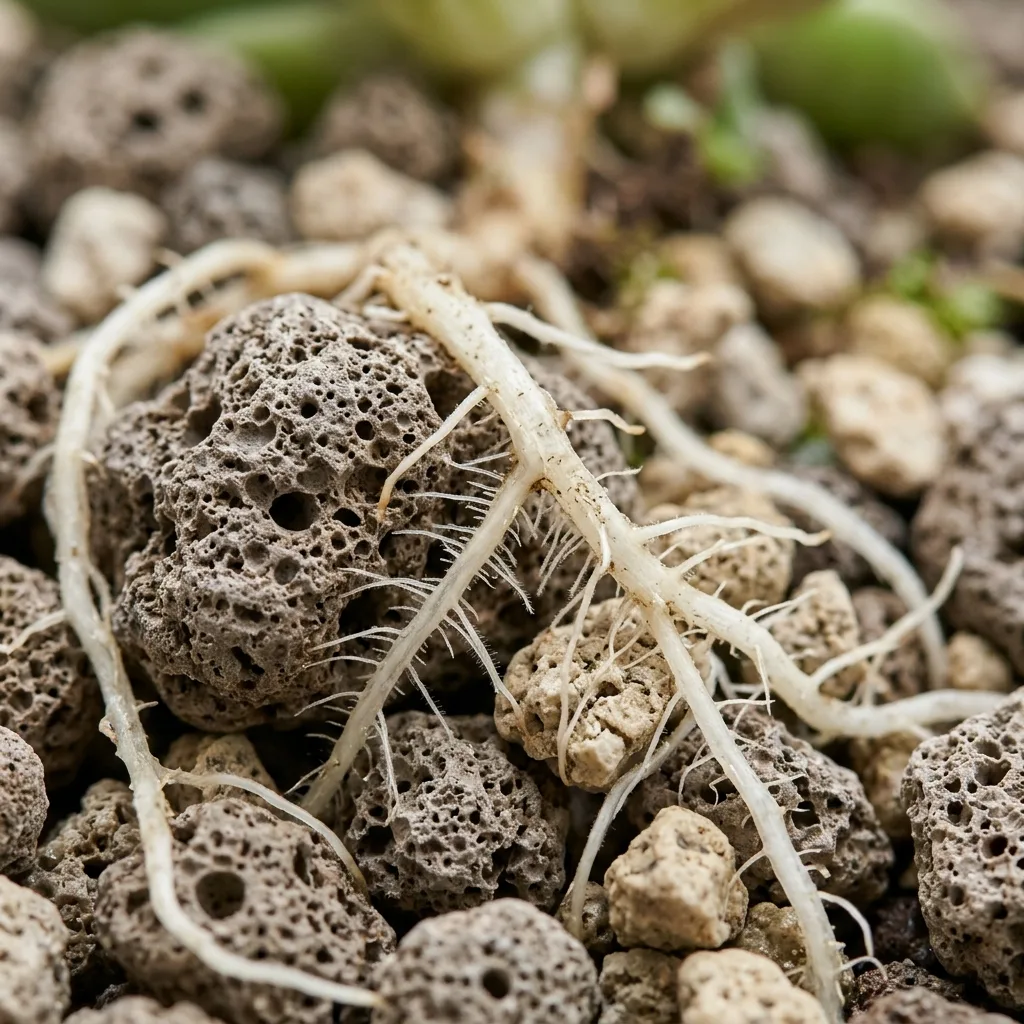
The golden rule for preserving succulents and desert cacti over the long haul is to dedicate at least 50% to 80% of your total pot volume to porous inorganic aggregates. Standard peat-heavy potting soils collapse and compact upon hydration, creating an anoxic, airless barrier around the root zone. In contrast, the delicate root hairs of desert and cliff-dwelling species evolved to weave through free air pockets within rocky fissures.
Essential inorganic components for your custom gritty blend include:
- Pumice: Screened to a 2–5 mm grain size, horticultural pumice features microscopic open pores that drain excess gravitational water instantly while holding essential oxygen reserves. It promotes continuous air circulation, warding off opportunistic subterranean fungi.
- Lava Rock (Volcanic Scoria): Packed with iron and trace minerals, crushed volcanic rock provides structural weight to anchor top-heavy specimens such as barrel cacti or mature Echeveria, all while resisting waterlogging.
- Zeolite (Clinoptilolite): Boasting an exceptional Cation Exchange Capacity (CEC), zeolite acts as a mineral vault, sequestering vital nutrient ions and slowly releasing them upon demand while neutralizing toxic ammonium buildup.
- Perlite: While lightweight and aerating, perlite floats to the surface over repeated waterings and pulverizes over time. Coarse horticultural pumice remains the superior, durable choice for long-term succulent preservation.
2. Balancing the Organic Matrix: Peat, Coco Coir, and Compost
In container culture, organic material should never act as a waterlogged sponge; rather, it should serve as a structural matrix allowing roots to anchor and access trace biological nutrients. However, an overabundance of organic matter in indoor environments invites fungal pathogens such as Pythium and Phytophthora, leading to rapid stem collapse.
Standard decomposed black peat degrades into a hydrophobic brick once thoroughly dried, forcing irrigation water to channel uselessly down the interior pot walls. Instead, select high-grade, fibrous blonde Sphagnum peat moss with stable pH dynamics, or washed, buffered coco coir. Heavy garden soil, bagged yard compost, and animal manures are far too nitrogen-dense for succulents; they trigger rapid, etiolated (spindly) growth with fragile cell walls, leaving the plant defenseless against mealybugs and mites.
3. Tailored Soil Mix Formulations by Climate and Genus
Every succulent group evolved under distinct precipitation patterns and geologic substrates. If you cultivate plants in a humid, temperate coastal climate, elevate the inorganic mineral ratio; if you grow under dry, scorching indoor heat or arid continental conditions, slightly increase the moisture-retentive organic matrix.
| Plant Group | Inorganic Aggregates (Pumice, Lava, Zeolite) | Organic Matrix (Fibrous Peat / Coco Coir) | Target Particle Size | Ideal Drainage Speed |
|---|---|---|---|---|
| Desert Cacti (Mammillaria, Ferocactus) | 80% - 85% | 15% - 20% | 3–6 mm | Instant (5–10 seconds) |
| Living Stones (Lithops, Conophytum) | 90% - 95% | 5% - 10% | 2–4 mm | Near-Instant (<5 seconds) |
| Haworthia & Gasteria Species | 70% | 30% (Coarse fiber) | 3–5 mm | Rapid (10–15 seconds) |
| Echeveria, Sedum, Crassula (Jade Plant) | 60% - 65% | 35% - 40% | 2–5 mm | Balanced (15–20 seconds) |
4. Pot Material Selection: Terracotta, Unglazed Ceramic, and Plastic
Successfully preserving a succulent relies on the dynamic synergy between your substrate mix and container walls. An improper pot can transform the most meticulously calibrated soil blend into a stagnant, oxygen-depleted bog.
- Unglazed Terracotta: Because of its micro-porous baked clay walls, terracotta permits gaseous diffusion and draws moisture outward through evaporative wicking. It acts as the ultimate safeguard for beginner growers prone to overwatering.
- Unglazed Ceramic & Stone: Thick, insulating, and aesthetic, these natural planters shield subterranean roots from intense direct sunlight overheating. A generous drainage hole remains non-negotiable.
- Plastic and Glazed Pots: Water cannot evaporate through vitrified or synthetic walls; hydration escapes exclusively from top surface evaporation and bottom drainage holes. When using plastic pots, increase the mineral aggregate content in your mix by at least 15%.

5. Step-by-Step Repotting and Root Pruning Protocol
To preserve your succulents for decades, execute a complete repotting every 1 to 2 years. This essential routine allows you to audit root health, clear spent organic matter, and replenish fresh trace minerals:
- Unpot When Bone Dry: Never extract a succulent from wet substrate. Gently compress flexible pots or tap rigid rim edges to slide the root mass out intact without tearing primary anchors.
- Clear Nursery Peat Plugs: Commercial greenhouses often grow plugs in pure peat moss. Gently massage and loosen this suffocating plug away from the root crown using a blunt wooden chopstick.
- Execute Root Pruning: Using sterilized bypass shears, prune away hollow, blackened, desiccated, or rootbound girdling strands. Pruning stimulates the active division of apical root meristems once growth resumes.
- Enforce the Callusing Period: Allow pruned root tissue to air-dry in a shaded, well-ventilated space for 24 to 48 hours. This allows fresh cuts to form a protective suberized callus before facing new soil microbes.
6. Post-Repotting Care: The Sacred 'Dry Resting' Rule
Unlike conventional tropical houseplants, cacti and succulents must never be watered immediately after repotting. Handling inevitably causes microscopic tears and fractures across delicate feeder roots. Introducing water immediately allows ubiquitous soil-borne fungal spores to invade these open lesions, rotting the vascular bundle from the inside out.
After nestling your plant into its dry, gritty medium, keep it completely dry for a minimum of 5 to 7 days. This grace period enables root abrasions to heal, acclimatizes the root architecture to the new granular micro-climate, and encourages root tips to stretch outward in search of ambient moisture. Administer the inaugural watering carefully from the base using room-temperature water until it flows freely from the drainage hole.


Reader Reviews & Comments 4 Reviews
Marcus Sterling
Eleanor Vance
Julian Hayes
Chloe Bennett
Leave a Review & Rating
Share your plant care tips, experiences, or questions with our succulent community.