






Deep within the wind-swept foothills of the South American Andes, tucked into the vertical slate and sandstone canyons of southern Bolivia and northwestern Argentina, hides one of nature's most astounding botanical marvels. Often barely reaching the size of a small coin and rarely exceeding 12 to 15 millimeters in diameter at full maturity, the Lilliput Cactus (Blossfeldia liliputana) stands as the smallest living representative of the entire cactus family (Cactaceae). Clinging like lichen to sheer, bare rock fissures beneath an unforgiving montane sun, hosting this miniature wonder on your windowsill or greenhouse bench is far more than ordinary plant care—it is an intricate exercise in microscopic cellular equilibrium.
Most collectors first encounter this miniature jewel as a grafted specimen, simply because cultivating it on its own delicate taproot demands patience, discipline, and uncompromising physiological precision. Dousing succulents with frequent watering never proves affection; rather, it suffocates their root zones, collapsing sensitive tissue into irreversible rot. With Blossfeldia, that margin of error narrows to near zero: its internal hydraulic architecture evolved under some of the most extreme desiccation tolerance regimes known to vascular plants. In this definitive guide, we dissect the cellular anatomy of the world's smallest succulent, reconstruct its native rock-chasm substrate, and implement an authentic, rot-free cultivation protocol step by step.
1. Botanical Biology and Physiological Foundations
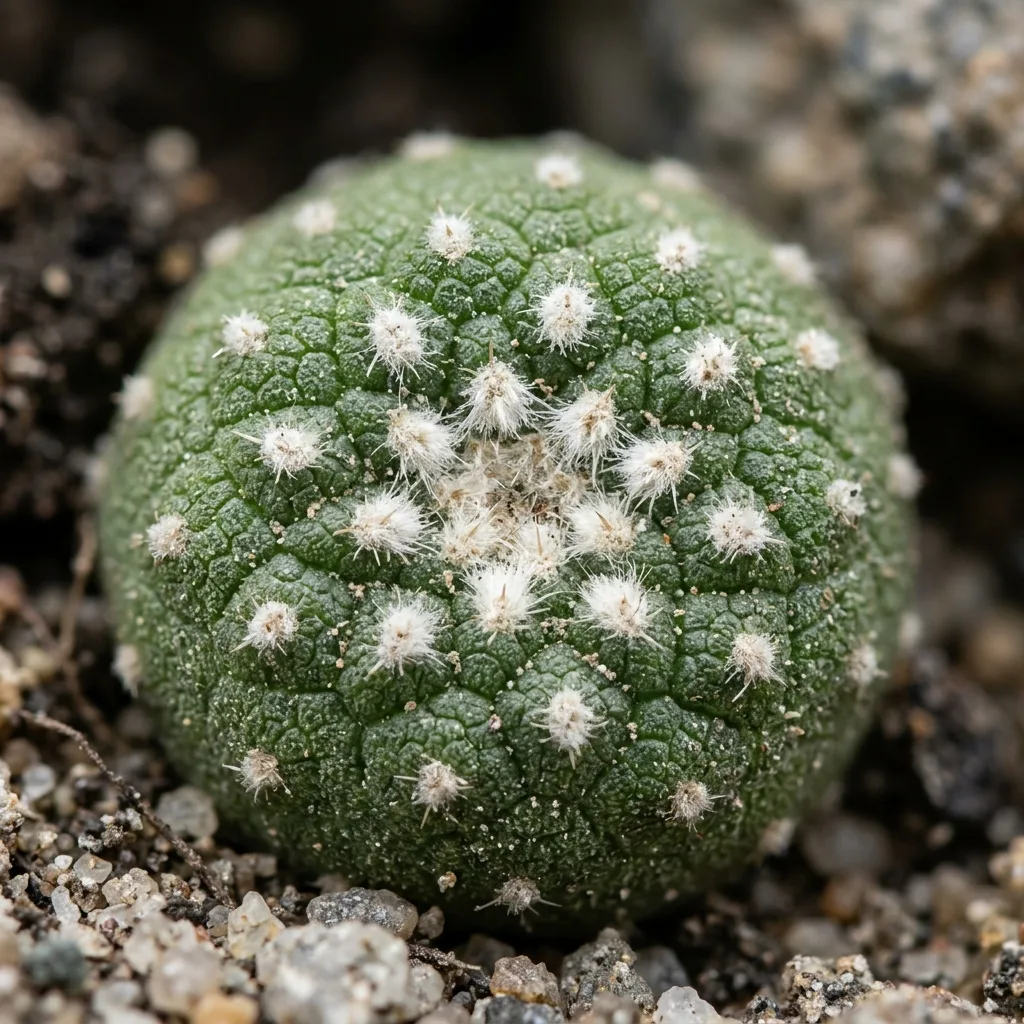
Blossfeldia liliputana belongs to an elite cohort of botanical wonders known as 'poikilohydric' angiosperms—flowering plants endowed with the rare capability to passively balance their internal water potential with ambient atmospheric humidity. During extended droughts, it can forfeit up to 80% of its total cellular water mass, shriveling into a dehydrated, button-like disc that appears completely lifeless, only to rapidly rebuild its intracellular turgor pressure within hours of moisture contact. This remarkable adaptation guided its evolutionary journey, stripping away protruding ribs and protective spines to produce a spineless, flattened spherical button that minimizes surface-area-to-volume ratio and curtails transpiration.
In terms of carbon assimilation, Blossfeldia is an obligate CAM (Crassulacean Acid Metabolism) species. It seals its microscopic stomata tightly throughout scorching daylight hours, reducing transpirational water loss to near absolute zero, and cracks them open exclusively under the cool, dry cover of night to take up carbon dioxide. Devoid of pronounced ribs, its stem features tiny spiraled areoles adorned with dense, cottony white trichomes. Far from mere decorative fluff, these trichomes act as microscopic hydrologic nets, capturing condensing dawn mist and morning dew droplets to funnel moisture directly toward subterranean tissues. Blossfeldia's root architecture consists of a stout, succulent taproot anchored in narrow rock cracks, fringed with exceptionally fragile capillary feeder roots. Rich organic matter, stagnating moisture, and anaerobic potting mixes induce rapid cellular lysis (tissue liquefaction) in these micro-roots within days, leading inevitably to lethal basal collar rot.
2. Accurate Diagnosis and Stress Symptoms
The most catastrophic error in cultivating the Lilliput Cactus is misinterpreting its natural resting shrivel as a cry for water, prompting hasty irrigation. To properly navigate its lifecycle, you must learn to read its subtle cellular stress cues:
- Physiological Desiccation (Natural State): The stem disc contracts slightly, pulls down toward the soil surface, and takes on an understated, matte, grayish-green tone with a concave center. This is normal dormancy; the epidermis remains firm to gentle touch, indicating healthy dormancy rather than decline.
- Collar and Basal Rot (Pathological Collapse): The stem base turns translucent yellowish-brown, accompanied by a soft, water-soaked, spongy texture and total loss of cellular turgor. The cell membranes have lysed, rendering the specimen unsalvageable.
- Etiolation (Light Deprivation): The naturally flattened, button-like stem elongates into an unsightly conical mound; areolar trichomes become sparse, and the epidermis turns pale lime green. This is a desperate morphological bid by chloroplasts to capture scarce photons.
- Rootstock Incompatibility in Grafted Specimens: If your Blossfeldia is grafted onto standard nursery stock such as Hylocereus or Pereskiopsis, any yellowing, corking, or softening of the lower green columnar stem indicates failing vascular bundles (xylem and phloem), cutting off the scion's lifeline.
3. Step-by-Step Cultivation Protocol
Potting an own-root Blossfeldia or recalibrating an existing maintenance routine requires surgical precision:
- Container Selection: Choose unglazed, breathable, high-fire terracotta or micro-porous ceramic pots no larger than 5 to 6 cm (2 to 2.5 inches) in diameter. Ensure the central drainage hole occupies at least one-third of the base. Plastic pots trap moisture and should be strictly avoided for ungrafted specimens.
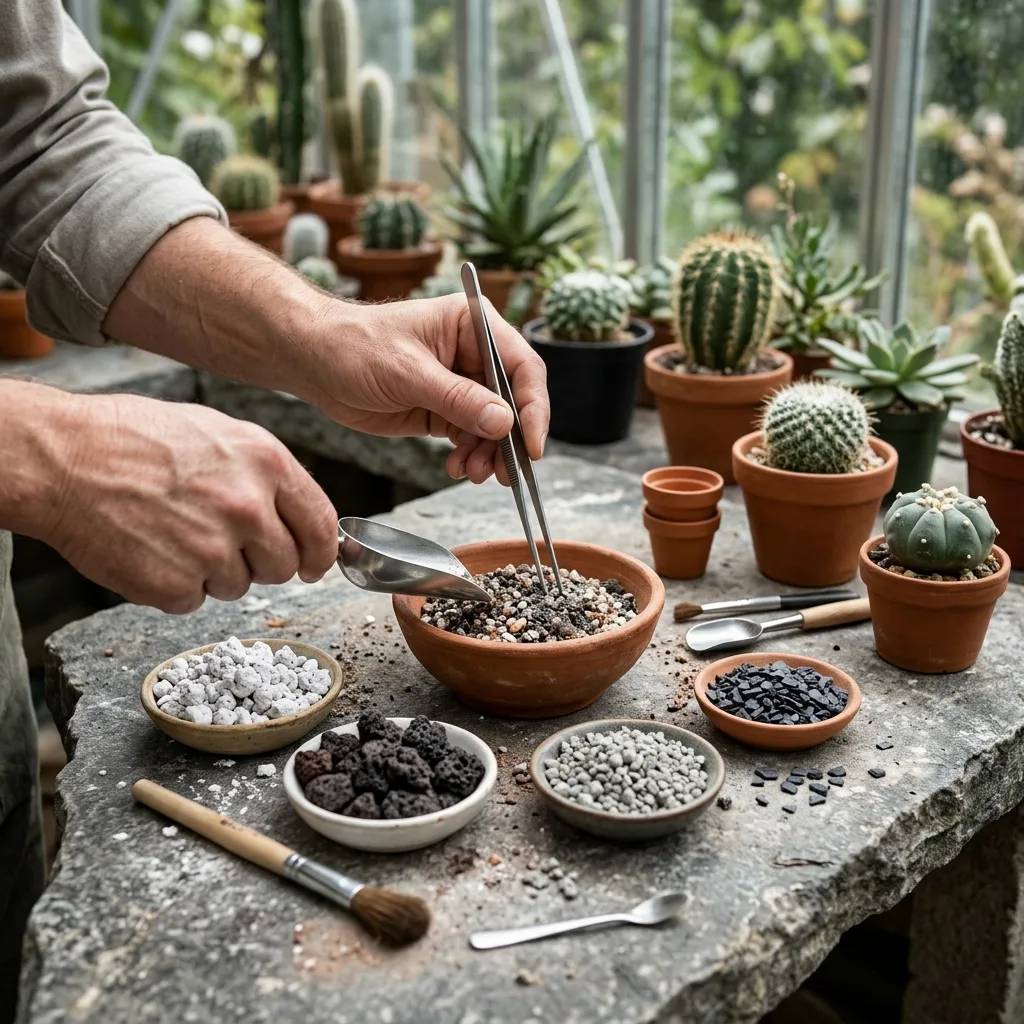
- Sub-Basal Drainage: Fill the bottom third of the container with 3 to 5 mm angular lava rock (scoria) or porous expanded clay pellets to guarantee instantaneous drainage and maintain an open air reservoir.
- Substrate Engineering: Never touch standard commercial potting soils or peat-based succulent mixes. Formulate a 90% purely mineral substrate (pumice, zeolite, lava rock, and calcined clay) combined with no more than 10% finely sifted, well-decomposed leaf mould.
- Root Positioning and Collar Armor: Suspend the taproot centrally at a natural vertical angle. To prevent green epidermal tissue from coming into contact with moist soil components, encase the neck and collar of the plant with a 5 mm layer of 2 to 3 mm pure quartz gravel, crushed slate, or granite chips. This inert mineral shield keeps the basal collar bone-dry after watering.
- Capillary Sub-Irrigation Technique: Never pour water over the top of Blossfeldia's stem. Rest the base of the pot in a shallow dish of tepid water, allowing moisture to wick upward via capillary action. The moment you see dampness darken the lower edge of the top gravel dressing, pull the pot out immediately and let it drain freely on a wire mesh rack for 15 minutes.
4. Essential Cultivation Parameters & Substrate Metrics
To safely sustain Blossfeldia liliputana through its multi-decade lifecycle indoors or in a specialist alpine house, adhere closely to the standardized parameters detailed below:
| Parameter / Material | Recommended Standard / Ratio | Physiological Rationale |
|---|---|---|
| Substrate Composition | 40% Pumice, 30% Zeolite, 20% Crushed Lava, 10% Worm Castings/Leaf Siftings | Zero risk of water retention, maximum root aeration, and sustained mineral exchange. |
| Grain Size (Aggregate) | 1 - 3 mm (Fine Mineral Fraction) | Replicates narrow cliff clefts, allowing delicate capillary root hairs to anchor securely. |
| Substrate pH | 6.2 - 6.8 (Slightly Acidic to Neutral) | Matches the natural chemical equilibrium of weathered Andean sandstone and slate. |
| Light Intensity | 15,000 - 25,000 Lux (Filtered, High-Intensity Light) | Emulates bright, scattered light in cliff clefts; direct midday glass scorches delicate chlorophyll. |
| Watering Frequency (Active Season) | Every 15-20 days (Wait 5 days after substrate is bone-dry) | Stimulates CAM photosynthesis by honoring natural hydration-dehydration cycles. |
| Winter Dormancy Temperature | 8°C - 12°C / 46°F - 54°F (Strictly Dry Conditions) | Promotes vernalization and cellular tissue hardening while keeping fungal pathogens dormant. |
5. Common Pitfalls & Emergency Rescue Protocols
- Mistake 1: Using Peat-Based Commercial Cactus Soil: Peat retains dampness around the taproot for weeks, quickly causing asphyxiation. Rescue: Unpot the plant immediately, rinse residual peat from the root fibers with lukewarm water, air-dry in a shaded, warm room for 48 hours, and repot into pure porous mineral aggregate.
- Mistake 2: Continued Winter Watering at Room Temperature: Keeping the cactus warm during dark winter months triggers premature growth hormones, forcing it into etiolated, weak tissue that quickly rots. Rescue: Cut off all watering completely between late autumn and early spring, moving the pot to a bright, cool spot around 10°C (50°F).
- Mistake 3: Treating a Grafted Plant as Ungrafted: When Blossfeldia is perched atop a rootstock, the irrigation schedule is dictated by the vigorous host plant, not the miniature scion. Rescue: Water according to the cultural needs of the rootstock (e.g., Hylocereus), never allowing the columnar base to become severely dehydrated or shriveled.
- Mistake 4: Misting to Provide Humidity: Spraying water over the stem fills the fibrous areoles, matting trichomes and creating an ideal entry point for mold spores. Rescue: Cease all overhead misting immediately. Provide natural humidity through gentle room ventilation and proper passive air movement.
- Mistake 5: Sudden Solar Shock: Shifting a winter-dormant button directly into harsh, unfiltered afternoon sun will scald the epidermis within an afternoon. Rescue: Shield the plant with a fine sheer curtain or shade cloth, gradually increasing light intensity over a three-week acclimation period.
6. Seasonal Calendar & Botanical Lifecycle
Cultivating Blossfeldia is an exercise in mindfulness. Synchronizing your care routine with its natural rhythm unlocks distinct developmental milestones:
- Spring (March – May): As daylight extends and temperatures hit 18–20°C (64–68°F), CAM respiration reactivates. Deliver an initial, modest bottom-watering. By late spring, miniature cream-white or pale yellow floral buds emerge from the apical areoles. The sight of these comparatively oversized blossoms crowning a dime-sized button is one of botany's most delightful spectacles.
- Summer (June – August): During extreme peak summer heat, Blossfeldia enters a semi-dormant state. Widen the gaps between waterings and maximize air circulation. A day-to-night temperature differential of at least 8–10°C (15–18°F) is essential to maintain efficient nocturnal malic acid accumulation.
- Autumn (September – October): Cellular tissues condense and harden in preparation for winter cold. Provide one final capillary watering in early to mid-autumn, allowing the substrate to turn completely bone-dry before cold weather sets in.
- Winter (November – February): Deep vegetative dormancy. Maintain zero moisture, bright filtered sunlight, and cool temperatures between 8°C and 12°C (46–54°F). This cold winter rest acts as the biochemical trigger needed to initiate flower buds for the coming spring.


Reader Reviews & Comments 4 Reviews
Julian Vance
Marcus Sterling
Eleanor Brooks
Clara Higgins
Leave a Review & Rating
Share your plant care tips, experiences, or questions with our succulent community.