






Picture a majestic, four-sided succulent stem wedged firmly within the limestone fissures of the sun-drenched, arid plateaus of India and Sri Lanka. Caralluma crenulata (often classified in modern taxonomy as Boucerosia crenulata), widely known among collectors as the Crenulated Starflower, is a mesmerizing succulent belonging to the Stapeliad tribe of the Apocynaceae family. It embodies nature's sculptural geometry in its purest form. Braving the whistling desert winds and scorching heat in the wild, this plant introduces both a minimalist, architectural aesthetic into our living spaces and leaves onlookers spellbound with its velvety, intricately patterned exotic blooms.
As a succulent enthusiast, cultivating a Caralluma demands a far deeper botanical intuition than tending to an everyday houseplant. Its water-storing green stems are the evolutionary triumph of a radical adaptation: performing photosynthesis entirely within leafless stem parenchyma. Few plants illustrate our core botanical philosophy so vividly: frequent watering is never a sign of love, but rather a swift way to suffocate fragile root hairs and starve them of vital oxygen.
Whether you have recently welcomed this unique stapeliad into your collection or are puzzled as to why your windowsill specimen has stalled or shifted its stem color, you have come to the right place. Let us explore step-by-step how to honor this ancient dweller of arid gorges in your home, completely banishing the specter of stem rot while encouraging seasonal flushes of jaw-dropping flowers.
1. Botanical Identity and Morphological Features
Morphologically, Caralluma crenulata produces upright, four-angled (tetragonal) fleshy stems that branch freely from the base over time to form compact, shrubby mounds. The specific epithet 'crenulata' refers to the notched, wavy, or blunt-toothed (crenate) margins running down each stem ridge. At the apex of these teeth lie microscopic, vestigial leaf rudiments; in the harsh aridity of its native biome, the plant discarded functional foliage through evolutionary specialization, delegating all chlorophyll synthesis and gas exchange directly to its outer epidermal layers.
The plant breathes via Crassulacean Acid Metabolism (CAM). By keeping its stomata tightly sealed against the searing daytime heat, it preserves vital cellular water reserves, opening its pores exclusively in the coolness of the night to capture carbon dioxide. Under optimal light conditions, stem coloration ranges from a matte grey-green to a dusty, bluish-olive tone. However, when exposed to intense solar stress, protective anthocyanin pigments take over, cloaking the stems in a striking bronze-to-purplish mottled armor.
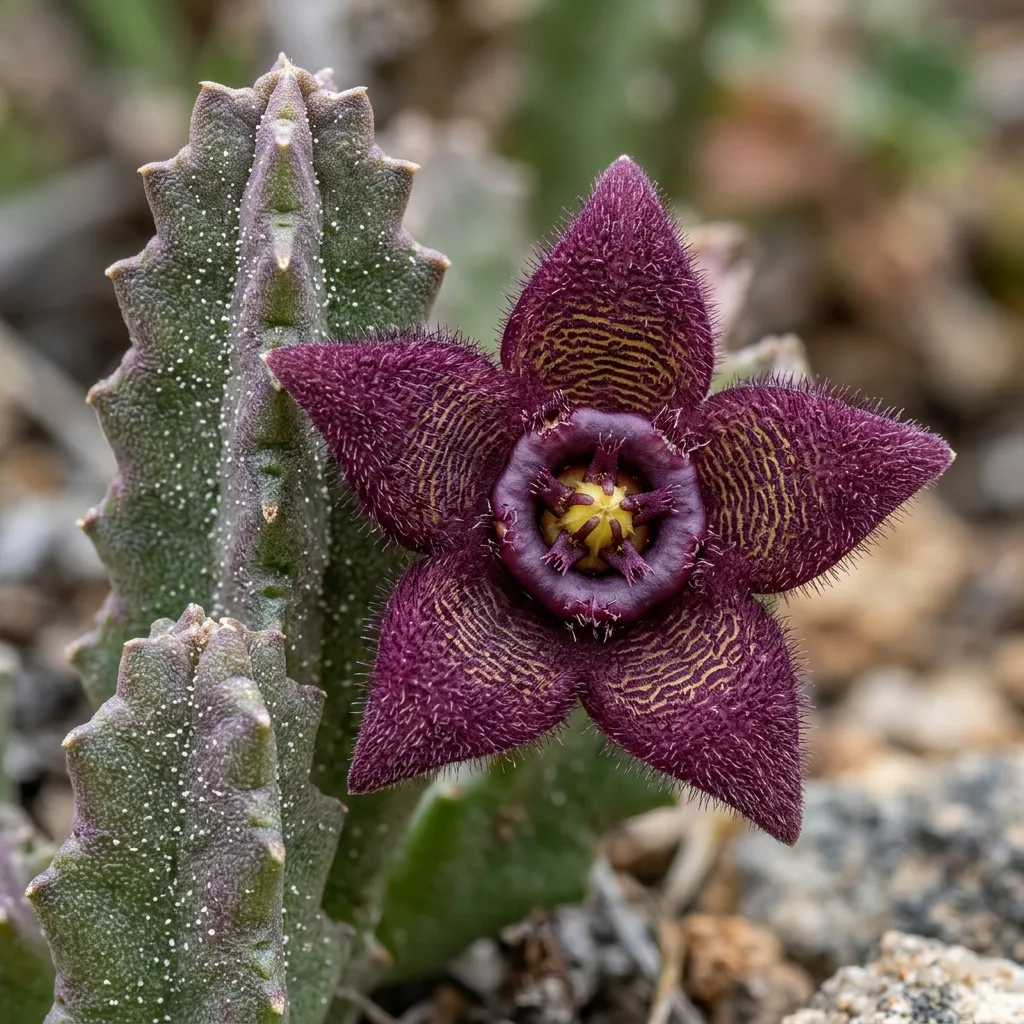
When blooming season arrives, dense umbel-like clusters emerge from the stem tips or upper nodes. The flowers feature five-lobed, velvety petals forming miniature stars, richly patterned with deep maroon, chocolate-brown, or midnight-purple backgrounds traversed by fine yellowish concentric striations. In nature, these flowers are ingeniously designed to attract carrion flies as primary pollinators; sniffing them up close reveals the faint, characteristic organic, slightly sour scent quintessential to stapeliads.
2. Light Requirements and Indoor Placement
In its native habitat, Caralluma crenulata prospers beneath the light canopy of sparse scrub or directly on exposed rocky terraces, meaning it demands abundant, brightly filtered sunlight to thrive. Inadequate light exposure leads rapidly to etiolation—a debilitating condition where the stems lose their sharp, architectural angles, stretch into weak, pale, thread-like tendrils, and become acutely vulnerable to opportunistic fungal pathogens.
Indoors, the most rewarding position is directly behind a sheer curtain on an unobstructed south- or east-facing windowsill. Gentle direct morning sun reinforces cellular wall rigidity and triggers flowering hormone synthesis. However, the blazing midday sun of July and August magnified through unshaded window glass can cause irreversible, scalded white or corky brown patches (chlorosis and tissue necrosis) along the exposed ridges.
3. Watering Discipline: The 'Soak and Dry' Protocol
The single most fatal mistake when growing Caralluma species is overwatering or adhering to a rigid calendar schedule. The xylem network and water-storage parenchyma of these plants hold sufficient cellular moisture to endure extended droughts with ease. Your golden rule must always be the uncompromising 'Soak and Dry' protocol.
Before reaching for your watering can, verify that the substrate has dried out completely—not merely on the topsoil, but all the way down to the base of the root ball. The most reliable diagnostic method is inserting a slender wooden skewer to the bottom of the pot; if it emerges completely dry without any adhering particles, or if the terracotta pot feels weightless, it is safe to hydrate. When you do water, soak the pot thoroughly until water streams freely from the drainage holes, and immediately empty any drainage tray within 15 minutes to prevent capillary back-absorption.
4. Substrate Composition and Pot Selection
The root system of Caralluma crenulata is exceptionally dependent on high oxygen tension. Standard peat-based potting soils act like waterlogged sponges, creating an anaerobic perimeter around the delicate root hairs where fungal mycelium proliferates uncontrollably. An ideal growing medium must drain freely within seconds and consist predominantly of porous, gritty inorganic minerals.
When it comes to container selection, unglazed terracotta is undeniably superior. Its breathable, micro-porous walls allow excess moisture to evaporate laterally from the entire root zone. Container depth should ideally be shallow to moderate; deep pots retain a persistent reservoir of damp soil at the bottom, compounding the danger of root suffocation.
| Component | Proportion (%) | Botanical Function |
|---|---|---|
| Horticultural Pumice (3-6 mm) | 35% | Provides superior macroporosity and prevents root asphyxiation. |
| Lava Rock / Zeolite | 25% | Delivers trace minerals and accelerates gravitational drainage. |
| Coarse Perlite / Sharp Coarse Sand | 15% | Prevents substrate compaction and lime buildup over time. |
| Sifted Cactus Peat or Leaf Compost | 25% | Supplies essential organic binding and baseline nutrient reserves. |
5. Step-by-Step Propagation Techniques
The safest and most reliable way to Propagate Succulents and Is It Difficult? A Scientific Botanical Guide">to propagate Caralluma crenulata is through vegetative stem cuttings. While seed propagation is botanically fascinating, seeds lose viability quickly, and germinating seedlings face high damping-off mortality rates in home environments without sterile laboratory incubators.
- Timing: The premier window for propagation is late spring or early summer. Elevated temperatures accelerate the plant's metabolic rate, ensuring rapid root initiation.
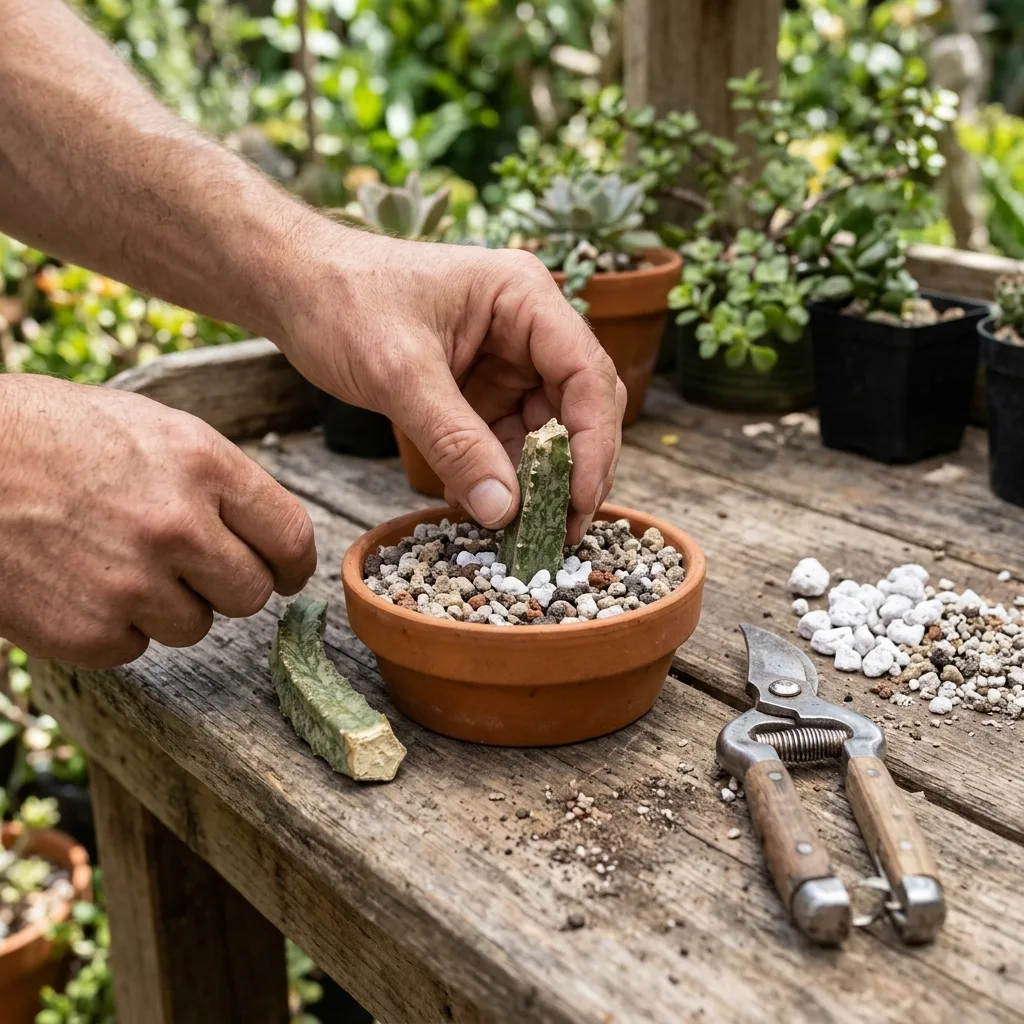
- Sterile Excision: Using a razor-sharp scalpel sterilized with 70% isopropyl alcohol, detach a robust, blemish-free lateral stem (at least 6-8 cm / 2.5-3 inches long) cleanly at the natural junction where it joins the primary stem.
- Latex and Callus Formation: The wound may exude a clear-to-milky sap. Under no circumstances should you pot a fresh cutting immediately! Placing raw wound tissue into moist potting soil invites lethal fungal infection. Rest the cutting in a dry, warm, shaded, well-ventilated location for 4 to 7 days until the cut base develops a firm, dry, greyish-white callus layer.
- Dry Planting and Rooting: Insert the callused cutting 1-2 cm deep into the mineral-rich potting mix described above. Anchor it upright using a few chunks of lava rock. Withhold all root-zone watering for the first 10-12 days; instead, mist the surface stones lightly every 3-4 days to entice dormant root primordia to seek ambient humidity.
- Root Confirmation: After 3 to 4 weeks, a gentle tug will reveal firm subterranean resistance. Once rooted, transition the young plant to the standard 'soak and dry' watering protocol.
6. Common Pests, Pathogens, and Curative Protocols
While Caralluma is virtually immune to nutritional deficiencies, its succulent tissue remains enticing to sap-sucking pests and opportunist fungi when environmental conditions go awry:
- Black Stem Rot: Presents as water-soaked, softening black lesions at the stem base, triggered by soggy, cold potting media. Intervention: Unpot the specimen instantly. Amputate all blackened tissue using a sterile blade well into clean green tissue. Re-callus the remaining healthy top stem and root it anew.
- Mealybugs (Pseudococcidae): These pervasive pests lodge themselves within the crenated indentations along stem ribs, shielding themselves under white waxy secretions while sucking plant juices. Remedy: Dab them away individually using cotton swabs dipped in 70% rubbing alcohol. For heavier infestations, apply systemic imidacloprid drench or an organic cold-pressed neem oil emulsion during evening hours.
- Root Mealybugs: Subterranean pests that target the delicate feeder roots. If the top stems appear shriveled despite proper moisture availability, inspect the root ball for powdery white deposits. Wash the root system thoroughly with warm water, treat with an insecticidal wash, and repot in fresh, sterile substrate.
7. Seasonal Care Calendar and Master Horticultural Tips
Mastering Caralluma crenulata care means synchronizing your care habits with the rhythm of the seasons. Respecting its innate biological clock transforms a sluggish plant into an annually blooming showpiece.
- Spring (Awakening): As daylight lengthens and temperatures climb in April, gradually increase watering frequency. Feed once every 8 weeks with a low-nitrogen, high-potassium cactus fertilizer diluted to quarter-strength to encourage flower bud formation.
- Summer (Active Growth & Bloom): Relocate your plant outdoors to a sheltered patio or balcony with bright shade and abundant airflow. Natural breezes are the single most effective deterrent against stem fungi. Water thoroughly whenever the mix dries out completely.
- Autumn (Acclimatization): Taper watering significantly from late September onward. Terminate all supplemental feeding. Bring outdoor plants inside well before night temperatures dip below 12°C (54°F).
- Winter (Dormancy & Rest): Position the pot in a bright, unheated room maintaining steady temperatures between 10-15°C (50-59°F). Withhold watering almost completely; offer a few tablespoons of tepid water on a bright morning only if the stems exhibit extreme furrowing. This cold, dry rest is the biological trigger needed to initiate flower buds for the coming summer.


Reader Reviews & Comments 3 Reviews
Clara Higgins
Julian Vance
Liam Sterling
Leave a Review & Rating
Share your plant care tips, experiences, or questions with our succulent community.