






Stretching from the wind-swept basalt cliffs of the Canary Islands into the brightest sunlit corners of our living rooms, the genus Aeonium stands as the living, sculptural rose of the succulent world. Mesmerizing growers with symmetrical rosettes poised atop slender, architectural branches, these plants reach a turning point in maturity: they either erupt into a cluster of vigorous offsets or grow top-heavy on a singular leggy stem, losing their balance. While many succulent enthusiasts hesitate to make the first cut out of fear of harming their specimen, Aeoniums—when approached with sound botanical principles—are actually among the most generous and effortless succulents to propagate.
In my nursery greenhouses, I always remind visiting collectors: severing an Aeonium rosette is not an act of harm; it mimics natural wind-driven fracture in habitat, offering the mother plant an opportunity for cellular rejuvenation and colony formation. However, Aeoniums harbor a crucial physiological secret that sets them apart from most other succulents: they actively grow during the cool autumn and winter months, slipping into a deep dormancy (estivation) under high summer heat. Honoring this internal biological clock when dividing and rooting cuttings is the fine line between vibrant rooting and devastating stem rot.
1. Botanical Identity and Morphological Characteristics
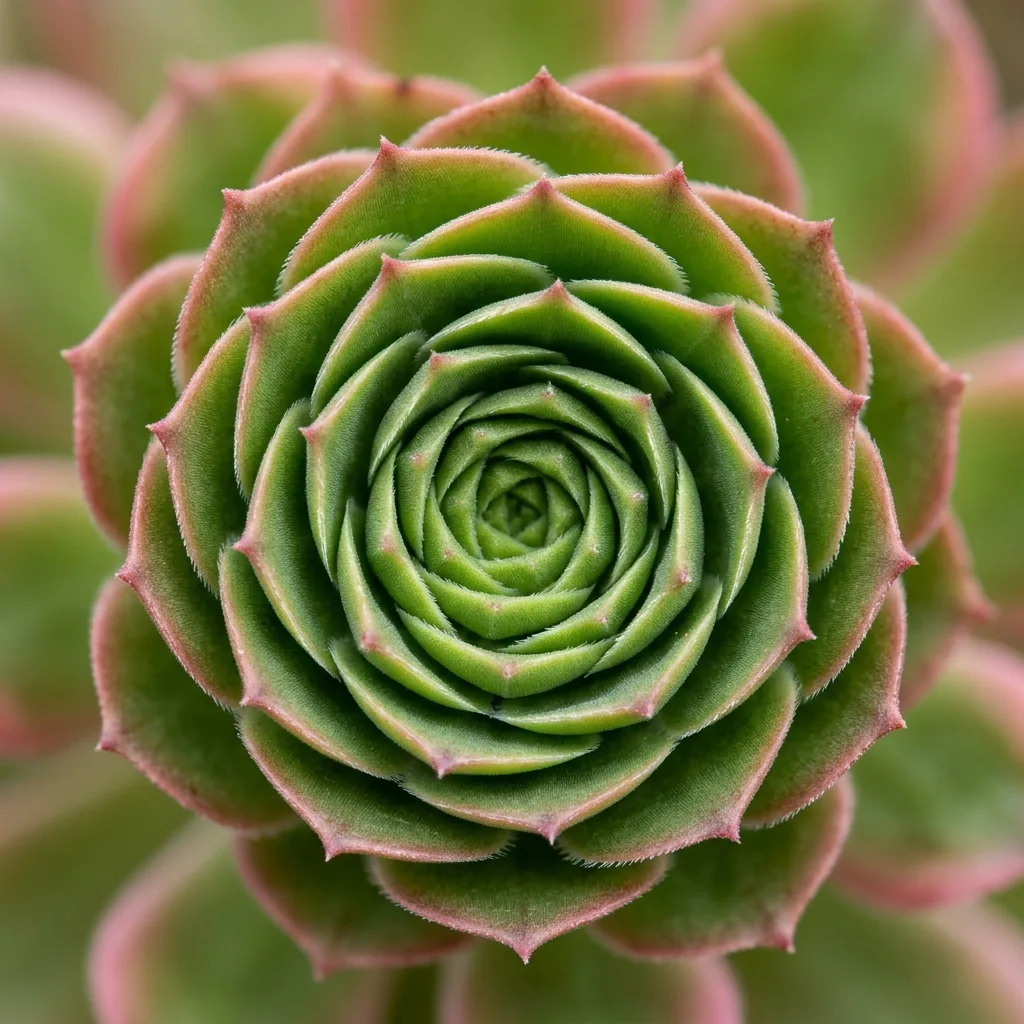
The genus Aeonium represents one of the most noble, monocarpic, and branching shrub-form members of the family Crassulaceae. Predominantly native to the Canary Islands, Madeira, and coastal Morocco, these plants tend to develop distinct, woody, semi-suberized stems. Their fleshy foliage is arranged in a tight, Fibonacci spiral radiating outward from an active apical meristem. Cellular water storage is concentrated primarily within the leaf mesophyll, while the fibrous stem rapidly shuttles moisture and dissolved nutrients via internal vascular bundles (xylem and phloem).
Aeoniums utilize Crassulacean Acid Metabolism (CAM) for respiration, opening their stomata under the cool cover of night to fix carbon dioxide into malic acid, then completing photosynthesis with closed stomata during the day to minimize transpiration. Their monocarpic nature means that once an individual rosette blooms, it expends its energy reserves setting seed and subsequently senesces. This botanical reality makes taking stem cuttings (beheading) and dividing lateral offsets the primary, essential practice for preserving and immortalizing your prized cultivars across generations.
2. Light Requirements and Indoor Positioning
Aeoniums require abundant, bright, filtered sunlight to synthesize and maintain protective photopigments—most notably anthocyanins—within their epidermal tissues. For example, dramatic purple-black cultivars such as Aeonium arboreum 'Zwartkop' will quickly revert to dull green and stretch out along their stems (etiolation) if deprived of at least 4 to 6 hours of gentle morning sun or intense indirect light daily.
When placed indoors, south- or west-facing windows softened by a sheer curtain provide an optimal light spectrum. During the peak of summer, however, they must be shielded from scorching, unfiltered midday ultraviolet rays; intense thermal stress can cause irreversible cellular scorching and leaf scarring. Furthermore, they despise stagnant, humid air; keeping them in well-ventilated rooms or breezy balconies ensures that rosettes remain dense, compact, and structurally sound.
3. Watering Discipline: The 'Soak and Dry' Protocol
The most fatal mistake in Aeonium cultivation is treating them like standard summer-growing succulents and drenching them through extreme heat. Aeoniums possess a classic Mediterranean winter-rainfall adaptation: autumn and spring mark their peaks of vigorous vegetative growth, they continue developing steadily through mild winters, but once ambient temperatures consistently exceed 26–28°C (79–82°F), their root systems suspend active uptake and slip into estivation.
During their active growth cycle, water deeply only when the potting substrate has dried out completely from top to bottom, ensuring moisture flushes freely from the drainage holes. Light, frequent sips of water are not an act of care; they starve roots of oxygen and create fungal breeding grounds. During summer dormancy, rosettes naturally contract inward like tight buds; during this window, irrigation should be dialed back dramatically to a sparse monthly misting around the soil perimeter solely to prevent the root hair network from desiccating entirely.
4. Ideal Substrate Formulation and Pot Selection
Possessing a delicate, fibrous root architecture, Aeoniums cannot tolerate perched water tables or stagnant moisture around the root zone. Fresh cuttings and divided stems initiate adventitious root primordia rapidly in highly porous, structurally stable, inorganic-rich substrates. For containers, unglazed terracotta pots or durable production containers featuring generous drainage apertures are mandatory to facilitate rapid evaporation.
| Substrate Component | Ratio (%) | Botanical Function |
|---|---|---|
| Horticultural Pumice (3–6 mm) | 40% | Superior drainage, porous micro-cavities, and optimal root aeration |
| Coarse Lava Rock / Zeolite | 20% | Anti-rot mineral support, ballast, and slow trace mineral release |
| Premium Peat Moss / Coco Coir | 30% | Moisture buffering and stable organic root anchor base |
| Coarse Perlite / Washed River Sand | 10% | Prevents compaction around delicate, emerging feeder roots |
5. Step-by-Step Propagation Techniques
Propagating and expanding your Aeonium collection rests on two reliable botanical methods: Rosette Beheading (Stem Cuttings) and Offset Division. While propagating from individual fallen leaves works brilliantly for Echeveria or Sedum, individual Aeonium leaves lack an adequate concentration of active meristematic stem cells at the petiole base; stem cuttings are therefore the undisputed horticultural standard.
Method A: Stem Cuttings & Beheading
- Timing is Everything: Perform this procedure during active seasonal growth—early autumn is ideal, followed by early spring.
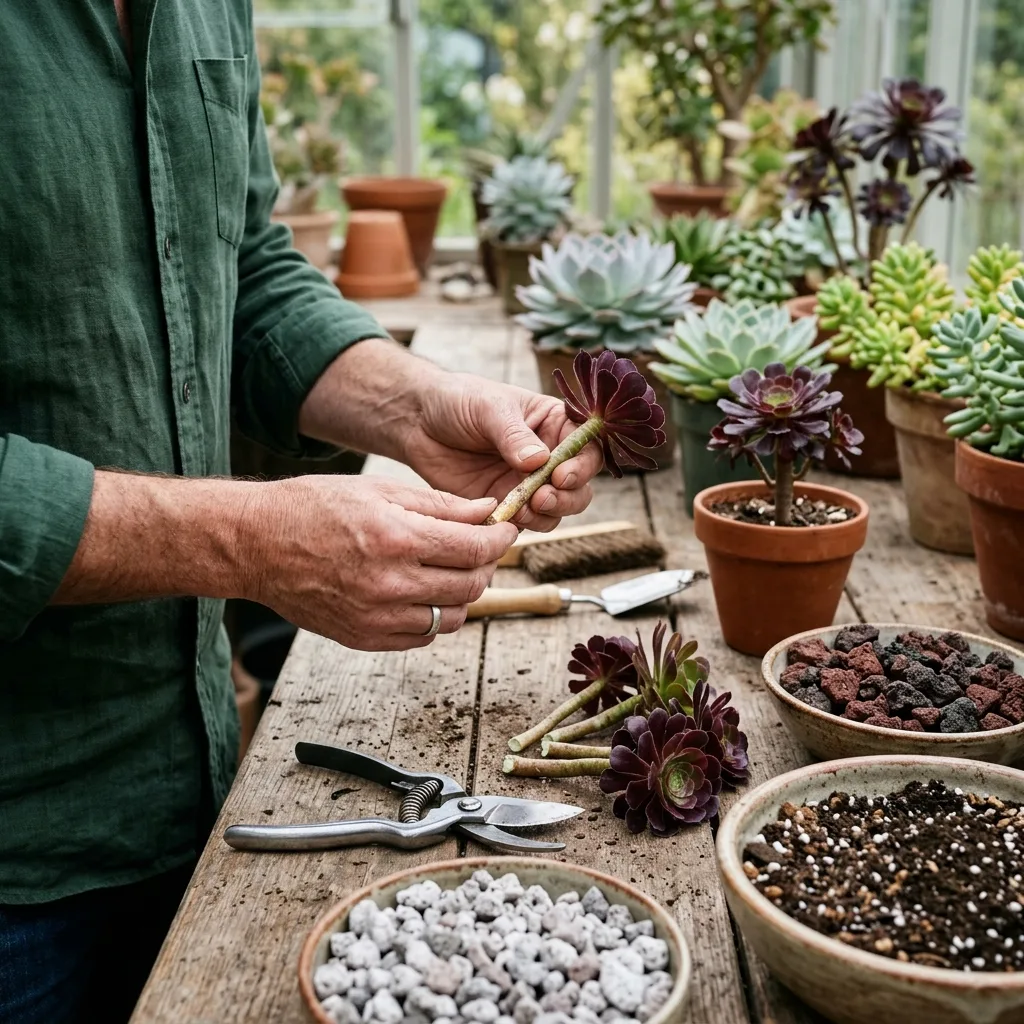
- Sterile Excision: Disinfect your pruning shears or scalpel blade using 70% isopropyl alcohol. Make a clean, horizontal cut through healthy stem tissue approximately 5 to 8 cm below the rosette base.
- Defoliate the Stem Base: Carefully strip away the lowest leaves along the bottom 3 to 4 cm of the stem to expose clean nodes where adventitious roots will emerge.
- Callus Formation: Never place fresh cuttings directly into moist soil! Rest the cut rosette in a dry, shaded, well-ventilated area for 3 to 7 days. Allow the raw cut surface to form a tough, corky scar layer (callus). This suberized tissue serves as an essential antimicrobial barrier against soil-borne pathogens.
- Planting into Dry Medium: Insert the calloused stem 2 to 3 cm deep into your pre-mixed, completely dry succulent substrate. Do not apply water for the first 7 to 10 days. After day 10, lightly moisten the top layer of substrate around the base. Within 3 to 4 weeks, a gentle tug will reveal slight resistance, signaling that fresh feeder roots have successfully anchored!
Method B: Propagating Lateral Offsets
When lateral rosettes (pups) branching from the main trunk develop their own distinct stems of at least a few centimeters, they can be separated. Sever the pup flush with the junction of the parent stalk using a sterile blade. If your offset already sports aerial adventitious roots reaching toward the soil, you have an immense head start; once the cut callouses, it will transition into vigorous root development within days. Never discard the beheaded mother trunk either: with the removal of apical dominance, dormant axillary nodes along the bare stem will typically burst with 3 to 5 new baby rosettes within several weeks!
6. Common Diseases, Pests, and Curative Protocols
During propagation and establishment, the primary adversaries of Aeoniums are moisture-induced fungal pathogens (such as Fusarium and Phytophthora) and sap-feeding mealybugs (Pseudococcidae) sheltering between overlapping leaf folds. Mealybugs cluster within the tender apical center, puncturing cellular walls, consuming plant sap, and leaving behind distorted growth and sticky honeydew.
If you observe a dark brown or black vascular ring inside the stem cross-section while taking a cutting, systemic fungal rot is already present. Cut progressively higher up the stem in 1 cm increments until the inner vascular cylinder is completely clean, pale green, and white. If mealybugs appear, spot-treat them immediately using a cotton swab dipped in 70% isopropyl alcohol, followed by an evening foliar wash of cold-pressed organic neem oil emulsion.
7. Seasonal Care Calendar & Expert Horticultural Rules
- Autumn (The Great Awakening & Propagation Window): As ambient temperatures drop below 20°C (68°F), Aeoniums break dormancy. This is the golden window for beheading, taking offsets, repotting, and resuming regular soaking schedules.
- Winter (Active Foliar Growth): Safeguard your plants from freezing conditions (maintain temperatures above 7–10°C / 45–50°F). Provide maximum indoor solar exposure or supplemental grow lights, watering deeply whenever the substrate dries completely.
- Spring (The Final Surge): The secondary propagation window. If fertilizing, supply a low-nitrogen, high-potassium liquid succulent fertilizer diluted to half strength during early spring to support cellular turgor without causing leggy growth.
- Summer (Estivation & Dormancy): Move your plants to a shaded, cool, well-ventilated shelter. Withhold heavy watering, limit feeding completely, and refrain from pruning or repotting until autumn returns.


Reader Reviews & Comments 3 Reviews
Eleanor Vance
Marcus Sterling
Claire Bennett
Leave a Review & Rating
Share your plant care tips, experiences, or questions with our succulent community.