






Amidst the sun-baked, rust-red crags of the Sonoran Desert, a striking silhouette rises against the wide horizon, evoking the soaring pipes of a grand cathedral organ: Stenocereus thurberi. Revered as one of nature's most magnificent architectural triumphs against drought, the Organ Pipe Cactus endures for centuries in its harsh native habitat, thrusting dozens of ribbed columns directly heavenward from ground level. When desert temperatures plummet at nightfall, its creamy white blossoms unfurl, bearing witness to a delicate, ancient ecological ballet shared with desert bats.
Welcoming this majestic desert giant into a collector's terracotta pot or an expansive conservatory introduces a profound sense of primordial desert stillness to your living space. However, keeping the Organ Pipe Cactus thriving demands abandoning standard houseplant habits entirely. In the succulent and cactus world, frequent watering is never an expression of love; it is an accidental path to root suffocation. Stenocereus thurberi does not yearn for pampering—it demands an authentic replication of its native home: blazing sunlight, immaculate air circulation, and a gritty, lean, mineral-based soil regime.
1. Taxonomic Identity, Areole Structure, and Spine Morphology
Classified within the family Cactaceae, subfamily Cactoideae, and tribe Pachycereeae, Stenocereus thurberi is universally known as the 'Organ Pipe Cactus', or locally in Mexico as 'Pitahaya Dulce'. While its close relative, the iconic Saguaro (Carnegiea gigantea), develops branching arms from a solitary central trunk, the Organ Pipe Cactus produces a dense thicket of 5 to 25 or more columnar stems arising directly from a narrow base located at or just beneath the soil line.
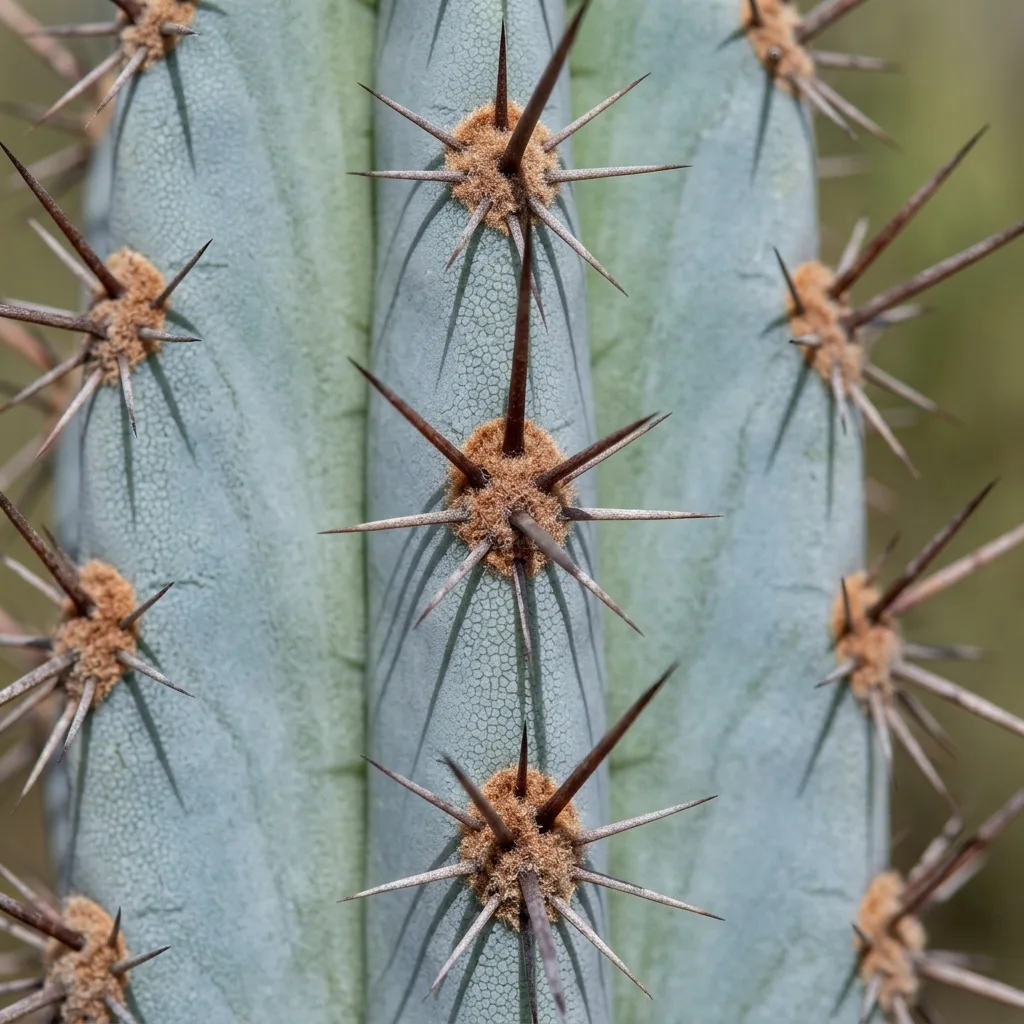
A close examination of its stem anatomy reveals between 12 and 19 vertical ribs (costae) traversing each column. These ribs function like an accordion of the desert: absorbing moisture during rare deluges to expand internal water storage tissues, and contracting sharply throughout prolonged droughts to minimize overall surface area and prevent evaporative moisture loss. Spaced evenly along the crests of these ribs are areoles cushioned with brownish-gray felty tomentum. Each areole produces 8 to 14 radial spines alongside 1 to 3 stouter, gray-to-black central spines. These spines serve purposes far beyond deterring herbivores; they create a protective micro-turbulent layer of air across the epidermis to mitigate severe heat accumulation and act as microscopic capillary gutters that channel dawn condensation straight toward the root zone.
2. Light Intensity, Sun Exposure, and Aeration Standards
The Organ Pipe Cactus is an absolute child of the sun, constantly hungry for high photon irradiance. To sustain robust cell wall formation and vigorous health, it demands direct, unfiltered, and intense sunlight. When kept in low-light environments deprived of at least 6 to 8 hours of direct sun daily, the apical tips of the columns stretch into thin, pale green shoots with widened rib gaps—a classic physiological deformity known to botanists as etiolation.
If cultivated indoors, an unobstructed south- or southwest-facing window sill is essentially the only suitable location. Keep in mind that window glass can sometimes focus intense heat, making active ventilation and continuous airflow vital. In stagnant, stifling rooms, fungal spores can swiftly colonize the weakened cuticle. If you relocate your cactus outdoors to a patio or garden during the summer months, gradual acclimation is non-negotiable; transferring a plant that overwintered indoors directly into scorching midday sun will cause irreversible cellular collapse and severe sunburn necrosis across its chlorophyll-rich tissues.
3. Irrigation Dynamics and the Critical Winter Dormancy Regime
To triumph over prolonged arid spells, Stenocereus thurberi employs Crassulacean Acid Metabolism (CAM) photosynthesis. It seals its microscopic pores (stomata) tightly during blistering daylight hours, virtually eliminating water loss through transpiration. Only after twilight settles and temperatures cool does the plant open its stomata to absorb and chemically fix carbon dioxide. This physiological marvel reduces its baseline water requirements to a minimum.
During the primary growing season—from mid-spring to early autumn—irrigation must strictly adhere to the 'drench-and-dry' protocol. Never apply water until the gritty soil mixture has dried out completely down to the bottom of the pot. When watering, saturate the container thoroughly until moisture drains freely from the drainage holes, and be sure to empty any runoff sitting in the saucer within 10 to 15 minutes.
By late autumn, as nighttime temperatures fall consistently toward 12–15°C (54–59°F), the plant halts vegetative growth and enters biological winter dormancy. From November through late March, you must withhold water entirely. Cold, damp conditions surrounding the root cortex starve root hairs of oxygen, quickly rendering them defenseless against opportunistic anaerobic rot. The ideal overwintering temperature sits comfortably between 8–12°C (46–54°F); this cool, arid resting period is crucial both for preserving structural compactness and triggering spring floral bud initiation.
4. High-Mineral Cactus Substrate and Potting Dynamics
The root system of the Organ Pipe Cactus evolved to thrive along steep, rocky volcanic inclines, designed to absorb fleeting rainwater instantly while shedding excess moisture without delay. Standard, peat-heavy commercial potting soils are virtually a death sentence for this desert specimen; they hold moisture like a dense sponge, breaking down and suffocating root cells within an anaerobic quagmire. What this species requires is an open, coarse-textured substrate packed with inorganic minerals.
| Substrate Component | Ratio (%) | Physical / Horticultural Function |
|---|---|---|
| Horticultural Pumice (3–6 mm) | 35% | Provides abundant internal micropores, maximizing root zone aeration. |
| Crushed Lava Rock / Scoria (3–5 mm) | 25% | Anchors the crown securely and guarantees rapid, unrestricted water drainage. |
| Clinoptilolite Zeolite (2–4 mm) | 15% | Delivers superior cation exchange capacity (CEC), holding nutrients and checking pathogens. |
| Coarse River Sand / Quartz Grit | 10% | Maintains macro-channel pathways, preventing substrate settling and compaction. |
| Sifted Coir (Coconut Peat) | 15% | Supplies minimal organic binding material and gentle moisture buffering for fine roots. |
Regarding container choices, unglazed terracotta pots remain the gold standard thanks to their porous clay walls that permit continuous lateral air and moisture evaporation. Conversely, plastic and glazed ceramic containers trap residual moisture, effectively doubling the time required for the medium to dry out. Because columnar stems grow heavy and vertical, select broad-based, heavy pots with completely unobstructed drainage holes to prevent top-heavy tipping.
5. Tactics for Flowering and Targeted Nutrient Protocols
Witnessing Stenocereus thurberi in bloom is among the most breathtaking events in desert botany. Emerging from mature areoles clustered toward the summits of the columns, these funnel-shaped blossoms measure 6 to 8 cm (2.5 to 3 inches) in diameter, featuring subtle purplish-pink outer segments surrounding delicate, creamy white inner petals. Opening strictly after dusk, they exude a heavy, sweet aroma before withering under the intense heat of the following midday sun. In the wild, their primary pollinators are lesser long-nosed bats (Leptonycteris yerbabuenae).
Inducing an Organ Pipe Cactus to bloom in a container collection requires aligning three fundamental environmental triggers:
- Age and Structural Maturity: Seed-grown specimens rarely initiate flower buds until individual columns reach a height of at least 1 to 1.5 meters (3 to 5 feet) alongside reaching developmental maturity (rooted vegetative cuttings can reduce this waiting timeframe).
- Unbroken Winter Dormancy: The specimen must experience 3 to 4 months kept cool at 8–12°C (46–54°F) in bone-dry soil. Plants kept in warm, heated living rooms through the winter fail to form floral primordia.
- Low-Nitrogen, High-Potassium Fertilization: Between May and July, apply a cactus fertilizer high in phosphorus and potassium but lean on nitrogen (such as an NPK 4-10-15 formulation, enriched with trace micronutrients) diluted to one-quarter strength once a month. Excess nitrogen causes bloated, weak cellular tissue highly susceptible to opportunistic bacterial and fungal rots.
6. Propagation: Stem Cuttings and Wedge Grafting
The most straightforward and reliable technique for propagating the Organ Pipe Cactus is harvesting established side columns (basal offshoots) springing from the parent clump. While seed germination is viable, raising seedlings to mature proportions requires immense patience spanning several years.
Step-by-Step Stem Cutting and Rooting Protocol:
- Timing and Tool Sterilization: Undertake cutting propagation during early summer when the parent cactus is in active growth. Always sterilize your harvesting blade or grafting knife thoroughly using 70% isopropyl alcohol.
- The Strategic Severance: Select a vigorous column at least 20 to 30 cm (8 to 12 inches) in length. Make a single, clean slice across the narrowest junction connecting it to the basal crown. Avoid crushing or tearing the epidermal ribs.
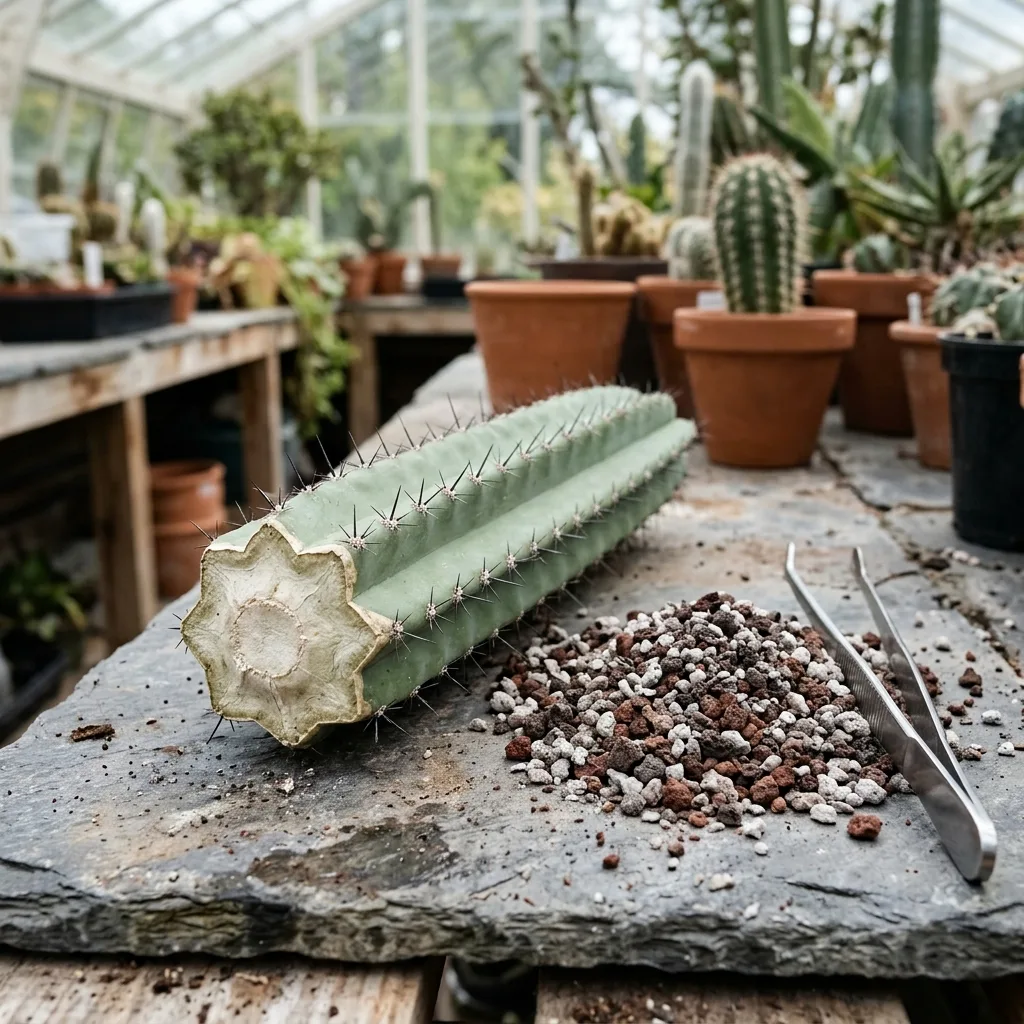
- Callus Formation: Dust the severed wound generously with powdered sulfur or crushed activated horticultural charcoal. Store the cutting upright in a dry, warm, shaded, well-ventilated space for 2 to 3 weeks until the cut edge develops a tough, leathery, grayish-white callus.
- Dry Planting: Plant the fully callused cutting 3 to 5 cm (1 to 2 inches) deep into a completely dry mineral mix composed of 80% pumice and 20% coarse perlite. Stabilize the tall stem using clean river rocks around the perimeter to prevent shifting.
- Patient Root Initiation: Keep the substrate completely bone-dry for the first 3 weeks. Maintain warm ambient conditions around 22–26°C (72–79°F) with bright, indirect light. Beginning in the fourth week, supply small amounts of water strictly from the bottom of the pot to coax developing root cells downward. Sturdy root networks typically establish within 6 to 8 weeks.
For rare variegated, chlorophyll-deficient, or weakened cultivars, wedge grafting onto vigorous columnar rootstocks such as Trichocereus bridgesii or Myrtillocactus geometrizans can significantly accelerate growth rates and safeguard fragile tissues.
7. Defending Against Fungal Pathogens and Common Pests
The greatest threat to an Organ Pipe Cactus is fungal rot induced by poorly draining soil and excessive irrigation—predominantly driven by pathogens like Fusarium oxysporum, Phytophthora, and Rhizoctonia species. A mushy, discolored base accompanied by an unpleasant, sour odor indicates the onset of catastrophic internal hydraulic collapse.
If rot is detected early at the root crown, immediately unpot the cactus, thoroughly wash away the contaminated soil, and excise all blackened, rotted roots back to clean, creamy-white tissue with a sterile knife. If decay has already ascended into the lower stem, the only recourse is radical decapitation: slice through the columnar stem 2 to 3 cm above any sign of internal vascular discoloration, allow the sound upper segment to callous completely, and restart the rooting protocol.
On the pest front, mealybugs (Pseudococcidae) often shelter within the deep folds of the ribs and felty areoles, while armored scale insects appear as stubborn, waxy brownish crusts along the epidermis. For mild infestations, dab the pests individually using a cotton swab saturated with 70% isopropyl alcohol. For extensive outbreaks, spray thoroughly during the late evening hours with a cold-pressed horticultural neem oil solution or apply an appropriate systemic insecticide according to label instructions.


Reader Reviews & Comments 4 Reviews
Clara Higgins
Marcus Vance
Julian Miller
Evelyn Reed
Leave a Review & Rating
Share your plant care tips, experiences, or questions with our succulent community.