






High above the forest floor, anchored securely in the bark fissures of ancient canopy giants within Brazil's mist-shrouded Mata Atlântica (Atlantic Rainforest), Rhipsalis pachyptera—widely celebrated among collectors as the Broad-Leaved Mistletoe Cactus or Succulent Mistletoe Cactus—stands as an evolutionary triumph that defies every conventional notion of desert cacti. Unlike its delicate, thread-like forest cousins, this remarkable epiphytic cactus commands attention with broad, winged, and remarkably succulent stem segments (cladodes) engineered to hoard life-sustaining moisture in suspended aerial microhabitats.
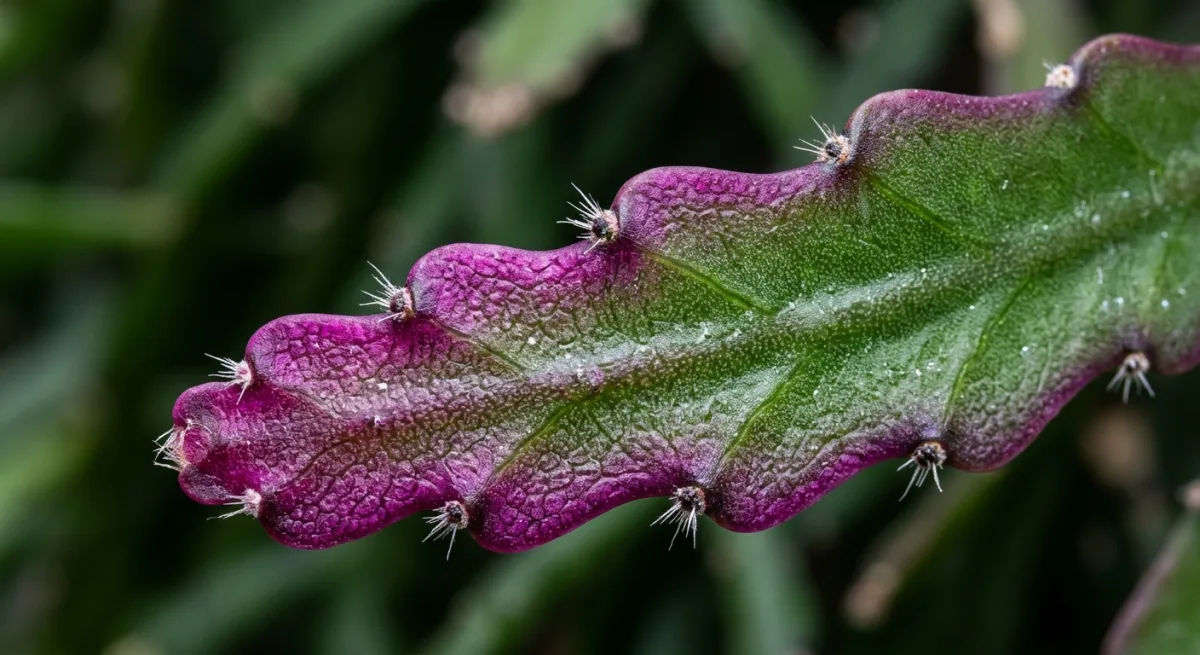
As these expansive, leaf-like cladodes transition from deep emerald green to rich shades of burgundy and burnished bronze under bright, filtered light, they bring an exquisite sculptural elegance into indoor collections. However, its specialized epiphytic nature demands a physiological care discipline fundamentally distinct from standard terrestrial cacti. In its native rainforest canopy, rainfall rushes past the roots within moments, leaving them bathed in circulating, oxygen-rich humid air. Recreating this dynamic, free-draining microenvironment within a container is the single greatest secret to keeping your specimen thriving for decades.
Whether you are cultivating this Brazilian treasure in a bright, dappled alcove of your living space or curating it inside a climate-controlled greenhouse, success hinges on understanding everything from root xylem dynamics to mineral substrate porosity. Let us examine the botanical morphology, microclimatic requirements, and conservation protocols necessary to nurture this rare collector species with true master-level confidence.
1. Taxonomy and Rare Morphological Characteristics
Classified within the botanical family Cactaceae and the tribe Rhipsalideae, Rhipsalis pachyptera derives its specific epithet from the classical Greek pachys (meaning 'thick') and pteron (meaning 'wing'). What casual observers mistake for lush leaves are, anatomically, modified photosynthetic stems known as cladodes. While serving the primary light-harvesting function of true foliage, these structures feature marginal areoles that bear minute, harmless bristles (trichomes) rather than the pungent, rigid spines typical of arid desert genera.
Key botanical characteristics that make this species prized among discerning succulent enthusiasts include:
- Broad, Undulate Cladodes: Individual stem segments commonly reach 8 to 20 cm in length and 5 to 12 cm in width. Their margins are prominently scalloped (crenate), with a central vascular midrib that becomes increasingly lignified and woody with age.
- Anthocyanin Pigmentation Dynamics: When exposed to strong, dappled sunlight, chlorophyll production harmonizes with defensive anthocyanin pigments. This photoprotective flush stains the leaf margins and surface tissue in magnificent hues of deep magenta, bronze, and plum.
- Marginal Areoles and Epiphytic Bloom: Throughout late winter and early spring, clusters of delicate, star-shaped, cream-to-yellowish blossoms erupt directly from the scalloped marginal notches. Once pollinated, these yield translucent, pearlescent white or soft pink spherical berries.
- CAM Photosynthesis Adaptation: Despite originating in a wet subtropical rainforest, R. pachyptera relies on Crassulacean Acid Metabolism (CAM). By opening its stomata exclusively under the cool cover of night to fix carbon dioxide, it dramatically curtails daytime transpirational water loss during dry canopy intervals.
2. Delicate Light and Temperature Parameters
Unlike xerophytic desert cacti adapted to intense, uninhibited sun exposure, R. pachyptera will suffer cellular chloroplast bleaching and severe epidermal sunburn if subjected to harsh, direct midday ultraviolet rays. In its native canopy, solar radiation is broken up by layers of leaves, creating bright, dappled light—the absolute gold standard for indoor cultivation.
Indoors, prime positioning includes an east-facing windowsill receiving gentle morning direct sun, or an unshaded northern/filtered southern or western exposure softened by a sheer curtain. If kept in insufficient light, the cladodes lose their succulent plumpness, newly emerging segments become spindly and attenuated (etiolation), and the striking bronze-purple pigmentation fades back to a dull, washed-out green.
Thermal parameters should closely reflect its subtropical rainforest roots. The optimal vegetative growth window lies between 18°C and 26°C (64°F to 79°F). To encourage generative flower bud initiation in autumn and early winter, provide a mild, cool resting period around 12°C to 15°C (54°F to 59°F). Crucially, temperatures must never drop below 8°C (46°F); sudden chilling triggers localized cellular turgor collapse, resulting in irreversible abscission where cladodes snap off and drop at the node joints.
3. Epiphytic Root Sensitivity and Watering Discipline
The single most catastrophic mistake collectors make with the Broad-Leaved Mistletoe Cactus is treating its subterranean system like either a desert succulent or a terrestrial tropical houseplant. Suspended along tree trunks, its aerial roots never sit in stagnant moisture. Instead, they absorb torrential tropical downpours and subsequently dry out within hours thanks to constant, buoyant breezes.
Consequently, your watering regime must adhere to the rule of never allowing total bone-dry desiccation, while never leaving the root ball saturated. Water thoroughly only when the top two-thirds of the substrate has dried out. Use room-temperature, low-mineral water—ideally collected rainwater, distilled water, or reverse-osmosis water. Saturating the porous air pockets around the roots with stagnant tap water deprives the root xylem of oxygen, opening the door wide to opportunistic anaerobic water molds such as Phytophthora and Pythium.
4. Custom Collector Substrate and Mineral Architecture
Standard, peat-dense commercial potting soils are a death sentence for this canopy dweller. Over time, peat compacts into an airless, hydrophobic brick that effectively chokes epiphytic root systems. To thrive, Rhipsalis pachyptera requires a custom-blended, ultra-chunky substrate engineered for rapid gas diffusion, structural longevity, and a slightly acidic pH (5.8 to 6.5).
| Substrate Component | Volume Ratio (%) | Particle Sizing | Functional Horticultural Role |
|---|---|---|---|
| Aged Pinus / Orchid Bark | 35% | 8 – 12 mm | Replicates natural tree bark microenvironments; offers prime root anchorage and maximum aeration. |
| Horticultural Pumice | 25% | 3 – 6 mm | Establishes persistent drainage macro-pores without retaining excess hydrostatic water. |
| Hard Japanese Akadama (Double Red) | 20% | 3 – 5 mm | Delivers superior cation-exchange capacity (CEC) while buffering micro-moisture balance. |
| Clinoptilolite Zeolite | 10% | 2 – 4 mm | Adsorbs mineral salts, traps heavy metals, and releases trace micronutrients while deterring root pathogens. |
| Long-Fiber Sphagnum Moss | 10% | Coarsely chopped | Creates gentle capillary humidity gradients around delicate developing aerial roots. |
For container choice, prioritize hanging wooden slatted baskets, breathable unglazed terracotta bowls, or specialized net orchid pots. If utilizing nursery plastic hanging pots, use a hot soldering iron to melt supplemental horizontal air slits along the bottom third of the container wall to dramatically boost root-zone oxygenation.
5. Propagation Hurdles and Safe Multiplication Protocols
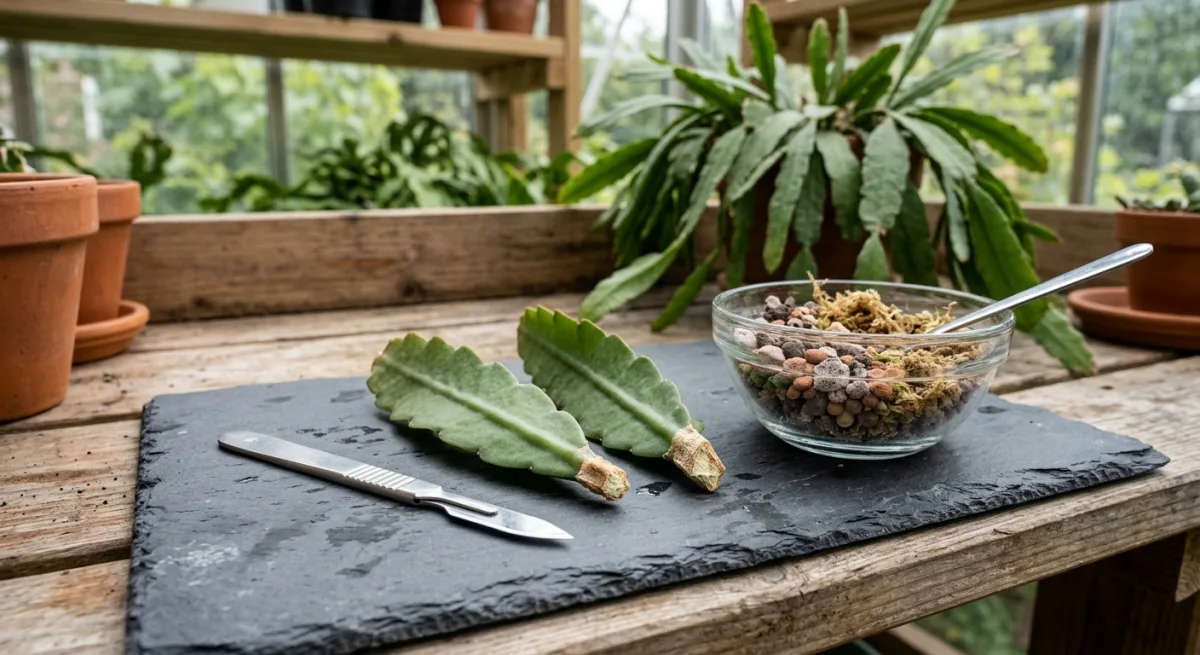
Propagating rare epiphytic cacti demands surgical cleanliness to preserve the balanced architecture of the mother specimen. While R. pachyptera can be grown from fresh seed, vegetative propagation via mature cladode cuttings is the definitive method to reliably reproduce unique varietal traits and accelerate development.
- Select Mature Cladodes: Choose a firm, well-hydrated, fully developed segment that is at least 1 to 2 years old. Immature, soft new growth lacks the cellular starch reserves required to resist fungal spores during rooting.
- Surgical Severing: Disinfect a sharp scalpel or propagation knife with 70% isopropyl alcohol. Cut cleanly through the narrow joint connecting two cladodes, or gently rotate the segment laterally until the vascular bundle separates cleanly without crushing stem tissue.
- Callus Formation: Never insert freshly cut cladodes directly into damp potting mix. Place the cuttings in an airy, shaded, warm space (20°C to 22°C / 68°F to 72°F) for 48 to 72 hours. This allows the severed vascular bundle to suberize and form a resilient, corky callus layer.
- Rooting Substrate: Insert the callused base approximately 1 to 2 cm vertically into a mixture of damp coarse perlite and chopped, pre-moistened sphagnum moss.
- Microclimate Management: Maintain ambient relative humidity between 60% and 70% while keeping the medium slightly damp via bottom-misting rather than direct top saturation. Adventitious epiphytic root initials typically emerge from the basal areoles within 3 to 5 weeks.
6. Specimen Preservation, Safety, and Long-Term Display
Due to habitat fragmentation throughout the coastal forests of southeastern Brazil, wild populations of Rhipsalis pachyptera face ongoing conservation pressure and are strictly protected under CITES Appendix II. Always ensure that newly acquired specimens originate from certified nursery seed or ethically cultivated vegetative stock rather than wild-collected harvests.
To preserve the health and aesthetic value of your specimen year after year, implement these professional standards:
- Weight Management and Structural Rigging: As the succulent cladodes branch and mature, individual cascading chains can become surprisingly heavy. Employ heavy-gauge stainless steel wire hanging assemblies anchored to solid ceiling hardware to prevent disastrous drop accidents.
- Integrated Pest Management (IPM): The sheltered crevices along the crenate margins and central lignified joints provide ideal refuge for citrus mealybugs (Pseudococcidae) and scale insects. Inspect these junction zones monthly with a 10x hand lens. Address early colonies using a targeted dab of isopropyl alcohol or a gentle cold-pressed neem oil / potassium soap spray during evening hours.
- Mitigating Foliar Mineral Crusts: Highly mineralized or alkaline municipal tap water leaves persistent calcium carbonate scaling on the broad cladodes, gradually obstructing stomatal pores. Refrain from foliar misting unless using pure rainwater or distilled water.
- Pet Safety Profile: According to ASPCA veterinary toxicology databases, species within the Rhipsalis genus are considered non-toxic to domestic felines and canines. Nonetheless, hanging your specimen well out of reach prevents curious paws from snapping the brittle node joints.


Reader Reviews & Comments 1 Review
No comments yet. Be the first to share your succulent experience!
Leave a Review & Rating
Share your plant care tips, experiences, or questions with our succulent community.