






Across the sun-scorched, rugged granite bluffs of Brazil, where unrelenting winds sweep through arid rocky fissures, an extraordinary emblem of plant resilience emerges: Dyckia, widely cherished by collectors as the sawblade bromeliad. At first glance, with its stiff, recurved, aggressively toothed marginal spines, one could easily mistake it for a fierce miniature agave or an armored aloe. Yet, in systematic botany, Dyckia represents one of the most rugged, drought-adapted terrestrial genera within the pineapple family (Bromeliaceae). The most frequent pitfall among passionate plant keepers is treating Dyckia either like an ultra-arid desert cactus left bone-dry for months, or conversely, attempting to fill its central crown with water as one would with tropical indoor bromeliads.
As a true terrestrial and lithophytic bromeliad, Dyckia defiantly weathers severe droughts atop open rock faces while demanding abundant moisture and an intensely aerated, free-draining root zone during active vegetative flushes. Keeping these architectural, sculptural rosettes thriving on your windowsill, patio, or greenhouse for decades hinges on deciphering their specialized cellular moisture reserves and rhizosphere dynamics. Let us decode the evolutionary genius of this ancient lineage and unveil the exact protocol for cultivating immaculate specimen clumps in domestic cultivation.
1. Botanical Biology and Physiological Foundations
To truly master the genus Dyckia, one must first recognize that it is not an epiphyte (species that dwell suspended on tree canopies without soil contact), but rather a dedicated lithophyte and terrestrial organism that anchors tenaciously into rock crevices and lean mineral detritus. Unlike classic atmospheric air plants (such as Tillandsia), Dyckia absorbs the overwhelming majority of its hydration and macro-nutrients through a genuine, robust, fibrous, and deep-seeking root architecture (the rhizosphere).
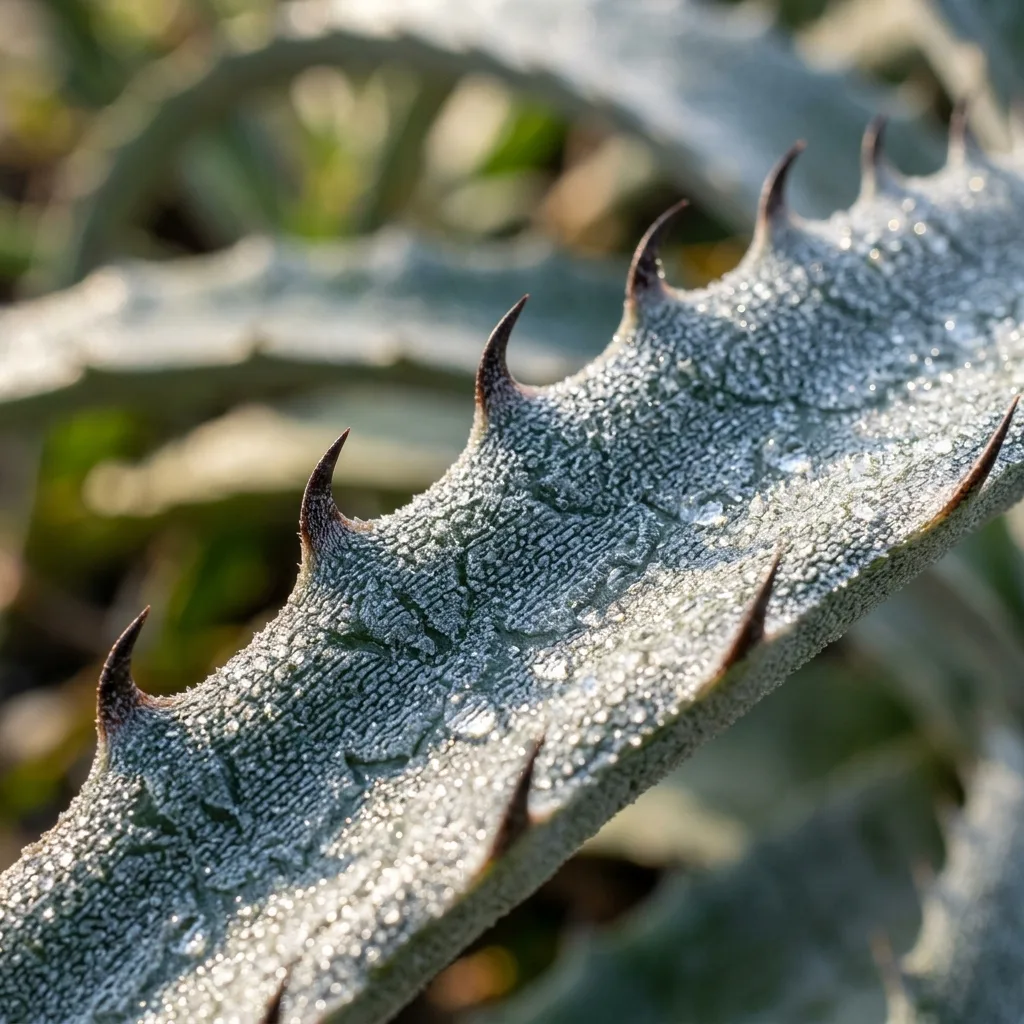
Its leaf anatomy is an evolutionary masterpiece engineered for water preservation under fierce environmental pressure. The foliage is enveloped at a microscopic scale by peltate, reflective scales known as trichomes. These specialized trichome layers serve a dual physiological purpose: they scatter intense solar ultraviolet (UV) radiation away from sensitive photosynthetic tissues, while simultaneously condensing and funneling nocturnal atmospheric dew directly into the leaf mesophyll. Dyckia operates via Crassulacean Acid Metabolism (CAM). By tightly sealing its stomata throughout blistering daylight hours, transpirational moisture loss drops nearly to zero; under the cool night sky, stomata reopen to sequester atmospheric carbon dioxide into malic acid. Consequently, daytime irrigation cannot be absorbed immediately at a cellular level, rendering a porous, oxygen-saturated, and highly permeable root zone indispensable to prevent moisture stagnation.
The most decisive physiological distinction, however, resides in its rosette architecture. While epiphytic 'tank' bromeliads like Guzmania or Vriesea hold pooled water reservoirs in their central urns, the rosette of a Dyckia is structurally engineered to shed water outward instantly. Stagnant moisture trapped within the central growing apex exposes tender meristematic tissue to devastating fungal and bacterial pathogens within a matter of hours.
2. Accurate Diagnosis and Plant Signals
Attuning your eye to the silent morphological signals of your Dyckia is essential for circumventing irreversible tissue collapse. Use these reliable diagnostic markers to determine whether your specimen is craving hydration, starving for light, or suffocating in an improper substrate:
- Loss of Turgor and Longitudinal Leaf Incurving (Dehydration): When leaf margins curl inward into a pronounced 'U' cross-section and lower basal foliage turns crisp and straw-colored, the plant's xylem conduits are failing to transport moisture. This signifies either desiccated, dead rootlets from prolonged neglect or root rot induced by an airless, waterlogged medium.
- Softening and Blackening at the Center (Meristematic Crown Rot): If the innermost juvenile leaves slide loose with a faint tug and emit a foul odor accompanied by dark, water-soaked tissue decay, Phytophthora or Fusarium pathogens have breached the crown meristem.
- Etiolation and Loss of Foliar Density (Phototropism / Light Starvation): When the rosette loses its tight, ground-hugging, compact geometric symmetry and the leaves stretch upward while becoming weak, floppy, and deep emerald green, the plant is expending precious carbohydrates to reach a brighter light source.
- Crisp, Necrotic Marginal Blotches (Heat Stress and Stagnant Atmosphere): Sudden transfers into scorching midday glass exposures without adequate air circulation generate localized tissue burns and brittle, brown foliar necrosis.
3. Step-by-Step Cultivation Protocol
To cultivate robust, heavily spined, multi-headed clumps that bloom reliably year after year, adhere meticulously to this four-step physiological regimen:
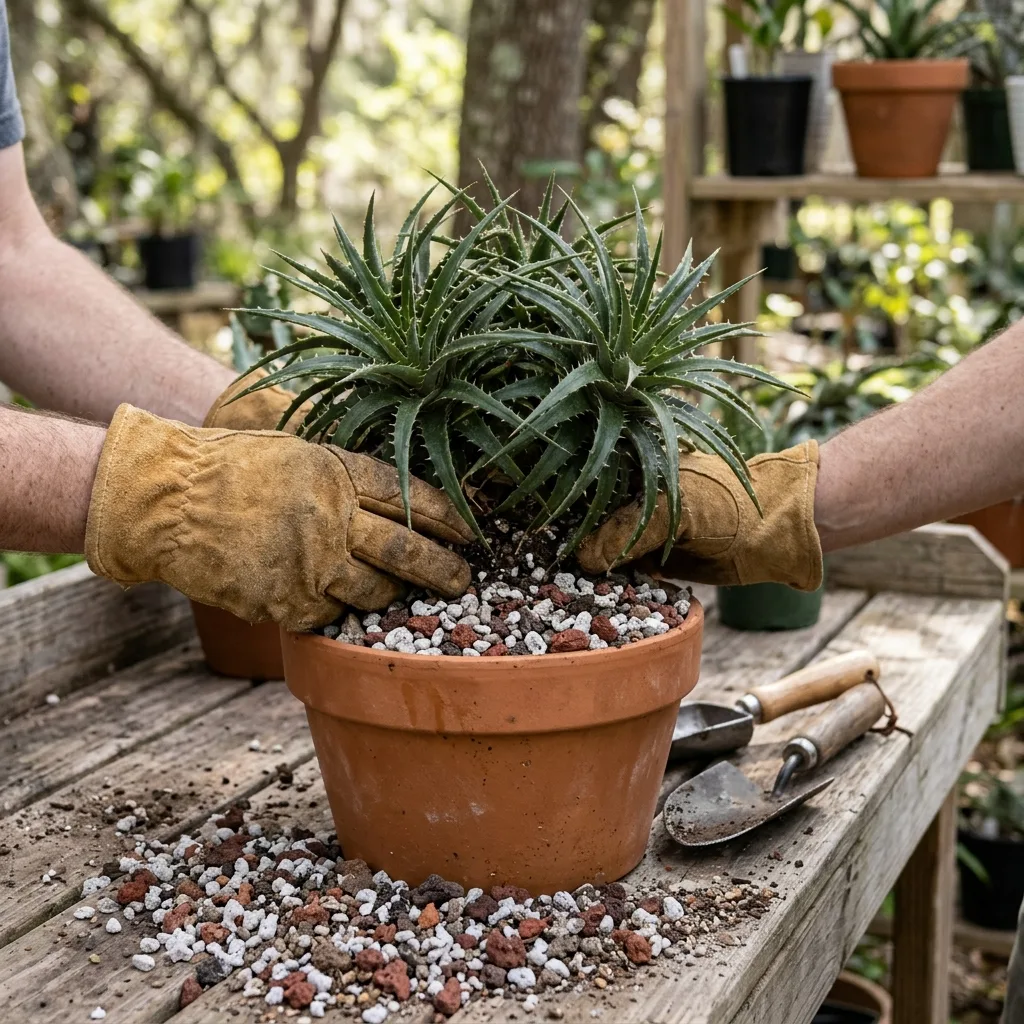
- Substrate Engineering and Pot Selection: Dyckia roots are tenacious and vigorous, requiring ample gas exchange. Opt for unglazed terracotta or low-profile composite clay pots with generous drainage perforations; shallow, wide azalea or bulb pans work exceptionally well. Prepare a custom substrate composed of 50% porous inorganic aggregates (pumice, crushed volcanic scoria, zeolite) and 50% coarse, fibrous organic material (chunky coco coir chips, buffered peat, or thoroughly sifted pine bark).
- Light Acclimation and Microclimate Positioning: Dyckia thrives under relentless illumination. Provide at least 6 to 8 hours of direct, unfiltered sunlight daily on a south- or west-facing patio, balcony, or unshaded window sill. If transitioning a plant outdoors after winter dormancy, never place it immediately beneath harsh summer midday rays; implement a gradual 10-day acclimation phase under dappled shade or 30% shade cloth to prevent solar scalding.
- Physiological Irrigation (The Soak-and-Dry Cycle): Throughout the active growth period from mid-spring through early autumn, drench the substrate thoroughly as soon as the top 2 to 3 cm (1 inch) dries out. Ensure water flows freely through the drainage holes. When ambient temperatures slip below 12°C (54°F) in autumn and winter, taper watering drastically, allowing the root zone to dry out almost entirely between modest waterings.
- Targeted Nutrition and Mineral Replenishment: Unlike many slow-growing desert cacti, Dyckia has a comparatively robust appetite when light and thermal baselines are met. During spring and mid-summer, apply a balanced, urea-free liquid fertilizer (such as an N-P-K 10-10-10 or 20-20-20 formula enriched with chelated micronutrients) diluted to half-strength once a month. Never apply fertilizer to bone-dry substrate; always saturate the pot with pure water beforehand to shield the root hairs from osmotic shock.
4. Required Equipment, Materials, and Metric Benchmarks
| Parameter / Component | Prescribed Standard / Composition | Physiological Objective |
|---|---|---|
| Substrate Matrix | 30% Pumice (3–5 mm) + 20% Crushed Scoria/Lava Rock + 50% Coarse Coco Coir / Peat | Optimizes macroporosity, rhizosphere aeration, and dynamic, capillary moisture buffering. |
| Light Intensity | Minimum 25,000 – 50,000+ Lux (Direct, full solar exposure) | Drives trichome density, triggers anthocyanin color shifts, and maintains compact rosette geometry. |
| Irrigation Water Specs | Room temperature (18°C – 22°C / 64°F – 72°F), low-mineral or resting rainwater | Prevents thermal shock to tender root hairs and stops calcium incrustation on foliar margins. |
| Container Material | Broad-rimmed, unglazed terracotta or high-drainage ceramic pans | Facilitates lateral transpiration through pot walls, mitigating saturated zones at the root base. |
| Thermal Tolerance | Optimal: 20°C – 35°C (68°F – 95°F) | Critical Floor: -2°C (28°F) in bone-dry soil | Prevents intracellular ice nucleation and sustains vital CAM enzymatic cycles. |
5. Five Critical Mistakes and Rescue Protocols
- Mistake: Treating It Like an Epiphytic Bromeliad by Filling the Central Cup.
Rescue Protocol: If standing water accumulates in the rosette crown, immediately tilt the pot sideways to drain it completely, or wick up moisture using the twisted corner of an absorbent paper towel. Shift the plant into an area with high ambient air movement and breezy ventilation. - Mistake: Subjecting It to Extended Cactus-Style Parched Drought in Peat.
Rescue Protocol: While exceptionally drought-hardy, keeping a Dyckia in hard-baked, hydrophobic peat throughout peak summer causes irreversible root desiccation. If the root system has died back, unpot the specimen, excise dead, brittle fibers with sterilized shears, and reroot the base in a lightly dampened blend of coarse pumice and perlite under bright, filtered light. - Mistake: Handling Dense Specimen Clumps with Bare Hands.
Rescue Protocol: The hooked marginal spines of Dyckia curve backward like predatory raptor talons, tearing skin upon the slightest tug. Always wear thick, puncture-resistant split-leather rose gauntlets, or wrap the foliage securely in multiple layers of rolled newspaper or corrugated cardboard collar before attempting repotting or root separation. - Mistake: Saturated Soil in Low Light and Cold Temperatures.
Rescue Protocol: In dim indoor spaces or cold winter rooms, transpirational pull drops close to zero. Excess moisture drowns the roots. If lower leaves turn translucent yellow and mushy, cease all watering immediately, unpot to inspect the rhizosphere, dust healthy root fragments with sulfur or cinnamon-based antifungal powder, and relocate to a bright, warm location. - Mistake: Severing Offsets (Pups) Prematurely.
Rescue Protocol: Dyckia produces basal vegetative offsets abundantly. Severing a pup before it reaches at least one-third the mass of the parent rosette—and before it has initiated independent adventitious root primordia—severely lowers survival rates. Dissect offsets cleanly using a sterile scalpel, allow the cut surface to callus in dry shade for 48 to 72 hours, and set into a dry mineral substrate until rooting occurs.
6. Seasonal Calendar and Long-Term Specimen Development
Synchronizing your care with Dyckia’s seasonal metabolic tempo yields remarkable developmental results:
- Spring (March – May): The vegetative awakening phase. The Art of Scientific Stem Cuttings and Rooting">This is the prime window for repotting, dividing crowded colonies, and harvesting vigorous offsets. Gradually ramp up irrigation frequency and administer your first diluted nutritional feed.
- Summer (June – August): The metabolic peak. Soil dries rapidly under intense sun; water methodically whenever the upper substrate dries out. Mature, unstressed plants will reward you by throwing tall, dramatic terminal inflorescences bearing tubular blooms in electrifying shades of yellow, vibrant orange, or crimson.
- Autumn (September – November): Growth decelerates. Terminate all supplemental feeding to allow foliar cell walls to harden. Widen the intervals between waterings. Relocate outdoor specimens indoors or beneath sheltered eaves before the first hard autumn frosts strike.
- Winter (December – February): Quiescent rest period. Provide a brightly lit station with thermal ranges maintained around 10°C to 15°C (50°F to 59°F). Water sparingly—only once or twice a month—just enough to stave off extreme cellular shriveling along the outer leaf margins.
By respecting these terrestrial bromeliad dynamics, your Dyckia will do far more than merely survive; over the years, it will multiply into a majestic, armor-clad, silver-and-amethyst clump that serves as the undisputed crown jewel of your succulent collection.


Reader Reviews & Comments 4 Reviews
Julian Hayes
Clara Montgomery
Marcus Vance
Deborah Evans
Leave a Review & Rating
Share your plant care tips, experiences, or questions with our succulent community.