






Across arid expanses stretching from the scorched Sonora Desert of Mexico to the sun-drenched rocky slopes of the Mediterranean, cacti do far more than merely survive; they yield some of nature's sweetest, most hydrating botanical gifts. To the question 'Are cactus fruits good for you?', the biochemical and botanical answer is a resounding yes. Defying extreme heat and prolonged drought, these fleshy pericarp tissues store potent betalain pigments, concentrated ascorbic acid (vitamin C), dietary pectins, and essential bioavailable magnesium within their cellular vacuoles.
In habitat, fruit set represents the evolutionary zenith of a cactus's annual life cycle. Originating directly from the hypanthium and floral receptacle, these structural vessels evolved specifically to disseminate seeds via desert fauna during the driest seasons. Whether cultivated in garden beds or patio containers, a successful harvest offers both an invigorating, restorative delicacy and unambiguous proof of your plant's prime physiological vitality.
1. Taxonomic Identity, Areole Architecture, and Spine Morphology
In botanical classification, not all cactus fruits are created equal. When discussing delectable, edible varieties, the primary taxonomic lineage belongs to the family Cactaceae, led predominantly by the genus Opuntia (prickly pear, paddle cactus) and the hemi-epiphytic, climbing genus Hylocereus (pitaya / dragon fruit, now widely classified under Selenicereus). Furthermore, Myrtillocactus geometrizans (bilberry cactus / garambullo) and assorted Stenocereus species yield exceptionally flavorful, candy-sweet desert berries.
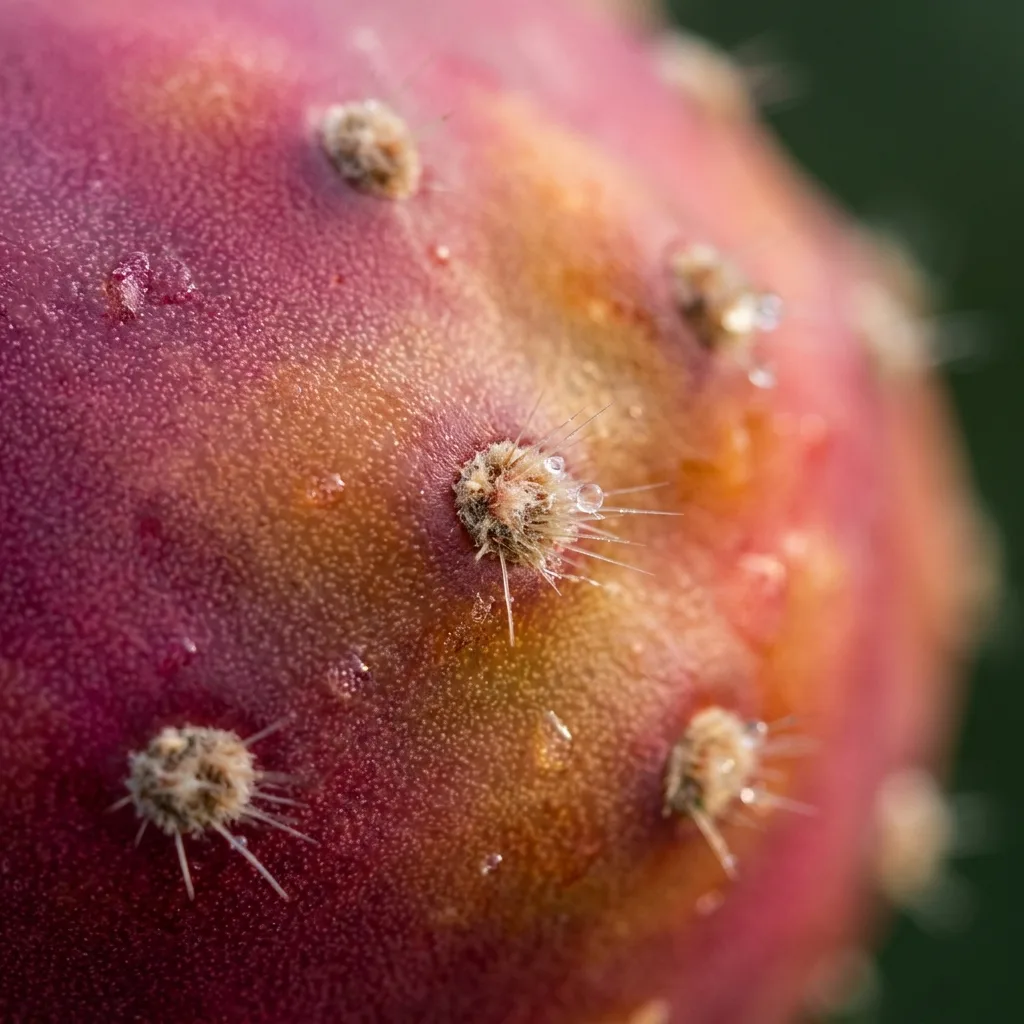
The quintessential morphological hallmark separating true cacti from all other succulent plant families is the specialized areole. Areoles are condensed, modified lateral bud organs distributed along the stem ribs, pads, and the outer epidermis of the fruit itself. A maturing cactus fruit features two distinct physical defenses emerging from these structures:
- True Spines: Rigid, lignified, modified bud scales that furnish mechanical defense against large herbivores.
- Glochids: Minute, hair-like bristles lined with retrorse (backward-facing) microscopic barbs. Prominently clustered at the center of each areole on Opuntia ficus-indica fruits, glochids detach upon the slightest friction, embedding tenaciously into dermal tissue and causing acute irritation.
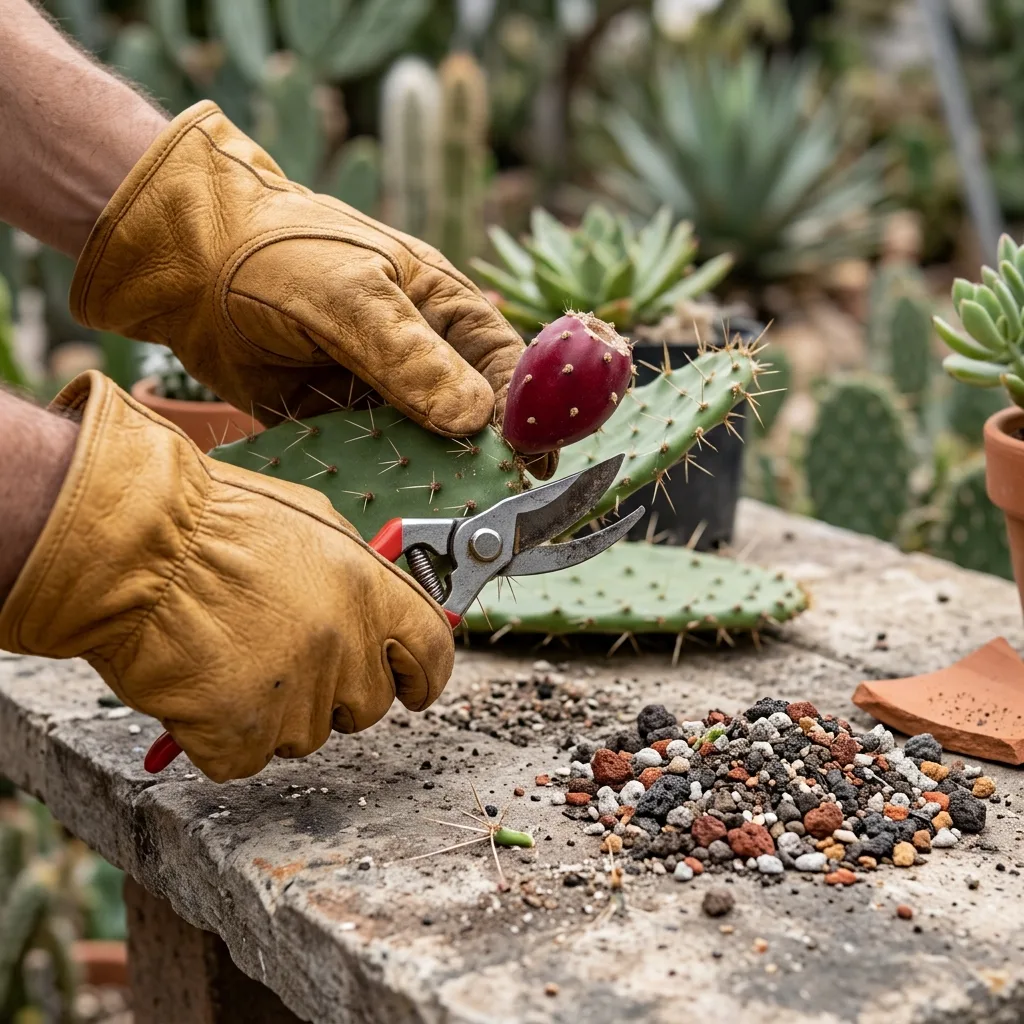
Enjoying the exceptional nutritional bounty of cactus fruits begins with respecting this glochid anatomy: always use heavy leather gloves, metal tongs, or singe the harvested fruit over an open flame before peeling.
2. Photoperiod, Solar Irradiance, and Ventilation Dynamics
Synthesizing sugars and setting fruit demands immense photosynthetic energy. Arid desert taxa such as Opuntia demand a minimum of 6 to 8 hours of uninterrupted, direct full-spectrum sunlight daily. Sub-optimal photon exposure triggers etiolation—the unsightly, structurally compromised stretching of cladodes—which completely prevents the plant from entering an operational reproductive phase.
Conversely, subtropical forest dwellers like Hylocereus favor intense morning and late-afternoon sun, benefiting from light dappled shade during peak solar noon to prevent cuticular scorching. For both genera, continuous air circulation is mandatory during nocturnal hours when epidermal stomata open. In stagnant, humid, or poorly ventilated indoor rooms, budding flowers inside areoles spontaneously desiccate and abort before anthesis.
3. Irrigation Dynamics and the Critical Winter Dormancy Regime
Cacti operate via Crassulacean Acid Metabolism (CAM) photosynthesis, holding their stomata tightly closed throughout blistering days and opening them solely under the cool night sky to fix carbon dioxide without catastrophic transpiration loss. The most fatal mistake in cactus care is keeping the root zone consistently moist in hopes of swelling the fruit. Watering frequently is never an act of affection; it suffocates the capillary root system and induces swift anaerobic collapse.
Throughout the active vegetative window from spring into late summer, apply a thorough soak-and-dry cycle: drench the substrate until water flows uninhibited from the drainage apertures, then allow the root ball to dry out entirely before offering more moisture.
However, the genuine biological prerequisite for a generous harvest is a strict winter dormancy period. From November through early March, place mature cacti in an unheated, well-ventilated, bright location maintained between 5°C and 12°C (41°F–54°F), withholding irrigation almost entirely. This combined moisture and thermal deficit subjects the vascular system to controlled physiological stress, sparking floral meristem initiation within the areoles. Cacti kept in heated living rooms all winter fail to register seasonal signals and will never produce fruit.
4. High-Mineral Substrate Engineering and Container Parameters
The nutrient density and sugar-acid balance of a cactus fruit are inextricably tied to the porous structure and mineral makeup of the subterranean substrate. Fibrous roots swiftly deteriorate when confined to compressed, peat-heavy, or clay soils. An optimal cactus medium must feature zero perched water tables, drain instantaneously, and preserve oxygen channels surrounding root xylem tissues.
| Substrate Component | Ratio (%) | Botanical Function & Soil Utility |
|---|---|---|
| Horticultural Pumice (3–6 mm) | 35% | Superior internal porosity, structural air pockets, and moisture buffering |
| Volcanic Scoria (Lava Rock) | 25% | Improves root aerification, stabilizes pot ballast, and releases trace minerals |
| Zeolite or Calcined Clay | 15% | Elevates Cation Exchange Capacity (CEC) and moderates rhizosphere pH |
| Coarse Washed River Sand | 10% | Accelerates gravitational percolation and optimizes root anchor grip |
| Aged, Screened Leaf Compost or Coco Coir | 15% | Minimal organic baseline providing indigenous mycorrhizal colonization |
Pair your gritty mineral mix exclusively with unglazed terracotta vessels featuring prominent drainage holes. The porous clay walls encourage rapid lateral evaporation, shielding subterranean root collars from chronic moisture traps.
5. Flower Induction Strategies and Nutrient Partitioning
To reap fruit, you must first foster robust, healthy blooms. During the active flowering period (April through July), fertilizers with high nitrogen ratios must be strictly avoided. Excess nitrogen encourages rapid, weak, flaccid vegetative tissue while completely repressing flower induction.
As soon as embryonic flower buds differentiate within the areoles, switch to a specialized low-nitrogen, high-phosphorus, high-potassium formula (such as an NPK 5-10-15 or 4-8-12 profile), applied at half-strength once per month. Potassium plays a pivotal role in osmotic regulation, maximizing fruit brix levels (sugar content), reinforcing cell wall integrity, and optimizing betalain pigment synthesis.
6. Propagation, Cladode Cuttings, and Grafting Techniques
To preserve precise genetic fidelity and replicate productive mother clones, vegetative propagation via cuttings remains the horticultural standard:
- Cladode (Pad) Harvesting: For Opuntia species, harvest a mature pad (at least 1 to 2 seasons old) at its narrow joint using a sterilized, razor-sharp grafting blade.
- Callus Formation: Never set fresh cuttings directly into moist soil. Lay the pad in a well-ventilated, warm, shaded room for 7 to 10 days until a dense, white suberized callous tissue covers the cut surface.
- Dry Bedding: Insert the calloused pad vertically into an inorganic, gritty rooting mix. Withhold standard watering for the first 14 days; simply mist the top surface lightly to stimulate geotropic adventitious root extension.
For sluggish, slower-growing fruiting genera (such as selective Echinocereus or Stenocereus taxa), performing a cleft or flat graft onto vigorous, disease-resistant Hylocereus rootstocks can accelerate the timeline to initial fruit harvest from five years down to under eighteen months.
7. Mitigating Fungal Pathogens and Post-Harvest Rot
During the final phase of fruit ripening, elevated tissue sugars render the pericarp more susceptible to opportunistic fungal spores. The most widespread threats include vascular wilt caused by Fusarium oxysporum and blossom-end rot provoked by Botrytis cinerea (gray mold).
If you detect sudden epidermal softening, basal discoloration, or an unusual sour odor around the areoles, cease all watering immediately. Excise compromised fruits with sterilized surgical instruments and dust all open tissue margins with micronized elemental sulfur or horticultural cinnamon powder to prevent fungal mycelium from colonizing vascular bundles. Generous air exchange and high-mineral substrate choices eliminate over 95% of these fungal complications from the start.


Reader Reviews & Comments 3 Reviews
Julian Vance
Clara Sterling
Marcus Holloway
Leave a Review & Rating
Share your plant care tips, experiences, or questions with our succulent community.