






Having evolved across the sun-baked limestones of the Sonoran Desert and the semi-arid plateaus of the South African Karoo, cacti and succulents represent one of the most exquisite hydraulic architectures nature has ever devised. Capable of storing months' worth of water within specialized parenchyma tissues, these remarkably resilient survivors can induce a profound sense of helplessness when they suddenly droop, wrinkle, and soften upon entering our living spaces. Yet, that languishing green silhouette on your windowsill is not dying in silence; it is communicating with you explicitly at a cellular level.
Wilting across succulent tissues is predominantly a physiological distress beacon triggered by the collapse of intracellular turgor pressure. Well-meaning growers often misinterpret this flaccidity as mere 'dehydration' and instinctively reach for the watering can. However, frequent watering is not an expression of horticultural care—it frequently asphyxiates root hair capillaries, depriving them of essential rhizosphere oxygen. Stem pleating and wrinkling can stem directly from acute desiccation, but ironically, it also results from pathogenic root rot severing the plant's vascular water highway (xylem).
In this comprehensive botanical masterclass, we examine how to decipher your wilting succulent’s cellular distress signals, identify biochemical and physical bottlenecks in the subterranean zone, and systematically implement a five-step clinical methodology to restore your specimen to its sculptural, robust splendor.
1. Taxonomic Identity, Areole Architecture, and Spine Morphology
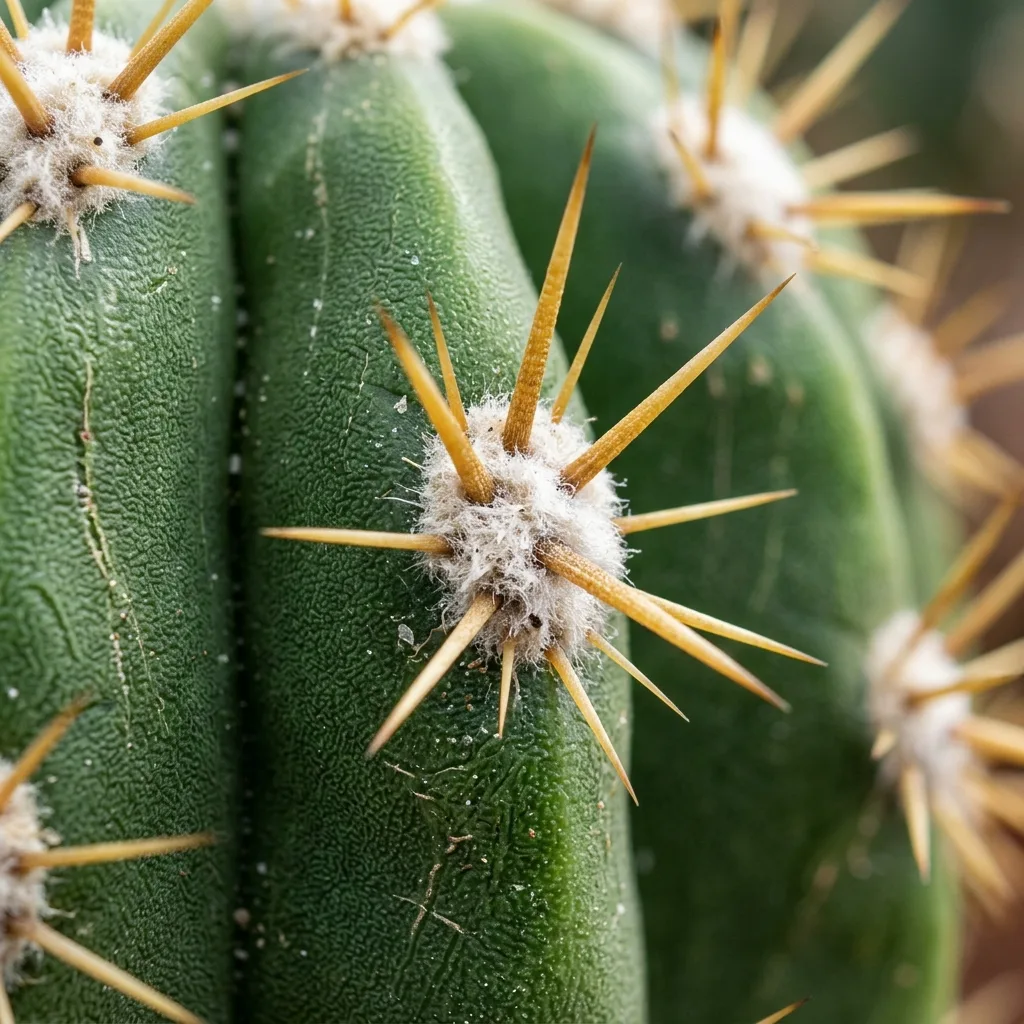
Before intervening in a wilting plant body, you must establish the anatomical boundaries of your specimen. The singular physiological characteristic separating the cactus family (Cactaceae) from all other succulent plant lineages (such as Crassulaceae, Euphorbiaceae, or Asphodelaceae) is the presence of the areole. Areoles are highly condensed, modified lateral bud meristems distributed across the stem; spines, offsets, and flowers emerge exclusively from these specialized cushion-like structures. Spines themselves are evolutionary modifications of leaves tailored to reduce boundary-layer transpiration to near zero.
If your wilting plant is a true cactus (such as an Echinopsis or Mammillaria), the wilting progression manifests as a dramatic narrowing between vertical ribs and an inward retraction of spiniferous tissues. As fluid stored in the water-storage parenchyma diminishes, accordion-like stem ribs collapse inward to minimize surface area exposed to solar radiation. Conversely, in leafy succulents (such as an Echeveria or Graptopetalum), wilting presents through the dulling of the silvery farina (epicuticular wax coating) accompanied by soft, wrinkled lower leaves. This epicuticular layer functions as natural systemic sunscreen; exercise great care never to smudge or rub it off with your fingers during diagnostic handling.
2. Light Exposure, Solar Irradiance, and Aeration Dynamics
When a succulent body begins to wilt, its metabolic rate declines, interrupting Crassulacean Acid Metabolism (CAM photosynthesis). Succulents open their stomata under the cover of night to fix and sequester atmospheric carbon dioxide as malic acid; throughout the day, they decarboxylate these organic acids to synthesize sugars using solar photons behind closed stomata. In light-deprived environments, this bioenergetic cycle stalls. The stem subsequently stretches upward in a desperate search for illumination—a condition known as etiolation—producing fragile, pale, structurally compromised tissue prone to systemic collapse.
A critical misstep during rehabilitation is impulsively moving an already weakened plant into intense, unfiltered midday sun. When cells with disrupted fluid homeostasis face sudden high irradiance (exceeding 40,000 lux), epidermal cells suffer irreversible photo-oxidation and chlorophyll degradation. During recovery, provide gentle morning sunshine filtered through sheer fabric (targeting roughly 15,000 to 25,000 lux). Furthermore, because stagnant ambient air inhibits evaporation at the delicate root crown, consistent, gentle ambient air circulation is paramount along your windowsill.
3. Hydration Cycles and the Vital Winter Dormancy Regime
The irrigation cadence represents the physiological core of succulent rehabilitation. The prevailing dogma that 'cacti only need a spoonful of water' remains one of the most destructive fallacies in indoor horticulture. Cacti must not be watered in microscopic increments; they require infrequent yet thoroughly saturating soakings. Desert cloudbursts are exceptionally rare, yet when they strike, they thoroughly drench the entire geological substrate profile. Fine root hairs rapidly absorb available moisture, filling large vacuole compartments within the parenchyma to sustain the organism through subsequent droughts.
Equally vital is the winter dormancy period observed between November and March. When ambient temperatures hover between 8°C and 12°C (46°F–54°F), cacti dramatically slow their internal biochemical machinery. Applying excess water during this vegetative rest invites pathogens to penetrate compromised root tips, triggering severe root rot that only becomes visible as spring approaches. Mild stem contraction and rib deflation during dormancy is an entirely natural physiological adaptation and requires zero corrective irrigation.
4. High-Mineral Substrates and Pot Selection Criteria
No therapeutic intervention can save a wilting cactus if subterranean root health remains compromised. Standard peat-based potting soils and conventional garden clays retain moisture for weeks on end, creating anaerobic conditions that induce root asphyxiation. When root networks collapse from oxygen starvation, the plant can no longer translocate moisture upward, ironically causing it to 'wilt from thirst due to excess water.'
An ideal substrate for emergency recovery must consist of at least 70% inorganic, porous volcanic aggregates:
| Substrate Component | Ratio | Physiological / Physical Function |
|---|---|---|
| Pumice (3–6 mm) | 35% | Superior porosity, microporous water retention, and internal aeration |
| Lava Rock / Scoria | 20% | Trace minerals, iron enrichment, and permanent drainage channels |
| Zeolite / Calcined Clay | 15% | High Cation Exchange Capacity (CEC) and toxin absorption |
| Coarse Quartz Sand | 10% | Prevents substrate compaction and accommodates fine root hairs |
| Sterile Coconut Coir | 20% | Minimal organic structure ensuring slow, controlled moisture release |
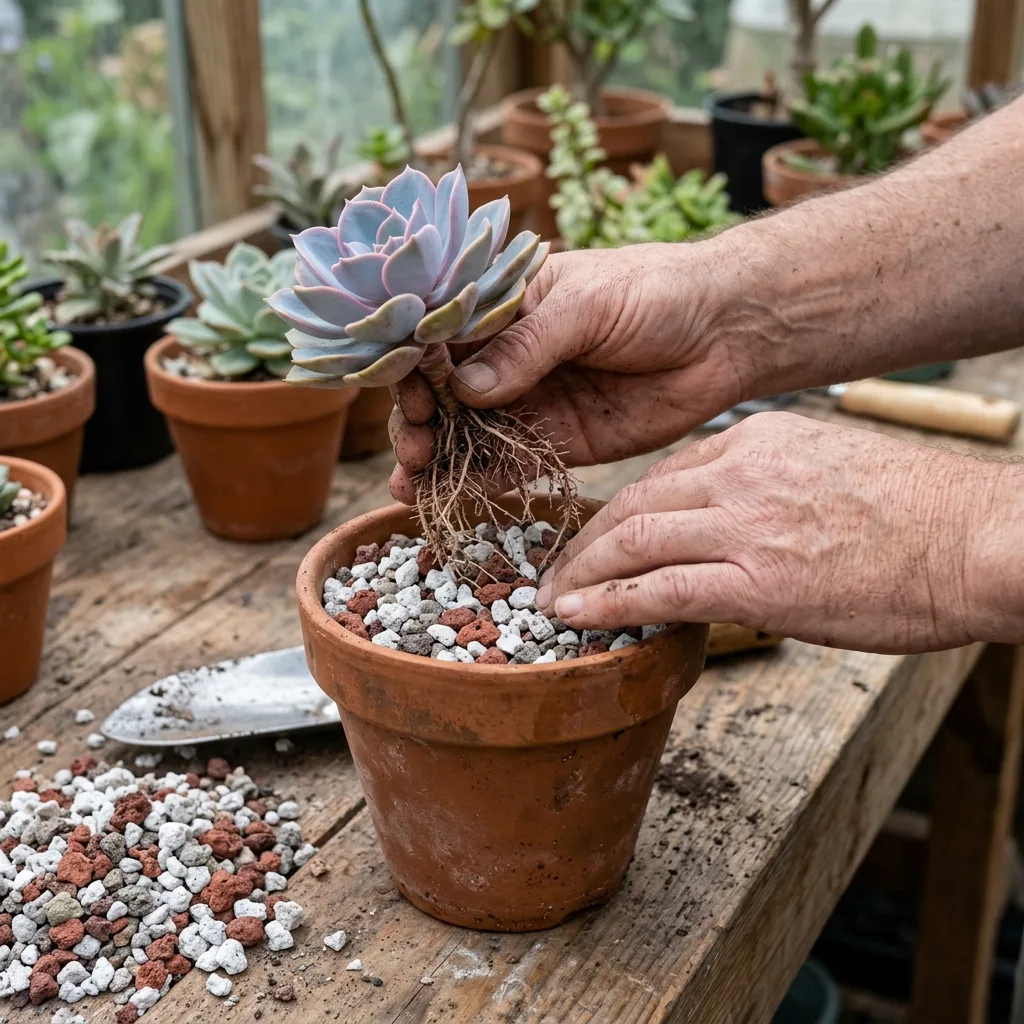
Regarding containers, always choose unglazed terracotta equipped with ample drainage holes. The porous clay walls permit bilateral moisture dissipation, facilitating gas exchange and suppressing fungal colonization around the root zone.
5-Step Clinical Protocol to Revive a Wilting Cactus or Succulent
To successfully rehabilitate your compromised plant, execute the following clinical procedure methodically:
- Step 1: Crown and Tissue Firmness Evaluation (Physical Triage)
Using a sterile wooden stylus, gently probe the basal crown directly at the soil interface. Do you see dark brown, wet lesions or feel soft, disintegrating tissue? Or is the epidermis simply lined with dry, retracted micro-furrows? Dry, wrinkled skin indicates systemic dehydration; dark, mushy tissue confirms active pathogenic rot. - Step 2: Subterranean Root Inspection and Substrate Extraction
Unpot the plant with extreme care. Submerge the root ball in lukewarm water to rinse away dense, degraded peat residues until the architecture is bare. Healthy succulent roots appear fibrous, resilient, and pale cream or white. Brown, blackened, brittle, or foul-smelling root strands indicate necrotic decay. - Step 3: Surgical Excision and Callus Formation
If rot is present, utilize a flame-sterilized scalpel to excise all necrotic root filaments. If the rot has ascended into the stem base, make clean horizontal cross-sections until only pristine, translucent green tissue remains, completely devoid of discolored vascular bundles. Dust the fresh cut with powdered activated charcoal or sulfur. Place the plant in a dry, warm, shaded, well-ventilated spot for 4 to 7 days until a tough, protective callus forms over the wound. - Step 4: Dry Mineral Re-Potting and Acclimatization
Once the callus has hardened, pot the specimen into the dry, mineral-dominant mix outlined in our substrate table. Crucially, do not water the plant immediately! Allow the specimen to rest undisturbed in dry substrate for 5 to 7 days, providing micro-fissures on root tissues adequate time to seal. - Step 5: Bottom-Up Hydration and Gradual Light Integration
Following the dry acclimatization interval, set the pot into a shallow basin of ambient water for 15 minutes, allowing moisture to rise through capillary action and saturate only the lower two-thirds of the substrate. Allow the vessel to drain fully, then relocate the plant to a spot with bright, indirect light and gentle morning sun. Within two to four weeks, the roots will resume hydration, restoring cellular turgor and smoothing out stem wrinkles.
5. Encouraging Rebloom and Strategic Nutrient Supplementation
Once a cactus has successfully overcome wilting stress and restored its hydraulic balance, it redirects survival energy toward generative reproduction—flowering. Initiating flower buds requires an uninterrupted, cool winter rest followed by a gradual increase in ambient temperature and photoperiod in early spring.
Never apply nitrogen-heavy liquid feeds to recovering succulents; excessive nitrogen produces bloated, structurally weak cells highly susceptible to secondary rot. Approximately one month after full turgor is regained, apply a specialized low-nitrogen, high-phosphorus, and high-potassium fertilizer (such as an NPK 4-10-10 or 5-15-15 formulation) diluted to one-quarter strength, once monthly during active growth.
6. Emergency Propagation, Stem Cuttings, and Rescue Grafting
In advanced cases, basal rot may have progressed too far up the central core to salvage the root system. Even in this dire scenario, you can often rescue genetics through vegetative propagation by harvesting healthy apical segments or uninfected offsets (pups). Cut cleanly through uninfected green tissue well above the decay margin, allow the cut face to callus completely in the shade, and rest the cutting upright over dry, coarse pumice.
For rare or extremely dehydrated cultivars lacking sufficient energy reserves to form adventitious roots, rescue grafting serves as a rapid surgical solution. Align the vascular cambium of your wilted scion with that of a vigorous, rooted rootstock (such as Hylocereus undatus or Trichocereus spachianus) and bind them with elastic bands. The robust rootstock will pump vital hydration and photosynthetic nutrients straight into the scion, visibly reinflating its tissues within days.
7. Mitigating Fungal Pathogens and Preventing Recurrence
The primary biological culprits triggering sudden wilting are opportunistic fungal pathogens: Fusarium oxysporum, Phytophthora cactorum, and Rhizoctonia solani. These fungi proliferate in heavy, poorly drained soils, entering damaged root hair cells and colonizing xylem pathways. Once these channels are clogged by fungal hyphae, water cannot reach the upper vegetative body, producing the misleading appearance of severe drought.
If fungal contamination is confirmed, immediately discard the old growing medium and disinfect pots with a 10% bleach solution or isopropyl alcohol. Lightly misting the basal stems of established collections in early spring with an organic copper-based fungicide or cold-pressed horticultural neem oil provides durable protection, ensuring your collection remains vibrant, sculptural, and permanently shielded against wilting crises.


Reader Reviews & Comments 3 Reviews
Marcus Thorne
Eleanor Vance
Clara Higgins
Leave a Review & Rating
Share your plant care tips, experiences, or questions with our succulent community.