






High atop the sun-scorched granite inselbergs of Bahia in northeastern Brazil, clinging tenaciously between wind-blown mineral deposits, rises a truly striking botanical silhouette. The Turk's Cap Cactus (Melocactus bahiensis) performs one of the most astonishing developmental metamorphoses within the cactus family (Cactaceae)—a biological watershed that cleanly divides its vegetative youth from its adult reproductive life. While most globular cacti continuously expand their ribbed green bodies throughout their lifespans, this tropical xerophyte permanently halts stem enlargement upon reaching sexual maturity, crowning itself with a dense, velvet-and-bristle terminal structure known as a cephalium.
Known colloquially around the world as the Turk's Cap Cactus or Turk's Head Cactus, this exquisite Brazilian native demands a microclimatic emulation of its tropical habitat on our home windowsills. However, treating it like a standard Sonoran or Chihuahuan desert dweller by subjecting it to sub-zero winter chills or burying its roots in peat-heavy nursery potting soil will quickly prove fatal. In this guide, we explore how to recreate the precise dynamics of its native inselberg rock fissures indoors, safeguard its delicate capillary root hydraulics, and guide your specimen step by step toward producing that iconic rust-red crown.
1. Taxonomic Identity, Areole Architecture, and Spine Morphology
Melocactus bahiensis is an evolutionarily specialized species situated within the subfamily Cactoideae and the tribe Cacteae. In habitat, it is largely endemic to the semi-arid, thorn-scrub and exposed bedrock biome of Bahia and Pernambuco known as the Caatinga. During its juvenile (vegetative) phase, the plant presents as a depressed-globose to broadly pyramidal succulent stem, deeply incised with 10 to 12 sharp, prominent ribs. Its succulent cortical parenchyma functions like an accordion, pleated to shrink during severe droughts to reduce exposed surface area, and swelling rapidly during torrential seasonal rains to hoard cellular water reserves.
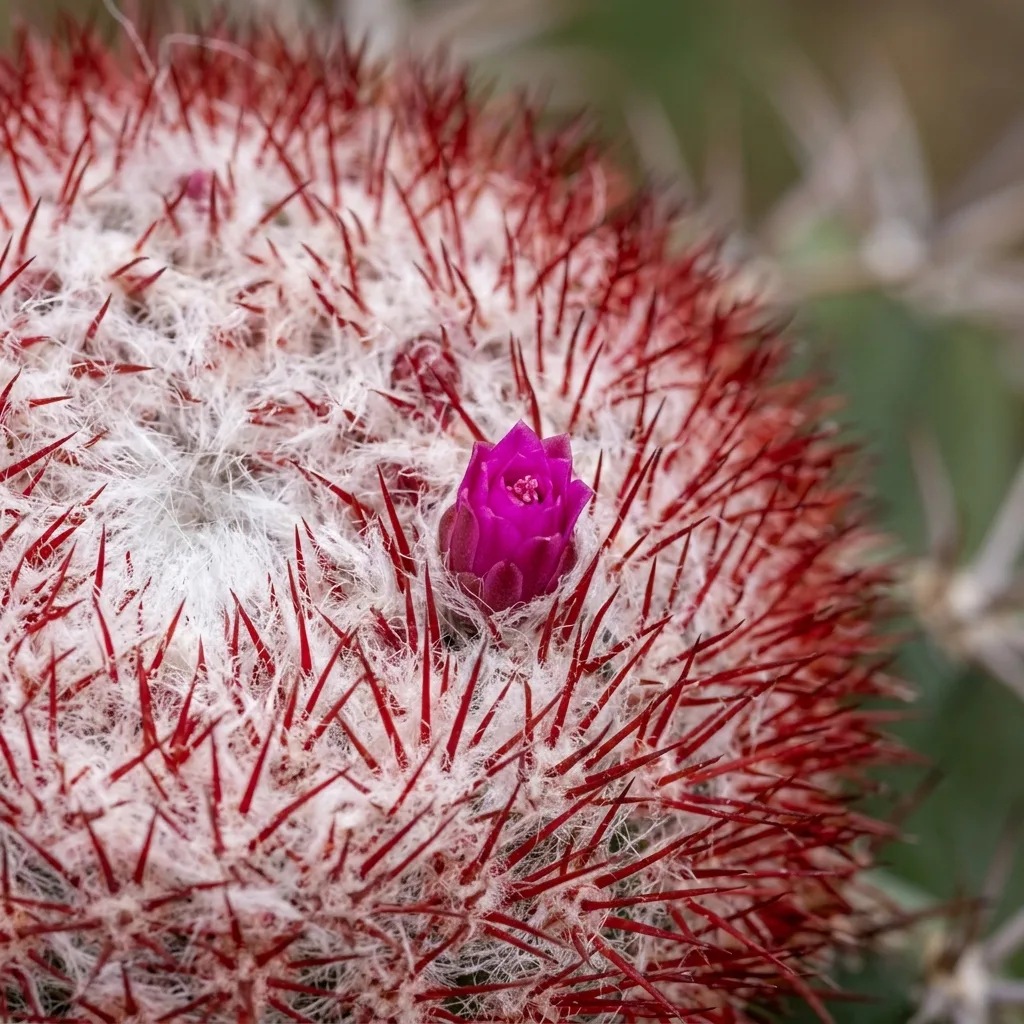
Evenly spaced along these distinct ribs sit woolly areoles armed with 8 to 12 stout, radiating radial spines and 1 to 4 stouter central spines thrusting upward and outward. Initially emerging in shades of reddish-brown to horn-amber, these spines mature into a weathered chalky-grey. Yet the true morphological marvel that distinguishes Melocactus bahiensis from almost any other succulent occurs when the specimen hits approximately 8 to 10 years of age and achieves a stem diameter of 10 to 15 cm. At this threshold, a genetic switch flips within the apical meristem: vegetative chlorophyllous stem growth halts permanently, giving way to generative (reproductive) tissue synthesis. From the apex sprouts a cylindrical, woolly pad composed of dense white trichomes interlaced with stiff, fiery reddish-orange bristles—the cephalium. For the remainder of the plant's life, every single flower, fruit, and seed will emerge exclusively from this specialized woolen crown.
2. Light Dynamics, Solar Irradiance, and Aeration Standards
In its native inselberg habitat, Melocactus bahiensis is bathed in unfiltered, high-lumen tropical sunlight rich in ultraviolet radiation. When cultivated indoors or in greenhouses, direct sunlight is indispensable for maintaining rigid rib structure, keeping spine clusters tightly spaced, and ensuring proper mineral deposition within the epidermis. A south- or west-facing window that provides a minimum of 6 hours of direct morning and afternoon sunlight serves as the ideal indoor staging ground.
However, intense midday sun focused through unvented window panes during peak summer heat can trigger greenhouse-effect scorching on the epidermis, particularly where ambient air circulation is sluggish. In nature, continuous trade winds sweep over the rocky bluffs, dissipating surface heat and maintaining optimal transpirational cooling. Consequently, home growers must prioritize active airflow alongside raw light levels. A Melocactus relegated to a stagnant, stuffy corner will accumulate moisture at the base of its areoles—even under good light—providing an open invitation for fungal spore germination.
3. Hydration Cycles and the Critical Winter Dormancy Regime
One of the most catastrophic mistakes in succulent cultivation is subjecting every cactus to an identical regime of extreme cold and complete winter drought. Unlike high-altitude Mexican cacti from the Chihuahuan desert that withstand freezing temperatures with bone-dry roots, Melocactus bahiensis is fundamentally tropical. This origin entirely reconfigures its irrigation and winter rest protocol. During the active growth season from early spring through mid-autumn, water deeply and thoroughly whenever the potting substrate has dried out completely (the classic 'soak and dry' method), allowing copious drainage from the pot base. This thorough wetting maintains the functional integrity of the xylem vessels; however, the saucer must be emptied immediately to prevent stagnant waterlogging.
The winter rest period represents the most critical survival bottleneck for this species. Melocactus roots are hypersensitive to low temperatures; exposing the plant to sustained ambient conditions below 12°C (54°F) induces cellular collapse and irreversible root mortality. Throughout winter, maintain ambient temperatures between 14°C and 16°C (57°F–61°F). Crucially, while arid desert cacti survive 3 to 4 months of zero moisture, the fine, fibrous root system of Melocactus bahiensis will desiccate and die permanently under prolonged bone-dry conditions. Therefore, winter watering should never be terminated entirely: apply a very modest splash of lukewarm water once every 4 to 6 weeks—just enough to dampen the lower root zone without thoroughly soaking the cold pot.
4. High-Mineral Substrate Formulation and Potting Dynamics
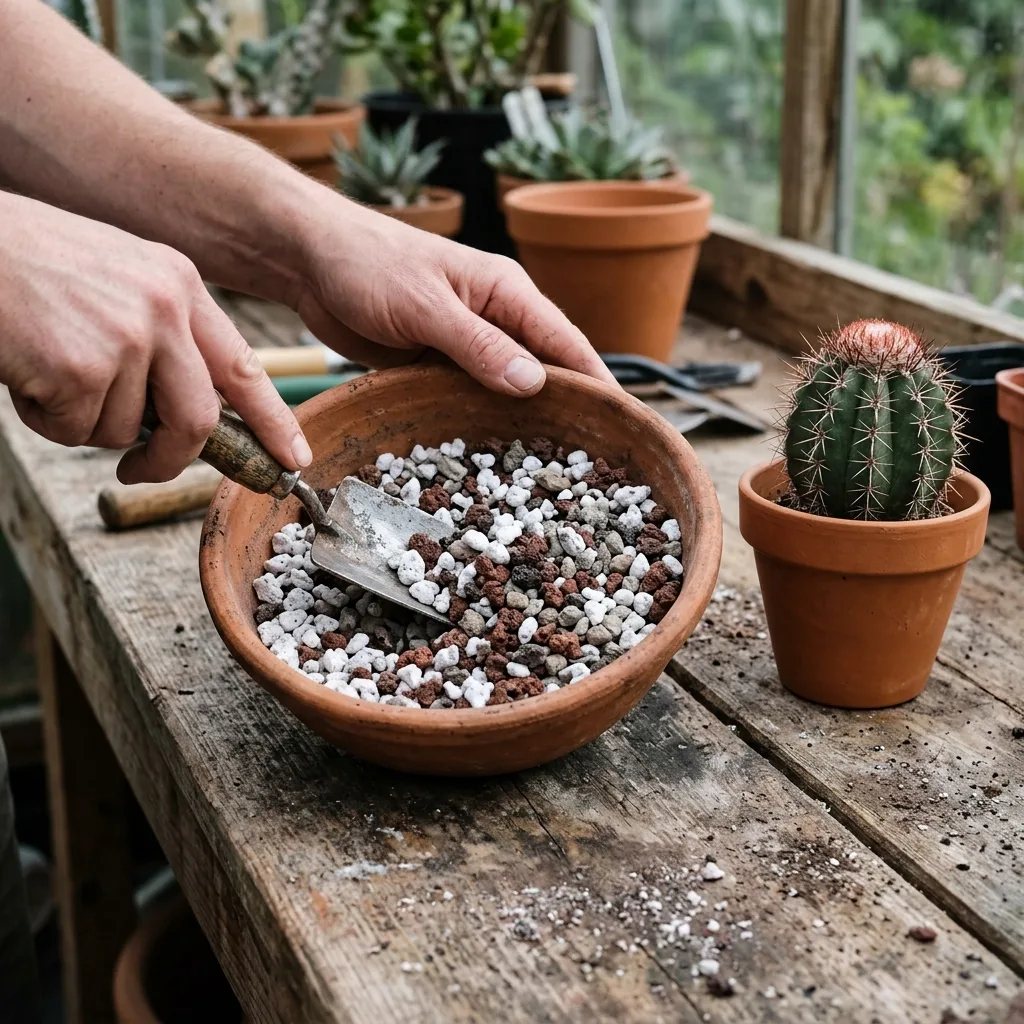
In its natural habitat, this cactus anchors itself into shallow rock crevices packed with highly porous decomposed granite, feldspar, and quartz gravel. It will rapidly perish if planted in commercial, peat-heavy peat-moss potting mixes that retain moisture and stifle gas exchange. The fibrous root architecture of Melocactus bahiensis requires exceptional aeration and rapid drainage. An optimal potting matrix must consist of at least 75% to 80% coarse inorganic mineral aggregates.
Pot selection is equally decisive for long-term health. Avoid glazed ceramic or non-breathable plastic containers; opt instead for unglazed, porous terracotta pots. Unglazed clay breathes, allowing excess moisture to evaporate sideways through the pot walls and preventing hypoxic conditions around the root crown. Furthermore, because the root network spreads laterally rather than anchoring via a deep taproot, choose a shallow, bowl-like container equipped with wide drainage holes rather than an overly deep standard pot.
| Substrate Component | Ratio (%) | Botanical Function & Cultivation Benefit |
|---|---|---|
| Pumice (3–6 mm) | 35% | Maximizes macroporosity and root oxygenation without water retention. |
| Crushed Lava Rock (Scoria) | 25% | Provides micro-rough surfaces for root anchoring while releasing trace iron minerals. |
| Clinoptilolite Zeolite | 15% | Offers high cation-exchange capacity, buffering excess salts and inhibiting root rot. |
| Coarse Quartz Sand / River Grit | 5% | Replicates natural Caatinga granitic crevices and prevents substrate compaction. |
| Low-Dust Coconut Coir / Cactus Peat | 20% | Maintains mild substrate acidity and holds controlled micro-moisture for fine root hairs. |
5. Floral Induction Strategies and Nutritional Regimens
To produce flowers, a Melocactus bahiensis must first complete its physiological transition and form an active cephalium. It is biologically impossible for a juvenile specimen lacking this woolen cap to set buds. Once the cephalium is established, however, blooming is remarkably effortless and recurrent. During the hottest weeks of mid-to-late summer, diminutive, tubular, vibrant magenta-to-fuchsia blossoms burst forth from the depths of the bristly crown during the bright afternoon hours.
While individual blossoms usually persist for only a single day, they are self-fertile. Following successful pollination, the plant pushes small, cylindrical, fleshy fruits resembling miniature bright-pink peppers out from the bristles over the subsequent weeks. To encourage consistent floral display, feed the plant every third watering from mid-spring through late summer with a specialized low-nitrogen, high-phosphorus and potassium fertilizer (such as an NPK 5-15-20 formula) diluted to half-strength. Excessive nitrogen must be strictly avoided, as it can cause soft, bloated cephalium tissue prone to opportunistic fungal colonization.
6. Propagation Dynamics, Cuttings, and Grafting Protocols
Propagating a Melocactus diverges radically from working with most multi-stemmed cacti. This solitary species rarely produces basal offsets (pups) and does not branch under normal cultivation. Consequently, stem cuttings are completely unviable; severing a crowned Melocactus destroys the apical meristem, and the excised tissue almost universally rots without striking roots.
The definitive, natural method to Propagate Succulents and Is It Difficult? A Scientific Botanical Guide">to propagate the species is from seed:
- Harvesting Seed: When the ripe, neon-pink or crimson fruits are fully extruded from the cephalium, harvest them gently using fine-tipped tweezers. Slit the fruit skin, wash the microscopic glossy black seeds in tepid water to eliminate sugary pulp, and let them dry on paper towels.
- Seedbed Preparation: Lay down a sterile substrate of finely sifted pumice and perlite. Scatter the seeds over the damp surface without covering them, as light is a prerequisite for germination.
- Germination Chamber: Seal the tray inside a clear bag or covered humidity dome at 25°C–28°C (77°F–82°F) under bright, indirect light. Seedlings typically emerge within 7 to 14 days.
- Grafting Accelerators: Because juvenile Melocactus bahiensis seedlings grow sluggishly, commercial growers frequently graft young seedlings onto vigorous rootstocks such as Hylocereus or Trichocereus. This technique dramatically accelerates development and induces cephalium formation years ahead of schedule. However, for natural stability and longevity, de-grafting and re-rooting onto mineral substrate is preferred once adult maturity approaches.
7. Mitigating Rot Pathology and Fungal Defenses
The Achilles' heel of Melocactus bahiensis lies at the root collar and within the core of the cephalium. In poorly aerated substrates, soil-borne water molds like Phytophthora and Fusarium swiftly destroy the root architecture. Early warning signs include a loss of rib turgor, a dull yellowish-brown discoloration spreading upward from the soil line, and a spongy stem base. Without immediate intervention—unpotting, excising necrotic tissue, applying sulfur powder, and re-rooting—the internal parenchyma rapidly liquefies.
A unique pathogen threat involves internal cephalium rot. Overhead watering or misting allows the dense woolen bristles to soak up moisture like a sponge. In the absence of strong ventilation and warm sun, grey mold (Botrytis) establishes within the damp wool, quietly decaying the central apical meristem from above. Always apply water directly to the surrounding mineral substrate via a narrow-spout watering can, keeping the cephalium bone-dry. Additionally, citrus mealybugs (Pseudococcidae) frequently seek sanctuary inside the woolen fibers. Inspect the cap periodically using a magnifying glass; treat localized outbreaks immediately with a cotton swab soaked in 70% isopropyl alcohol, backing this up with systemic insecticides if deep infestations occur.


Reader Reviews & Comments 4 Reviews
Julian Vance
Eleanor Hayes
Clara Henderson
Marcus Sterling
Leave a Review & Rating
Share your plant care tips, experiences, or questions with our succulent community.