






Tempered by millennia of relentless desert droughts and searing solar radiation, cacti introduce some of nature's most arresting sculptural forms into our living spaces. Spanning from the craggy canyons of the Sonoran Desert to the limestone promontories of central Mexico, the unique botanical family Cactaceae represents an evolutionary marvel that swapped traditional broad leaves for sharp spines to conquer extreme water deficits. Yet behind those pristine, picture-perfect specimens lined up in commercial greenhouses, one frequently discovers concealed root decay, artificial chemical forcing, and chronic light starvation.
Inviting a cactus—whether a classic golden barrel cactus, an old lady pincushion cactus, or an epiphytic Christmas cactus—into your home is far more than acquiring a minimalist decorative object. It means stewarding a living organism with a slow-ticking metabolic clock and distinctly separated seasonal dormancy and active vegetative cycles. Many enthusiastic plant parents lose their specimens within mere weeks under the deceptive myth that 'cacti need zero care.' Genuine growing success does not begin at home on your windowsill; it begins right on the nursery bench.
In this comprehensive botanical buyer's handbook, we unpack the 10 most critical criteria you need to evaluate cacti through the discerning eye of a veteran horticulturist, detailing underlying physiological mechanisms, hands-on diagnostics, and foolproof home acclimation protocols.
1. Taxonomic Identity, Areole Morphology, and Spine Integrity
The definitive botanical method to distinguish a genuine cactus (Cactaceae) from lookalikes such as succulent spurges (Euphorbia) or other stem-succulent xerophytes lies in the examination of areoles. These specialized, modified branch buds resembling tiny cushions of fluff or trichomes are the exclusive evolutionary signature of true cacti. When inspecting a specimen, check the color of the areoles, the density of their wool, and the firmness of the emerging spines. Meticulously inspect the plant from the basal root flare up to the crown; soft scale insects and spider mites routinely seek sanctuary deep within these woolly cushions.
Spine morphology serves as an open window into the plant's recent lighting history. Feeble, shedding, or curiously pliable spines whisper tales of greenhouse etiolation—sunlight deficiency. Gently touch the radial and central spines of popular genera like Mammillaria (pincushion cactus), Gymnocalycium (chin cactus), or Echinocactus (barrel cactus) to confirm they are firmly anchored to the epidermal tissue.
2. Photonic Energy, Sunlight Intensity, and Aeration Standards
Before purchasing any cactus, map out the precise light exposure inside your home. Cacti are definitively not low-light plants. Relying on Crassulacean Acid Metabolism (CAM) physiology, they open their stomata at night to absorb carbon dioxide and require intense photonic energy during the daytime—at least 5 to 6 hours of unfiltered direct or softly sheer-filtered sun—to metabolize those stored malic acids. Placing a desert cactus on a dim, windowless office desk spells a protracted biological death sentence.
Passive air movement is just as paramount as pure light lumens. Stagnant, poorly ventilated indoor pockets impede transpiration and trap ambient humidity against the cuticle, triggering the germination of opportunistic fungal spores within the stomata. Ensure ahead of time that you can offer an airy, unobstructed south- or west-facing sill before bringing your new specimen home.

3. Hydration Cycles and the Vital Winter Dormancy Protocol
Excessive affection via overzealous watering—not prolonged dehydration—Is the Thumb Cactus? Mammillaria Matudae Care and Blooming Guide">Is the Orange Snowball Cactus? Botanical Care Tips for Growing Rebutia">is the leading killer of cultivated cacti. The succulent cortex of a cactus holds water securely bound within parenchyma tissue cells enriched with specialized mucilaginous compounds. The fundamental rule to adopt prior to purchase is the strict 'soak and complete dry-out' regimen. Never apply moisture until the substrate has dried out entirely down to the very base of the container.
Furthermore, to initiate seasonal flowering buds in spring, desert cacti require an authentic winter resting phase (dormancy) sustained at crisp temperatures between 46–54°F (8–12°C) combined with absolute soil dryness. Specimens kept adjacent to heating vents through winter and watered indiscriminately cannot enter dormancy; their biological rhythms unravel, leaving them prone to loose, weak cellular tissue.
4. Inorganic Mineral Substrates and Potting Physics
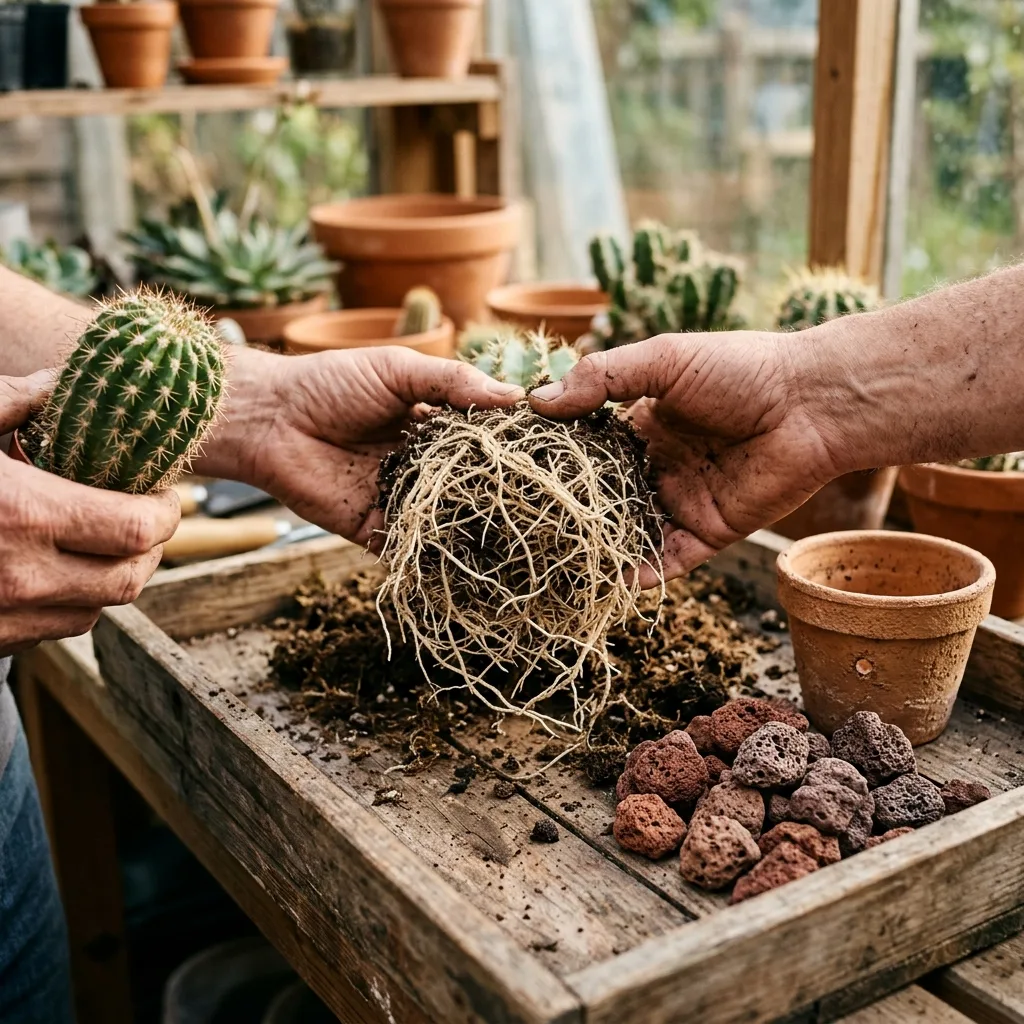
Commercial growers frequently pot young cacti in cost-efficient, lightweight pure peat moss or compressed coconut coir. While convenient for bulk logistics, this substrate proves catastrophic in residential spaces. Once fully desiccated, peat becomes stubbornly hydrophobic, repelling moisture; conversely, once saturated, it stays sodden for weeks, suffocating delicate root hairs. Plan to transition your newly purchased cactus into a grit-dominant mineral mix as soon as active spring growth resumes.
The following table outlines the optimal balance of potting components tailored for true desert species versus epiphytic rainforest cacti:
| Substrate Component | Desert Cacti Blend | Forest/Epiphytic Cacti (Rhipsalis, Schlumbergera) | Horticultural Role & Benefits |
|---|---|---|---|
| Coarse Horticultural Pumice | 35% | 20% | High microporosity, structural stability, creates long-lasting air pockets |
| Crushed Lava Rock / Zeolite | 25% | 10% | Nutrient-buffering mineral backbone; prevents basal rot |
| Coarse Quartz River Grit | 15% | 10% | Accelerates gravitational drainage and adds anchor weight |
| Aged Leaf Mold / Screened Peat | 15% | 40% | Mild organic nutrient retention and stable background moisture |
| Horticultural Charcoal / Perlite | 10% | 20% | Antiseptic microbial protection and substrate sweetening |
5. Inducing Natural Floral Displays and Nutrient Strategies
Do not be misled by vibrant straw flowers glued onto retail cacti! Plant distributors routinely fasten artificial, dyed blooms directly to cactus ribs with hot glue. Genuine, biologically earned flowering requires developmental patience, relentless photoperiod illumination, and cold winter chilling. Prolific genera like Rebutia (crown cactus), Lobivia, and Parodia bloom readily even at a juvenile stage, while colossal columnars and ancient barrel cacti (Echinocactus) may demand several decades of maturity before generating their maiden blossoms.
Throughout active spring and summer cycles, supplement with a specialized cactus fertilizer low in nitrogen and elevated in phosphorus and potassium (such as an NPK 5-10-10 or 4-7-7 formula), diluted to one-quarter the manufacturer's suggested strength. Excessive nitrogen promotes rapid, watery tissue expansion, leading to epidermal splitting and fatal fungal ingress.
6. Propagation Habits, Offsets, and the Realities of Grafting
Exercise caution when purchasing novelty grafted specimens—most notably the ubiquitous 'Moon Cactus,' where a chlorophyll-deficient mutant scion (bright red or yellow Gymnocalycium mihanovichii) is grafted onto a dragon fruit rootstock (Hylocereus). Despite their captivating, candy-like appearance, these unions frequently decline within 2 to 3 years due to vascular mismatch and the differing longevity of the understock. If you seek an enduring botanical companion, choose plants thriving on their own natural root systems.
Naturally clustering varieties that produce offsets or 'pups' (such as Echinopsis or clustering Mammillaria) are effortlessly propagated. Sever the pup at the joint during early summer with a sterilized scalpel, allow the wound to air-cure in bright shade for 4 to 5 days until a firm suberized callus forms, and bed it into purely mineral grit to root securely.
7. Defending Against Basal Rot, Microbial Pathogens, and Pests
Prior to finalizing any purchase, perform a tactile check along the plant's base right where the green epidermis meets the soil line using your fingernail or a blunt wooden skewer. Any tissue that yields spongily, collapses under pressure, or displays watery brown discoloration indicates active mycelial invasion by Fusarium or Phytophthora—an advanced condition that is rarely curable. A healthy cactus stem must feel rock-solid and resiliently turgid.
Furthermore, inspect spine clusters and apical crevices for tiny, cottony white tufts. These are telltale nests of mealybugs (Pseudococcidae), which greedily siphon sap and transmit viral complexes. As a standard botanical best practice, maintain every newly acquired cactus in strict isolation away from your resident collection for a full 14-day quarantine period.
The 10 Golden Criteria Checklist Before Buying Any Cactus
- Epidermal Firmness: Gently squeeze the body near the base; it must feel firm and structural, never squishy or hollow.
- Meristem Architecture: The growing tip should reflect the natural habit of the species, without narrow, conical, light-deprived elongation.
- Areole Health Screen: Confirm the complete absence of white, waxy web clusters or immovable, shield-like scale insects.
- Artificial Adornments: Refuse specimens marred by hot-glued strawflowers, synthetic glitter, or decorative spray coatings.
- Root Integrity: Gently ease the plant upward from its container; root strands should look pale, fibrous, and healthy, never blackened or desiccated.
- Substrate Hydration: Reject plants sitting in waterlogged, mossy media or hard-baked, hydrophobic peat crusts.
- Drainage Capabilities: Verify that the pot has clear bottom drainage apertures; unpotted novelty mugs require immediate transplanting.
- Specific Ecological Type: Distinguish whether the specimen is a true desert dweller (e.g., Ferocactus) or an epiphytic rainforest native (e.g., Christmas cactus).
- Graft Longevity Realism: Recognize the limited physiological lifespan of two-tiered chimeric grafts like neon Moon Cacti.
- Quarantine Protocol: Plan to isolate the newcomer in an airy, moderately lit room for at least 14 days before introducing it to your primary plant displays.


Reader Reviews & Comments 3 Reviews
Eleanor Vance
Marcus Bennett
Julianna Reed
Leave a Review & Rating
Share your plant care tips, experiences, or questions with our succulent community.