






Hailing from the arid plateaus and rugged, rocky slopes of South Africa's Drakensberg Mountains, the genus Delosperma stands out as one of the most resilient, high-performance ground covers in the succulent kingdom. The glistening shimmer that washes across its foliage under direct sunlight earned this plant the common moniker 'Ice Plant'—yet this sparkle is far from frost; it is a breathtaking manifestation of cellular-level water retention and light mitigation. When cultivating this botanical gem in balcony containers, rockeries, or patio pots, the most pervasive mistake enthusiasts make is attempting to pamper it indoors like a delicate tropical houseplant.
Delosperma possesses a metabolism forged by abrasive weather patterns, punishing midday solar radiation, and barren, mineral-rich scree. In this guide, we dive deep into the botanical mechanisms required not merely to keep Delosperma alive, but to ignite a continuous, carpet-forming explosion of daisy-like blossoms spanning from mid-spring until late autumn. From root oxygenation dynamics to mineral grit formulation, structural pruning disciplines, and vernalization triggers, every technique is presented with professional horticultural precision.
1. Botanical Biology and Physiological Foundations
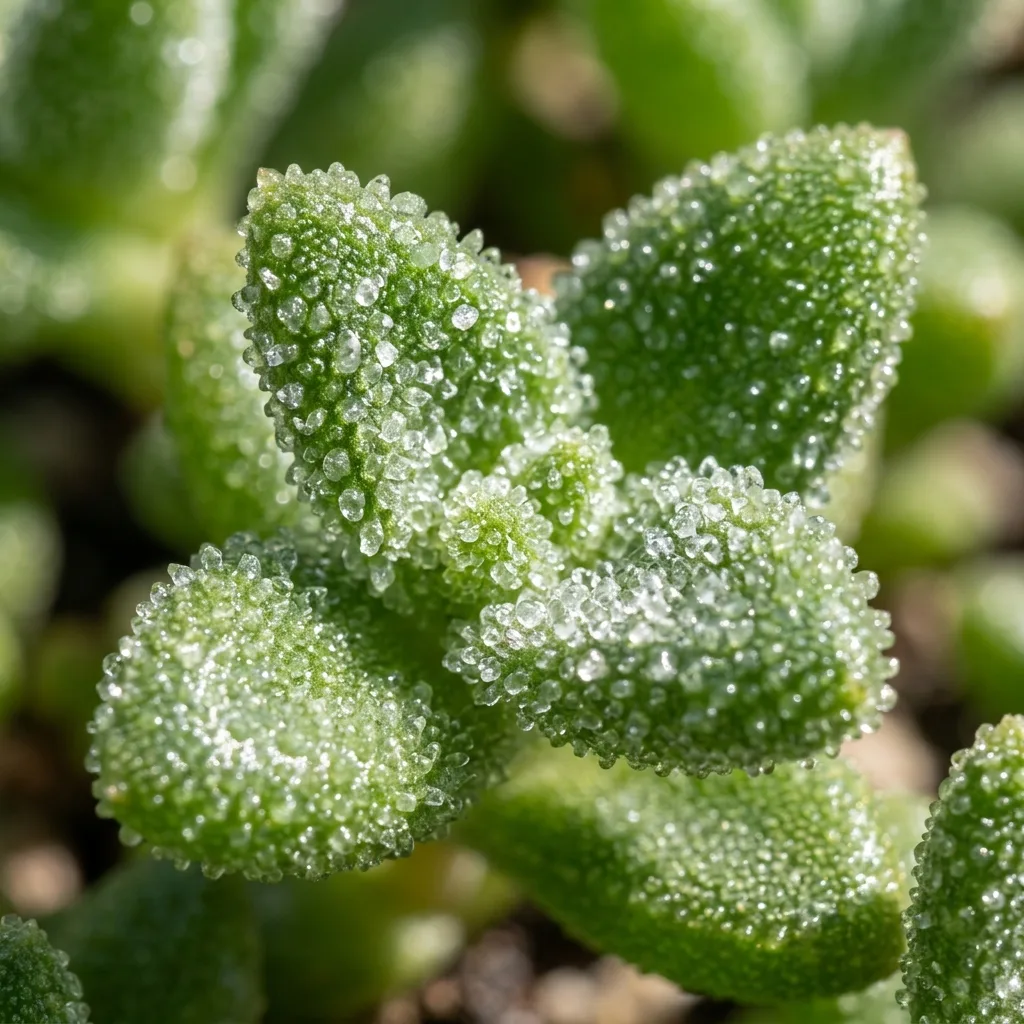
Species of Delosperma (family Aizoaceae) reflect solar radiation like microscopic mirrors due to specialized, modified epidermal water-storage cells known as bladder cells or idioblasts. These crystalline trichomes disperse intense light wavelengths, effectively shielding the interior photosynthetic mesophyll tissue from photoinhibition and extreme thermal spikes. When you run your fingers across a Delosperma stem, that cool, beaded texture you feel is an intricate cellular sunscreen engineered by millions of years of evolutionary pressure.
To optimize water-use efficiency, the plant relies on a versatile metabolic engine known as facultative Crassulacean Acid Metabolism (CAM). During periods of temperate weather and adequate hydration, it utilizes standard C3 photosynthesis to drive rapid vegetative growth and initiate copious flower buds. However, under drought conditions and soaring daytime heat, it switches swiftly to CAM, sealing its stomata during daylight hours to eliminate transpirational water loss and opening them solely at night to uptake carbon dioxide. While this adaptability makes Delosperma exceptionally drought-hardy, its root system is shallow, creeping, and acutely oxygen-dependent. The absorbent root hairs descend into cellular hypoxia within mere days if trapped in dense, moisture-retentive soils, leading to catastrophic root rot. The fundamental physiological imperative when cultivating Delosperma is therefore never to maintain dampness, but to provide a hyper-porous, fast-draining rocky crevice microenvironment.
2. Diagnostic Symptoms and Physiological Indicators
Accurately reading the physiological cues of your Delosperma is the boundary between flourishing specimens and lost rootstocks. Misinterpreting these signals almost always leads growers to apply water to an already drowning plant.
- Etiolation (Phototropism and Light Starvation): Abnormally elongated internodes, pallid light-green coloration, and complete cessation of floral bud initiation. Deprived of unfiltered sunlight, Delosperma loses its compact habit and collapses.
- Loss of Turgor and Longitudinal Wrinkling (True Dehydration): The fleshy leaves soften slightly and yield easily to gentle finger pressure while maintaining clear green coloration. If the substrate is completely dry to the core, controlled deep saturation is required.
- Basal Stem Blackening and Translucent Tissue (Root & Crown Rot): The vascular xylem suffers fungal blockages from pathogens like Pythium or Fusarium following overwatering in non-draining media. The foliage turns to mush and detaches at the slightest touch.
- Purplish-Red Foliar Tints: Anthocyanin pigmentation mobilized by thermal drops or intense solar irradiance. This is an adaptive physiological photoprotectant, not a pathology.
3. Step-by-Step Cultivation Protocol
To establish thriving carpets of Delosperma on balconies, terraces, or dry garden walls, implement this systematic 4-phase horticultural protocol:
Step 1: Container Geometry and Material Selection
Delosperma develops a horizontally spreading, fibrous root network rather than a deep taproot. Select wide, shallow planting pans or troughs rather than deep pots. Unfinished terracotta is the gold standard material: its microporous ceramic walls enable lateral evaporative cooling and promote rapid gas exchange throughout the entire root zone.
Step 2: Planting Depth and Crown Protection
When unpotting nursery specimens, gently untangle the root ball using your fingers to loosen any bound media. Never bury the sensitive root crown beneath the soil line. After potting into the mineral substrate, spread a 1–2 cm top-dressing layer of coarse pumice or crushed volcanic scoria around the crown. This mineral barrier forms a sterile dry zone that prevents fungal collar rot by keeping fleshy basal stems detached from damp organic fines.
Step 3: The 'Soak and Dry' Irrigation Method
Surface misting or light sprinkle watering is the quickest way to ruin a succulent. Delosperma evolved for deluge-and-drought cycles mimicking native cloudbursts: saturate the root ball thoroughly until water cascades freely from the container's drainage openings. Then, withhold all irrigation until the substrate has desiccated by at least 80% throughout the profile. During peak summer heat, this may mean irrigating once or twice weekly; during early spring or autumn, intervals extend to 10–14 days.
Step 4: Sun Hardening and Light Management
Delosperma requires a minimum of 6 hours of direct, unfiltered outdoor sunlight daily. Indoor windowsill cultivation rarely provides adequate foot-candles to stimulate bloom setting. When transitioning nursery-grown plants to full sun, harden them off in dappled shade for 7 to 10 days to allow epidermal cells to synthesize protective pigments and avoid cellular sun scorch.
4. Substrate Formulations and Environmental Metrics
Using standard peat-based potting soils or dense garden clay is the leading cause of mortality in Delosperma. Your substrate must balance capillary porosity with immediate air-filled porosity, formulated according to the scientific metrics below:
| Component / Parameter | Recommended Proportion / Value | Physiological Function |
|---|---|---|
| Coarse Pumice (3–6 mm) | 35% | Creates permanent macro-pore aeration channels preventing root hypoxia. |
| Volcanic Scoria / Lava Grit (2–5 mm) | 25% | Imparts mechanical ballast, trace minerals, and high percolation speed. |
| Coarse River Grit / Washed Zeolite | 15% | Minimizes perched water tables and buffers cation exchange. |
| Sifted Coco Coir or Aged Compost | 25% | Provides stable, non-hydrophobic organic anchoring for root hairs. |
| Substrate pH | 6.0 – 7.5 | Slightly acidic to neutral; maximizes micronutrient uptake. |
| Luminous Intensity | Min. 35,000 – 50,000 Lux | Drives facultative CAM-C3 transitions and triggers floral meristems. |

5. Common Pitfalls and Remediation Strategies
- Indoor Confinement in Stagnant Air: Delosperma requires atmospheric air movement to regulate boundary layer humidity around its leaves. Indoors, it quickly etiolates and sheds foliage. Remedy: Move the container outdoors immediately to a ventilated, full-sun balcony or deck.
- Cultivating in Pure Peat Moss: Peat acts as a soggy sponge when wet and forms a water-repellent brick when dry. Remedy: Gently wash the existing peat matrix from the bare roots with tepid water and repot into the mineral-rich grit mix described above.
- Overwintering in Heated Rooms with Frequent Irrigation: Without a chilling period (vernalization) and seasonal dormancy, flower bud formation is severely suppressed. Remedy: Move the dry plant into an unheated, sheltered outdoor location or cold frame (2–8°C) through winter to satisfy its rest requirement.
- Excessive High-Nitrogen Fertilization: Nitrogen surges produce soft, watery green vegetative growth vulnerable to pests while completely stalling floral differentiation. Remedy: Discontinue nitrogen; switch to dilute phosphorus-potassium formulations (e.g., NPK 5-10-10 or targeted cactus fertilizers) at quarter strength.
- Neglecting Woody Basal Pruning: Over time, old stems become lignified and bare in the center, reducing flower density. Remedy: In early spring, cut back straggly, woody runners with sterilized shears to stimulate vigorous new basal vegetative shoots.
6. Seasonal Calendar and Botanical Outcomes
Working in harmony with Delosperma's natural seasonal rhythms ensures longevity and non-stop blooming performance:
- Spring (Awakening & Bud Burst): As ambient temperatures settle above 12–15°C, gradually reintroduce watering. Apply a low-nitrogen, micronutrient-rich liquid fertilizer once monthly. Floral meristems will begin swelling rapidly.
- Summer (Peak Floral Display): The plant thrives in full sun, producing an unbroken succession of shimmering flowers. Irrigate deeply each time the pot dries out completely. Deadhead spent blossoms periodically to conserve photosynthetic energy for successive flushes.
- Autumn (Tissue Hardening): From late September onward, cut watering frequency in half. Cellular sap concentrates, cell walls thicken, and leaves take on reddish anthocyanin shades, preparing tissues for frost resistance.
- Winter (Dormancy and Cold Hardiness): Hardy species like Delosperma cooperi can tolerate freezing temperatures down to -15°C (5°F)—provided their root zone remains bone-dry! Eliminate irrigation during freezing stretches. Cold weather combined with dry root systems is harmless and serves as the physiological catalyst for massive spring flowering.


Reader Reviews & Comments 3 Reviews
Arthur Pendelton
Clara Higgins
Julian Vance
Leave a Review & Rating
Share your plant care tips, experiences, or questions with our succulent community.