






Journeying into our living spaces from the sun-drenched limestone ledges of Central and South America, Talinum paniculatum—affectionately known across the globe as 'Jewels of Opar'—is an extraordinary botanical marvel that gently challenges our preconceptions of what a succulent can be. To eyes accustomed to the architectural stillness of desert cacti and geometric rosettes, this plant delivers an airy, kinetic display: miniature celestial pink stars and glistening ruby-red seed spheres suspended like a delicate fireworks canopy over glossy emerald leaves. For devoted plant collectors, its allure lies not merely in its rugged drought resilience, but in possessing some of the most poetic seed structures nature has ever engineered.
Resting quietly during the blazing midday heat, opening its fragile starry blossoms as the afternoon sun begins its descent, and subsequently ripening these flowers into burnished bronze and scarlet spheres, Talinum paniculatum reigns as the jewel of the Talinaceae family. Whether potted beside a bright, sun-kissed window or serving as an ethereal border specimen in a Mediterranean-style xeriscape, this species offers maximum aesthetic elegance for minimal intervention. So pour yourself a fresh cup of coffee; let us delve together into the cellular mechanics, substrate dynamics, and caudiciform training secrets of this captivating perennial.
1. Botanical Identity and Morphological Characteristics
Talinum paniculatum is a herbaceous perennial succulent adapted masterfully to semi-arid climates by virtue of its fleshy leaf morphology and swollen tuberous root architecture. Native populations span from the southern United States through the Caribbean basin and deep into tropical and subtropical South America. Morphologically, the plant presents two striking structural tiers: a basal cluster of thick, glabrous, obovate-to-spatulate emerald-green leaves, from which emerge gossamer-thin, wiry, cloud-like panicles that ascend 60 to 80 centimeters into the sky.
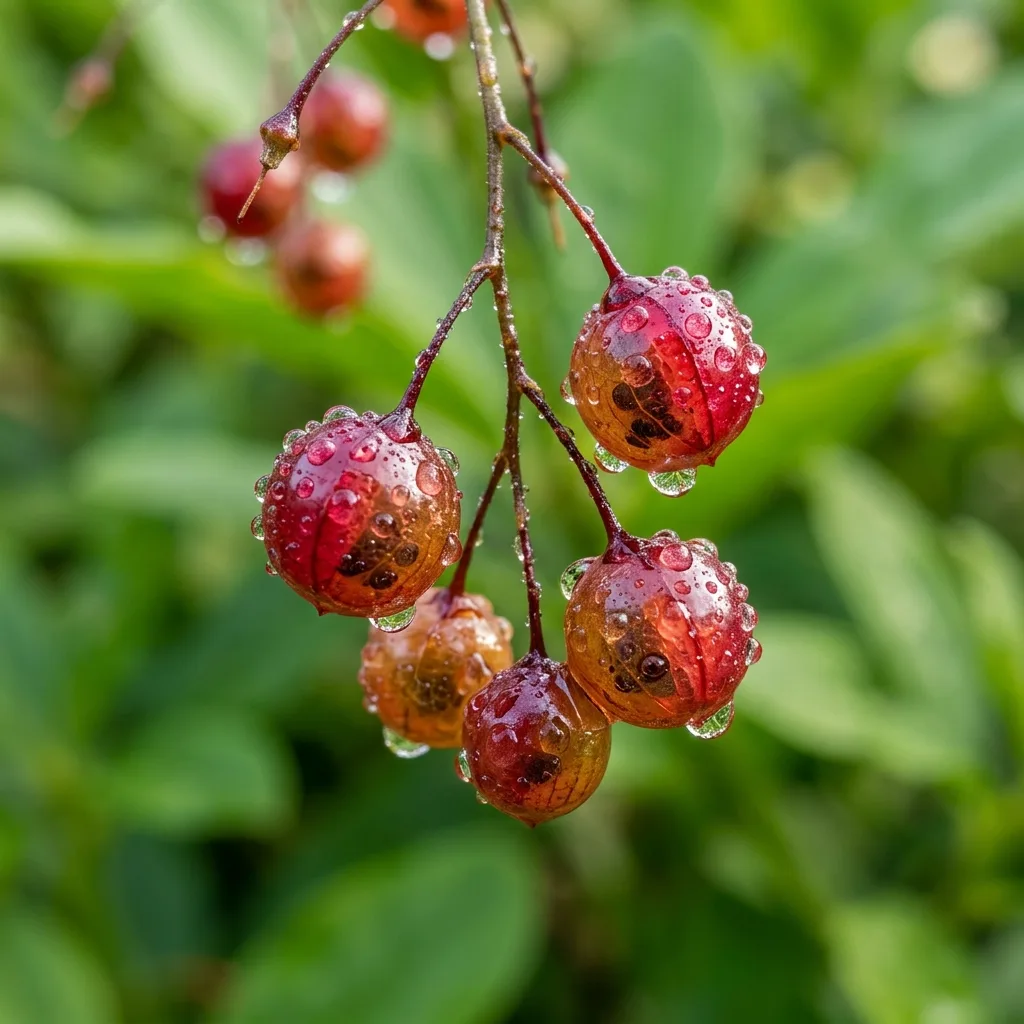
Its definitive horticultural hallmark is the jewel-like fruiting display that inspired its common name. Following the brief afternoon anthesis of its 4–5 mm star-shaped pinkish-magenta blossoms, the floral remnants give way to spherical, lustrous fruit capsules. As these seed heads mature, they embark on a mesmerizing chromatic progression: starting as warm amber-yellow, transitioning into brilliant coral-carmine, and ultimately deepening into dark, reflective ruby tones. At a cellular level, Talinum stores ample moisture within its foliar mesophyll tissue while simultaneously forming a stout, fleshy underground storage organ (caudex). This tuberous reservoir serves as an unyielding survival insurance policy during prolonged dry spells—and, in the hands of an artistic grower, can be strategically elevated above the soil line to produce a spectacular succulent bonsai.
2. Light Requirements and Indoor Positioning
The ability of Jewels of Opar to generate its signature airy flower clouds and deeply pigmented ruby spheres is intimately tied to photon irradiance. In its indigenous biotopes, it thrives across open, sun-baked clearings and dappled woodland edges. To flourish in cultivation, it demands a minimum of 5 to 6 hours of direct, unfiltered sunlight or exceptionally bright, high-intensity ambient light daily.
When grown indoors, south-facing or unobstructed west-facing window sills provide the premier vantage point. Under inadequate light levels, the plant rapidly demonstrates etiolation: internodes stretch conspicuously, the rich emerald foliage pales to a dull chartreuse, and the wiry inflorescences lose their tensile strength, drooping limply. However, during blistering midsummer afternoons, solar rays focused through double-pane window glass can produce localized thermal burns; maintaining vigorous room ventilation is critical. Outdoors, positioning the plant where it receives generous morning sun and gentle protection from harsh, searing late-afternoon rays cultivates the most compact, lush foliar rosette.
3. Watering Discipline: The 'Soak and Dry' Protocol
The single most pervasive pitfall in succulent stewardship is adhering to a rigid, calendar-bound watering regimen. For Talinum paniculatum, irrigation must always be dictated by the real-time hydration state of the subterranean substrate. The tuberous caudex stores significant water reserves; consequently, subjecting the root zone to persistent, waterlogged mud fosters anaerobic conditions in the root cortex, triggering swift and devastating fungal rot.
The golden standard of watering is the time-tested 'Soak and Dry' approach:
- Never apply water until the potting medium has thoroughly dried out from top to bottom. Probe the top 4–5 cm of substrate with a slender wooden skewer; it must emerge completely dry and particle-free.
- When irrigating, drench the container thoroughly and evenly until water streams unimpeded from the drainage holes, ensuring that the entire root core is properly saturated.
- Empty the drainage saucer within 15 minutes. Succulent roots must never be left standing in stagnant runoff, which suffocates root hairs by depriving them of oxygen.
- During the winter dormancy period, when metabolic rates drop significantly, scale back watering frequency drastically. Only provide modest sips of lukewarm water when the lower leaves exhibit subtle signs of turgor loss and fine wrinkling.
4. Substrate Optimization and Pot Selection
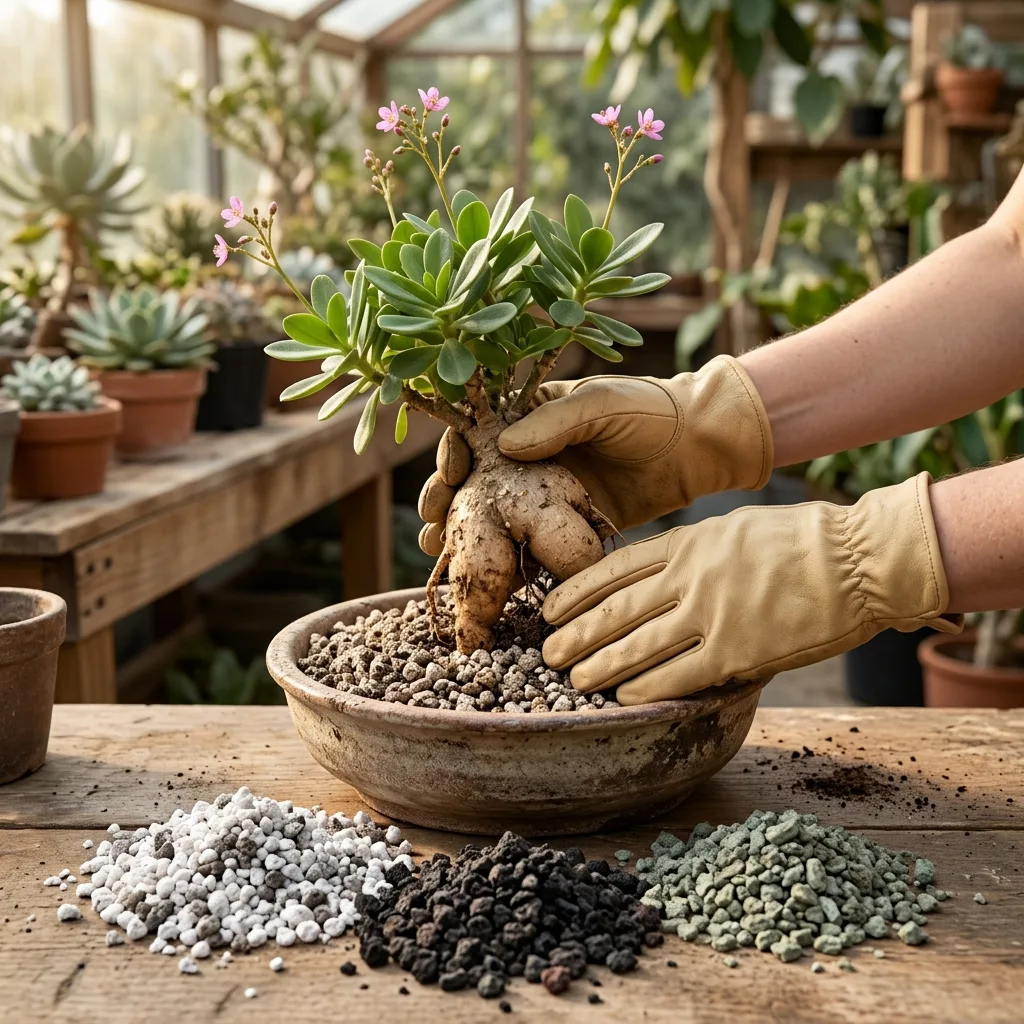
In its native terrain, Talinum paniculatum anchors into fractured limestone crevices, rocky slopes, and gritty soils with almost zero moisture retention. Standard peat-heavy potting soils act like a dense sponge, suffocating roots and halting crucial gas exchange (rhizospheric oxygen diffusion). An optimal mix is coarse, highly porous, and structurally mineral-dominant—allowing water to cascade through in seconds while retaining just a thin veil of capillary moisture around porous volcanic aggregates.
Regarding containers, unglazed porous terracotta remains unexcelled. The permeable clay walls allow moisture to evaporate laterally, effectively mitigating root-zone humidity spikes and discouraging pathogenic molds. Ensure the pot features ample, unobstructed drainage apertures at the base.
| Soil Component | Ratio (%) | Botanical Function & Root Dynamics |
|---|---|---|
| Horticultural Pumice (3–6 mm) | 40% | Creates essential macropores, prevents root rot, and guarantees robust oxygenation around the root zone. |
| Crushed Lava Rock or Zeolite | 20% | Supplies vital trace minerals, prevents substrate compaction, and maximizes swift gravitational drainage. |
| Coarse Perlite / Washed River Sand | 15% | Maintains mix lightness and structural aeration, allowing tender root tips to navigate unimpeded. |
| Quality Succulent Peat / Coco Coir | 25% | Provides base organic buffering and allows the root system to absorb essential nutrient solutes without drying out prematurely. |
5. Step-by-Step Propagation Techniques
Talinum paniculatum is among the most gratifying succulents to propagate. Blessed with a high degree of autogamy (self-pollination), a solitary specimen yields hundreds of viable seeds each season. Furthermore, it roots effortlessly from semi-hardwood stem cuttings and can be propagated via mature tuber division.
Method 1: Growing from Seed (The Most Rewarding Path)
- Harvesting: Once the seed capsules transition from lustrous ruby to a matte, papery bronze, gently pluck them from the panicle stems. Cracking them reveals dozens of shiny, jet-black seeds.
- Substrate Prep: Prepare a flat tray filled with 70% fine pumice/grit and 30% sifted seed-starting peat. Moisten thoroughly. Because Talinum seeds require light to trigger germination, press them lightly onto the surface without burying them.
- Humidity & Germination: Cover the flat with a clear humidity dome and place it in bright, indirect light at 22–25°C (72–77°F). Mist lightly to keep the surface slightly damp. Germination routinely occurs within 7 to 14 days.
Method 2: Apical Stem Cuttings
- During active spring or early summer growth, sever an 8–10 cm vigorous stem cutting cleanly using a sterile, razor-sharp blade.
- Strip away the lowest leaves and allow the cutting to rest in a dry, ventilated, shaded area for 48 to 72 hours until a firm callus tissue forms over the wound.
- Insert the callused cutting into lightly moistened gritty succulent mix. Delay full watering for 5 to 7 days. Robust root systems develop within 3 weeks.
6. Common Pests, Diseases, and Curative Solutions
While fundamentally rugged, adverse cultural practices can leave Jewels of Opar vulnerable to physiological stress and opportunist pests:
- Root and Tuber Rot (Fusarium / Pythium): Manifests as sudden yellowing, water-soaked foliage, and a soft, blackened base at the soil line. Immediate remedy: Excise all decaying root tissues back to clean, white vascular flesh, dust with sulfur or ground cinnamon, allow to callus, and repot in fresh, sterile mineral substrate.
- Mealybugs (Pseudococcidae): These sap-sucking insects colonize leaf axils and delicate growth tips, masquerading as tiny cottony tufts. Remove localized colonies immediately using a cotton swab dipped in 70% isopropyl alcohol, followed by an application of cold-pressed organic neem oil spray.
- Spider Mites (Tetranychidae): Proliferate in hot, arid indoor air, leaving fine stippling and minute webbing beneath the leaves. Rinsing the foliage with tepid water and introducing moderate ambient humidity disrupts their life cycle.
7. Landscape, Culinary, and Artistic Applications
Beyond being an ornamental container darling, Talinum paniculatum demonstrates multi-faceted versatility spanning ecological landscaping, botanical art, and traditional gastronomy:
- Xeriscape & Gravel Garden Accents: Its protracted blooming period and jewel-toned seed heads introduce an ethereal, kinetic haze that sways gracefully with the breeze. It blends seamlessly with agaves, ornamental grasses, and sedums, demonstrating remarkable drought fortitude once established.
- Exposed Caudex Succulent Bonsai: As specimens mature, the swollen subterranean taproot gains significant mass. With every biennial repotting, lift the crown 2 to 3 cm higher above the soil line. Over a few years, the weathered root hardens, forming a breathtaking, gnarled miniature desert tree (caudiciform habit).
- Culinary and Gastronomic Uses: Known colloquially as 'Surinam purslane' or 'Ceylon spinach,' the tender young leaves are consumed across diverse tropical cultures. Eaten raw, they offer a crisp, mildly acidic, refreshing crunch reminiscent of purslane; lightly braised or steamed, they mimic spinach while providing rich sources of vitamins A and C, calcium, and iron.
- Floristry and Botanical Arrangements: The airy, branching panicles loaded with glistening ruby capsules serve as an exceptional architectural filler in fresh floral bouquets, offering a contemporary alternative to Gypsophila (Baby's Breath). When harvested dry, the panicles retain their striking color, making them celebrated elements in everlasting dried floral art.
Seasonal Maintenance Calendar
- Spring (Awakening & Vigorous Growth): The quintessential window for repotting, root pruning, and caudex lifting. Clear away dried winter flower stalks, refresh the mineral substrate, and resume watering accompanied by a diluted, balanced low-nitrogen succulent fertilizer.
- Summer (Peak Floral Splendor): Provide abundant sunshine and adhere faithfully to the 'soak and dry' routine. Inflorescences and ruby seed pods will reach their zenith. Protect outdoor containerized specimens from desiccating windstorms.
- Autumn (Seed Gathering & Transition): Collect mature, bronzed seed capsules for spring sowing. Gradually taper off watering frequency to encourage the plant to harden its tissues in preparation for cool-season rest.
- Winter (Dormancy Stewardship): Overwinter the plant in a bright, cool spot maintained above 10°C (50°F). In frost-prone zones, foliage may die back naturally; however, as long as the tuberous caudex remains firm and dry, it will burst with vigorous emerald foliage come spring. Keep watering to an absolute minimum.


Reader Reviews & Comments 4 Reviews
Marcus Holloway
Clara Davenport
Julian Vance
Evelyn Reed
Leave a Review & Rating
Share your plant care tips, experiences, or questions with our succulent community.