






Thriving amidst the wind-scoured Siberian tundra, anchoring into the sheer granite clefts of Scandinavian fjords, and braving the snow-laden crests of the Alps, Rhodiola rosea—widely known as Golden Root or Rose Root—stands out as one of the most remarkable and resilient species in the entire succulent kingdom. While most succulents evolved to endure blistering desert heat and unrelenting thermal radiation, Rhodiola achieved a biological marvel in reverse: it adapted to thrive under sub-zero freezes, alpine blizzards, and oxygen-thin mountain atmospheres.
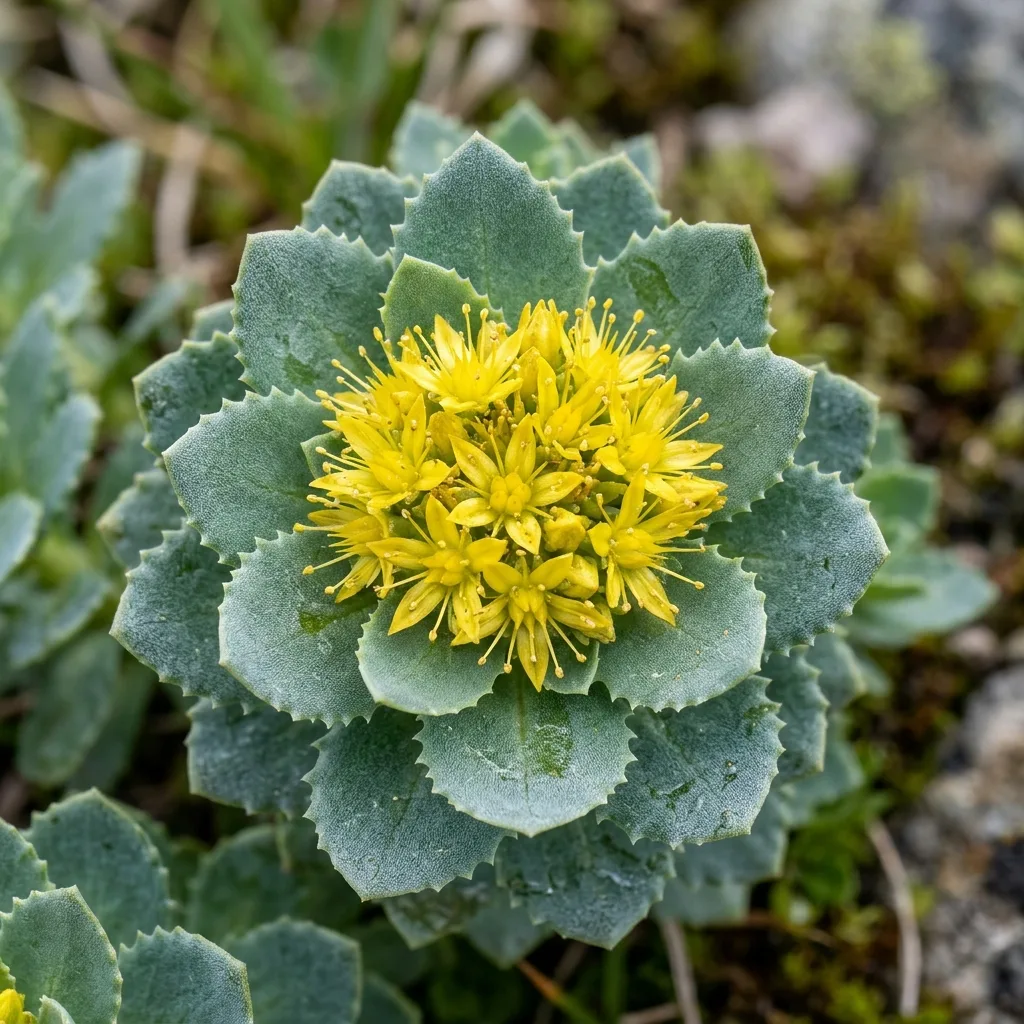
This noble member of the Crassulaceae (stonecrop) family is revered not only for its spiraling rosettes of succulent, glaucous blue-green foliage, but also for its legendary, rose-scented woody rhizomes—treasured for centuries by traditional herbalists and Viking navigators alike. If you have grown weary of delicate, heat-demanding tropical houseplants and wish to welcome a true mountain warrior into your personal sanctuary, Golden Root will infuse your botanical collection with profound evolutionary depth and an aura of ancient northern folklore.
1. Botanical Identity and Morphological Characteristics
In formal botanical taxonomy, Rhodiola rosea is classified as an herbaceous, dioecious perennial succulent belonging to the family Crassulaceae. Being dioecious, male (staminate) and female (pistillate) reproductive organs are carried on distinct individual specimens; female blooms develop fertile seed heads, while male blossoms present showy, sulfur-to-tangerine pollen clusters. The defining morphological anchor of the plant is its massive, subterranean-to-surface woody rhizome (often functioning like a miniature caudex). When bruised or sliced, this structure exudes an unmistakable fragrance identical to pure damask rose oil. This modified stem operates as a vital reservoir, storing water, carbohydrates, and signature bioactive glycosides (most notably salidroside and rosavins) that enable the plant to endure punishing circumpolar winters.
With the arrival of early spring, active vegetative buds on the crown erupt into dense clusters of erect, fleshy, unbranched stems reaching 10 to 35 cm in height. These shoots are densely cloaked in sessile, alternate, obovate-to-oblanceolate succulent leaves. The margins are subtly dentate (toothed) toward the apex, and the epidermis is enveloped in a pale, silvery-blue crystalline waxy layer known as farina. This coating deflects excessive alpine ultraviolet (UV) radiation while arresting cellular transpiration. From late spring through mid-summer, dense terminal cymes burst into flower, staging a luminous display of yellow, pale green, and crimson-tipped blossoms.
2. Light Requirements and Indoor Positioning
Native alpine screes and cliffs have conditioned Rhodiola rosea to thrive under intense, unfiltered solar radiation rich in natural ultraviolet wavelengths. When cultivating this plant in an artificial home or domestic garden setting, compromising on light volume is the quickest route to structural failure:
- Outdoor Placement: Golden Root is intrinsically an outdoor plant; it revels in fresh air circulation, cool mountain drafts, and direct morning-to-midday sun. Outdoor rockeries, elevated alpine scree beds, or terracotta patio containers are its ideal cultivated habitats.
- Indoor Exposure: If overwintered or grown indoors, place the container on an unobstructed south- or southwest-facing windowsill receiving a bare minimum of 6 to 8 hours of direct sunlight daily. In insufficient light, the plant rapidly exhibits severe etiolation—stems stretch and turn pale green, leaf internodes widen conspicuously, rosette symmetry disintegrates, and stems become limp and prone to collapse.
- Summer Heat and Solar Cautions: Although Rhodiola relishes direct ultraviolet sunlight, it genuinely deters oppressive, stagnant ambient heat. In regions where summer temperatures routinely surpass 35°C (95°F), shelter the container from intense, scorching afternoon rays (between 12:00 PM and 4:00 PM) using light shade netting or by relocating it to an airy spot with dappled light. Excessive root-zone temperatures can trigger an unwanted midsummer stasis or root decline.
3. Watering Protocol: The 'Soak and Dry' Method
The single most destructive fallacy in succulent husbandry is presuming that all fleshy-leaved plants demand identical watering schedules. Giving small, frequent sips of water is not an act of care; it creates an anaerobic environment that suffocates roots while leaving deep root hairs parched. The thick subterranean crown of Rhodiola rosea holds an immense store of cellular moisture.
You must strictly adhere to the professional 'Soak and Dry' protocol. Irrigate the potting medium thoroughly until water flows freely through the drainage apertures at the base of the container. Discard any residual runoff sitting in the saucer immediately. Before irrigating again, verify that the substrate has dried out completely throughout the entire depth of the pot—not merely on the topsoil layer. Inserting a bare wooden dowel or a calibrated moisture probe to the base of the root ball provides the most accurate assessment.
4. Ideal Substrate Formulation and Pot Selection
In its native montane homes, Rhodiola rosea anchors itself into the decomposed mineral crevices of granite, quartzite, and mica-schist cliffs—environments characterized by near-zero humic content, abundant mineral grit, and ultra-rapid drainage. Allowing water to linger around the root collar for even an hour can prove fatal. Standard peat-based potting soils act as a lethal sponge for this species.
For pot selection, unglazed, thick-walled terracotta containers equipped with wide drainage holes are mandatory. Terracotta is inherently porous, permitting gaseous exchange across the pot wall and expediting the evaporation of surplus moisture. Non-porous plastic and glazed ceramic containers should be avoided as they trap stale moisture.
| Substrate Component | Ratio (%) | Botanical Function and Agronomic Benefit |
|---|---|---|
| Coarse Horticultural Pumice (3–6 mm) | 40% | Provides peak aeration, structural porosity, and guards against anaerobic root suffocation. |
| Crushed Lava Rock / Zeolite | 25% | Delivers steady micronutrient leaching, sharp micro-drainage, and simulates native cliffside anchoring. |
| Coarse River Grit / Sharp Perlite | 15% | Prevents soil compaction, breaks surface tension, and ensures unimpeded gravitational drainage. |
| Low-Peat Cactus Soil / Well-Rotted Leaf Mold | 20% | Offers minimal organic retention and nutritional stability during the rapid spring growth flush. |
5. Step-by-Step Propagation Techniques
Thanks to its distinct botanical architecture, Rhodiola rosea can be successfully multiplied using two primary methods: Rhizome Division and Propagation from Seed.
Method A: Rhizome Division (The Most Reliable Approach)
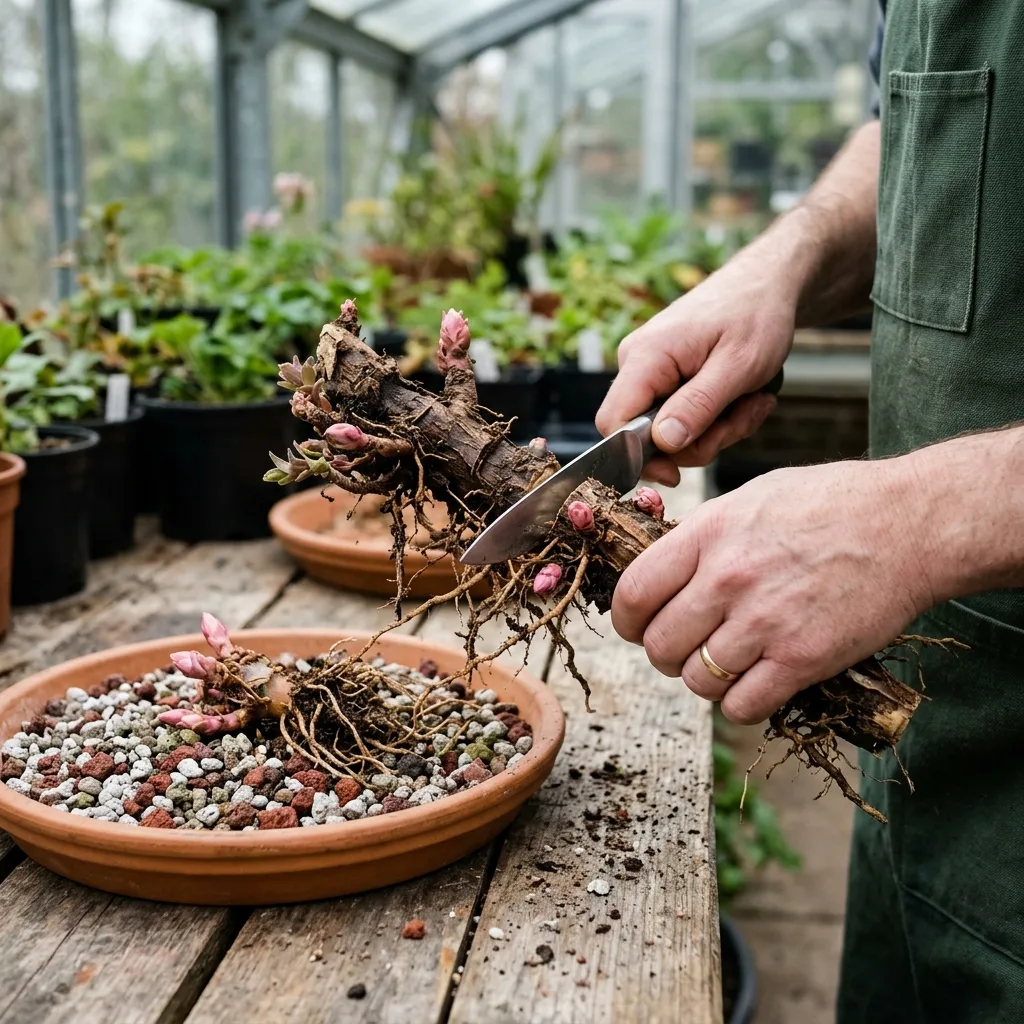
- Timing Is Crucial: The premier window for vegetative division is late winter to early spring (March to early April), just as latent pink vegetative buds begin to swell along the crown.
- Unpot and Clean: Remove the plant from completely dry substrate. Gently brush away the adhering grit from the root system to clearly expose the woody crown.
- Identify Viable Growth Eyes: Locate sections of the rhizome that carry at least one to two prominent vegetative eyes (dormant shoot buds) along with their own cluster of intact fibrous feeder roots.
- Execute a Sterile Cut: Using a surgical scalpel or a garden knife sterilized with 70% isopropyl alcohol, slice through the rhizome cleanly. Avoid jagged tears.
- Callus Formation: Never plant freshly cut rhizomes directly into damp substrate! Store the divisions in a dry, shaded, well-ventilated room for 48 to 72 hours until a firm, leathery suberized layer (callus) forms over the wound. This step seals out opportunistic soil-borne fungi.
- Potting and Initial Moisture: Plant the callused pieces into your mineral-heavy gritty mix. Keep the mix dry for 4 to 5 days, after which you may initiate light, cautious bottom-watering.
Method B: Seed Propagation (Cold Stratification Required)
Rhodiola seeds carry deep evolutionary physiological dormancy mechanisms designed to prevent premature autumn germination in arctic habitats. Mix the dust-fine seeds with slightly damp perlite or silica sand inside a sealed polyethylene bag and subject them to artificial cold stratification in a refrigerator (at 2°C to 4°C / 35°F to 39°F) for 4 to 6 weeks. Following stratification, surface-sow the seeds over a finely sifted mineral germination bed, pressing them gently without burying them—Rhodiola seeds require light to trigger germination. Maintain a steady temperature of 15°C to 20°C (59°F to 68°F); vibrant micro-rosettes will emerge within 14 to 21 days.
6. Common Diseases, Pests, and Therapeutic Solutions
While Rhodiola rosea is remarkably tough and largely ignored by standard pests when grown in outdoor air, container culture can introduce specific physiological stresses:
- Crown and Rhizome Rot (Fusarium, Phytophthora spp.): Triggered almost exclusively by wet winter soil or poorly aerated, dense potting media. Early symptoms include basal shoot darkening, tissue softening, and a rapid water-soaked collapse of foliage. To salvage the plant, unpot it immediately, excise all soft, discolored rhizome tissues back to clean, firm, healthy white/green vascular tissue, dust the cut surfaces with sulfur or powdered cinnamon, and repot into dry pumice-dominant grit.
- Mealybugs (Pseudococcidae): These sap-sucking pests congregate in the sheltered crevices of leaf axils and beneath the scales of the woody rhizome, presenting as cottony white deposits. Manually dab and eradicate them using a cotton swab saturated with 70% isopropyl alcohol. For severe infestations, spray thoroughly with pure cold-pressed neem oil or horticultural insecticidal soap during the evening hours.
- Summer Heat Blight and Tip Burn: When ambient temperatures exceed 35°C (95°F) under direct glass-magnified light, the fleshy leaves can desiccate quickly, causing margins to scorch and drop. Relocating the plant to an open-air area with enhanced air circulation and morning-only sun rectifies the issue immediately.
7. Seasonal Care Calendar and Professional Tips
Rhodiola rosea is intrinsically tuned to seasonal shifts. Aligning your cultural routine with its physiological cycles ensures a long-lived specimen:
- Spring (March – May): The period of vigorous vegetative expansion. Stems shoot upward from the crown with impressive speed. Incrementally increase watering frequency as ambient temperatures rise. Once every 8 weeks, apply a highly diluted, low-nitrogen, high-potassium liquid cactus fertilizer at one-quarter strength.
- Summer (June – August): The flowering period. Maintain the standard 'Soak and Dry' regimen, ensuring the container never stays waterlogged. During sustained summer heatwaves, provide partial afternoon shade and maximize convective air movement around the pot.
- Autumn (September – November): The growth cycle concludes. Foliage turns bright yellow, amber, and crimson before drying to a crisp. This senescence is completely natural; do not mistake it for plant death! Prune the withered stems roughly 2 cm above the crown using clean shears. Reduce watering to near-zero levels.
- Winter (December – February): Full dormancy. Keep the plant outdoors, in an unheated cold frame, or on a sheltered cold balcony. Do not fear sub-zero temperatures; it easily tolerates -25°C (-13°F) provided the substrate remains dry. Supply only a modest spoonful of water once a month strictly to prevent the root mass from becoming bone-dry rock.


Reader Reviews & Comments 4 Reviews
Dr. Eleanor Vance
Julian Miller
Fiona Campbell
Marcus Sterling
Leave a Review & Rating
Share your plant care tips, experiences, or questions with our succulent community.