






Picture a luminous, chalk-white botanical jewel clinging tenaciously to volcanic fissures and calcified sand dunes under the relentless solar radiation and brackish maritime winds of the Atlantic Ocean. A captivating representative of the Caryophyllaceae (pink or carnation) family, Polycarpaea nivea exhibits a morphological blueprint fundamentally divergent from everyday succulents. At first glance, its foliage appears dusted with fresh morning frost or draped in opulent white velvet; in biological reality, this structure represents an immaculate optical and cellular shield engineered by evolutionary pressure to counteract uncompromising hyper-arid conditions. Cultivating this rare coastal halophyte in domestic spaces means faithfully recreating the exact microclimatic junction where desert aridity meets oceanic ecology inside a single container.
Too many succulent growers mistakenly lump Polycarpaea nivea together with conventional soft-leaved crassulaceans, condemning it to death via waterlogged peat mixes and indiscriminate watering schedules. In reality, its root system exhibits acute sensitivity to persistent moisture; deprived of capillary oxygen, the rhizosphere collapses within mere days. Drawing upon rigorous physiological data and longitudinal observations in our propagation greenhouses, we present a systematic care regimen structured to preserve the species' iconic silken radiance while sustaining vigorous, rot-free growth for decades.
1. Botanical Biology and Physiological Foundations
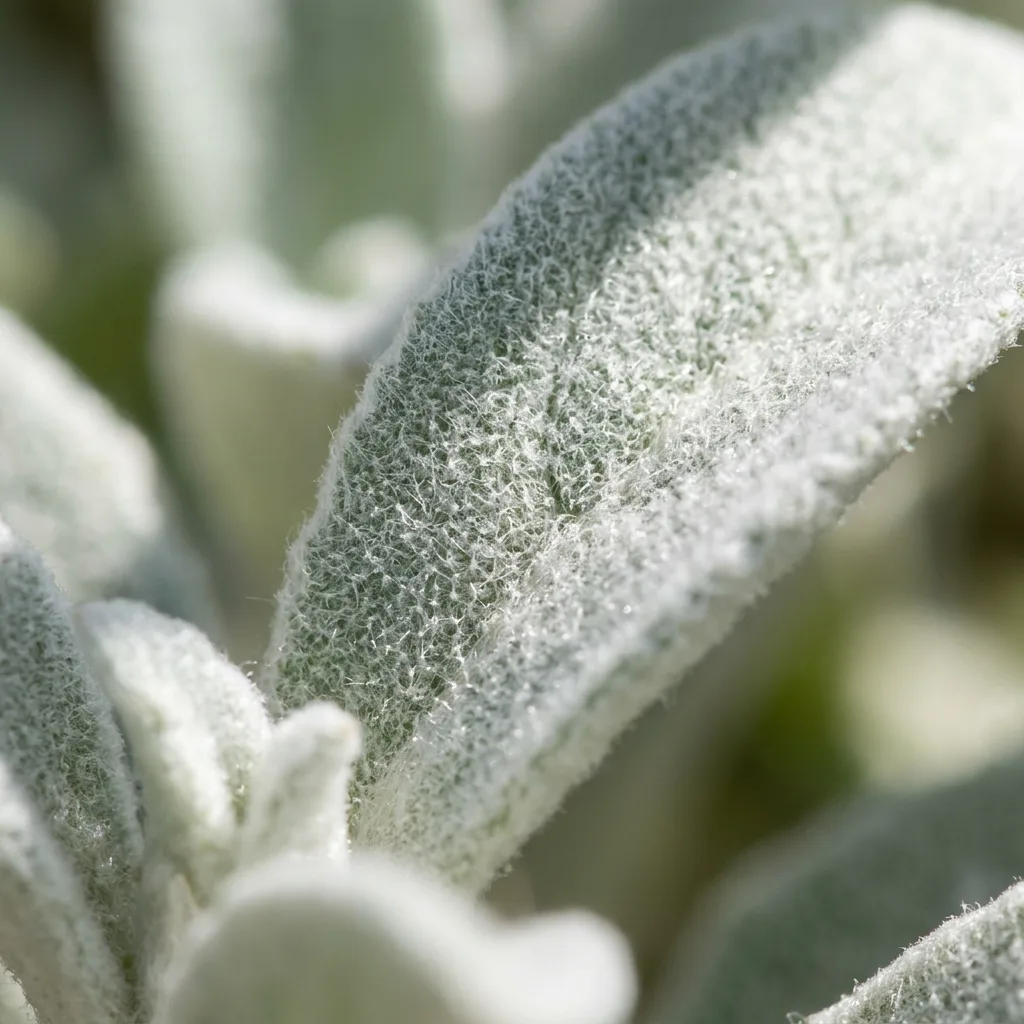
The distinctive, chalky alabaster hue of Polycarpaea nivea does not arise from standard epidermal pigments; rather, it is generated by a dense, interlocking carpet of specialized multicellular hair structures known as 'tomentose' trichomes. These modified epidermal appendages function as a multi-tiered survival apparatus:
- Radiant Solar Deflection: The silvery-white trichome matrix reflects up to 40% of incident, scorching ultraviolet and near-infrared radiation. This mechanism lowers internal cellular temperatures, preventing the thermal breakdown of light-harvesting pigments (photooxidation) within fragile chloroplasts.
- Boundary Layer Dynamics: The tightly packed pubescence interrupts air currents sweeping directly across stomatal apertures. By establishing an undisturbed micro-boundary layer of stagnant air, the plant minimizes transpirational water loss without compromising carbon fixation.
- Heliophytic and Calcicolous Root Architecture: Evolved as a halophytic (salt-tolerant) and calcicolous (lime-loving) species, its root cortical cells undergo severe osmotic collapse under continuous dampness. The moment gas diffusion stalls within dense organic peat, anaerobic root pathogens—predominantly Fusarium and Pythium strains—breach the unlignified rhizodermis with devastating speed.
2. Accurate Diagnostics and Stress Indicators
Sustained success with Polycarpaea nivea relies on the grower's ability to interpret subtle cellular signals before irreversible tissue failure takes hold. The plant communicates physiological stress through distinct macroscopic symptoms:
- Light Deprivation (Etiolation): Stems stretch abnormally, internodal spacing widens dramatically, and the foliage loses its chalky luminescence, fading into an uncharacteristic, muted greenish-grey. This marks an immediate decline in trichome biosynthesis as chloroplasts scramble toward available light sources.
- Overwatering and Rhizosphere Asphyxiation: Basal leaves closest to the soil transition into a translucent, yellowish gelatinous mush, accompanied by dark browning of the stem collar. A faint, sour anaerobic odor often emanates from the potting substrate.
- Physiological Drought: The leaves preserve their gleaming silver coat but curve inward longitudinally; individual rosettes lose turgor, retracting into tight, shrunken clusters. Although stems lose elasticity, structural lignified tissues remain remarkably firm to the touch.
- Substrate Acidification or Mineral Deficiency: Necrotic tipping appears across young growth and terminal leaf points, completely halting vegetative development. The plant is evolutionarily adapted to alkaline, calcium-rich conditions and falters in low-pH substrates.
3. Step-by-Step Cultivation Protocol
To cultivate this rare coastal succulent with unwavering consistency indoors, implement this meticulous four-stage management cycle:
Step 1: Photoperiod Optimization and Spatial Positioning
Position the plant on an unobstructed south- or southwest-facing windowsill receiving at least 6 to 8 hours of uninterrupted, direct sunlight daily. In light-deprived interiors or high-latitude winters, suspend a high-output full-spectrum LED horticultural grow light 20–25 cm directly above the canopy, maintaining a consistent 12-hour daily photoperiod.
Step 2: Low-Organic, High-Porosity Substrate Formulation
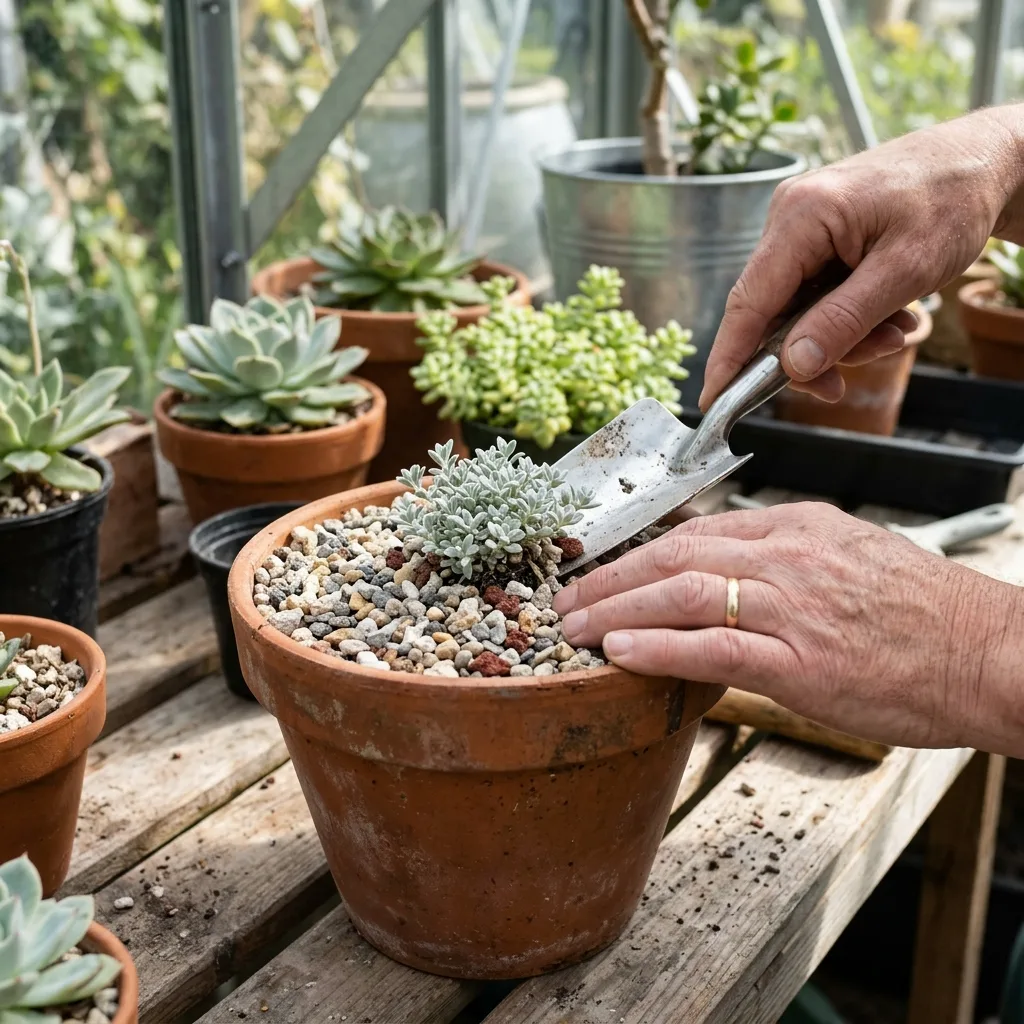
Polycarpaea nivea cannot survive in conventional potting compost. The growing medium must consist of 75% to 80% coarse inorganic mineral aggregates—such as pumice, crushed scoria (lava rock), limestone chips rich in calcium carbonate, or coarse horticultural grit. The remaining 20% to 25% should comprise finely sieved, mature leaf mold or high-grade coconut coir pith.
Step 3: The 'Soak and Total Desiccation' Hydration Technique
When hydrating, apply water deliberately until generous runoff drains freely from the vessel's drainage ports. Direct the stream solely along the inner rim of the pot using a narrow-spout watering can, keeping the central rosette and leaves entirely dry. Discard all runoff from the drainage saucer after 10 minutes. Before irrigating again, verify with an untreated wooden skewer inserted to the pot bottom that the core is completely dry.
Step 4: Collar Protection Shielding
To shield the highly vulnerable root collar (the junction between primary stem and root system) from residual surface humidity, apply a 1 to 1.5 cm top-dressing of washed scoria, crushed quartz, or pumice over the substrate. This inorganic barrier prevents basal stem contact with damp organic matter, eliminating up to 90% of stem-rot occurrences.
4. Essential Cultivation Parameters and Equipment
The following parameters define the precise horticultural thresholds required to emulate the natural coastal biotope of Polycarpaea nivea under container culture:
| Parameter / Component | Target Specification | Physiological Objective |
|---|---|---|
| Container Material | Unglazed terracotta (clay) | Permits passive lateral vapor diffusion, promoting maximum rhizosphere aeration |
| Inorganic Mineral Content | 75% – 80% (Pumice, scoria, limestone grit) | Prevents perched water tables and eliminates standing moisture around roots |
| Organic Component | 20% – 25% (Sieved coco coir or leaf compost) | Retains minimal essential trace elements and baseline nutrient exchange capacity |
| Substrate pH Target | 7.2 – 8.2 (Slightly alkaline) | Mirrors wild calcified coastal sands, optimizing vital calcium assimilation |
| Luminous Intensity | 5,000 – 10,000 Lux (Direct unfiltered light) | Stimulates trichome density to maintain the reflective white epidermal armor |
| Minimum Winter Temperature | 8°C – 10°C / 46°F – 50°F (Kept strictly dry) | Prevents cellular ice crystallization and cold-induced opportunistic fungal attacks |
5. Five Critical Pitfalls and Remedial Actions
- Pitfall 1: Overhead Watering or Foliar Spraying: Tomentose hairs absorb and trap water droplets; without rapid airflow, core stem rot sets in rapidly.
Remedy: Apply water strictly at soil level. If the crown is wetted accidentally, place the plant before an oscillating fan immediately to accelerate evaporation. - Pitfall 2: Planting in Glazed or Plastic Pots: Non-porous containers trap moisture, turning the lower substrate into an anaerobic quagmire.
Remedy: Unpot the plant immediately, dust the roots with a broad-spectrum systemic fungicide, let them air-dry for 24 hours, and repot into raw terracotta. - Pitfall 3: Administering High-Nitrogen Fertilizers: Excess nitrogen causes hyper-hydrated, fragile cellular elongation, reduces trichome production, and attracts scale or mealybugs.
Remedy: Restrict feeding to the active spring cycle using a low-nitrogen, high-potassium cactus fertilizer diluted to one-quarter strength. - Pitfall 4: Stagnant Air Circulation: Humid, still air inside terrariums or enclosed window recesses degrades the protective trichome coat.
Remedy: Maintain constant ambient air movement by positioning the specimen near open, drafty windows or utilizing a gentle micro-fan. - Pitfall 5: Submerging the Root Collar Too Deeply: Burying stem tissue beneath moist substrate invariably causes basal collar collapse within weeks.
Remedy: Elevate the plant so only roots sit in the substrate, anchoring the lower stem solely within pure inorganic rock mulch.
6. Seasonal Phenology and Long-Term Results
Polycarpaea nivea follows a defined seasonal rhythm shaped by its wild coastal provenance:
- Spring (Reactivation and Vegetative Growth): As ambient temperatures stabilize between 18°C and 24°C (64°F–75°F), root tips resume cell division. Gradually increase watering frequency as the substrate dries out completely. A dilute micro-nutrient fertilizer may be applied bi-monthly. This is the optimal window for terminal stem cuttings.
- Summer (Semi-Dormancy and Heat Adaptation): When temperatures exceed 35°C (95°F), the plant restricts gas exchange to curb transpirational loss. Reduce watering volume accordingly, and never apply water during peak midday heat.
- Autumn (Secondary Flush and Inflorescence): As daytime temperatures moderate, subtle blossoms framed by papery, chalk-white bracts emerge at stem terminals. This marks the premier window for gathering mature seeds.
- Winter (Rest Phase): Relocate the specimen to a bright, cool space held between 10°C and 15°C (50°F–59°F). Suspend routine watering almost entirely; supply just enough moisture once a month to prevent irreversible root-hair desiccation.
Adhering to these physiological directives transforms Polycarpaea nivea into an architectural, dense, living porcelain sculpture that commands attention in any discerning botanical collection.


Reader Reviews & Comments 3 Reviews
Julian Vance
Clara Sterling
Arthur Pendelton
Leave a Review & Rating
Share your plant care tips, experiences, or questions with our succulent community.