






High in the Mexican state of Oaxaca, clinging precariously to sheer, wind-scoured limestone cliffs where gusts whistle through narrow gorges, nature has carved out a miniature botanical masterpiece: Ortegocactus macdougallii. Tucked into barren rock fissures under a merciless subtropical sun, its unique epidermis gleams between lizard green and olive chartreuse. When welcomed into our collections, this monotypic gem whispers the secrets of nature’s most resilient cellular architecture, designed to defy the harshest elements on Earth.
Often hailed by seasoned succulent connoisseurs as the 'holy grail' of desert collections, this species will quickly wither if treated like a generic desert cactus. Deprived of oxygen at the root level, its sensitive basal collar can disintegrate in the blink of an eye. Yet, once you tune your indoor care to the ancient rhythms of its wild habitat, it transforms into an awe-inspiring, sculptured centerpiece in your living space or greenhouse. Let us delve into the cellular wonders and practical cultivation principles of this spellbinding cactus, drawing directly from greenhouse trials and physiological botany.
1. Taxonomic Identity, Areole Architecture, and Spine Morphology
In the realm of systematic botany, monotypic genera—those possessing only a single, unique species—command profound respect. Belonging to the tribe Cacteae within the family Cactaceae, Ortegocactus macdougallii was discovered in the 1950s in the wilds of Oaxaca by famed plant explorer Thomas MacDougall, and subsequently named in honour of Mexican naturalist Francisco Ortega. In its native habitat, it typically begins life as an individual solitary sphere before developing low basal offsets, slowly expanding over decades into compact, multi-headed mounds.
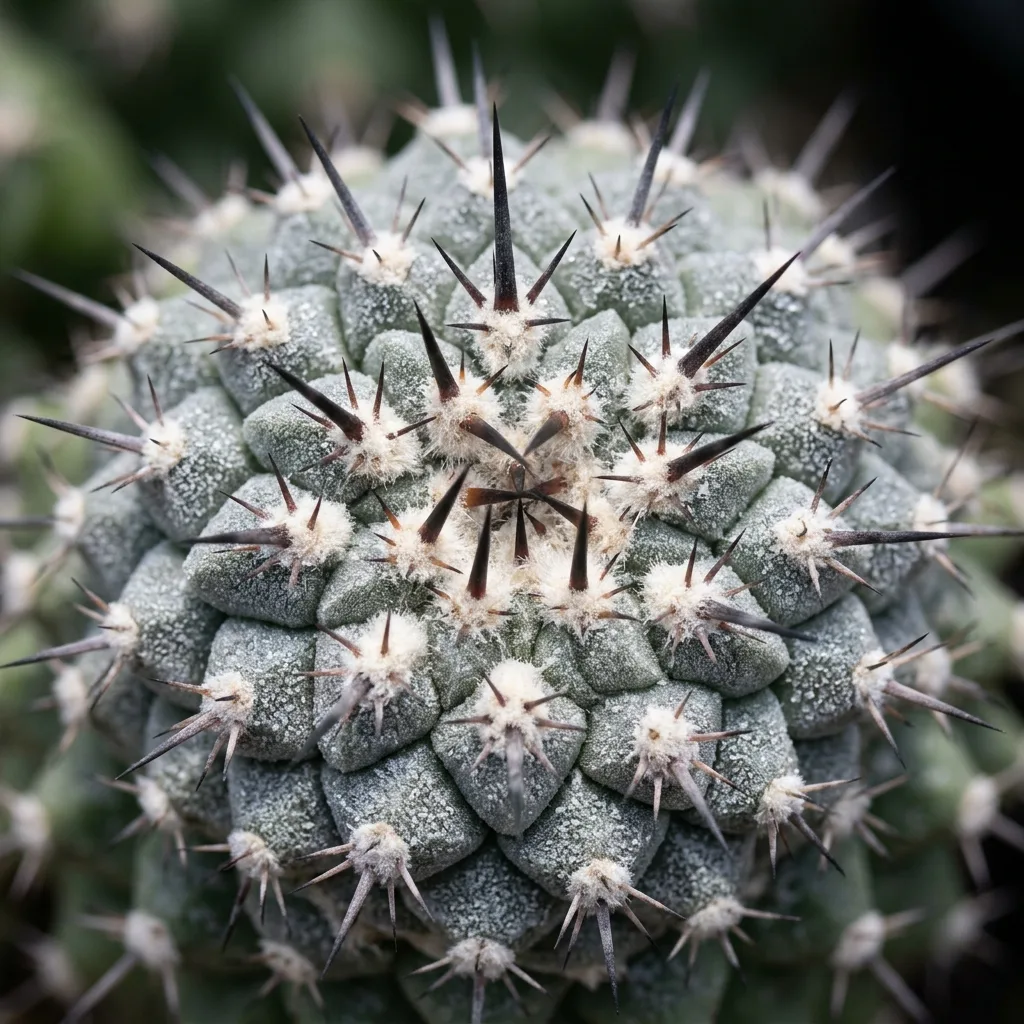
Morphologically, its most iconic signature is its non-glossy, finely textured epidermis, fluctuating from crisp lime green to chartreuse, reminiscent of reptile skin. The stem surface is divided into flattened, rhomboid tubercles rather than continuous vertical ribs. Perched atop each tubercle rests an areole that, in its youth, is crowned with a plush tuft of white-to-gray wool. Arising from this woolly cushion are spines resembling needles of dark volcanic obsidian. Typically, a single central spine—curved gracefully upward, pale at the base and pitch-black toward the tip—is encircled by 7 to 8 slender, radiating radial spines. This architectural defense shields the apical meristem from blistering UV radiation while functioning as an aerodynamic net, harvesting nocturnal mist and channeling micro-droplets directly down toward the root plate.
2. Sunlight Intensity, Photobiology, and Ventilation Protocols
Like many extreme desert xerophytes, Ortegocactus relies on Crassulacean Acid Metabolism (CAM) to survive. To eliminate transpiration losses, its stomata stay tightly sealed against the scorching daytime heat, opening only under the cool blanket of night to capture and store carbon dioxide as malic acid. The most fatal domestic misstep is marooning this species on a stagnant, airless windowsill behind unventilated glass.
Light spectrum and quality directly govern spine pigmentation and that coveted olive-chartreuse epidermal luster:
- Light Intensity: Provide a minimum of 6 to 8 hours of intense, bright, filtered sunlight daily. Gentle early morning and late afternoon direct rays are ideal. However, during midsummer peak hours (12:00 PM to 3:00 PM), intense sun through south-facing window glass can trigger thermal lens effects; soften this peak exposure with a light 20-30% shade cloth.
- Air Circulation: Ortegocactus detests stale, humid air. Perched at elevations between 1,800 and 2,000 meters in Oaxaca, it thrives on perpetual mountain breezes that cool the cuticle surface and deny opportunistic fungal spores a purchase. Ventilate your growing space regularly or install a small oscillating fan to maintain constant, gentle air exchange.
3. Irrigation Dynamics and the Critical Winter Dormancy Regime
Over-watering succulents is not an act of love—it is slow cellular suffocation. Ortegocactus macdougallii has evolved expansive cortex water-storage parenchyma cells, allowing it to withstand prolonged droughts without shedding a single fibrous root.
Structure your watering calendar strictly around seasonal cycles:
- Spring and Summer (Active Vegetative Cycle): Water exclusively when the potting substrate has dried out completely down to the bottom drainage hole. Apply the thorough 'soak and dry' method, allowing water to flush out freely from the base. Never allow runoff water to pool in a drip tray for more than 10 minutes. Frequency varies between 12 and 18 days depending on your local ambient temperature and pot size.
- Autumn (Transitional Hardening): Beginning in late September, systematically space out irrigations. As ambient temperatures drop, cell division halts, enzymatic activity declines, and xylem transpiration slows to a near standstill.
- Winter Rest (November through March): This period of absolute chilling and dormancy is non-negotiable if you wish to maintain root vitality and trigger vernal flowering. Keep the plant in a bright, bone-dry spot where temperatures remain stable between 6°C and 12°C (43°F - 54°F). Withhold water entirely throughout winter. Damp substrate coupled with cold temperatures allows subterranean Fusarium mycelia to penetrate root capillaries within 48 hours.
4. High-Mineral Substrate Formulations and Terracotta Pot Dynamics
Ortegocactus roots will not tolerate peaty, bark-heavy, or standard commercial potting soils. In its native Oaxaca, it anchors directly into calcium-carbonate-rich limestone fissures with virtually zero organic mulch. It demands a hyper-porous substrate that sheds water instantly while preserving vast macropores for root respiration.
Here is my greenhouse-tested mineral substrate formula that virtually eliminates basal rot:
| Substrate Component | Ratio (%) | Botanical Function & Benefit |
|---|---|---|
| Horticultural Pumice (3–5 mm) | 40% | Maximum root aeration and structural porosity |
| Lava Rock Grit (Scoria) | 25% | Trace iron, magnesium, and lightning-fast drainage |
| Limestone Screenings / Zeolite | 15% | Replicates native calcareous pH and binds chemical toxins |
| Coarse Quartz Sand / River Grit | 10% | Improves water percolation and prevents soil compaction |
| Sifted Mature Leaf Compost / Worm Castings | 10% | Essential minimal baseline organic nutrition |
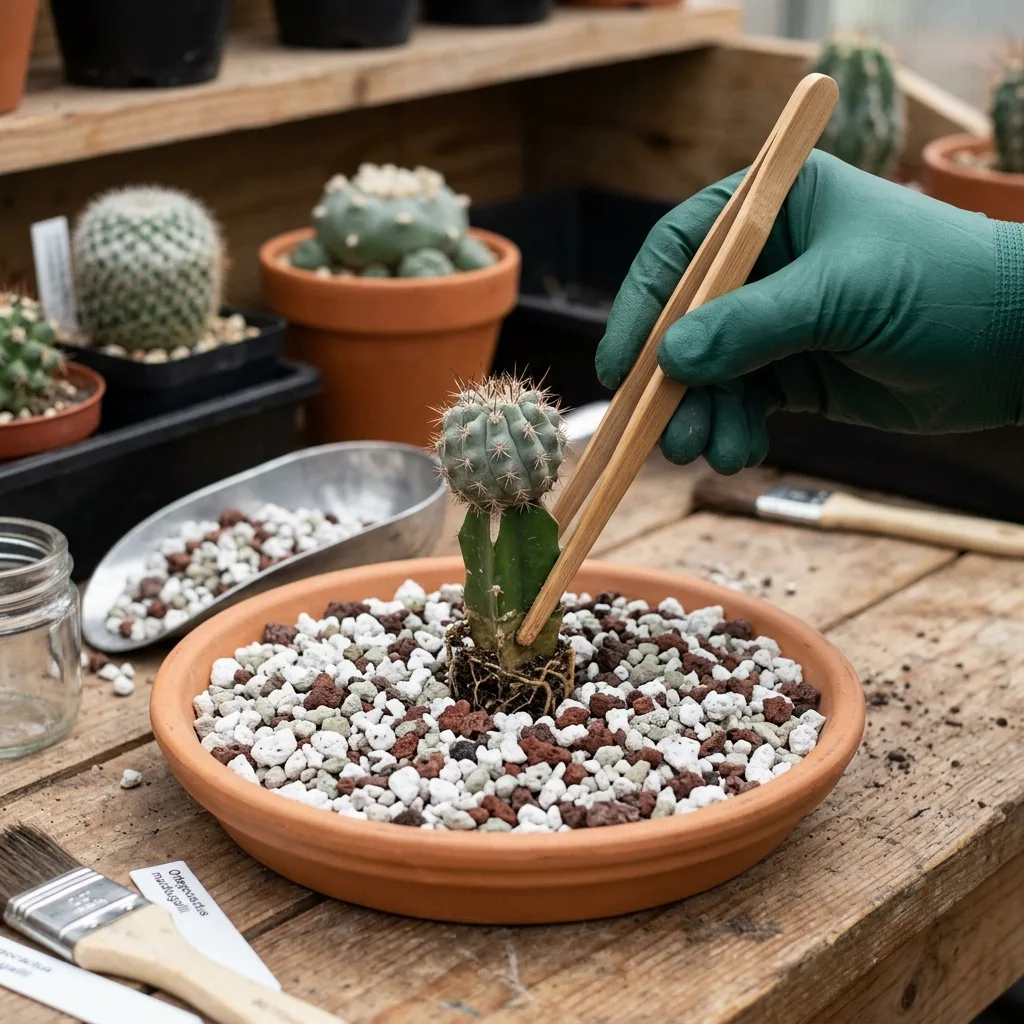
Avoid non-porous glazed ceramic and sealed plastic containers. Unfinished, high-fired, breathable terracotta pots are indispensable. The porous clay walls wick residual moisture outward, promoting accelerated root respiration and keeping the delicate basal neck bone-dry. Select a pot that is only 2 to 3 cm wider than the cactus itself to prevent uncolonized pockets of wet soil.
5. Inducing Vernal Blooms and Micro-Nutrient Strategies
The crowning glory of growing an Ortegocactus macdougallii arrives in mid-spring, when the apical areoles erupt with satiny, radiant yellow blossoms. The glossy petals open broadly toward the noon sun, accented by a striking greenish-yellow stigma and a golden ring of pollen-laden anthers. Yet this visual reward is strictly determined by seasonal environmental cues.
To guarantee prolific flower development:
- Cold Vernalization Period: The plant must undergo an unbroken 6 to 8 weeks of winter chilling around 8°C to 10°C (46°F - 50°F). This cold rest triggers the physiological activation of dormant floral primordia within the apical areoles.
- Spring Reactivation & Phosphorus Balance: In late March, as ambient warmth returns, reawaken root hairs with an ultra-light morning mist of tepid water before your first deep soak. In mid-April, feed once using a specialized cactus fertilizer that is very low in nitrogen and elevated in phosphorus and potassium (e.g., NPK 4-10-15 or 5-15-20), diluted to one-quarter the manufacturer's recommended strength. Excess nitrogen causes the epidermis to fissure and prompts vegetative distortion at the expense of floral buds.
6. Propagation: Basal Offsets, Seeds, and Degrafting
Propagating Ortegocactus is a refined horticultural discipline demanding clean cuts and patient observation. Three main approaches are used:
- Basal Offsets (Pups): Mature clusters slowly produce offsets around their base. In late spring, slice a pup away from the mother stem using a sterilized surgical scalpel. Coat the wound with sulfur powder or ground cinnamon to inhibit pathogens, and allow it to dry in warm, shaded air for 7 to 10 days until a robust callus forms. Set the callused cutting on pure dry pumice, withholding water completely until new adventitious root nubs emerge, offering only light surrounding humidity.
- Seed Cultivation: Following pollination, minute black seeds develop inside small, dry berries. Surface-sow onto a pre-sterilized mineral bed at 22°C to 26°C (72°F - 79°F) in spring. Germination occurs within 14 to 28 days, though early seedling growth is notoriously slow and requires unwavering moisture vigilance.
- Grafting Dynamics: Because own-root specimens grow slowly and exhibit exquisite sensitivity to excess soil moisture, commercial nurseries often graft them onto vigorous rootstocks like Myrtillocactus geometrizans or Echinopsis. While grafting accelerates growth threefold, it can cause the scion to adopt a bloated, unnaturally elongated shape. Dedicated cactus purists almost invariably prefer own-root plants for their authentic, flattened-globose geometry.
7. Defending Against Fungal Pathogens and Common Pests
The primary hazard threatening Ortegocactus collections is rapid basal collar rot initiated by Fusarium or Phytophthora pathogens. These soil-borne fungi enter through microscopic root tears caused by overwatering, liquifying the internal cortex into an amber mush within days. If the lower tubercles feel soft, sunken, or discolored, you must intervene immediately.
Unpot the specimen without delay. Wash away every speck of old substrate and examine the root flare. Using a flamed scalpel, carve away all brown, discolored, or compromised vascular tissue until only immaculate, crisp green and white flesh remains. Dust the surgical surface with systemic fungicide powder or activated charcoal, let the plant dry in an airy, shaded room for 10 to 14 days, and repot into fresh, completely dry mineral substrate. Withhold all water for at least three weeks. If cottony root or stem mealybugs appear within the dense areole wool, eliminate them manually using a fine cotton swab dipped in 70% isopropyl alcohol.


Reader Reviews & Comments 4 Reviews
Clara Davenport
Julian Vance
Marcus Sterling
Arthur Pendelton
Leave a Review & Rating
Share your plant care tips, experiences, or questions with our succulent community.