






Picture a minute alpine marvel tucked into the rugged rock crevices of the windswept Andean slopes across Bolivia and Argentina: fiery orange petals erupting suddenly from a stem that resembles a pure white, velvety snowball. Cherished by collectors and sought after in specialty nurseries as the 'orange snowball cactus' (botanically classified under Rebutia krainziana selections or Rebutia cv. Sunrise hybrids), this plant captivates indoor growers with its dense, compact habit and explosive citrus-toned floral display.
Too often, this alpine gem meets a premature end on indoor windowsills due to excessive watering or poorly draining pots. Yet, beneath its delicate appearance lies an extraordinary evolutionary adaptation designed to conquer harsh mountain environments. Showering succulents and cacti with frequent watering is not an act of love; it starves their oxygen-craving roots and causes fatal suffocation. If you want to keep this glowing miniature snowball vibrant on your windowsill for decades and enjoy a dramatic floral canopy every spring, let us dive into its cellular anatomy and cultivation needs.
1. Taxonomic Identity, Areole Architecture, and Spine Morphology
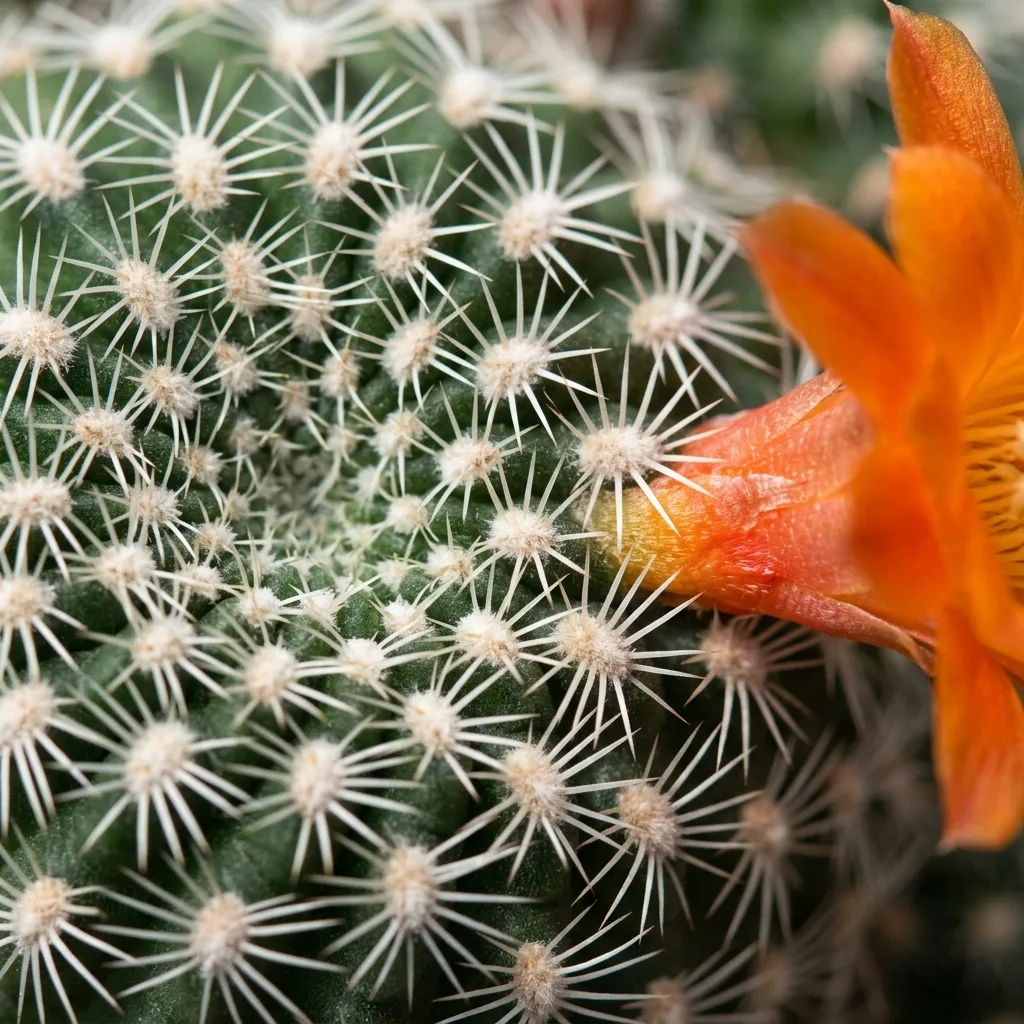
Popularly known among hobbyists as the 'orange snowball' or 'orange crown cactus,' this specimen belongs to the genus Rebutia (often circumscribed within Aylostera in contemporary phylogenetic treatments) within the family Cactaceae. The secret behind its snowball-like appearance lies in its areole structure. Areoles are modified lateral shoot buds unique to cacti, and in this species, they are tightly arranged in spiraling geometric rows along shallow tubercles.
The plant's dense coat of fine, white radial spines feels remarkably soft—more like brushed felt or wool than sharp, defensive needles. This dense white mantle serves critical physiological functions: it reflects high-altitude ultraviolet (UV) radiation, prevents surface overheating during scorching mountain days, and efficiently condenses nighttime mountain fogs into water droplets that trickle down to the root collar. Developing initially as a solitary, globose stem before producing basal offsets to form compact mounds (clusters), this miniature titan reaches mature glory at roughly 5 to 7 cm in diameter.
2. Sunlight Intensity, Photoperiod, and Air Circulation
Maintaining that tightly packed, pristine spherical geometry requires abundant, bright, filtered sunlight. If placed in a dim room or deep on an interior shelf, the stem quickly begins to stretch, narrow, and morph into a cone-shaped spire. Known botanically as 'etiolation' (light starvation), this cellular stretching causes irreversible morphological damage and diminishes the plant's aesthetic appeal.
Conversely, harsh, unfiltered midday sun through direct windowpanes (particularly between 12:00 PM and 3:00 PM) can overwhelm the chloroplasts despite the protective white spine cover, leaving permanent corky sunburn blemishes on the epidermis. Gentle, bright sunlight filtered through a sheer curtain on east- or west-facing sills provides the golden standard. Equally vital is ambient ventilation; stagnant, stuffy indoor corners represent an open invitation for red spider mites and opportunistic fungal spores.
3. Hydration Cycles and the Vital Winter Dormancy Regime
Adapted to arid Andean valleys, Rebutia species employ Crassulacean Acid Metabolism (CAM) photosynthesis. They keep their stomata tightly sealed during daylight hours to halt moisture transpiration, opening them only during cool night hours to intake and store carbon dioxide. Consequently, hydration must follow a disciplined 'soak and dry' rhythm—never shallow, frequent sips, but thorough saturations interspersed with complete dehydration.
During active spring and summer growth, ensure the substrate dries completely down to the bottom of the container before watering deeply until excess runs freely through the drainage holes. Never allow runoff water to linger in decorative saucers; empty standing water within 10 minutes.
The real secret to blooming happens during winter. For your orange snowball to erupt into vivid orange flowers in spring, you must induce an authentic **winter dormancy**. From November through late February, transfer the plant to a cool, luminous location maintained between 5°C and 10°C (41°F–50°F)—such as a frost-free sunroom or cool, bright stairwell—and withhold water entirely. Moderate shriveling of the stem during this phase is entirely physiological; by concentrating cellular solutes and increasing osmotic pressure, the plant protects itself against cold injury while setting flower buds during this temperature drop.
4. High-Mineral Substrate Formulations and Pot Selection
The fibrous, fine root system of the orange snowball demands an open, lime-free, and highly aerated medium. Standard peat moss or conventional potting soils act as death traps; dense peat retains moisture like a sponge, quickly suffocating root hairs and rotting the plant's stem base.
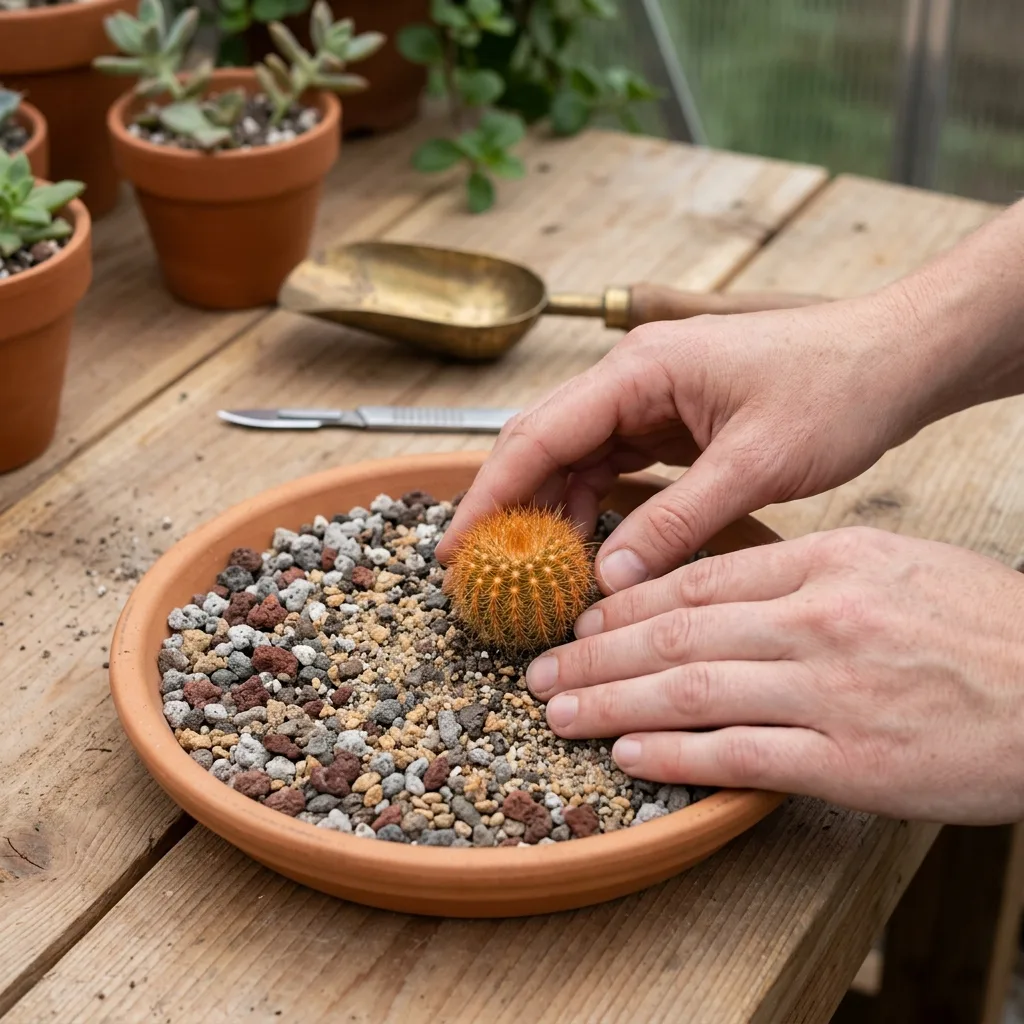
When selecting a pot, choose unglazed terracotta containers fitted with ample drainage holes. The porous clay walls breathe and promote rapid substrate drying. Since Rebutia species develop relatively shallow root systems and expand horizontally via basal offsets, shallow, wide bowl planters are ideal for supporting clustering growth.
| Component | Ratio (%) | Horticultural Function and Botanical Benefit |
|---|---|---|
| Pumice (2–4 mm grain) | 40% | Provides structural air pockets and prevents root suffocation. |
| Lava Rock / Zeolite Grit | 30% | Releases trace minerals, stabilizes internal container humidity, and aerates. |
| Coarse River Sand (Washed) | 15% | Accelerates capillary gravitational drainage and prevents compaction. |
| Sterile Peat Fiber / Decomposed Leaf Mold | 15% | Supplies minimal organic matrix required for root anchorage. |
5. Flowering Induction and Nutrient Supplementation
Unlike many cacti that produce blooms from their apex (the very crown of the plant), Rebutia species develop flower buds around the basal areoles nearest the substrate line. When fully open, this growth habit gives the orange snowball the appearance of wearing a vibrant, citrus-colored floral crown around its base.
To kickstart the blooming cycle, give the cactus its first gentle sip of lukewarm water in mid-March as temperatures rise. Follow this in April and May with a specialized cactus fertilizer low in nitrogen and rich in phosphorus and potassium (such as an NPK 5-15-20 formulation). Fertilizers high in nitrogen cause rapid, unnatural water bloating, leading to epidermis splitting and bud abortion. Administer nutrients only during peak vegetative growth, once a month, diluted to half the manufacturer's suggested dose.
6. Propagation: Basal Offsets and Grafting Techniques
As an orange snowball matures, it forms an attractive clump by generating miniature offsets (pups) around its primary crown. These offsets represent the most reliable and rapid method for clonal propagation:
- Harvesting Offsets: In mid-spring, use a sterile, razor-sharp scalpel to gently detach a firm pup from the base without gouging the mother plant.
- Callus Formation: Do not place the fresh cutting directly into soil! Rest the offset in a dry, shaded, and well-ventilated spot for 4 to 6 days until the wounded surface forms a firm, dry protective callus. This step prevents fungal pathogen entry.
- Rooting: Place the callused pup atop a purely mineral, lightly moistened mix of pumice and perlite. Within 2 to 3 weeks, new adventitious root hairs will anchor into the grit.
- Grafting Considerations: While rare color mutations or chlorophyll-deficient cultivars are sometimes grafted onto Hylocereus or Myrtillocactus rootstocks, standard orange snowballs possess vigorous root systems on their own. Grafting is primarily reserved for emergency rot rescues.
7. Defending Against Fungal Pathogens and Basal Stem Rot
The primary threat to the orange snowball comes from soil-borne fungal pathogens such as Fusarium and Phytophthora, which cause sudden root-collar rot. Because the stem is shrouded in dense white spines, basal softening and yellowing can easily go unnoticed until structural damage is advanced.
To safeguard the crown, topdress the potting mix with a 1-centimeter layer of pure lava grit or zeolite. This top dressing keeps the fleshy green epidermis separated from damp organic particles during watering. If you detect mushy, translucent tissue near the soil line, unpot the specimen immediately. Excise all necrotic tissue with a sterilized blade until only clean, healthy green tissue remains. Dust the wound with elemental sulfur or activated charcoal, air-cure the plant in shade for 7 to 10 days, and restart root induction in clean mineral grit.


Reader Reviews & Comments 3 Reviews
Eleanor Vance
Marcus Thorne
Sophia Bennett
Leave a Review & Rating
Share your plant care tips, experiences, or questions with our succulent community.