






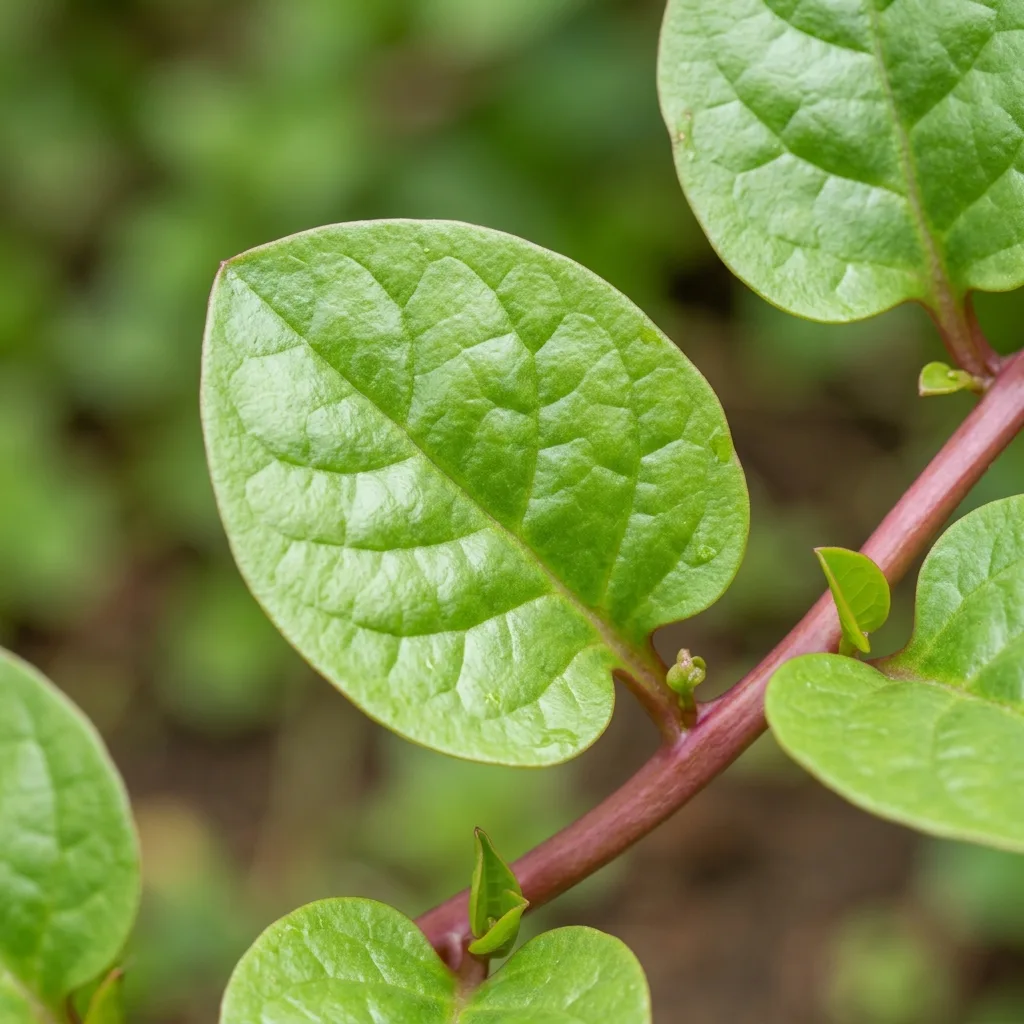
Stretching from the humid forest floors and monsoon-swept floodplains of Southeast Asia and the Indian subcontinent directly into our living spaces, Malabar spinach (Basella alba) is a captivating botanical marvel that defies conventional plant classification. Naturally ascending tree trunks and thick bamboo canes with vigor, this species possesses an entirely distinct physiology from true garden spinach (Spinacia oleracea): its glossy leaves and twining stems house a genuine succulent tissue matrix rich in mucilage and water reserves designed to buffer against sudden drought shocks.
Cultivating Basella alba in our homes or controlled greenhouses feels like merging the disciplined resilience of desert succulents with the exuberant biomass production of tropical rainforests. The succulent enthusiast’s passion for thick, smooth, and waxy foliage converges here in a dizzying vertical climbing habit. However, nurturing this tropical gem without suffocating its root system—while maintaining peak hydraulic pressure within its cellular structure—requires understanding a delicate physiological balance.
1. Botanical Biology and Physiological Foundations
Malabar spinach is the archetypal representative of the Basellaceae family. Unlike desert cacti and Crassulaceae family members, it is not an absolute CAM (Crassulacean Acid Metabolism) species; instead, it fixes carbon during high-temperature periods with an efficiency closely mirroring C4 photosynthetic adaptations. At the cellular level, the spongy parenchyma cells of its leaves accumulate immense concentrations of arabinogalactans and water-soluble polysaccharides (mucilage). This viscous mucilaginous gel acts as a biological shock absorber, shielding the plant's turgor pressure against severe transpiration deficits.
The plant's cylindrical, fleshy, and water-storing climbing stems (functioning as flexible lianas rather than true caudiciforms) require an uninterrupted osmotic stream through their xylem and phloem vessels. Unlike conventional xeric succulents, Basella alba resents having its root zone desiccate into bone-dry sand. However, the moment oxygen diffusion to the root cortex is restricted in anaerobic, waterlogged soil, opportunistic water molds such as Pythium and Phytophthora can decimate fine feeder roots within hours. The horticultural objective is therefore clear: a potting medium with substantial moisture retention capacity that simultaneously guarantees generous micro- and macro-porosity for root respiration.
2. Accurate Diagnosis and Signs of Physiological Need
Monitoring the metabolic vitality of your Malabar spinach begins with reading its leaf morphology and internodal elongation rates. When an internal physiological imbalance arises, the vine communicates through unmistakable morphological cues:
- Etiolation and Paper-Thin Foliage: If climbing shoots turn spindly and internodes stretch excessively (exceeding 10 cm / 4 inches), the vine is light-starved. Under low photon flux, succulent leaf thickness diminishes rapidly, leaving foliage thin, papery, and vulnerable.
- Loss of Turgor and Wilting: Elevated root-zone salinity or extended underwatering causes intracellular vacuole pressure to plummet. Leaves lose their porcelain luster, droop, and feel rubbery to the touch.
- Yellowing Lower Leaves and Basal Stem Darkening: A classic indicator of root asphyxiation. When substrate pores remain oversaturated, the succulent base turns water-soaked, soft, and brown. Frequent watering is never an expression of plant love; it deprives roots of oxygen and unintentionally drowns them.
- Premature Flowering (Stunting / Bolting): Abrupt reductions in day length or root constriction and moisture stress trigger the vine's emergency survival instincts, prompting it to produce clusters of small pinkish-white buds. This shift abruptly halts vegetative leaf production.
3. Step-by-Step Cultivation Protocol
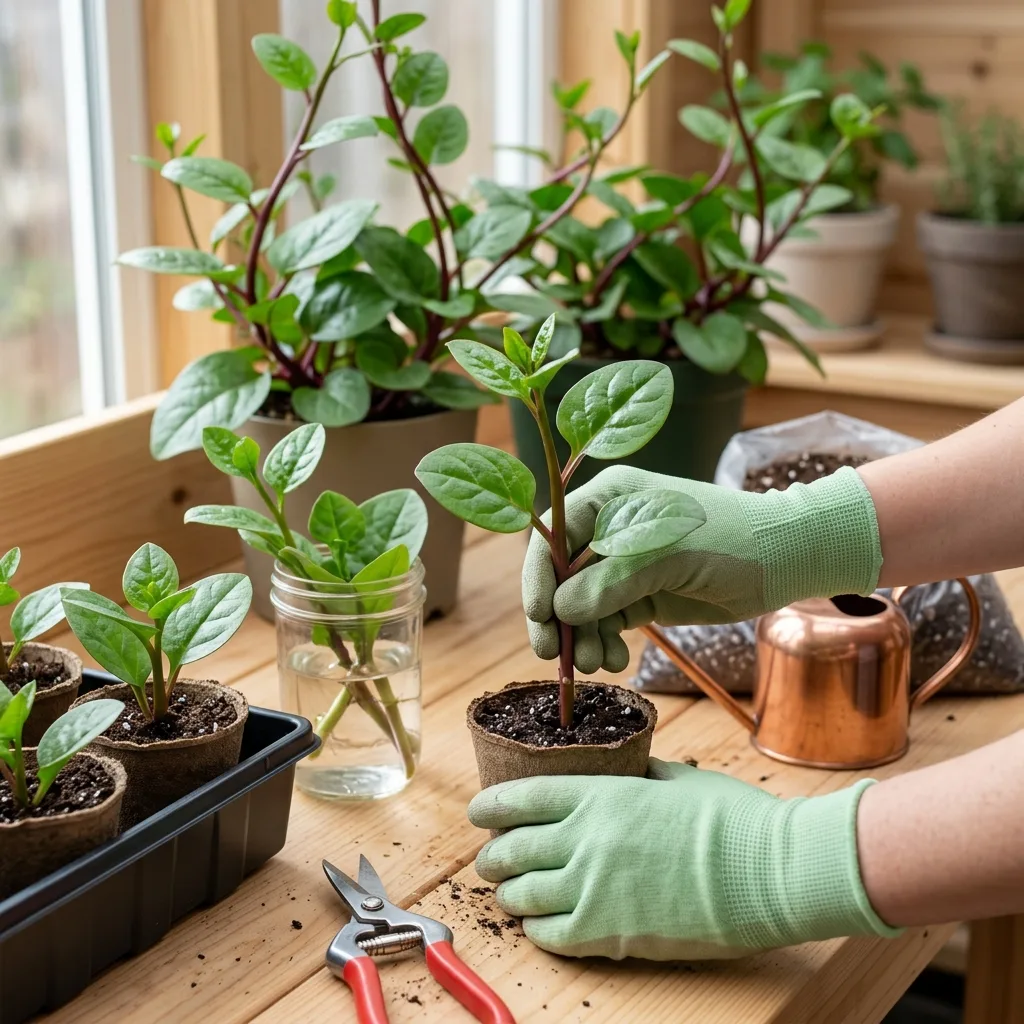
To cultivate Malabar spinach from seed or cutting into a dense, fleshy climbing specimen, follow the controlled protocol perfected over decades in our nursery:
- Seed Preparation and Scarification: Basella alba seeds possess an exceptionally hard, protective pericarp. To accelerate germination, soak seeds for 24 hours in lukewarm (approx. 30°C / 86°F) purified water, or gently abrade the outer seed coat with fine-grit sandpaper to facilitate moisture penetration into the embryo.
- Formulating an Aerated Root Bed: Blend rich organic compost with porous volcanic pumice or perlite. Ensure your container features unobstructed drainage holes so excess water can exit freely without pooling at the base.
- Sowing and Germination Climate: Sow seeds 1 to 1.5 cm (0.5 inch) deep. Maintain ambient temperatures between 24–28°C (75–82°F) and mist the substrate to keep it damp—never soupy or muddy. The first cotyledons typically emerge within 10 to 14 days.
- Trellis Integration: When the vine reaches roughly 15 cm (6 inches) in height and produces its first true succulent leaves, install a bamboo trellis, jute twine, or wooden climbing support into the pot. Malabar spinach naturally twines counterclockwise; gently guide the young vines around the structure without forcing or snapping the brittle tissue.
- Strategic Apical Pinching: Once the main vine reaches 60–80 cm (24–31 inches), pinch off the terminal tip by about 5 cm (2 inches). Breaking apical dominance interrupts the downward flow of auxin, triggering dozens of fresh lateral shoots packed with thick succulent foliage.
- Harvesting Succulent Leaves: Harvest mature, outer leaves that have reached at least 5–7 mm in thickness by snipping them cleanly at the base of the petiole with clean shears or pinching with fingernails. Never strip the entire vine bare; leave the node and main stem intact to serve as the photosynthetic engine for continuous regrowth.
4. Required Tools, Materials, and Cultivation Metrics
The optimal substrate ratios, environmental thresholds, and lighting requirements for maintaining Basella alba are detailed in the physiological matrix below:
| Component / Metric | Recommended Value / Ratio | Physiological Purpose |
|---|---|---|
| Organic Compost / Worm Castings | 40% | Provides sustained slow-release nitrogen and humic compounds for biomass growth |
| Horticultural Pumice (3–5 mm grade) | 30% | Ensures macro-pore oxygen diffusion and rapid drainage through the root zone |
| Coco Coir | 20% | Creates a lightweight, fibrous, uniform moisture matrix vital for mucilage production |
| Agricultural Zeolite | 10% | Boosts Cation Exchange Capacity (CEC) and prevents nutrient leaching |
| Optimal Substrate pH | 6.0 – 6.8 | Maximizes bioavailability of essential micronutrients (iron and magnesium) |
| Light Intensity (PPFD) | 400 – 650 µmol/m²/s | Drives leaf cuticular thickness, cell division, and chlorophyll a/b balance |
| Irrigation Rhythm | When top 3 cm (1 in) is dry | Maintains cell turgor while preventing fungal pathogens and root hypoxia |
5. 5 Common Pitfalls and Remediation Strategies
Here are the five most frequent missteps growers make when tending to Malabar spinach, accompanied by botanically grounded solutions:
- Treating It Like an Arid Desert Cactus: While Basella alba boasts succulent foliage, it is not a desert xerophyte. Severe, extended drought causes stems to turn woody, foliage to taste bitter, and triggers premature bolting. Remedy: Water thoroughly as soon as the top couple of inches dry out; empty drip trays to prevent stagnant standing water.
- Exposing the Vine to Cold Drafts: Temperatures dropping below 15°C (59°F) inhibit vital metabolic enzymes, stalling growth. Chills below 10°C (50°F) trigger cellular collapse and chilling injury on fleshy foliage. Remedy: Bring container-grown vines indoors well before autumn chills set in, placing them in a warm, south-facing exposure.
- Over-Fertilizing with High-Nitrogen Synthetics: Blasting the plant with synthetic nitrogen forces rapid, watery cellular expansion without adequate cell wall reinforcement. This succulent tissue becomes prime prey for mealybugs and aphids. Remedy: Switch to compost tea, worm casting extracts, or dilute organic kelp meal to build balanced cellular integrity.
- Placing in Dim, Low-Light Corners: In light-deficient interior spaces, leaf blades lose their succulent thickness, internodes stretch, and leaves turn pale green. Remedy: Provide at least 5–6 hours of bright, filtered sunlight daily, or supplement with a 30-watt full-spectrum LED grow light set 30 cm above the canopy.
- Failing to Provide Vertical Trellising: Allowing heavy succulent stems to sprawl along damp potting soil invites soil-borne fungal spores to colonize the leaves. Remedy: Install a vertical climbing trellis from the very beginning to maximize airflow and keep leaves clean.
6. Seasonal Calendar and Long-Term Trajectory
Spring (March – May): The season of awakening and germination. Sow scarified seeds indoors or in a warm greenhouse. Once ambient temperatures reliably surpass 20°C (68°F), transplant robust seedlings into their permanent pots and pinch early growth to encourage lateral branching.
Summer (June – August): The peak biomass phase. Under ample heat and generous light, shoots can surge 20–30 cm (8–12 inches) weekly. Maintain steady moisture, feed lightly with organic nutrients, harvest thick outer leaves regularly, and promptly snip off emerging flower clusters.
Autumn (September – November): As natural photoperiods shorten, the vine prioritizes reproductive development. If collecting seeds for next spring, permit a few flower clusters to mature into deep purple-black berries. Gradually taper watering frequency as growth moderates, especially before transitioning containers indoors.
Winter (December – February): In frost-free climates or bright indoor spaces, Malabar spinach can overwinter as a perennial. Metabolic rates decline. Moisten the potting soil just enough to prevent the root ball from shriveling completely, and cease all fertilizing until spring warmth reawakens root activity.


Reader Reviews & Comments 3 Reviews
Eleanor Vance
Marcus Thorne
Julian Reynolds
Leave a Review & Rating
Share your plant care tips, experiences, or questions with our succulent community.