






While wandering through the foothills of the Andes across the wind-scoured Patagonian steppes of Chile and Argentina, you encounter an extraordinary ground-level spectacle: tiny, spiny, dense cushions adorned with vibrant green, succulent leaves, boldly defying sub-zero blizzards and stony scree. This remarkable botanical formation is Maihuenia, one of the most morphologically primitive and evolutionarily fascinating genera within the cactus family (Cactaceae). Many of us instinctively picture succulents solely as offspring of blistering sun and arid lowlands; yet Maihuenia is a rare alpine masterpiece, uniquely adapted to biting cold, persistent snowpack, and ferocious mountain squalls.
The single greatest mistake in conventional succulent care is forcing every fleshy-stemmed plant into the exact same microclimatic box. The cozy, humid, and stagnant air of an ordinary living room is effectively an invisible cage for a species possessing an extreme alpine physiology like Maihuenia. Its root system demands abundant dissolved oxygen, while its crown requires brisk, crystal-clear air movement and sharp diurnal temperature swings. Attempting to grow Maihuenia without honoring its seasonal natural life cycle is like rowing upstream against an oceanic current.
In this comprehensive master guide, we explore how to cultivate Maihuenia species (most notably Maihuenia poeppigii and Maihuenia patagonica) in your personal conservatory or outdoor balcony collection. From mineral substrate chemistry to seasonal thermal triggers, we examine how to prevent etiolation and basal crown rot while maintaining its signature, rock-hard compact growth habit.
1. Botanical Biology and Physiological Foundations
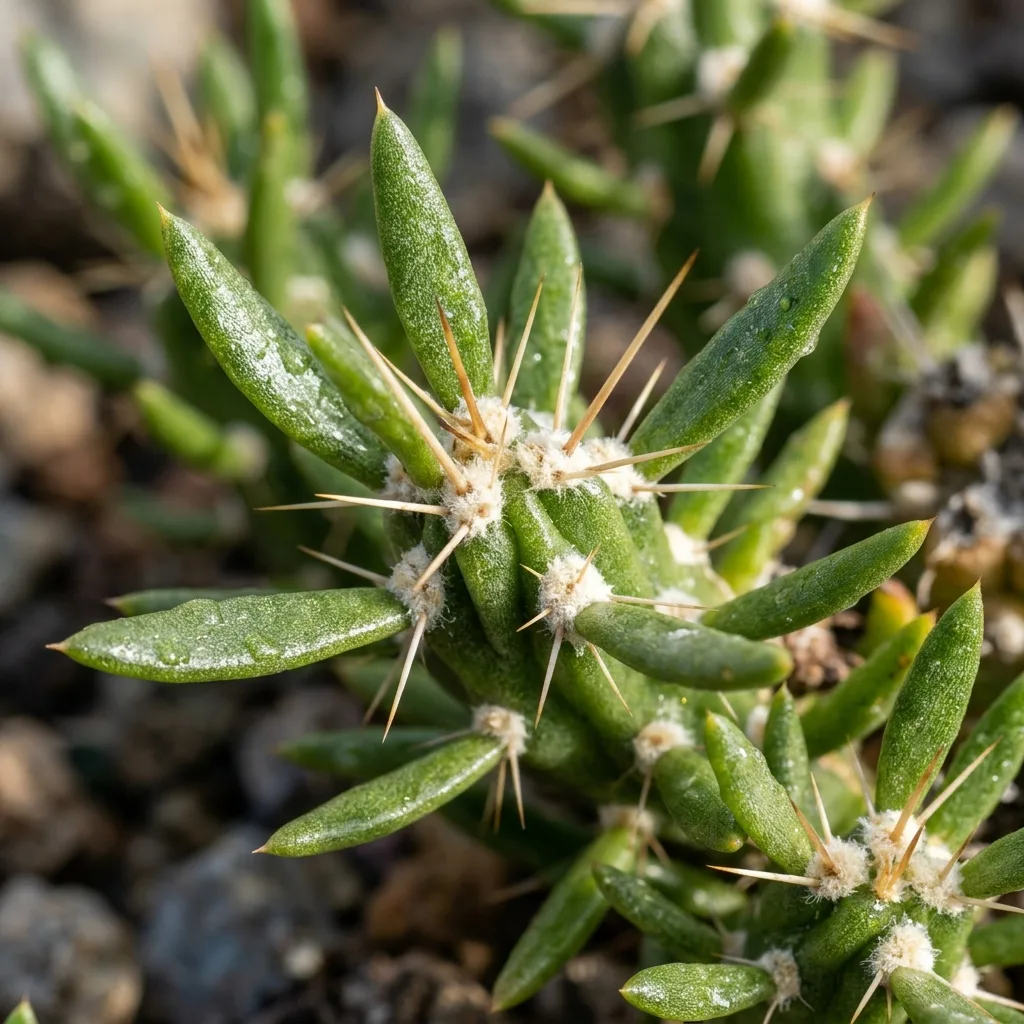
The genus Maihuenia is the sole member of Maihuenioideae, an ancient subfamily of the cactus family (Cactaceae). What renders these alpine wonders unique in the cactus realm is their possession of true, persistent, succulent leaves reminiscent of Pereskia, combined with distinct globular-to-cylindrical stem segments (cladode-like joints) and sharp spines emerging from specialized areoles.
Physiologically, Maihuenia exhibits remarkable C3-CAM flexibility. Under temperate conditions and adequate moisture, it operates primarily via C3 photosynthesis for rapid carbon assimilation; however, when confronted with drought or intense solar irradiance, it switches smoothly toward Crassulacean Acid Metabolism (CAM) to halt transpirational water loss. The accumulation of high concentrations of soluble sugars and thermal antifreeze proteins within its cytoplasm protects cell membranes from rupturing even when ambient temperatures plummet to -15°C or -20°C (5°F to -4°F). In its native habitat, it develops a dense 'cushion plant' architecture, reducing wind drag and constructing its own micro-thermal dome at ground level to conserve heat and localized humidity.
The root anatomy consists of a substantial, fleshy taproot paired with a network of ultra-fine, highly sensitive capillary feeder roots. While this swollen taproot safely caches deep subterranean water reserves, the basal root-crown junction is extraordinarily vulnerable to pathogens such as Fusarium and Phytophthora whenever it rests against damp, organic-rich soil. Consequently, the master key to long-term vitality lies in striking an impeccable balance between root zone oxygenation and instantaneous drainage.
2. Diagnostic Symptoms and Visual Cues
Cultivating Maihuenia successfully requires learning to read its cellular responses. Deviations from proper care will quickly manifest as visible structural changes:
- Etiolation (Spindly, Weak Elongation): An abnormal lengthening between stem segments, accompanied by pale, drooping leaves that shed prematurely, indicates insufficient light levels and dead air. Under natural conditions, Maihuenia forms tight, compact mounds; low light causes it to stretch out like weak string.
- Epidermal Softening and Crown Blackening: Dark discoloration or mushiness right where the plant emerges from the substrate points directly to overwatering or dense, water-retentive media. Cellular turgor has collapsed and fungal mycelium has infiltrated the xylem vessels.
- Winter Shriveling (Natural Dehydration vs. Fatal Decline): In late autumn, Maihuenia segments naturally contract and shed a portion of their fleshy leaves. This is a vital survival mechanism wherein the plant discharges cellular water to lower its freezing threshold. However, if this shriveling is accompanied by black lesions or loose roots, root loss has occurred.
- Leaf Tip Scorching: While rare, abruptly moving a specimen kept in a dim, heated indoor room directly into intense midday spring sunlight induces severe photo-oxidative stress, scalding unacclimated epidermal tissues.
3. Step-by-Step Cultivation Protocol
Successfully caring for Maihuenia at home or on a terrace requires emulating the harsh, high-drainage microclimate of the Patagonian plains. Follow this systematic cultivation protocol:
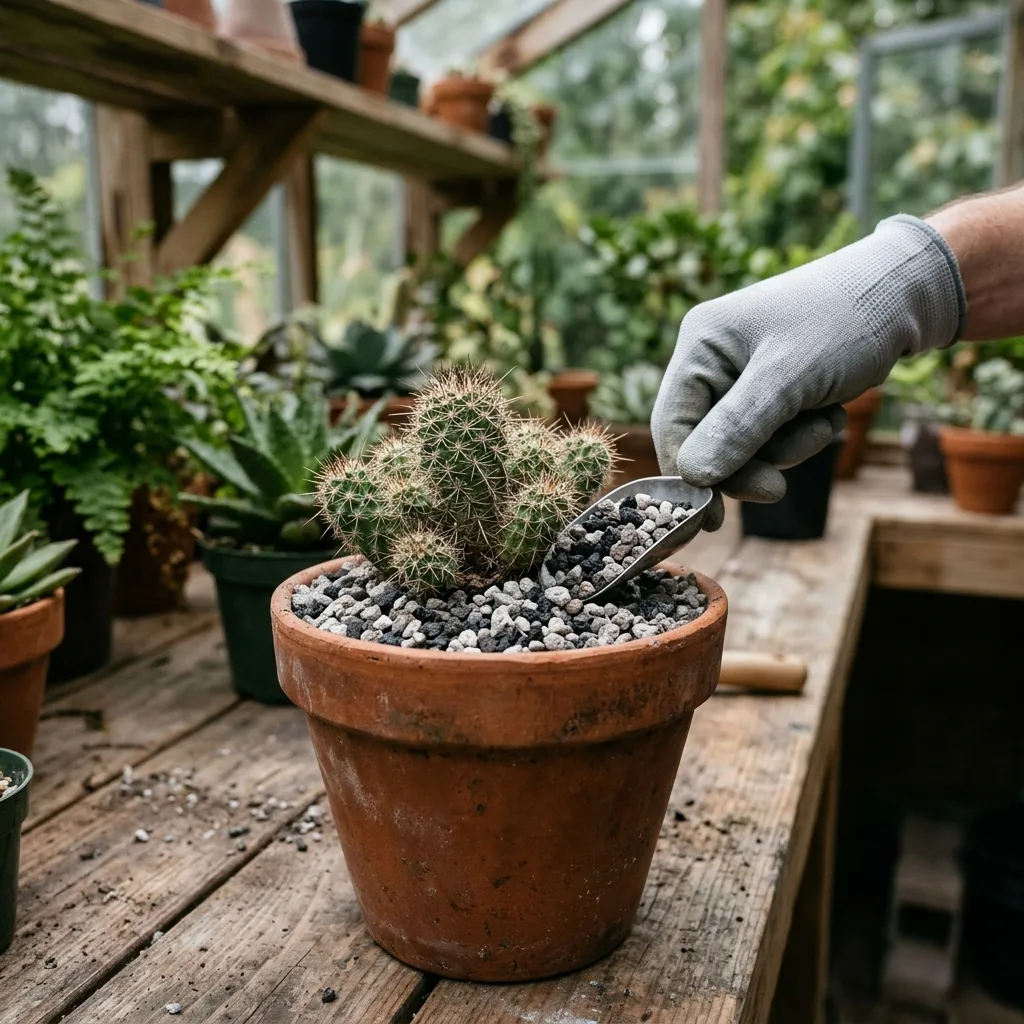
- Container Selection: Maihuenia sends down an extensive vertical taproot. Rather than using shallow, wide bonsai trays, choose an unglazed terracotta pot whose depth exceeds its diameter, outfitted with multiple drainage holes. Terracotta allows moisture to evaporate laterally through its walls, keeping the root rhizosphere oxygenated and cool.
- Crown Collar Isolation (Drainage Layering): Fill the bottom 2 to 3 cm of the pot with coarse pumice or lava rock. Fill in the substrate mix, position the plant, but ensure the top 2 cm around the sensitive root crown never touches organic matter. Topdress this collar zone exclusively with pure coarse quartz gravel, crushed granite, or horticultural zeolite. This technique eliminates crown rot risks by over 90%.
- Solar Positioning: Maihuenia demands full, unhindered sunlight (a minimum of 6 to 8 hours daily). A south- or west-facing balcony exposed to mountain or ambient breezes is ideal. For indoor collections, place the specimen 15 to 20 cm beneath a high-PAR, full-spectrum LED horticultural fixture.
- Air Movement: Showering succulents with frequent water is not an act of kindness—it merely asphyxiates the root system. For Maihuenia, continuous air movement is just as critical as moisture. It cannot endure stuffy rooms; fresh, circulating air must sweep over the foliage at all times.
- Irrigation Methodology: From mid-spring through early autumn, water deeply and thoroughly until excess moisture cascades from the drainage ports. Allow the entire substrate column to dry out completely before irrigating again. Utilizing a bottom-soaking method (submerging the lower third of the pot in water for 15 minutes before thoroughly draining) stimulates deep taproot capillary development.
4. Substrate Composition, Equipment, and Metrics
The potting medium for Maihuenia must be substantially more mineral-based and free-draining than standard succulent mixes. The following formulation has been rigorously proven in our nursery trials:
| Component / Parameter | Proportion / Value | Physiological Function |
|---|---|---|
| Horticultural Pumice (3-6 mm) | 40% | Porous structure stores oxygen and prevents saturation. |
| Lava Rock / Volcanic Tuff (2-4 mm) | 25% | Delivers trace minerals and reinforces structural root anchorage. |
| Zeolite (Clinoptilolite) | 15% | Increases cation-exchange capacity (CEC) and suppresses pathogen activity. |
| Coarse River Quartz Sand | 10% | Stabilizes substrate density, allowing delicate root hairs to grip. |
| Sterilized Coarse Peat / Leaf Mold | 10% | Provides baseline organic buffering and microscopic moisture retention. |
| Optimal Substrate pH | 6.0 - 7.0 | Slightly acidic to neutral for balanced mineral bio-availability. |
| Cold Hardiness Threshold | -15°C (5°F) | Fully frost-hardy, provided the substrate remains bone-dry. |
5. Five Common Mistakes and Recovery Strategies
- Mistake 1: Utilizing Standard Commercial Cactus Soil. Peat-heavy commercial potting soils are lethal to Maihuenia; they hold perched water tables for weeks, suffocating the taproot.
Recovery: Unpot the plant immediately and carefully rinse the root system in tepid water to remove all peat residue. Allow it to air-dry in a shaded spot for 48 hours, then repot into the 90% mineral substrate detailed above. - Mistake 2: Keeping It Near Indoor Heaters During Winter. Without an authentic cold dormancy period, the plant cannot initiate floral buds and will produce sickly, pale growth the following spring.
Recovery: Move the plant to a bright, frost-protected, yet unheated balcony, cold frame, or alpine greenhouse kept between 0°C and 8°C (32°F - 46°F), and cease watering entirely. - Mistake 3: Overhead Foliar Spraying. Water droplets trapped between dense leaf rosettes and spiny areoles create ideal breeding grounds for fungal spores, especially during cooler evenings.
Recovery: Direct water strictly into the topsoil or use bottom-watering basins. If water settles in the crown, wick it away gently using the corner of a clean paper towel. - Mistake 4: Cultivating Behind Stagnant, Unventilated Glass. Glass cloches or unventilated south-facing window corners act like ovens, causing thermal shock and stretching.
Recovery: Acclimate the plant incrementally to open-air conditions. Keep it in bright dappled shade for one week before moving it directly into breezy, full outdoor sunlight. - Mistake 5: Panicked Watering in Response to Fall Shriveling. Seeing the plant deflate in late autumn and mistakenly assuming it is dying of thirst leads to swift rot.
Recovery: Trust its biological cycle. Between October and February, contraction is a protective adaptation against freezing; keep the substrate completely dry.
6. Seasonal Calendar and Long-Term Results
When you align your care routine with Maihuenia's internal circadian and annual clocks, it will mature into an extraordinary showpiece:
- Spring (March – May): The awakening phase. Once ambient daytime temperatures stabilize around 12–15°C (54–59°F), offer the first modest watering of the season. Fresh, luminous green leaves emerge rapidly. By late spring, large, satiny yellow or cream-colored solitary blossoms may appear. A balanced, low-nitrogen, high-potassium cactus fertilizer may be applied once at quarter strength.
- Summer (June – August): Active vegetative growth and structural densification. Provide unrestricted sunlight, strong air movement, and deep watering only after the pot dries completely. If temperatures exceed 40°C (104°F), the plant may enter a brief heat-induced resting phase; extend watering intervals accordingly.
- Autumn (September – November): Pre-dormancy conditioning. Progressively dial back irrigation until ceasing it entirely by late October. Allow the plant to experience cool ambient temperatures so it can concentrate its intracellular solutes and activate frost hardiness.
- Winter (December – February): Absolute dormancy. Maintain the substrate in a bone-dry state. Cold temperatures on an open balcony, cold frame, or alpine house are ideal. As long as the root zone remains completely dry, frost and snow will cause no harm.
Adhering to this disciplined, botanically sound protocol allows your Maihuenia to produce compact clusters of new segments year after year, spreading gracefully over mineral topdressings to become the hardy, conversation-starting centerpiece of your botanical collection.


Reader Reviews & Comments 3 Reviews
Julian Vance
Clara Hensley
Marcus Sterling
Leave a Review & Rating
Share your plant care tips, experiences, or questions with our succulent community.