






When I first examined the genus Cotyledon clinging to rugged, sun-baked ledges across the semi-arid Karoo plateau in South Africa, I was once again spellbound by nature's evolutionary genius. The silvery, wax-dusted plump leaves and those nodding, bell-shaped inflorescences are far more than ornamental marvels—they are precise bio-engineering adaptations engineered to conquer severe drought. Yet, when we bring these striking architectural succulents into our living rooms or patios, failing to replicate this natural equilibrium almost invariably leads to sudden leaf drop and fatal root rot.
For countless enthusiasts, the dilemma of how to successfully cultivate and sustain a Cotyledon succulent surfaces the very moment they pick up a watering can. More often than not, the gravest mistake is suffocating these hardy desert warriors with excessive affection—namely, water. Frequent irrigation is never an act of care; it starves fragile root hairs of oxygen and precipitates cellular decay. In this comprehensive guide, we bridge rigorous plant biology with practical, hands-on cultivation: dissecting Crassulacean acid metabolism, seasonal water uptake, high-porosity mineral substrates, and precision pruning protocols.
1. Botanical Biology and Physiological Foundations
Belonging to the family Crassulaceae, the genus Cotyledon consists of specialized drought-adapted species operating via CAM (Crassulacean Acid Metabolism) photosynthesis. Under this biochemical adaptation, stomata stay firmly closed during hot daylight hours to curb transpirational water loss. Once ambient temperatures drop at night, stomata open to assimilate atmospheric carbon dioxide, storing it in cellular vacuoles as malic acid. Come daybreak, sunlight breaks down this stored malic acid to complete the Calvin cycle. Consequently, exposing Cotyledons to stagnant, humid conditions overnight severely impedes gas exchange and cellular respiration.
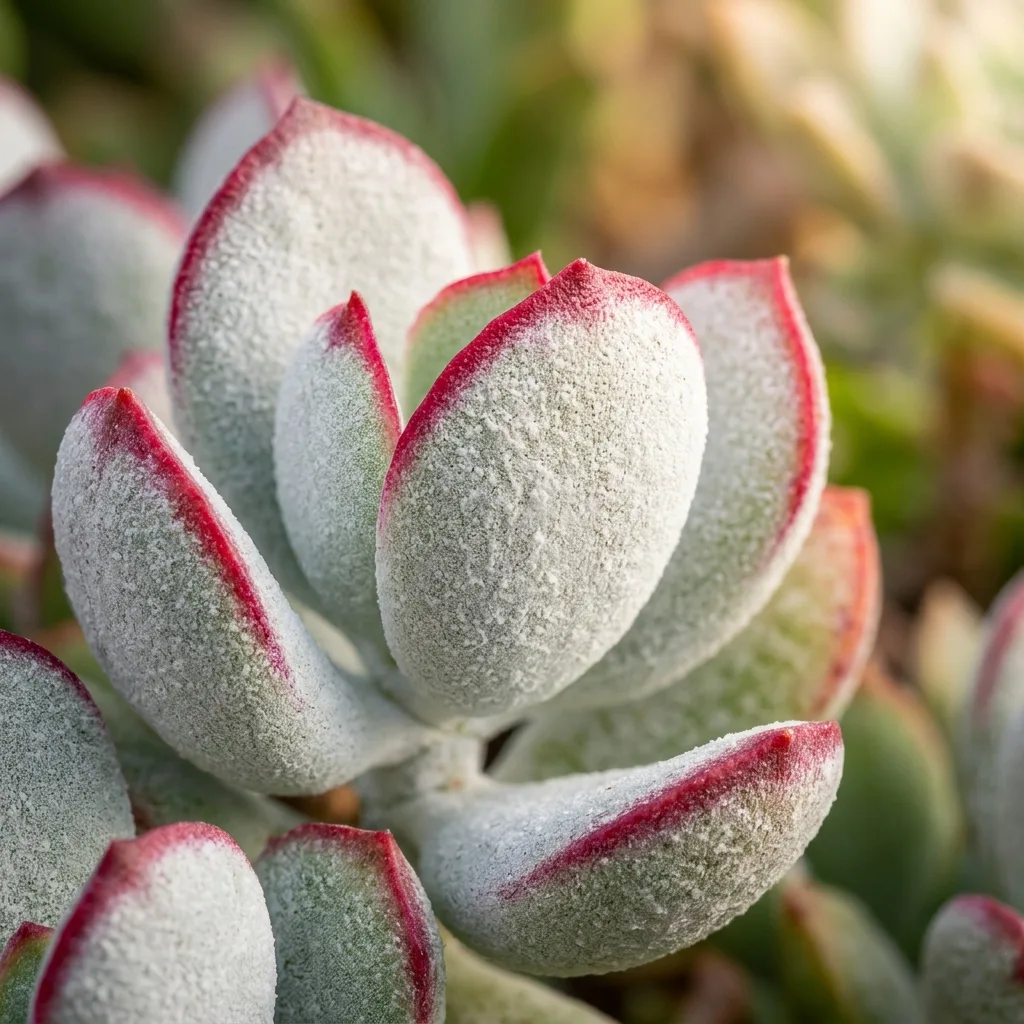
The velvety or chalky white coating dusting the foliage is known botanically as farina, or an epicuticular wax layer. The silvery farina layer on the leaves functions as the plant's natural mineral sunscreen; avoid touching or wiping it away, as fingerprints leave permanent voids. This micro-crystalline layer reflects harmful ultraviolet (UV) radiation and minimizes epicuticular moisture loss. Beneath the soil line, Cotyledon species anchor via shallow, fibrous root networks. While xylem pathways transport moisture swiftly into the succulent leaf parenchyma, the root cells have an exceptionally high biological oxygen demand. Free-standing, stagnant water in compacted potting mix promotes rapid proliferation of virulent soil-borne fungi such as Fusarium and Phytophthora, causing asphyxiation and systemic vascular collapse.
2. Diagnostic Signs: Reading Your Plant's Cellular Needs
You can readily decipher whether your Cotyledon is thriving or in urgent distress simply by observing leaf texture, firmness, and pigmentation:
- Moisture Deficit (Under-watering): Basal foliage displays fine wrinkles, accompanied by a noticeable decrease in hydrostatic turgor pressure. This dehydration response is reversible; proper watering re-plumps cells within hours.
- Waterlogging and Root Asphyxiation: Foliage turns translucent, yellowed, or water-soaked, dropping from the stem at the slightest touch. This indicates ruptured cellular membranes and active fungal rot at the vascular core.
- Light Deficiency (Etiolation): Stems stretch outward spindly and pale, internodal spacing widens significantly, and the vibrant red, burgundy, or chocolate margins fade to a dull, washed-out green.
- Stagnant Air Circulation: Dark lesions appear at the stem base, and powdery or gray mold patches develop over the epicuticular wax.
3. Step-by-Step Cultivation Protocol
Follow this exact horticultural protocol to ensure robust, rot-free structural growth for your Cotyledon collection:
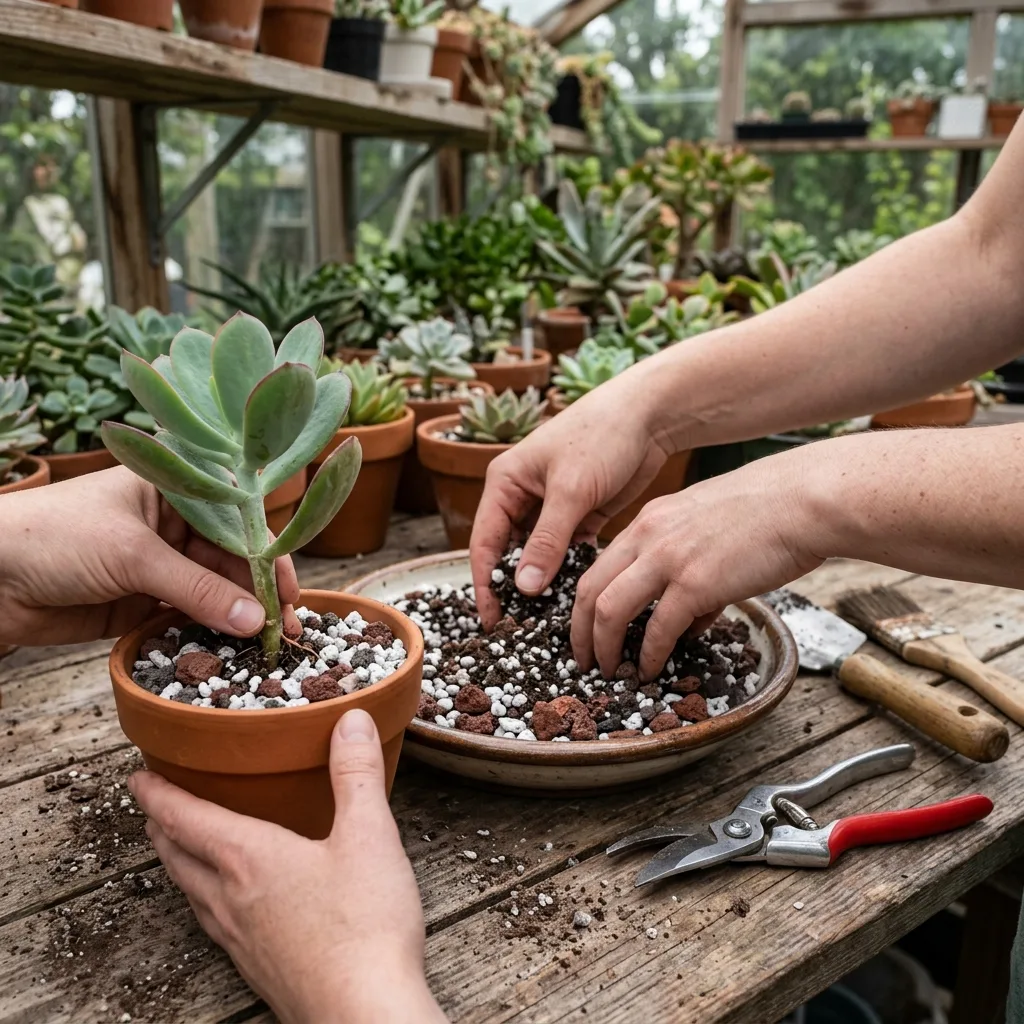
- Container Selection: Always choose unglazed terracotta pots equipped with generous drainage holes. The porous clay walls facilitate bilateral moisture evaporation, lowering the risk of stagnant wet spots and keeping the rhizosphere thoroughly oxygenated.
- High-Porosity Mineral Substrate: Standard peat-based potting soil is lethal for these succulents. Build a fast-draining gritty mix formulated with horticultural pumice, crushed lava rock, and coarse perlite.
- Strategic Light Exposure: Cotyledons thrive under unfiltered morning sunlight. Provide a minimum of 5 to 6 hours of bright light daily near south- or west-facing windows. In midsummer, filter harsh noon rays through sheer mesh to protect pristine farina coatings from solar scorching.
- Controlled 'Soak and Dry' Hydration: Probe the substrate deeply before each watering. Once the root ball has dried out completely, saturate the pot until water exits freely from the drainage hole. Discard all runoff from the saucer within 10 minutes. Always apply water directly to the soil, keeping the succulent rosettes and stem junctions bone-dry.
- Pruning and Propagation: Reinvigorate leggier stems or winter-stressed growths in early spring with clean, sharp bypass pruners. Allow excised stem cuttings to callous in the shade for 3 to 4 days, then plant into completely dry, gritty mineral mix to encourage rapid adventitious root initiation.
4. Substrate Metrics, Environmental Parameters, and Standards
Maintain the environmental parameters summarized below to satisfy the precise physiological thresholds of Cotyledon species:
| Parameter / Component | Recommended Value / Ratio | Horticultural Rationale |
|---|---|---|
| Inorganic Drainage Media | 60% (Pumice, 3-5 mm volcanic lava, zeolite) | Eliminates perched water tables; guarantees immediate drainage and root oxygenation. |
| Organic Nutrition Substrate | 40% (Coarse sifted peat/coco coir, worm castings) | Provides physical anchorage and controlled, steady micro-nutrient release. |
| Light Intensity (Lux) | 25,000 – 45,000 Lux (Direct / Bright Indirect) | Sustains compact internodes, rich anthocyanin margins, and flower bud formation. |
| Irrigation Rhythm | 100% dry substrate (Every 7-10 days in summer, 20-30 days in winter) | Suppresses pathogenic fungal spores and prevents parenchymal hyperhydration. |
| Temperature Range | Optimal: 16°C – 26°C / 60°F – 79°F (Absolute minimum: 5°C / 41°F) | Cold-sensitive; cellular sap crystallizes and bursts cell walls below 5°C. |
| Air Movement | Moderate to High (Constant gentle airflow) | Enhances nocturnal stomatal CO2 uptake (CAM) and averts fungal blight. |
5. 5 Common Mistakes and How to Correct Them
- Overhead Foliar Misting: Spritzing water degrades the hydrophobic epicuticular wax and traps moisture in leaf axils, inducing stem rot. Correction: Discontinue misting immediately; direct water exclusively to the soil line using a narrow-spout watering can.
- Using Oversized Pots: Pounding a small plant into a large pot creates an oversized soil reservoir that holds moisture for too long. Correction: Downsize to an unglazed terracotta container only 2–3 cm (1 inch) wider than the root mass.
- Watering in Low-Light Situations: Inadequate light slows down photosynthesis and transpirational pull, leaving roots submerged in sodden soil. Correction: Relocate the plant gradually to an east- or south-facing window sill and withhold water until the soil is bone-dry.
- Wiping Away the Farina: Polishing dusty leaves with a cloth or cleaning sprays destroys the plant's natural UV defense. Correction: Remove household dust gently using a dry, soft-bristled artist brush.
- Cold and Wet Soil in Winter: A saturated substrate during low winter temperatures is the number-one cause of rapid root death. Correction: Reduce watering to a bare minimum in winter and ensure ambient temperatures stay above 8°C–10°C (46°F–50°F).
6. Seasonal Cultivation Calendar & Long-Term Results
A Cotyledon's developmental rhythms shift distinctly throughout the year:
- Spring (Active Growth Phase): Root metabolism reactivates. Reinstate a steady watering cadence starting in March. Apply a diluted, low-nitrogen succulent fertilizer once every two months to fuel healthy new shoots.
- Summer (Semi-Dormancy & Bloom Period): In excessive heat (above 35°C / 95°F), metabolic activity naturally slows. Scale back water to prevent cellular rupture. Mature specimens will push tall scapes topped with pendulous, nectar-rich bell flowers.
- Autumn (Secondary Vegetative Push): As day temperatures settle around 20°C–25°C (68°F–77°F), root growth surges again. Maintain consistent hydration so foliage can build resilient turgor pressure ahead of winter.
- Winter (Quiescence & Rest): Position the plant in a cool, bright, and completely dry location. A light root-zone sip once every 3 to 4 weeks is sufficient to prevent total root-hair desiccation without initiating wet-stem decay.
Adhering to these biological parameters will reward you with a resilient, sculptural Cotyledon that matures into a living work of art—flourishing with dense, chalk-dusted foliage and crowning your collection each season with vivid, architectural blooms.


Reader Reviews & Comments 3 Reviews
Eleanor Vance
Marcus Sterling
Clara Higgins
Leave a Review & Rating
Share your plant care tips, experiences, or questions with our succulent community.