






Hidden beneath the fog-shrouded coastal dunes of South Africa and Namibia, nestled almost entirely beneath gritty quartz sand under a scorching sun and relentless desert winds, lives an exquisite botanical gem: Fenestraria rhopalophylla, affectionately known across the horticultural world as 'Baby Toes'. In its native habitat, this diminutive marvel exposes only the transparent, crystal-like tips of its club-shaped leaves to the harsh elements above. Yet, when brought into indoor living spaces, it all too frequently falls victim to excessive human kindness and catastrophic overwatering. Cultivating a thriving Fenestraria is never merely about keeping a houseplant hydrated; it is about honoring millions of years of specialized optical evolution, Crassulacean acid metabolism, and extreme drought survival strategies.
Countless succulent enthusiasts lament watching their compact rosettes stretch into pale, elongated matchsticks, or discovering overnight that the entire root crown has collapsed into a translucent, gelatinous mass of rot. Successfully answering the question of how to cultivate and maintain Fenestraria relies entirely on understanding this precise cellular physiology. Frequent irrigation is not an expression of affection; in these subterranean desert dwellers, it strips the root zone of vital oxygen and suffocates the plant from below. Let us delve into the cellular dynamics of this remarkable Aizoaceae family member and construct an exact, step-by-step horticultural blueprint to keep your specimen robust, compact, and rot-free for years to come.
1. Botanical Biology and Physiological Foundations
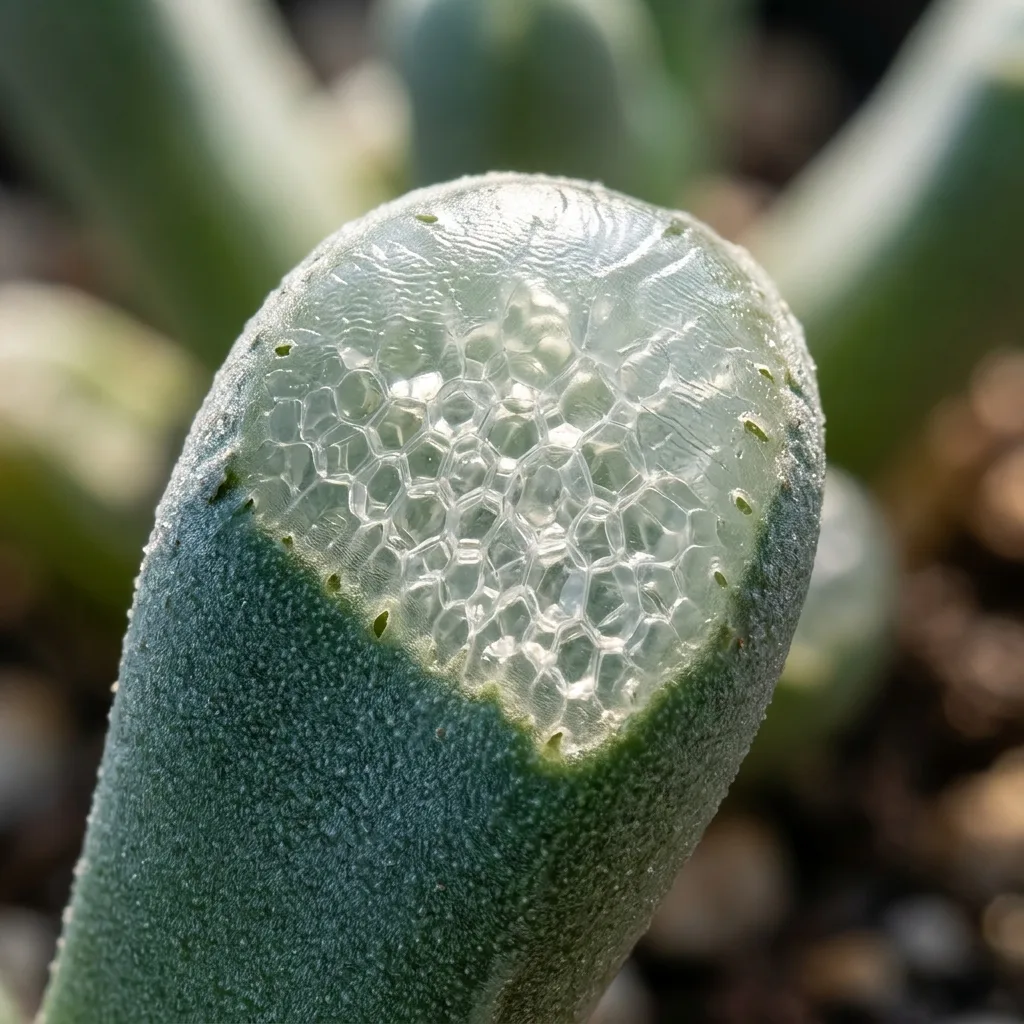
The defining anatomical feature of the genus Fenestraria is what botanical literature classifies as 'windowed leaves'. At the apex of each club-shaped (clavate) leaf lies a specialized optical window composed of transparent, chlorophyll-free, water-storing epidermal cells. This biological lens functions as a natural optical diffuser: it filters blistering solar radiation and refracts photosynthetically active radiation (PAR) deep downward into the inner, chlorophyll-packed mesophyll layers embedded along the lateral subterranean walls of the leaf. In the wild, the photosynthetic machinery remains insulated and cooled underground, while the plant harvests sunlight exclusively through these tiny surface-level skylights.
To conserve precious internal moisture in an environment where rainfall is practically nonexistent, Fenestraria utilizes Crassulacean Acid Metabolism (CAM). The plant keeps its stomata hermetically sealed throughout the sweltering daytime hours to prevent transpirational water loss, opening them only under the cool cover of night to absorb and chemically fix atmospheric carbon dioxide into malic acid. Consequently, irrigating during warm daytime hours creates a biological mismatch: the root system cannot metabolize moisture efficiently while stomata are closed, causing stagnant water to linger around the root hairs—the primary catalyst for lethal anaerobic bacteria and devastating Fusarium fungal pathogens.
Fenestraria exhibits a dimorphic root architecture: a network of hyper-fine root hairs capable of capturing brief moisture from sea fogs, tethered to a thick, fleshy central taproot that stores subterranean water reserves. The root xylem is adapted to high osmotic pressure gradients; when placed in moist, peat-heavy commercial potting soils, the cells absorb water unchecked via runaway osmosis, causing extreme internal turgor pressure. The alarming horizontal splits and ruptures frequently observed on Baby Toes leaves are the direct, violent mechanical consequence of this cellular membrane blowout.
2. Accurate Diagnosis and Diagnostic Symptom Checklist
To accurately assess what your Baby Toes succulent requires, observe leaf turgidity, skin texture, and apical window clarity with precision:
- Underwatering (Physiological Loss of Turgor): The transparent apical windows visibly sink inward (concave indentation), vertical micro-wrinkles appear along the sides of the leaf cylinders, and the foliage feels subtly soft or rubbery to a gentle pinch. This is the only unequivocal botanical signal that irrigation is required.
- Overwatering and Edema (Cellular Rupture): Leaves appear rock-hard, glossy, and abnormally swollen, often developing deep, horizontal fissures just beneath the apical windows. In advanced stages, the leaf base turns a sickly translucent pale yellow, followed by immediate crown liquidation and detachment.
- Etiolation (Insufficient Light): Stems that should naturally remain squat and densely clustered begin stretching upward toward light sources like pale, spindly matchsticks. The apical windows shrink, and the natural clumping architecture unravels. A wild-type Fenestraria rarely exceeds 3 to 5 cm in height; foliage reaching 7 to 8 cm is a desperate morphological cry for higher photon flux density.
- Summer Dormancy (Aestivation): As ambient temperatures climb above 30°C (86°F), the leaves may wrinkle slightly and all active vegetative growth halts completely. This physiological rest period must never be mistaken for chronic dehydration; the plant has down-regulated its metabolic activity to survive high heat.
3. Step-by-Step Cultivation Protocol
To nurture a resilient, rock-hard Baby Toes specimen that produces brilliant daisy-like flowers in season, execute the following cultivation protocol:
- Container Selection: Always utilize an unglazed, porous terracotta pot fitted with generous, unblocked drainage holes. Terracotta facilitates essential gas exchange through its clay walls, allowing the substrate core to dry out evenly. Select a pot depth of 7 to 9 cm (3 to 3.5 inches) to give the taproot vertical clearance without trapping vast volumes of uncolonized, damp soil.
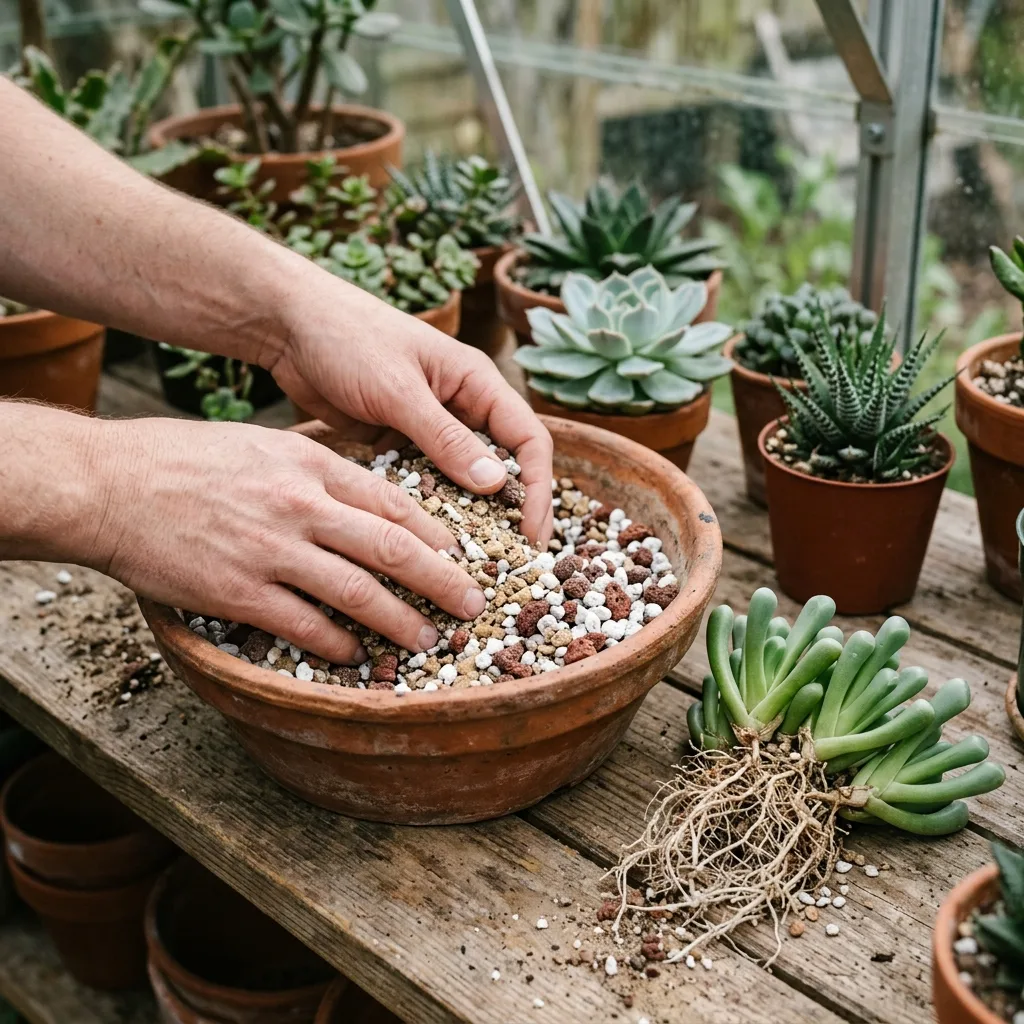
- Engineering an Ultra-Mineral Substrate: Standard peat-based cactus mixes are lethal to Fenestraria. Your potting medium must consist of at least 80% to 85% porous, inorganic minerals (such as 2-4 mm pumice, crushed volcanic scoria, zeolite, and coarse quartz grit) combined with no more than 15% sifted coconut coir or pasteurized leaf mold.
- Planting Depth and Crown Protection: While wild specimens sit flush with the desert floor, indoor air circulation is insufficient to support full burial. Keep the fleshy base of the leaves approximately 1 cm above the soil line. Support the root crown entirely with a top-dressing layer of coarse, pure pumice or volcanic gravel (dry mulching) to ensure green tissue never rests directly against damp organic soil particles.
- Optimizing Photon Delivery: Provide a minimum of 5 to 6 hours of direct, unfiltered or lightly filtered morning and early afternoon sunlight daily. A south- or southwest-facing windowsill is ideal in the Northern Hemisphere. In low-light environments, employ a full-spectrum 6500K LED horticultural grow light delivering adequate Photosynthetic Photon Flux Density (PPFD) to prevent etiolation.
- The Deficit Irrigation Method: Never apply water while the leaf windows remain flat, taut, or convex. Water exclusively when the apical windows exhibit distinct concave dimpling and side-creasing. When watering, perform a deep, thorough drench until water runs freely from the drainage holes, then discard all runoff from the saucer immediately. In the winter growth phase, water roughly every 15 to 20 days; during high-summer aestivation, restrict watering to a meager tablespoon around the pot perimeter once a month purely to prevent root-hair dieback.
4. Key Cultivation Parameters and Material Specifications
Horticultural success with Fenestraria relies entirely on disciplined abiotic parameters rather than chemical fertilizers. The table below delineates the optimal environmental benchmarks:
| Parameter / Component | Recommended Standard | Physiological Purpose / Notes |
|---|---|---|
| Substrate Composition | 40% Pumice (2-4 mm) + 25% Volcanic Scoria + 20% Zeolite + 15% Coco Coir | Ensures maximum rhizosphere oxygenation and near-instantaneous water drainage. |
| Container Type | Unglazed terracotta (baked clay), 7-9 cm depth | Allows the potting medium to breathe laterally, rapidly evaporating core moisture. |
| Light Intensity | 5-6 hours direct sun or 250-300 µmol/m²/s PAR | Inhibits etiolation, preserving natural squat, compact, and cylindrical morphology. |
| Temperature Range | 12°C - 26°C (54°F - 79°F; absolute minimum 5°C / 41°F, strictly non-frost hardy) | Triggers natural summer aestivation above 30°C; actively photosynthesizes in cool conditions. |
| Watering Frequency | Strictly when apical windows become concave (Winter: ~15-20 days; Summer: ~30 days) | Completely prevents cellular turgor blowouts, leaf splitting, and subterranean fungal rot. |
5. 5 Common Pitfalls and Emergency Rescue Protocols
- Pitfall: Adhering to a Rigid Calendar Schedule. Watering "every Monday" is a death sentence for Fenestraria.
Rescue Protocol: Discard your calendar. Use physiological leaf cues as your sole metric. If the windows are flat or bulging, withhold water even if four weeks have elapsed. Dehydration is easily corrected; overwatering destroys a plant in 48 hours. - Pitfall: Using Commercial "Cactus & Succulent" Soil Out of the Bag. Most retail mixes contain 60-80% moisture-retentive peat moss, which suffocates Baby Toes roots.
Rescue Protocol: Unpot the specimen immediately and rinse away every trace of dark nursery peat from the root system. Let the bare roots air-dry on paper towels in a shaded, ventilated room for 48 hours, then repot into an 85% mineral mix. Do not water for the first 5 to 7 days post-repotting. - Pitfall: Burying the Entire Leaf Cylinder Indoors. Replicating wild subterranean burial without wild desert wind and high-energy radiation causes trapped moisture to rot the leaves.
Rescue Protocol: Elevate the rosette so that only the roots are below ground level. Collar the neck of the plant with coarse, dust-free pumice or volcanic gravel so the leaf bases remain dry even after watering. - Pitfall: Low-Light Cultivation Causing Irreversible Stretching. Once leaves stretch out to 7-8 cm, those specific leaves can never shrink back down.
Rescue Protocol: Do not prune or decapitate the stretched leaves, as they house the plant's only water and carbohydrate reserves. Gradually acclimate the pot to direct sunlight or place it beneath high-output grow lights. New offsets and emerging center leaves will grow tight, short, and cylindrical. - Pitfall: Heavy Watering During Mid-Summer Heat. Fenestraria is an opportunistic winter-grower. When temperatures consistently top 32°C (90°F), its metabolism slows to a crawl.
Rescue Protocol: During July and August, resist the urge to deep-water wrinkled leaves. Move the pot to a brightly lit, well-ventilated, cooler position away from scorching afternoon glare. Provide only a spoonful of water once a month to keep the primary taproot alive, resuming regular deep irrigations once autumn temperatures drop.
6. Seasonal Phenology and Long-Term Care Routine
Aligning your cultivation practices with Fenestraria's natural biorhythms will reward you with exceptional structural vigor and profuse, shimmering floral displays:
Autumn (September – November): This marks the awakening and most vigorous vegetative phase for the plant. As diurnal temperatures shift and night conditions cool, CAM pathway efficiency peaks. Irrigate deeply whenever the apical windows exhibit slight concave indentations. By late autumn or early winter, mature specimens will send up stunning, daisy-like white or shimmering golden-yellow blossoms from between the clustered leaf cylinders.
Winter (December – February): Growth continues robustly on sunny windowsills. Keep the plant safe from frost, maintaining ambient temperatures between 10°C and 16°C (50°F - 61°F). Because lower ambient temperatures slow soil evaporation, extend intervals between watering sessions and water exclusively on the mornings of bright, sunny days to ensure the substrate dries efficiently.
Spring (March – May): Following bloom completion, dried floral stems should be gently removed with sterile tweezers once they detach easily. As day length and solar intensity climb, the plant completes its final seasonal growth flush. A single application of low-nitrogen, high-potassium cactus fertilizer (such as NPK 5-10-10), diluted to one-quarter strength, may be administered to support offset development.
Summer (June – August): High atmospheric heat induces seasonal dormancy (aestivation). Turgor intake is suspended. Move the pot to an airy, well-ventilated location shielded from blistering midday sun. Keep watering to an absolute minimum. Maintaining this seasonal rhythm allows your Fenestraria to multiply its rosettes year after year, eventually forming a dense, breathtaking carpet of living desert architecture.


Reader Reviews & Comments 4 Reviews
Julian Vance
Marcus Sterling
Eleanor Brooks
Claire Dupont
Leave a Review & Rating
Share your plant care tips, experiences, or questions with our succulent community.