





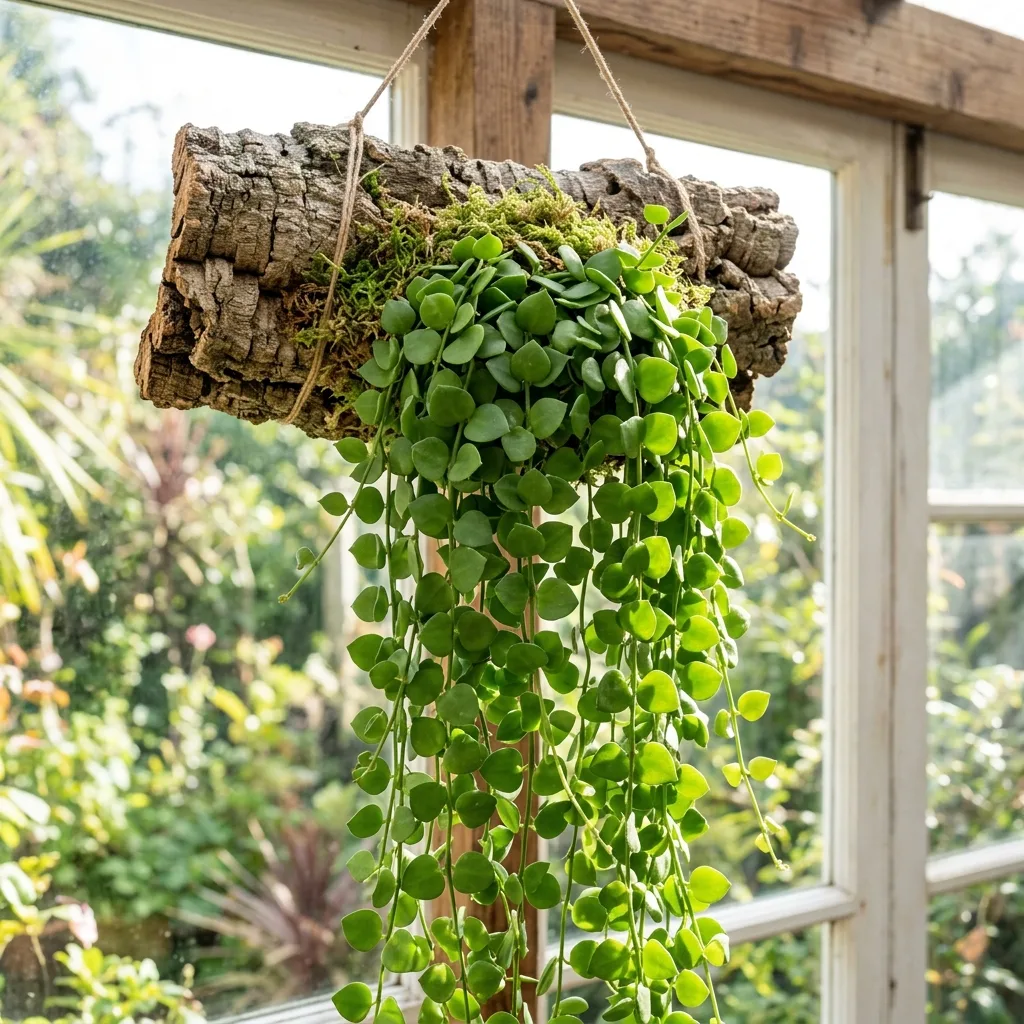
Picture an elegant vine suspended high in the misty tropical rainforests of Southeast Asia, nestled beneath the filtered canopy of ancient trees. Dischidia succulents are not denizens of arid rock crevices; they are the true children of aged, atmospheric tree bark reaching toward the sky. Far too many plant enthusiasts inadvertently suffocate these delicate epiphytes by burying their roots in dense peat or standard commercial cactus soil. In truth, what Dischidia genuinely craves is coarse bark aerated by tropical breezes and sustained by high relative humidity.
As a fascinating member of the Apocynaceae (dogbane) family, this botanical marvel stores metabolic water within fleshy, succulent foliage while sending out adventitious aerial roots to absorb moisture and ambient nutrients directly from the air. Cultivating a thriving Dischidia is less about saturating a common nursery pot and more about recreating a living rainforest microclimate inside your home. In this masterclass, we will delve into the cellular secrets needed to produce vigorous, cascading tendrils draped effortlessly from mounted bark slabs or airy hanging baskets.
1. Botanical Biology and Physiological Foundations
Species of the genus Dischidia—such as the beloved Dischidia nummularia ('String of Nickels') or Dischidia ruscifolia ('Million Hearts')—thrive in their native habitats as true epiphytes. Epiphytic organisms are strictly non-parasitic; they extract zero nourishment from host trees, utilizing their physical bark exclusively as mechanical structural anchors. This specialized evolutionary niche has directly molded the xylem and phloem architecture of the root zone. Rather than tolerating compact, anoxic, muddy media, their roots have evolved exclusively to cling to coarse crevices where bark fragments and detritus are constantly ventilated by open airflow.
At the cellular level, Dischidia employs Crassulacean Acid Metabolism (CAM) photosynthesis to mitigate transpirational water loss. The plant keeps its stomatal pores tightly sealed throughout hot daylight hours to preserve internal turgor, opening them exclusively during cool, humid nights to assimilate carbon dioxide into malic acid. During the following day, this stored carbon is converted into sugars under filtered solar radiation. If the root zone remains persistently sodden and deprived of molecular oxygen, this lack of gas exchange triggers rapid anaerobic fermentation within the tender apical cells of the roots. This enzymatic breakdown quickly dissolves the root cortex, rendering the plant defenseless against devastating waterborne oomycetes such as Pythium and Phytophthora.
2. Accurate Diagnostics and Stress Indicators
You can readily decipher the physiological status and environmental balance of your Dischidia by monitoring specific stem and foliar markers:
- Optimal Light & Humidity Equilibrium: Foliage remains firm, lustrous, and plump with optimal turgidity. Tiny, vibrant adventitious roots emerge proactively from nodal junctions, exhibiting an active climbing or clinging habit.
- Etiolation (Light Deficiency): Internodes stretch noticeably, foliage becomes smaller and turns a pale, faded green. In Dischidia ruscifolia, the signature dense, compact heart patterning becomes loose and disjointed.
- Solar Scorch & Cellular Bleaching: Prolonged exposure to intense midday ultraviolet rays causes protective anthocyanin reddening, followed quickly by permanent white or tan necrotic lesions on the leaf blades.
- Root Suffocation (Excess Water or Dense Media): Basal foliage turns yellow from the bottom up and drops at the slightest touch, accompanied by soft, darkened rot at the soil line.
- Low Ambient Humidity Stress: Crisp foliar margins, drying or shriveling adventitious root tips, and the complete stalling of delicate juvenile growth points.
3. Step-by-Step Cultivation Protocol
Follow this precise horticultural sequence to pot, mount, or root Dischidia specimens with zero risk of root decline:
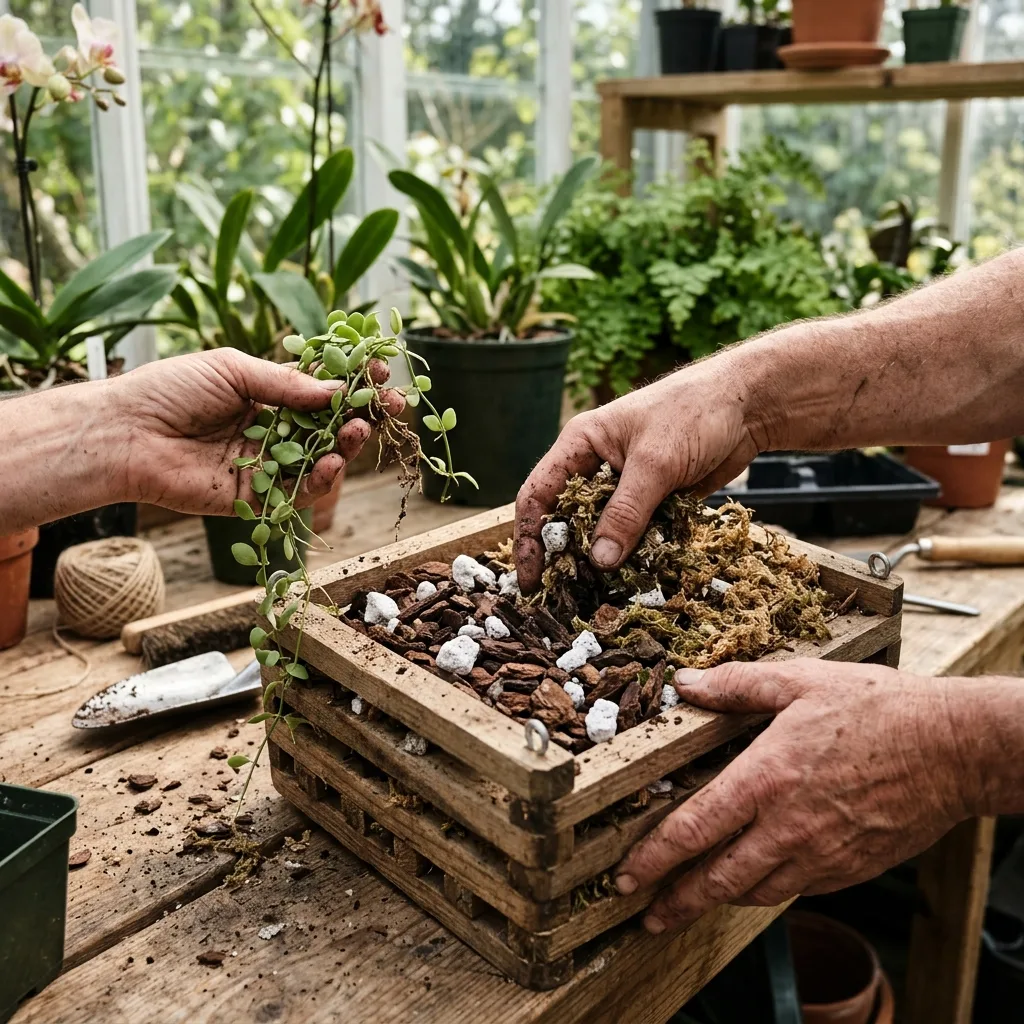
- Substrate Engineering: Discard all standard houseplant soils entirely. Formulate a hyper-porous epiphytic medium consisting of medium-grade orchid pine bark, coarse pumice, long-fiber sphagnum moss, and horticultural coco husk chunks.
- Container Selection: Choose slatted plastic orchid baskets, net pots, unglazed pierced terracotta, or self-draining hanging baskets. Water must rush through the medium and drain completely within seconds.
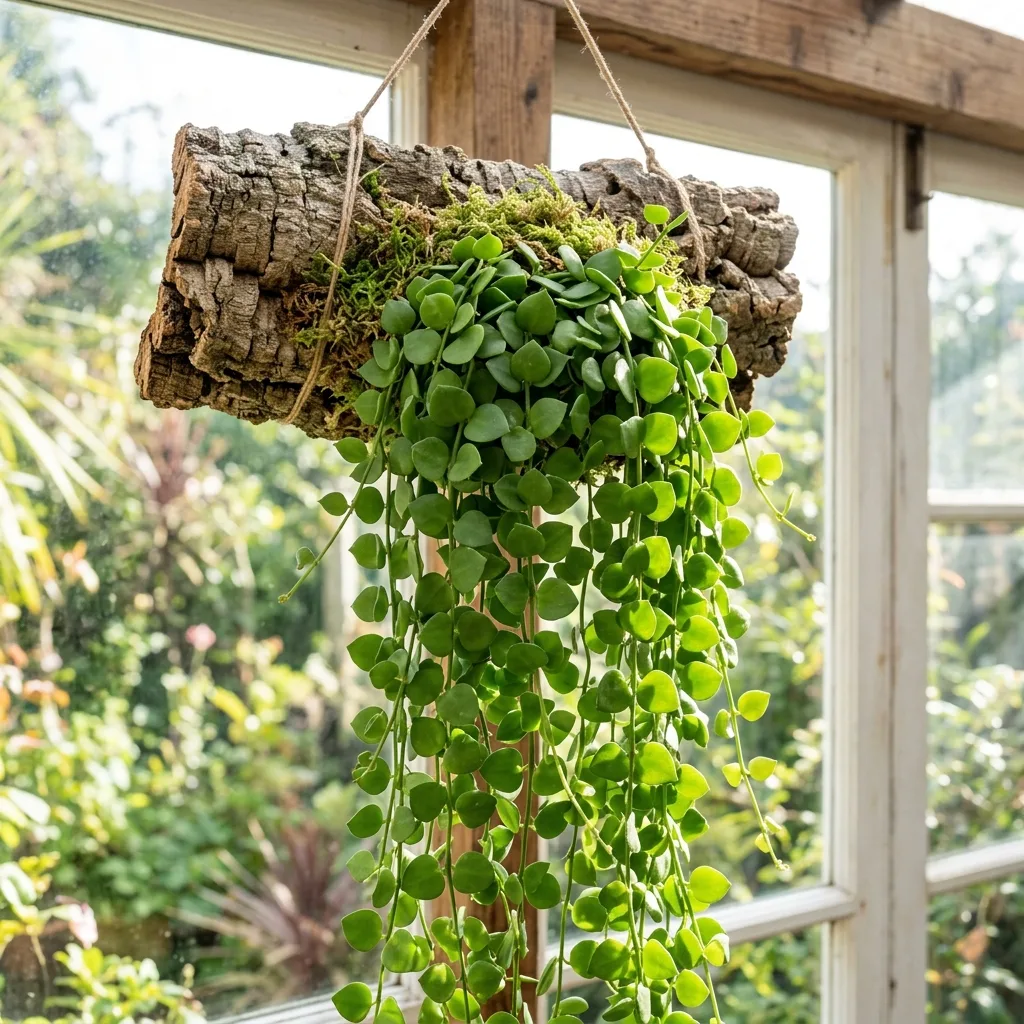
- Bark Slab Mounting (The Authentic Epiphytic Technique): To mount your specimen naturally onto a virgin cork bark slab or mangrove driftwood, wrap the basal root system gently in a nest of damp sphagnum moss and secure it firmly against the bark using transparent monofilament fishing line.
- Luminous Placement: Position the specimen where it receives copious bright, indirect morning light softened through sheer curtains. An east-facing or bright northeast exposure provides the precise photon density required to sustain CAM photosynthesis without burning the cuticle.
- The Submersion Immersion Method: Wait until the upper bark medium is thoroughly dry. Submerge the lower two-thirds of the basket into a basin of room-temperature, filtered or rainwater for 5 to 7 minutes. Allow the bark and moss to hydrate evenly, then hang the container freely so that all excess water drains out completely.
4. Required Materials, Substrate Ratios, and Environmental Metrics
Guesswork frequently leads to epiphytic decline. The following media matrix has been formulated and greenhouse-tested by our horticulturists to provide peak cellular oxygenation and longevity:
| Component / Environmental Factor | Recommended Ratio / Metric | Physiological Function |
|---|---|---|
| Orchid Pine Bark (8–15 mm particle size) | 40% | Creates primary aeration voids; allows natural epiphytic anchoring |
| Coarse Pumice or Horticultural Lava Rock | 30% | Prevents substrate compaction; balances xylem hydrostatic pressure |
| Long-Fiber Sphagnum / Coconut Husk Chunks | 20% | Provides controlled, micro-atmospheric root moisture |
| Horticultural Charcoal or Zeolite | 10% | Adsorbs metabolic toxins; suppresses fungal pathogen development |
| Ambient Relative Humidity | 50% – 75% RH | Prevents dehydration of exposed aerial adventitious roots |
| Optimal Temperature Range | 18°C – 27°C (64°F – 80°F) | Ensures enzymatic efficiency during nocturnal CAM stomatal cycles |
5. Five Common Mistakes and Emergency Interventions
- Foliar Misting with Hard Tap Water: Chlorinated, mineral-dense water deposits alkaline calcium crusts, clogging stomata and leaving unsightly white residue. Correction: Clean the leaves gently using a microfiber cloth dampened with pure distilled water. Use an ultrasonic room humidifier or pebble tray instead of surface misting.
- Placement in Dim, Sunless Bathrooms: Although Dischidia loves high humidity, placing it in dark corners inhibits chlorophyll activity and halts growth. Correction: Relocate the plant immediately to a window receiving at least 6 to 8 hours of brilliant, indirect or filtered sunlight daily.
- Over-Saturating Media in Winter: Ambient temperatures drop and metabolic rates slow significantly in winter, drastically reducing transpiration. Damp, cold roots invite pathogen attacks. Correction: Space out watering cycles; hydrate only when the bark medium is entirely dry and feels feather-light.
- Over-Fertilizing with High-Nitrogen Salts: Epiphytes have evolved in low-nutrient canopy environments. Concentrated fertilizers chemically burn the microscopic root hairs. Correction: Dilute a balanced, urea-free orchid fertilizer to one-quarter strength and apply it only once a month during active spring and summer growth.
- Allowing Runoff to Stand in Saucers: Trapping stagnant water beneath the container creates a capillary wick effect that drowns the lower root system in mud. Correction: Always empty collection saucers completely within 15 minutes of watering.
6. Seasonal Management and Long-Term Results
Spring (Vegetative Activation): As temperatures reliably exceed 18°C (64°F), the plant awakens, generating rapid stem extensions and fresh, lime-green adventitious root tips. Begin quarter-strength micro-nutrient fertilization and perform any needed mounting or repotting into fresh bark.
Summer (Photosynthetic Peak & Flowering): In summer, Dischidia produces its charming, lantern-shaped or starry blossoms in shades of creamy white to pale pink. Because transpirational water loss peaks during heatwaves, verify hydration regularly and ensure brisk, continuous air circulation to thwart opportunistic foliar fungi.
Autumn (Metabolic Transition): As day length shortens, taper off all nutritional inputs. Extend the dry intervals between soaking sessions as the plant begins its transition toward winter rest.
Winter (Dormancy and Cold Protection): Never expose the plant to temperatures below 12°C–14°C (54°F–57°F). Guard carefully against both freezing drafty windows and the desiccating forced dry air of heating vents. Maintain ambient humidity around the foliage using localized room humidifiers.
When you align your care routine with these biological principles, your Dischidia will reward you with luxurious, cascading cascades extending meters in length. Embellished with sculptural, textured leaves and fascinating aerial roots, it brings an authentic piece of tropical canopy architecture right into your living space.


Reader Reviews & Comments 4 Reviews
Clara Jenkins
Eleanor Vance
Marcus Thorne
Julian Hayes
Leave a Review & Rating
Share your plant care tips, experiences, or questions with our succulent community.