






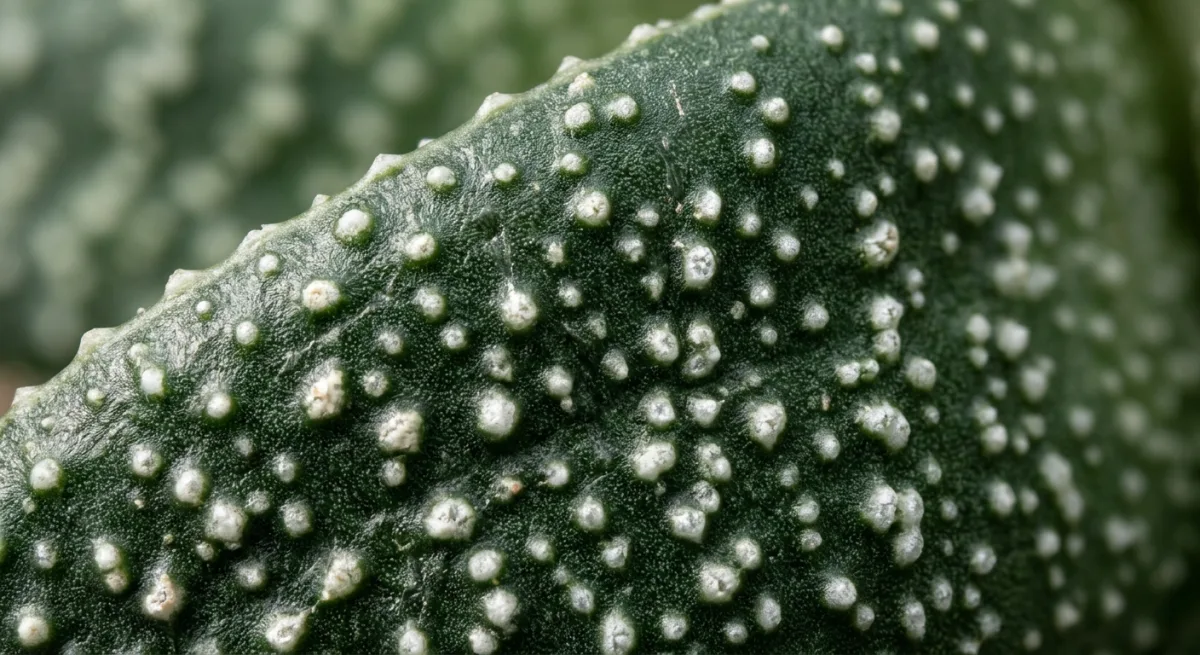
Hailing from the sheltered, rocky thickets of South Africa’s Eastern Cape, Gasteria bicolor—affectionately known among houseplant lovers as 'Lawyer's Tongue' or 'Ox Tongue'—stands as one of the most resilient, living sculptures in the succulent kingdom. Its leathery texture, pearlescent white speckles, and two-ranked distichous leaf arrangement bring an unmistakable geometric elegance to interior glassware. Yet, before placing this architectural gem into a glass vessel, we must respect a fundamental biological truth: succulents are not denizens of damp, misty jungle floors. A sealed, humid terrarium jar is not a sanctuary for them; it is a slow-motion greenhouse trap.
The cellular architecture of succulents evolved specifically to store scarce moisture within deep parenchyma tissues for months on end. Closed glass cloches devoid of continuous air circulation trap evaporating moisture around the root zone, ultimately paralyzing the plant's natural transpiration mechanisms. This is precisely why cultivating Gasteria bicolor in glass is viable only under the philosophy of an 'open glass terrarium.' A thoughtfully engineered, wide-mouthed glass vessel provides the steady ambient airflow this species craves, while its crystal-clear walls allow us to inspect the dynamic hydrological balance of the substrate layers below.
1. Engineering the Drainage Layers
Cultivating a succulent inside a glass vessel without bottom drainage holes is essentially an exercise in hydrological risk management. In traditional ceramic containers, gravitational pull draws excess water safely out through drainage holes. Inside a terrarium, however, we must recreate this gravitational drainage artificially through precision vertical layering. To prevent water from pooling around the roots and igniting anaerobic root-rot bacteria, our stratified foundation must function as an engineered underground water table.
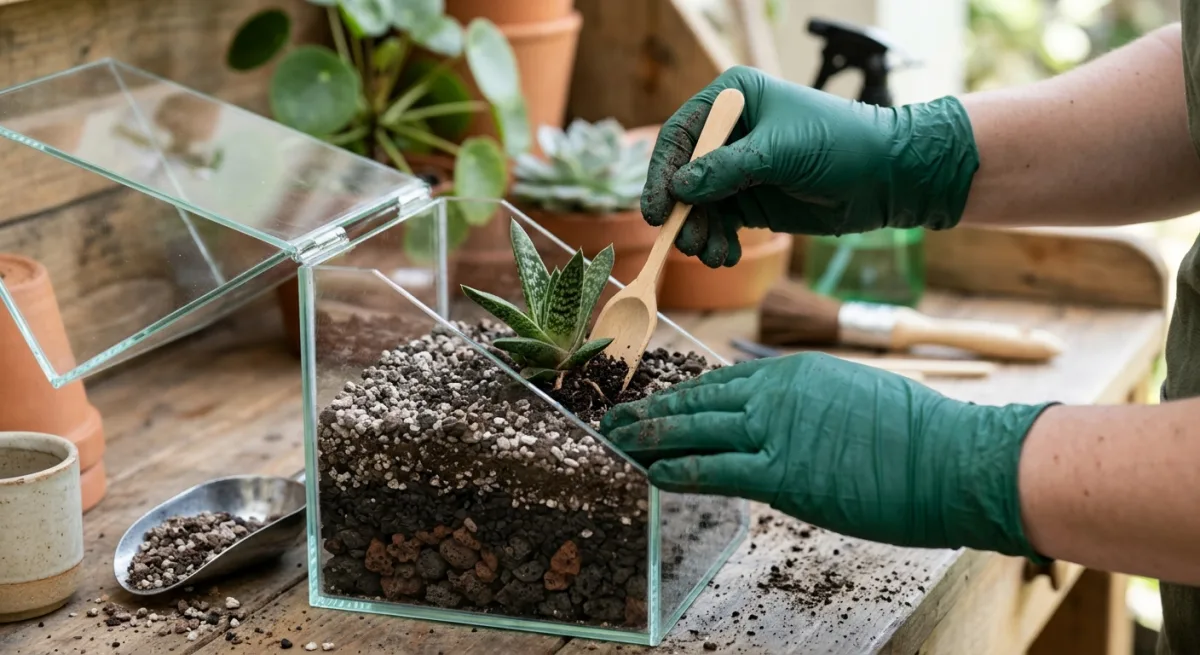
The bottom foundation serves as the false bottom reservoir where free water physically separates from the root perimeter. Here, coarse pumice and volcanic lava rock are essential. The generous interstitial air pockets between these porous stones capture downward gravitational runoff, keeping it isolated safely below root depth. Directly atop this reservoir, a layer of granular activated charcoal prevents stagnant water from souring, neutralizes volatile organic acids, and inhibits fungal spore colonies from establishing near the roots. Finally, a thin disc of synthetic landscape geotextile fabric or fiberglass mesh serves as a critical physical barrier, preventing fine soil particles from washing down and clogging the open drainage pockets below.
2. Companion Species Selection and Compatibility Rules
When curating a community succulent terrarium, the single most fatal mistake is arranging plants based strictly on color and silhouette aesthetics. The golden rule of succulent coexistence is uncompromising: Pair only species that share identical light and moisture metabolic regimes.
Gasteria bicolor thrives in bright, indirect light and gentle partial shade. If you pair it alongside an Echeveria or a miniature desert Opuntia that demands all-day blisteringly hot desert sun, disaster is guaranteed: the Echeveria will stretch into an unsightly, etiolated spindle from light deprivation, while the Gasteria, forced under scorching direct sun, will break down its chlorophyll reserves and scorch to a dull, defensive bronze-brown. Ideal companions for Gasteria bicolor in an open vessel include:
- Haworthiopsis attenuata or limifolia: Shares virtually identical root morphology, shade tolerance, and slow, predictable growth rates.
- Sansevieria ballyi or trifasciata 'Hahnii': Miniature bird's nest snake plants beautifully balance Gasteria's distichous tongue-like form with upright or rosette architecture under the same drought-tolerant, low-light conditions.
- Crassula rupestris subsp. marnieriana: Offers cascading, architectural beaded stems that spill gracefully over the glass lip, creating vertical contrast while remaining perfectly healthy in bright, indirect light.
3. Layer Thicknesses and Material Engineering Specifications
The lifespan of an open glass terrarium relies entirely on the structural proportions of its strata. Considering the total interior height of your glass container as 100%, the recommended layer depths and their biomechanical functions are detailed below:
| Strata Layer | Proportion / Thickness | Material Composition | Biomechanical Function |
|---|---|---|---|
| Reservoir Base | 15% - 20% of vessel depth (3-4 cm) | Coarse lava rock (8-12 mm) and chunky pumice | Isolates gravitational excess water from the root zone; prevents root suffocation. |
| Filtration & Purification | Thin distribution (0.5 - 1 cm) | Horticultural granular activated charcoal | Inhibits pathogen colonization in stagnant moisture, absorbs odors, and filters soil gases. |
| Physical Separation Barrier | 0.1 cm (single disc) | Geotextile landscape fabric or fiberglass mesh | Prevents finer substrate particles from washing down and choking open reservoir voids. |
| Root & Growth Substrate | 35% - 40% of vessel depth (6-8 cm) | 60% inorganic aggregate (pumice, zeolite, perlite) + 40% coco coir/peat | Supports CAM root gas exchange; guarantees rapid dry-back and prevents soil compaction. |
| Top Dressing (Inorganic Mulch) | 1 - 2 cm | Decorative volcanic gravel, river grit, or crushed quartz | Prevents substrate erosion and keeps the basal stem dry, halting collar rot (stem rot). |
4. Step-by-Step Terrarium Assembly and Planting Guide
Before assembling your living arrangement, wash the glass vessel thoroughly with warm water and a splash of white vinegar, allowing it to dry completely. Follow these clinical steps:
- Building the Drainage Bed: Distribute a 3-4 cm layer of pre-rinsed, dust-free lava rock across the bottom of the container. Scatter an even 0.5 cm layer of activated charcoal granules across the stones.
- Placing the Separation Filter: Cut a circular section of geotextile fabric tailored to the inner diameter of the glass. Press it lightly over the charcoal bed, curving the edges up slightly against the glass to prevent soil seepage down the sides.
- Adding the Substrate Blend: Spoon in your gritty, airy substrate mix composed of pumice, lava grit, and light coco coir. Sculpting a gentle slope—higher at the back and lower at the front—creates a dramatic sense of landscape depth.
- Preparing and Siting the Gasteria: Unpot your Gasteria bicolor and gently massage away old nursery peat without snapping the brittle storage roots. Trim away any hollow or desiccated root strands with sterile snips. Excavate a planting well in the substrate, nestling the plant as your focal anchor. Ensure the root collar (where root meets stem) remains level with the substrate surface—never bury the crown.
- Integrating Companion Plants: Position your Haworthia or miniature accent succulents at complementary angles, allowing ample negative space around the wide, arching blades of the Gasteria. Firm the substrate gently around the roots using fingertips or chopsticks to eliminate air voids.
- Applying the Mineral Top Dressing: Carefully spoon a 1-2 cm layer of fine volcanic grit or river gravel beneath the leaves. This inorganic barrier prevents the lowest leaves from resting on damp soil particles, completely mitigating the risk of basal leaf rot during watering.
5. Natural Decorative Accents: Rocks, Driftwood, and Natural Sand
A masterfully designed open glass terrarium is a micro-scale recreation of a wild rock crevice. To heighten this naturalistic aesthetic, avoid artificial plastic figurines in favor of authentic geological elements. The smooth, architectural strap leaves of Gasteria bicolor contrast magnificently against rough, craggy stones.
Dragon Stone or miniature Seiryu stone fragments positioned vertically in the backdrop simulate the plant's native rock-cleft habitat. Small pieces of oven-baked, sanitized mopani or cholla wood add warm, organic textures. If you wish to incorporate visual sand strata against the glass, opt for natural crushed quartz, granite, or black volcanic sand rather than artificially dyed aquarium sand, which can leach synthetic dyes and alter delicate soil chemistry over time.
6. Precision Watering and Light Management in Terrariums
Watering an open glass terrarium is an art of careful observation, not a routine chore on a rigid calendar. Because closed-bottom glass cannot evacuate overpoured water, follow these strict parameters:
- Precision Watering Tools: Never pour water directly with a wide-mouth watering can, and never mist the terrarium with a spray bottle (water trapped in leaf rosettes rapidly induces crown rot). Use a narrow-spouted laboratory squeeze bottle or a large syringe to deliver water drop by drop directly to the soil perimeter and root zones.
- The Volume Rule: The total volume of water introduced should never exceed approximately 10% of the total soil volume in the container. You should observe slight moisture trickling through to the upper perimeter of the lava rock reservoir, but the reservoir stones should never be submerged in sitting water.
- Seasonal Frequency: During active spring and summer growth, a light application every 2 to 3 weeks is typically sufficient. In winter dormancy, stretch this to once every 4 to 5 weeks. When a Gasteria is truly thirsty, its fleshy leaves will slightly deflate and exhibit subtle inward concave cupping. If the leaves feel hard, thick, and plump, withhold water entirely.
- Light Positioning: Keep the terrarium away from harsh, unshaded south- or west-facing windows. The curved glass walls can act as optical lenses, focusing solar thermal energy and blistering succulent leaf tissue within hours. Gentle morning sunshine from an east-facing window or bright, diffused ambient light offers the ultimate photosynthetic sweet spot.


Reader Reviews & Comments 1 Review
No comments yet. Be the first to share your succulent experience!
Leave a Review & Rating
Share your plant care tips, experiences, or questions with our succulent community.