






Forged in the heart of marine ecosystems, the calcium carbonate matrix of oyster shells has served as the unsung life support for coastal flora for millennia. From wild succulent colonies anchored tenaciously in Mediterranean limestone crevices to tender root networks navigating mineral-depleted substrates in lush rainforest understories, plants depend fundamentally on a steady, accessible reservoir of calcium to fortify structural cellular integrity. Yet within the urban confines of our living rooms, balconies, and manicured borders, potted soils steadily lose this crucial element through continuous irrigation leaching and acidic fertilizer inputs—leaving root architectures fragile, meristems deformed, and tissues defenseless against opportunist soil-borne pathogens.
This is precisely where crushed oyster shells transcend their culinary origins to become a master horticultural tool. Rather than inert agricultural waste, this bio-mineral matrix acts as a biological shield across the soil surface, gently metering slow-release calcium carbonate (CaCO3) and oceanic trace minerals with every irrigation cycle, revitalizing xylem sap dynamics from the base up. However, utilizing the incorrect particle fraction or applying unsterilized, sodium-rich shells can disrupt the soil microbiome and trigger osmotic collapse.
In this master guide, we will unpack the cellular mechanics behind oyster shell mulching, examine how its microscopic crystal facets intercept slug and snail invasions with mechanical precision, master the dry-collar technique to eradicate basal stem rot, and learn to calibrate grit size for peak root respiration.
1. Early Diagnostic Symptoms and Microscopic / Visual Clues
Plants in dire need of calcium buffering, soil stabilization, or surface-level pest interception exhibit unmistakable warning signs across their foliage, root collars, and growing media:
- Apical Meristem Breakdown and Distorted Young Foliage: Calcium is strictly an immobile element within vascular tissue. When soil reserves dwindle or become locked out by overly acidic peat, developing leaves cup downward, turn brittle, and develop necrotic, burnt margins along the growing tips.
- Basal Stem Softening and Fungal Hyphae (Damping-Off & Collar Rot): Dense organic mulches trap prolonged moisture against delicate epidermal tissue, inviting virulent oomycetes like Pythium and fungal pathogens like Rhizoctonia. The base turns translucent, blackens, and collapses. Coarse crushed oyster shell, in contrast, sheds surface water instantly, creating an aerated buffer that physically prevents hyphal networks from bridging to the stem.
- Serrated Margin Damage and Mucus Pathways: Nocturnal gastropods (slugs and snails) rasp through protective cuticular wax, leaving erratic feeding holes and telltale silvery trails behind. The microscopic, razor-sharp calcite edges of broken oyster shells form a physical perimeter that soft-bodied mollusks cannot traverse.
- Surface Algal Crusts and Mold Blooms: Compacted, un-aerated, and excessively sour substrates frequently develop a suffocating green or white biofilm across the topsoil, severely restricting gaseous exchange and oxygen diffusion to the roots below.
2. Root Causes and Environmental Triggers
The depletion of soil calcium reserves and the rapid onset of crown rot are rarely coincidental; they are accelerated by recurring cultural missteps:
- Progressive Substrate Acidification: Commercial peat moss and sphagnum-based potting harvesters naturally degrade over 12 to 24 months, liberating humic and fulvic acids that drive the pH below 5.0. In this acidic zone, critical divalent cations like calcium (Ca²⁺) and magnesium (Mg²⁺) become chemically unavailable to root hairs.
- Poorly Draining Organic Top-Dressings: Utilizing standard wood bark nuggets, shredded hardwood, or raw pine needles around succulents, cacti, and delicate aroids creates a saturated sponge right against the stem collar—the exact catalyst required for devastating Phytophthora outbreaks.
- Sheltered, High-Humidity Microclimates: Shaded courtyards, ground-level beds, and enclosed plant stands create optimal incubation conditions for snail eggs and slug colonies. Without a mechanical mineral defense, tender emergent foliage can be decimated overnight.
3. Natural and Organic Mitigation Protocols
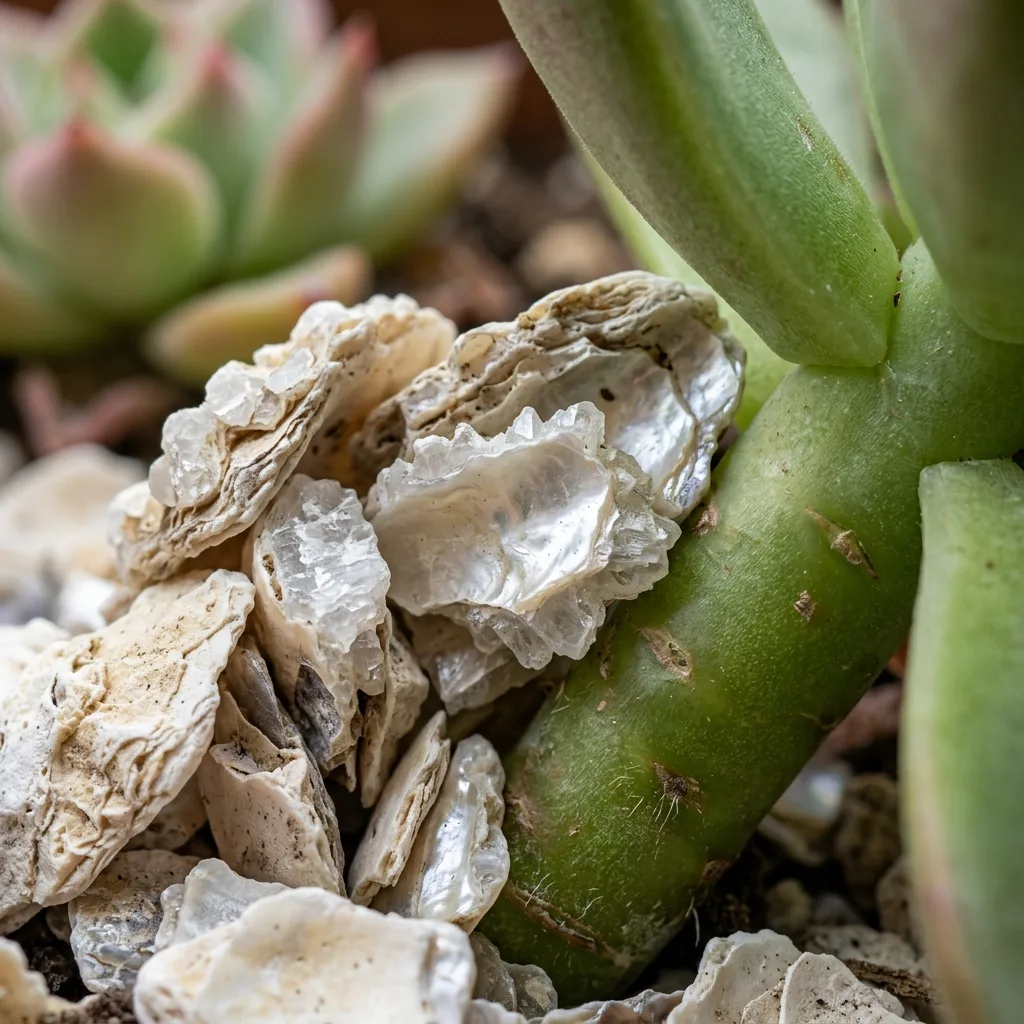
Crushed oyster shell (specifically coarse grit or horticultural grade) serves as one of nature's most resilient physical barriers and chemical buffers. In organic plant management, it fulfills three indispensable ecological functions:
- Mechanical Gastropod Perimeter (Snail & Slug Barrier): The fracturing planes of oyster shells yield microscopic, razor-like crystalline edges. Soft-bodied mollusks attempting to slide over these jagged calcite surfaces suffer cuticular micro-abrasions and instantaneous moisture depletion, causing them to immediately retreat. A continuous perimeter ring 3 to 4 cm wide and 1 cm deep around vulnerable crowns provides complete, non-toxic physical deterrence.
- Sustained-Release Cellular Reinforcement: Pristine oyster shells are composed of approximately 95–96% calcium carbonate (CaCO3), woven into an organic structural protein matrix called ostracalin (3–4%), alongside beneficial marine trace elements like zinc, manganese, and silica. With every watering, microscopic ionic fractions dissolve, facilitating the cross-linking of pectic polysaccharides within the middle lamella of plant cell walls. This thickens epidermal membranes, markedly increasing resilience against sap-sucking pests and fungal appressorium penetration.
- Dry Collar Root-Neck Aeration: When applied as a 1 to 1.5 cm top layer around dry-loving species like Echeveria, Haworthia, and Sansevieria, irrigation water bypasses the collar instantly. The lower root tier accesses hydration while the vulnerable subterranean stem junction remains completely aerated and dry.
4. Chemical and Systemic Remediation Framework
Before installing your oyster shell top-dressing, any pre-existing fungal sporulation, active collar necrosis, or high parasitic nematode populations within the root zone must be systemically halted. The following integrated management table outlines targeted remedial protocols that harmonize safely with a mineral top-dressing regimen:
| Active Ingredient / Bio-Agent | Target Pathogen / Pest | Dosage (Per Liter of Water) | Application Frequency & Method |
|---|---|---|---|
| Bacillus subtilis (Beneficial Bacterium) | Root & Crown Rot (Pythium, Rhizoctonia) | 2 - 3 g / L | Root drench every 10 days; apply directly to core root zone prior to mulching |
| Ferric Phosphate (Iron Phosphate) | Garden Slugs & Snails | 5 g / m² (Granular) | Scatter evenly over topsoil directly beneath the protective oyster shell layer |
| Potassium Bicarbonate | Surface Soil Molds & Powdery Mildew | 3 g / L | Foliar and soil-line spray; allow substrate surface to dry thoroughly before dressing |
| Copper Oxychloride | Stem Cankers & Basal Soft Rots | 1.5 g / L | Targeted spot-brushing directly onto visible stem lesions; single curative application |
5. Quarantine, Desalination, and Sanitization Steps
Never apply raw, unconditioned oyster shells sourced directly from ocean beaches or unprocessed seafood processing lines. Excess sodium chloride, sea debris, and decomposing organic fish matter can severely scorch fine root hairs and induce osmotic drought:
- Thorough Desalination (Rinsing Phase): Transfer raw shells into a heavy-duty wire mesh sieve. Flush them vigorously under cold running fresh water at least 3 to 4 times to dissolve and leach out every trace of marine sodium. Residual salts will otherwise induce severe osmotic stress and cause succulent leaves to rapidly desiccate.
- Thermal Sanitization (Oven Curing): Spread the washed shell fragments evenly across an ungreased baking sheet and bake at 150°C (300°F) for 30 to 40 minutes. This thermal process eradicates latent marine bacteria, denatures smelly organic proteins, and tempers the shell structure, making it much easier to fracture cleanly.
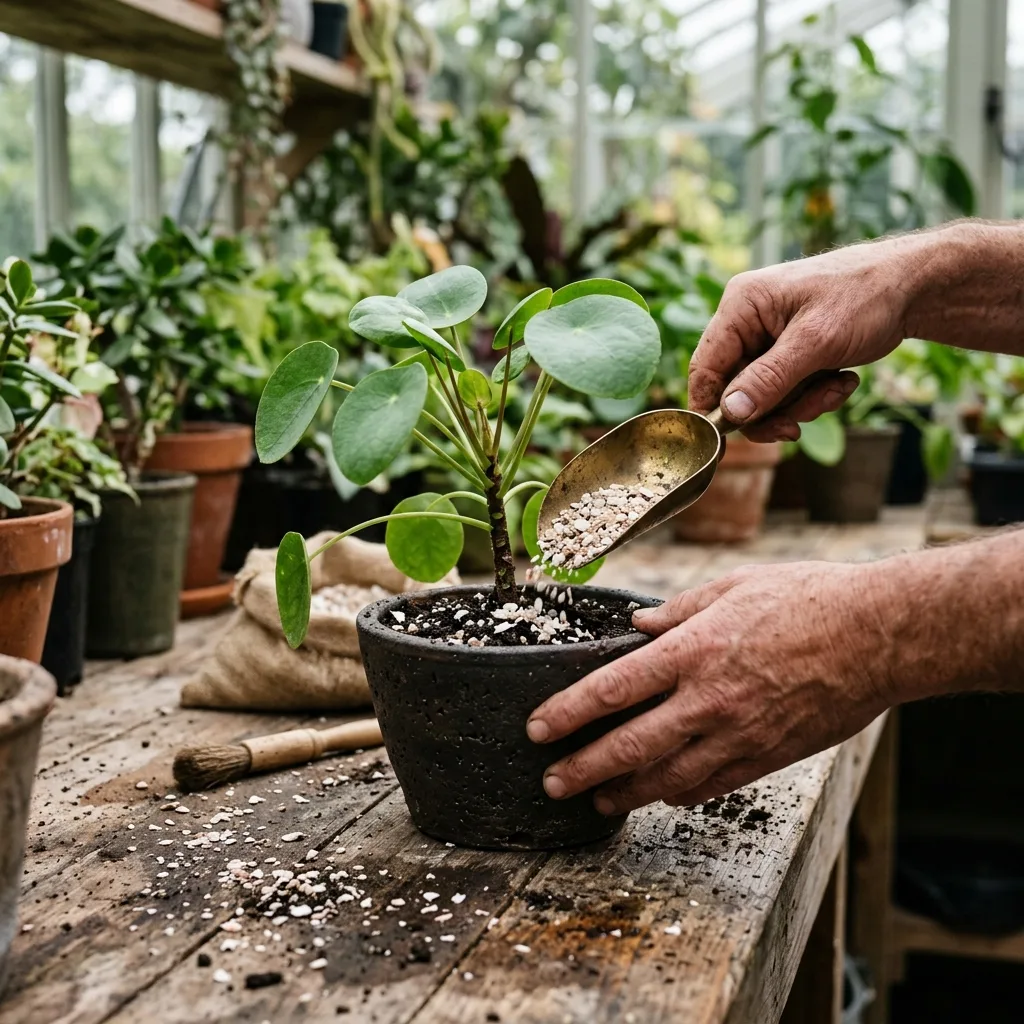
- Mechanical Crushing and Particle Sizing: Place the cooled, sanitized shells inside a durable canvas sack and break them apart using a rubber mallet or mini sledge. Pass the crushed material through a soil sieve: separate and discard the sub-1mm powder (or reserve it strictly as an activator for acidic compost bins), and keep the clean, angular 2 to 5 mm grit for plant mulching.
- Quarantine Protocol: Any plant undergoing recovery from gastropod damage or fungal collar infections should be quarantined at least 1.5 meters away from surrounding collections for a 14-day observation window.
6. Plant Rehabilitation and Long-Term Recovery Care
Once your specimens have been top-dressed with sterilized oyster shell grit, adjust your cultural management to leverage the unique physical properties of this mineral layer:
- Recalibrating Soil Moisture Monitoring: Oyster shell is an inorganic mineral top-dressing; while it reflects intense solar radiation and keeps root zones cool, it allows far better air circulation and evaporation than thick bark chips. Do not water on a rigid schedule. Slide a moisture meter probe or your finger through the grit layer into the actual substrate below; irrigate only when the core shows proper dryness according to that species' profile.
- Optimizing Reflective Light Exposure (The Albedo Effect): The bright off-white and pale gray tones of clean oyster shells create a beneficial albedo effect, bouncing ambient light back onto the shaded understory and lowest tiers of your plants. This keeps rosette-forming succulents compact and prevents premature etiolation (stretching). Position recovering plants in bright, filtered daylight.
- Tapering Calcium Supplements: Immediately discontinue calcium-heavy synthetic fertilizers like calcium nitrate. The oyster shell mulch maintains a steady baseline equilibrium of bioavailable calcium ions. Excess supplemental calcium can interfere with potassium and magnesium uptake, leading to tissue brittleness. Transition instead to a balanced, dilute fertilizer formula focused on potassium, phosphorus, and micro-nutrients.


Reader Reviews & Comments 4 Reviews
Eleanor Vance
Marcus Thornton
Julianna Reed
Arthur Pendelton
Leave a Review & Rating
Share your plant care tips, experiences, or questions with our succulent community.