






Out in the heart of nature, beneath vast horizons, the ground under our feet is a vibrant, living ecosystem—an intricate web where earthworms, beneficial microbes, and seasonal rainfall operate in unbroken harmony. Yet the very instant you scoop up a shovel of that rich earth and confine it inside the rigid walls of a pot, this magnificent equilibrium abruptly collapses. The open drainage and continuous gas exchange that succulents evolved with in the rugged Karoo desert or along the rocky cliffs of Oaxaca are replaced inside a closed container by a dense, airless, cement-like block that literally suffocates fragile roots.
When repotting plants at home, it is tempting to think: 'If my garden roses thrive in this dirt, my succulents should adore it too.' Unfortunately, plant physiology in container culture answers to an entirely different set of physical laws. In the open ground, gravity and deep capillary networks effortlessly draw excess moisture downward into expansive horizons. In a pot, those capillary columns are severed at the base; a perched water table rises upward, and tender root cells are entirely cut off from the critical gas exchange they require to survive.
Drenching succulents frequently is not an act of love; it deprives root tissues of oxygen and inadvertently drowns them. In the exact same way, loading a container with native garden soil or heavy topsoil forms an airtight plaster cast around delicate feeder roots. In this comprehensive master guide, you will discover the soil physics behind why native garden soil fails in container culture, why inorganic mineral components are fundamental for cellular root respiration, and how to craft scientific, well-aerated potting substrates that permanently protect your succulents from root rot.
1. Comparative Analysis of Inorganic Mineral Substrates
Gravity drainage does not behave the same way inside a pot as it does in an open field. Due to a physical phenomenon known as the 'perched water table,' a persistent saturated zone forms at the very bottom of any container. When ordinary garden topsoil is shoveled into a pot, fine clay and silt colloids wash into this wet zone, sealing off macroscopic pore spaces. This is precisely where inorganic granular minerals step in. Unlike organic matter, inorganic aggregates do not decompose or pack down over time, preserving vital cellular oxygen pockets around root systems.
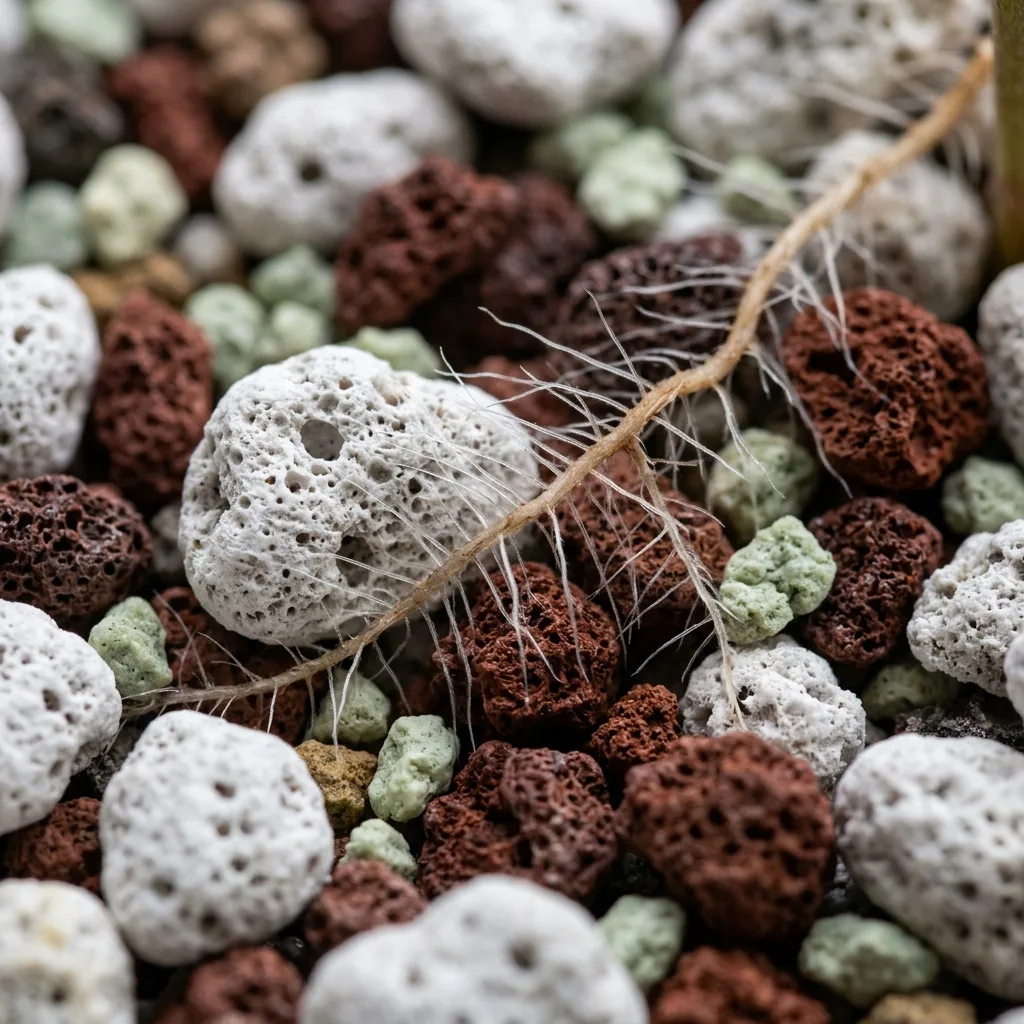
Here is an in-depth botanical overview of the physical and chemical properties of the four primary inorganic components utilized in premium succulent and cactus substrates:
- Pumice (Pumicite): An amorphous, porous volcanic silicate. For succulent substrates, aggregate sizes between 2–6 mm are ideal. The primary botanical virtue of pumice is its dual-action pore structure: its interior micropores trap a modest reserve of moisture, while the coarse spaces between particles allow uninterrupted oxygen circulation around the root zone. It drastically enhances hydraulic conductivity without adding unmanageable weight.
- Lava Rock (Volcanic Scoria): A jagged, vesicular aggregate rich in iron and magnesium. Its heavier bulk density anchors the plant and stabilizes the container against strong winds. Its fractured, micro-rough surfaces provide an exceptional anchor for root hair attachment while maintaining superior hydraulic flow.
- Zeolite (Clinoptilolite): A microporous aluminosilicate featuring a crystalline honeycomb framework with an extraordinary Cation Exchange Capacity (CEC). Beyond simply preventing compaction, zeolite acts as a dynamic nutrient battery—buffering excess fertilizer salts from irrigation water and steadily releasing them to root xylem tissue on demand. It also serves as a natural physical shield that suppresses the proliferation of anaerobic root rot pathogens.
- Coarse Quartz & River Grit: Fine construction sand and seaside beach sand should strictly be avoided, as the former sets like mortar while the latter causes lethal salinity stress. However, screened, sharp 2–4 mm river grit lends permanent structural stability to the mix and prevents surface water pooling.
2. Balancing the Organic Fraction: Peat, Coco Coir, and Compost
Native garden topsoil is loaded with unsterilized organic matter, microscopic larvae, pathogenic nematodes, dormant fungal spores, and heavy colloidal clay. In a confined container, this rich organic mass ferments rapidly under high moisture, stripping available dissolved oxygen from the pore water and fostering destructive anaerobic bacterial colonies. For potted succulents, unrefined garden compost must be replaced with sterile, highly porous, structurally stable organic materials in carefully measured volumes.
The sole botanical purpose of the organic fraction in succulent culture is to retain a baseline level of moisture so root cells do not despoil from desiccation, while offering an aerated matrix for beneficial mycorrhizal symbiosis. The most dependable organic components include:
- Baltic Sphagnum Peat Moss: Naturally acidic, fibrous, and biologically sterile. It offers remarkable water retention, but if allowed to dry out completely, it becomes severely hydrophobic (water-repellent). For this reason, peat should never be used alone; it must always be cut with an abundance of coarse inorganic grit.
- Coconut Coir (Coco Peat): Derived from the fibrous mesocarp of coconut husks. Compared to peat moss, coir rehydrates far more readily after desiccation and presents a near-neutral pH (5.8–6.5). However, unwashed low-grade coco products often carry excessive residual sodium and potassium salts, so always ensure your coir is thoroughly rinsed with fresh water prior to mixing.
- Aged Worm Castings (Vermicompost): Rather than relying on heavy garden compost, you can integrate a modest 5% to 10% volume of refined, mature worm castings. This modest fraction delivers steady micronutrients and beneficial microbial life without scorching sensitive root tissues or suffocating aeration.
3. Precision Substrate Recipes for Diverse Succulent Genera and Climates
Root morphology varies markedly across different succulent families based on the ecological niches they occupy in habitat. For example, the thick, tuberous storage roots of Haworthia species exhibit vastly different oxygen requirements than the highly reduced, xerophytic bodies of Lithops. The following reference table outlines rigorously tested substrate formulations tailored for container cultivation:
| Plant Group / Genus | Inorganic Aggregate Ratio | Organic Component Ratio | Recommended Granule Size | Post-Watering Dry-Down Target |
|---|---|---|---|---|
| Haworthia & Gasteria (Thick, fleshy storage roots) | 65% (Pumice + Zeolite + Scoria) | 35% (Coco Coir + Fibrous Peat) | 3 – 5 mm | 4 – 6 Days |
| Echeveria, Graptopetalum, Sedum (Fibrous, shallow root systems) | 70% (Pumice + Coarse Grit + Scoria) | 30% (Sterile Peat + 5% Worm Castings) | 2 – 4 mm | 3 – 5 Days |
| Desert Cacti (Mammillaria, Ferocactus) (Extreme xerophytes) | 80% – 85% (Pumice + Scoria + Zeolite) | 15% – 20% (Sterile Peat) | 3 – 6 mm | 2 – 3 Days |
| Living Stones (Lithops, Conophytum) (Mesemb family, highly rot-prone) | 90% – 95% (Pure Zeolite + Pumice + Granite Grit) | 5% – 10% (Finely Sifted Peat) | 2 – 5 mm | 24 – 48 Hours |
If you cultivate your collection in humid coastal regions (such as Miami, Seattle, or London), ambient atmospheric moisture dramatically slows evaporation rates, making it essential to boost the inorganic aggregate ratio in these formulas by an additional 10%. Conversely, in arid continental or desert climates, you can afford a slightly higher organic fraction to avoid perpetual root desiccation.
4. Pot Material Physics: Terracotta, Glazed Ceramic, and Plastic
No matter how meticulously calibrated your substrate might be, the thermodynamics and porosity of the container itself will directly dictate root-zone health. Choosing a container is not merely an aesthetic choice; it is an active variable in evaporative cooling and moisture dissipation.
- Unglazed Terracotta: The indisputable benchmark for indoor succulent cultivation. Its porous baked-clay walls allow moisture vapor and oxygen to diffuse freely across the entire circumference of the pot, not merely through bottom drainage holes. This facilitates root respiration and substantially lowers the height of the perched water table.
- Glazed Ceramic and Porcelain: Coated in an impervious vitrified glaze, these pots offer zero gas or moisture permeability through their side walls. Evaporation can occur only from the exposed top surface and the bottom drainage port. If you pot into glazed vessels, keep the inorganic mineral content of your soil mix at 80% or higher.
- Nursery Plastic Pots: Lightweight and efficient at holding uniform moisture, yet prone to extreme solar heat transfer when placed in full sun. Dark plastic pots can literally cook tender root systems during midsummer heatwaves. Always select light-colored plastics or slip them into an outer decorative terracotta vessel to insulate root zones.
5. Step-by-Step Repotting and Root Sanitation Protocol
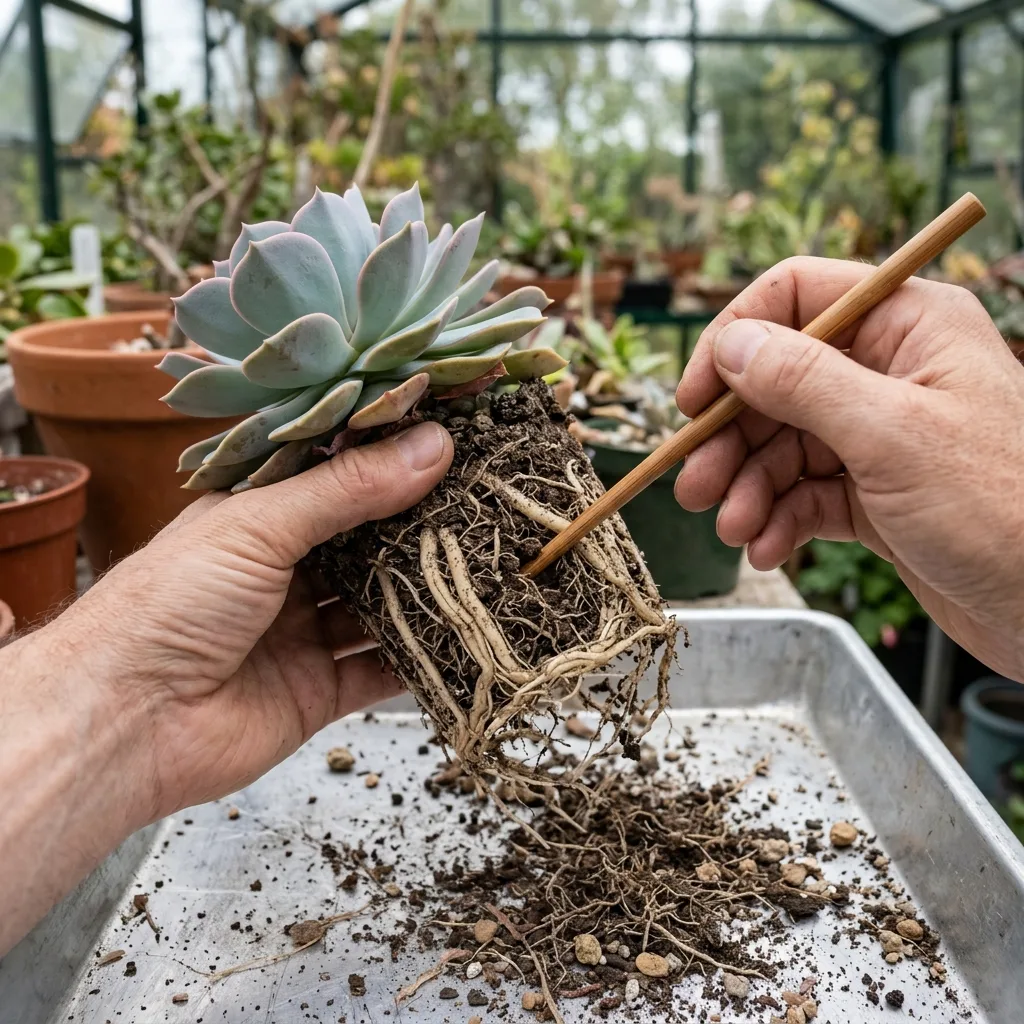
Repotting a succulent involves far more than lifting a rootball from one vessel and dropping it into another. To inspect your plant's structural root health and ease its transition into a coarse granular medium, follow these structured steps:
- Begin with Thoroughly Dry Soil: Suspend all irrigation for at least 7 to 10 days before repotting. Wet, turgid roots are exceedingly brittle, and microscopic tears inflicted in damp conditions invite virulent fungal spores to enter.
- Strip Away Old Topsoil and Dense Peat: Gently cradle the plant at the root crown and ease it out of the container. Using a dull wooden chopstick or bamboo probe, patiently tease apart and clear away old nursery peat or rock-hard native soil packed around the center. Aim to clear away at least 80% to 90% of the old medium.
- Perform Root Pruning: Using razor-sharp, alcohol-sterilized shears, prune away any roots that appear blackened, hollow, mushy, or stringy. Trimming the bottom third of excessively elongated root masses stimulates rapid branching of fresh, actively absorbing lateral root hairs.
- Positioning and Container Prep: Cover the bottom drainage hole of your new pot with a small piece of synthetic fiberglass mesh or insect screen (never plug it with solid gravel or pot shards). Add a 2–3 cm foundation layer of your pre-mixed granular substrate. Center the plant so its root-to-stem collar (the sensitive basal crown) rests approximately 1 to 1.5 cm below the container rim.
- Backfilling the Inorganic Substrate: Funnel the dry mix around the roots, lightly tapping the sides of the pot against your workbench to settle granules deep into the root interstices. Do not violently compress the substrate with your fingers; root systems need uncrushed aeration pockets to breathe.
6. Post-Repotting Recovery: The Sacred 'Dry-Rest' Period
While traditional houseplant care often dictates soaking a plant immediately with a heavy drench to settle the soil, doing so with succulents and cacti is a recipe for catastrophic failure. During repotting, hundreds of microscopic root hairs inevitably snap. The moment these raw cellular wounds come into contact with wet substrate, opportunist fungal spores penetrate the compromised epidermal barriers, triggering basal stem rot within weeks.
Following repotting, adhere strictly to the 5 to 7 day dry-rest rule: do not give the plant a single drop of water. Stage your newly potted specimen in bright, well-ventilated shade, safely shielded from scorching direct sunlight. During this dry dormancy, the damaged root tissues develop a protective suberized cork layer (callus tissue), effectively sealing the plant off from bacterial and fungal pathogens.
Administer your first gentle soaking only after this callusing window has closed, allowing water to flush cleanly through the bottom drainage holes. Finally, remember that the delicate, silvery-white powdery coating found on many succulent leaves—botanically termed epicuticular wax or farina—serves as the plant’s natural sunscreen and hydrophobic barrier; take care not to handle leaves directly to avoid rubbing this irreplaceable protective film away.


Reader Reviews & Comments 4 Reviews
Eleanor Vance
Marcus Aurelius Thorne
Sophia Lin
David K. Miller
Leave a Review & Rating
Share your plant care tips, experiences, or questions with our succulent community.