






When a plant enthusiast sends a succulent to a fellow collector, they are affectionately entrusting a living piece of botanical wonder. Yet, entrusting these delicate specimens to a dark, turbulent, and unventilated postal box is always an anxiety-inducing experience. Without meticulous technique, fragile rosettes fracture, moisture-laden root balls succumb to fungal decay within hours, and pristine epicuticular wax layers are permanently wiped away. From a physiological standpoint, succulents are remarkably well-equipped for mail transit—provided we prepare them in complete harmony with their evolutionary water-storage mechanisms.
Shipping succulents involves far more than simply placing a specimen in a cardboard box and sealing the flaps. It is an artful balance of calibrating tissue turgor pressure, preconditioning the root architecture for temporary dehydration, and engineering a shock-absorbing microclimate inside the parcel. Whether you are swapping a prized hybrid Echeveria, shipping a trailing Burro's Tail (Sedum morganianum), or gifting a hardy Zebra Haworthia (Haworthiopsis attenuata), this definitive protocol ensures your plants endure journeys spanning thousands of miles without sacrificing a single leaf.
1. Botanical Identity and Morphological Characteristics
The remarkable resilience succulents display under shipping stress stems directly from cellular adaptations honed in arid, resource-scarce environments. Utilizing Crassulacean Acid Metabolism (CAM), these plants seal their stomata tightly during diurnal hours to prevent transpirational water loss, assimilating and storing carbon dioxide nocturnally. Consequently, even when deprived of photic energy and moisture for several consecutive days, they downregulate metabolic respiration and enter an energy-conserving stasis.
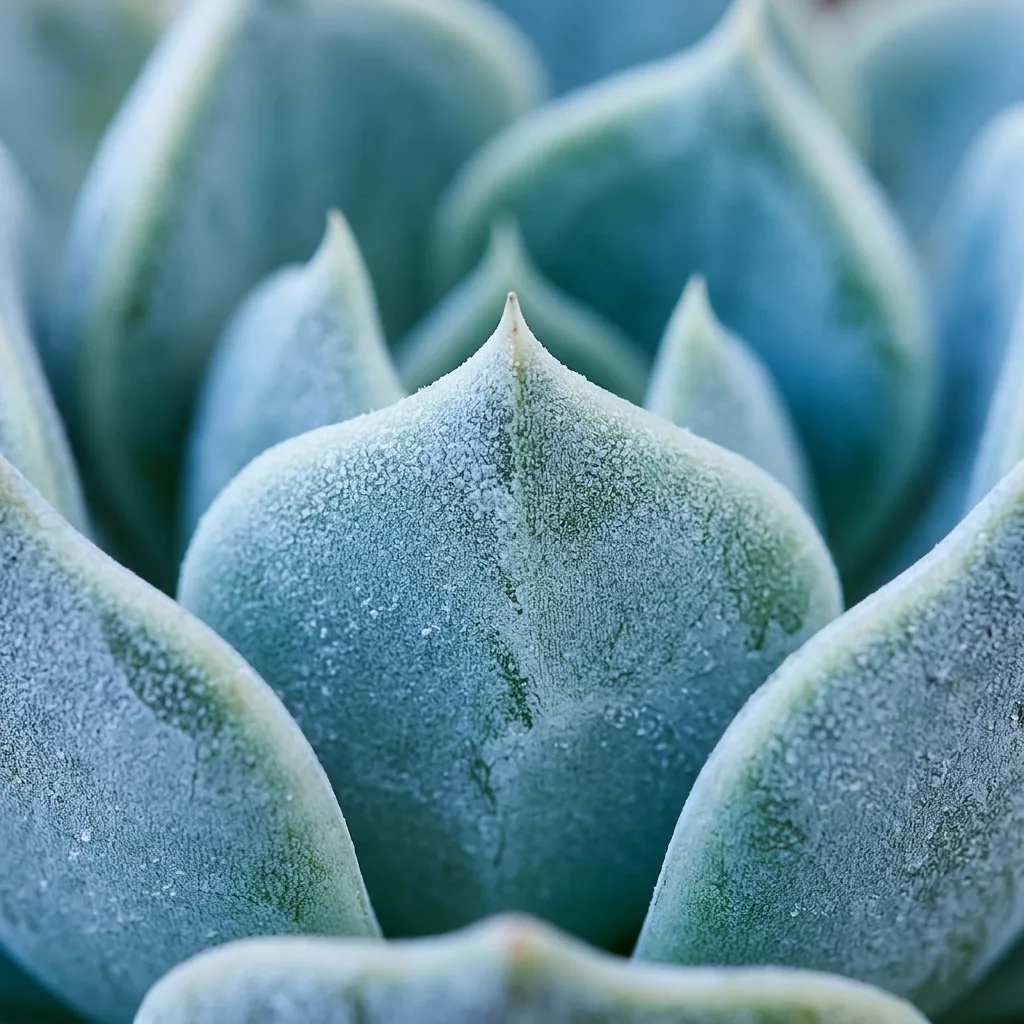
Nevertheless, each succulent genus presents distinct morphological vulnerabilities during transit. For instance, stonecrops and trailing varieties like Burro's Tail (Sedum morganianum) possess extremely brittle petiole junctions that snap under minimal vibrational torque. In contrast, Echeveria, Pachyphytum, and Graptopetalum species feature a fragile, powdery epicuticular wax (farina) that shields foliage against pathogen ingress and scorch; physical abrasion permanently removes this non-regenerative barrier. Meanwhile, tough specimens such as Haworthiopsis and Gasteria boast dense, fibrous leaves and robust fleshy roots, ranking them among the most resilient travel taxa. Identifying these morphological thresholds forms the bedrock of your packaging strategy.
2. Photic Requirements and Post-Transit Acclimation
The pitch-black interior of a shipping box induces an abrupt photoperiodic shock and artificial resting phase. Confined for 2 to 4 days, the plant temporarily suspends chlorophyll synthesis and may initiate etiolation—stretching pale, weakened tissue in a desperate search for light. Minimizing transit duration is imperative: always dispatch packages early in the week (Monday or Tuesday) to ensure the consignment does not languish over the weekend in unconditioned regional sorting hubs.
Upon unboxing, the most lethal error a recipient can make is placing the dark-shocked succulent directly into scorching, unfiltered sunlight. While enclosed in darkness, the plant downregulates photoprotective accessory pigments, such as anthocyanins and carotenoids. Direct solar radiation at this stage triggers rapid photo-oxidation and irreversible cellular necrosis (sunburn). Any newly arrived specimen must undergo a gradual 3- to 4-day acclimation protocol in a temperate room receiving bright, indirect or sheer-curtain-filtered ambient light.
3. Watering Discipline: The Crucial 'Soak and Dry' Reality
In the realm of botanical shipping, the golden rule remains absolute: "A dry plant is a safe traveler." Before unpotting, verify that the substrate is entirely, bone-dry throughout the root profile. Commercial nurseries and seasoned horticulturists uniformly strip away all nursery soil prior to packing—an internationally standardized practice known as bare-root shipping.
Once the root ball is gently freed of soil, tiny microscopic fractures along delicate root hairs require exposure to circulating air for 24 to 48 hours in a shaded, well-ventilated space atop clean paper. This allows the plant to form protective callus tissue over all root lesions, establishing an impervious barrier against opportunistic fungal spores. Once repotted by the recipient, the plant should not be irrigated immediately; wait 4 to 6 days before initiating the standard 'soak and dry' watering cycle.
4. Ideal Substrate Formulation and Pot Selection
A postal-shipped succulent's recovery velocity depends directly on the structural porosity and gas-exchange capacity of its post-travel growing medium. Because root hairs undergo mild dehydration during transport, they require an inorganic, gritty aggregate that supplies abundant oxygen rather than a dense, moisture-retentive peat blend. Glazed decorative ceramic pots or non-draining containers must be strictly avoided in favor of porous, unglazed terracotta, which allows root-zone respiration and rapid moisture evaporation through its sidewalls.
| Substrate Component | Volume Ratio (%) | Horticultural Function and Physiological Benefit |
|---|---|---|
| Coarse Pumice (3–5 mm) | 40% | Maximizes macroporosity, prevents compaction, and oxygenates feeder roots |
| Horticultural Lava Rock (Scoria) | 20% | Supplies structural grit, trace minerals, and anchor stability |
| Natural Zeolite (Clinoptilolite) | 15% | Elevates cation-exchange capacity (CEC) while binding potential salts |
| Sifted Fine Coconut Coir / Low-Dust Peat | 20% | Provides an airy organic baseline for nascent root hair anchorage |
| Coarse Perlite / Coarse Silica Grit | 5% | Reduces bulk density and accelerates water drainage rates |
5. Step-by-Step Propagation and Professional Packing Protocol
Follow this systematic, step-by-step master protocol to ensure completely safe mail transit:
- Bare-Root Preparation: Cease watering 7 days in advance. Gently tease the succulent from its container and dust away lingering soil particles from the root matrix using your fingertips or a soft, dry makeup brush. Trim excessively elongated or dead secondary roots with sterilized shears.
- Callus Formation: Rest the clean plant on unprinted kraft paper in a warm, shaded area for 24 hours to let minor epidermal root tears dry and suberize thoroughly.
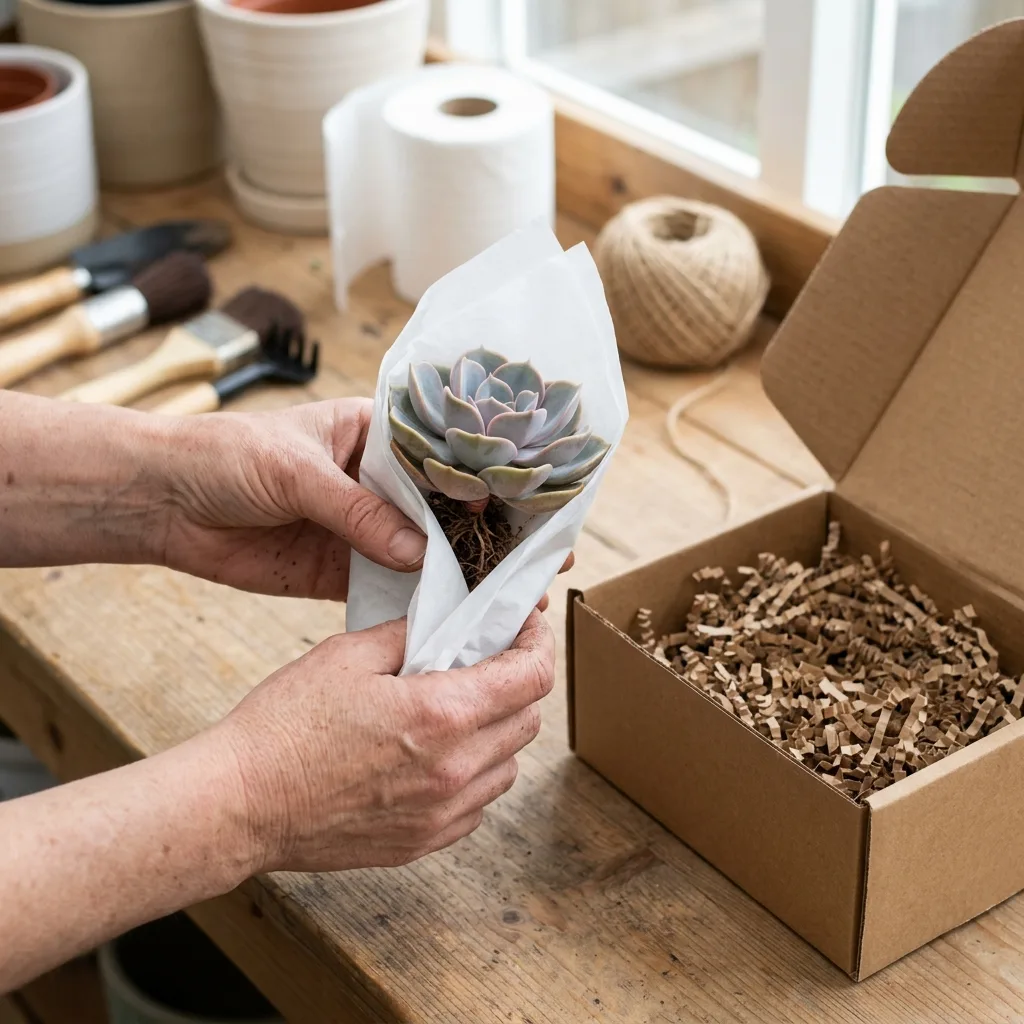
- Protective Wrapping ('The Cocoon' Method): Take 3 to 4 sheets of soft, dry paper towels or unbleached toilet tissue. Gently fold the dry roots upward toward the base of the stem, and wrap the paper around the entire perimeter like an ice-cream cone or cocoon. This soft, breathable cellulose layer prevents abrasions to the farina wax and absorbs any residual ambient condensation. Never wrap bare foliage directly in plastic bubble wrap, as impermeable plastics trap moisture.
- Cushioning and Parcel Immobilization: Select a rigid, corrugated shipping box. Line the bottom with a generous bed of crinkled paper shreds or biodegradable packing peanuts. Nestle the paper-wrapped specimens snugly inside, filling every single void with additional shredded paper. When you close the flaps and gently shake the parcel, there should be zero internal movement or shifting.
6. Common Post-Transit Issues, Shipping Damage, and Remediation
The most frequent consequence of postal movement is basal leaf drop. Highly succulent taxa frequently shed one or two lower leaves in response to handling shocks and vibrational stress. Do not discard healthy fallen leaves; lay them flat atop a dry, shaded tray to generate adventitious plantlets via vegetative leaf propagation.
If a specimen arrives bearing black, translucent, or water-soaked foliage, it has suffered from severe moisture-induced stem rot. Immediately excise all infected, compromised tissue with a sterilized scalpel until only pristine, healthy green and white vascular tissue remains. Dust the fresh surgical wound with sulfur powder or ground organic cinnamon to inhibit fungal colonization, and allow it to dry unpotted for 5 days. Furthermore, always inspect leaf axils with a bright loupe; dormant mealybugs (Pseudococcidae) can proliferate in transit microclimates. Dab any detected pests with a cotton swab saturated in 70% isopropyl alcohol prior to planting.
7. Seasonal Shipping Calendar and Master Horticultural Tips
Shipping living botanical treasures requires dynamic adjustments based on seasonal climatic extremes:
- Spring and Autumn (Optimal Window): Moderate ambient temperatures ranging from 15°C to 22°C (59°F–72°F) offer the safest shipping corridor. Standard multi-layer paper packaging provides ample protection.
- Summer Shipping (Thermal Hazard): In ambient temperatures exceeding 30°C (86°F), delivery van cargo holds can reach catastrophic levels above 50°C (122°F), effectively parboiling hydrated plants. Utilize insulated foam-lined shipping boxes, pack strictly bone-dry specimens, and choose expedited courier options held for customer pickup at transit depots.
- Winter Shipping (Sub-Zero Freezing): Below 5°C (41°F), intracellular fluids freeze into jagged ice crystals, rupturing succulent cell membranes. For winter dispatch, line the parcel walls with reflective thermal bubble foil and securely tape an active 72-hour uni-heat pack to the inner box lid (ensuring a layer of paper separates the heat source from direct contact with foliage).


Reader Reviews & Comments 4 Reviews
Eleanor Vance
Marcus Sterling
Clara Higgins
Julian Thorne
Leave a Review & Rating
Share your plant care tips, experiences, or questions with our succulent community.