






Bringing home a charming little pot from a nursery or plant market only to discover the label simply reads 'succulent' is both exciting and slightly perplexing for any plant enthusiast. Spanning from the rocky cliffs of Oaxaca to the arid plains of Namaqualand, and from Madagascar's dry forests to the precipitous slopes of the Canary Islands, these remarkable plants have evolved ingenious survival mechanisms over millennia. Yet, each genus operates on profoundly different root cellular dynamics, CAM photosynthetic rhythms, and photic demands; without identifying your plant's genus, providing bespoke, thriving care is virtually impossible.
In my greenhouses, visitors ask me daily: 'Rıfat, is this specimen a Sedum or an Echeveria?' Correctly diagnosing succulent genera extends far beyond memorizing Latin binomials—it is the nuanced art of reading water-storage architecture, epicuticular protective waxes, and seasonal dormancy patterns. Pick up your hand lens, and let us decipher your succulent's morphological clues step by step.
1. Botanical Identity and Morphological Features
When categorizing succulents, rosettes might initially appear indistinguishable to the untrained eye. However, minute morphological traits quickly unravel a plant's taxonomic lineage. Key diagnostic criteria for the most prevalent genera include:
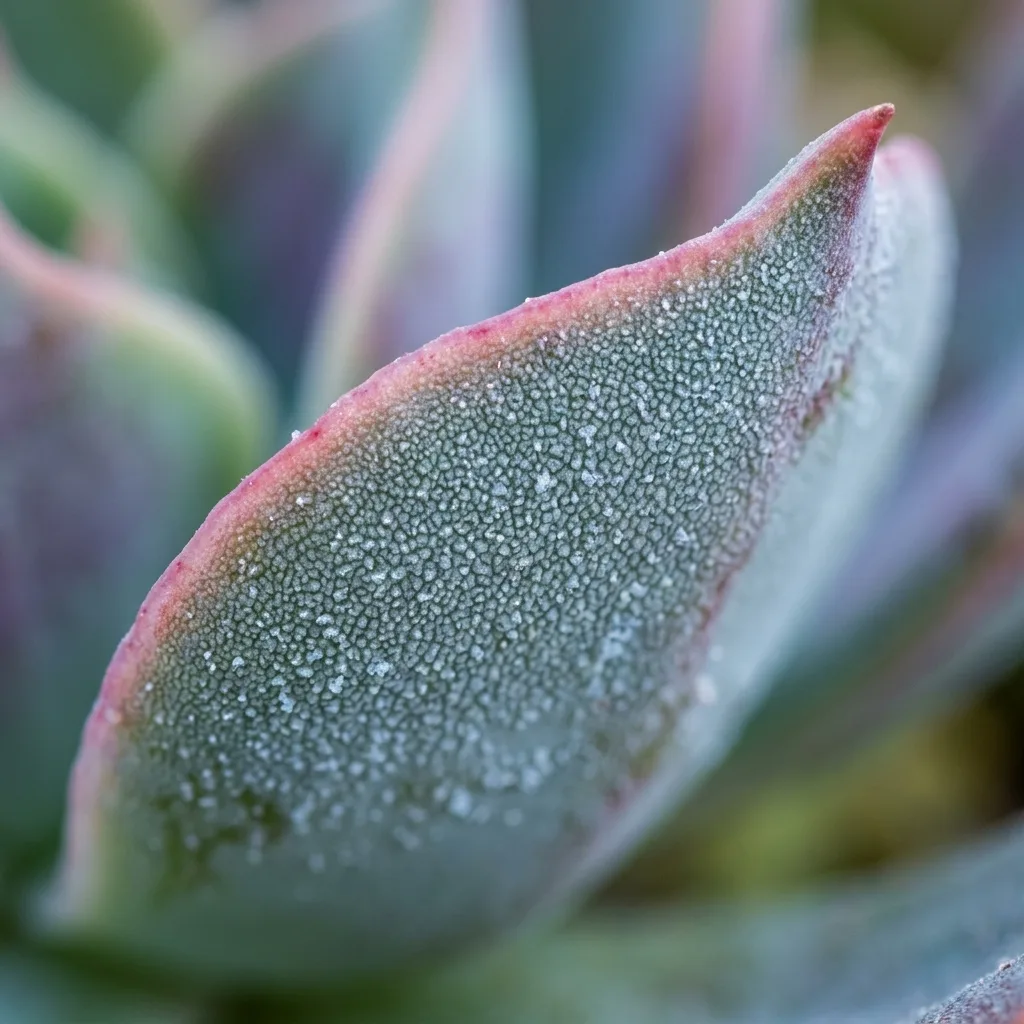
- Echeveria: Leaves form a distinct, geometrically symmetrical rosette. Foliage is typically coated in a delicate, powdery layer of farina (epicuticular wax)—the plant's intrinsic sunscreen. Leaf tips are frequently pointed or mucronate but never exhibit translucent windows. The flowers are campanulate (bell-shaped), nodding gracefully along lateral arching cymes.
- Sempervivum (Hens and Chicks / Houseleeks): Frequently conflated with Echeveria, yet distinguished by prominent marginal cilia (fine, hair-like fringes) along leaf edges. Their foremost botanical hallmark is that they are strictly monocarpic—the flowering central rosette exhausts its meristematic tissues and dies after seed set, perpetuating the colony via prolific offsets. They boast extraordinary sub-zero frost hardiness.
- Graptopetalum and Pachyphytum: Graptopetalum produces delicate, star-shaped blossoms with distinct petal markings, while its stems naturally elongate and trail gracefully over time. Pachyphytum displays remarkably swollen, rounded, pebble-like leaves coated in an exceptionally dense farina mantle.
- Haworthia and Haworthiopsis: These shade-tolerant members of the Asphodelaceae family feature glassy epidermal windows (fenestrations) at leaf apices designed to channel diffuse light directly to subsurface chloroplasts, or display raised white tubercles. They lack farina entirely and actively avoid intense, unshaded solar radiation.
- Crassula: Foliage is arranged along the stems in decussate opposite pairs at precise 90-degree angles. In species such as the Jade Plant (Crassula ovata), close examination reveals visible hydathodes (water-secreting pores) resembling minuscule pits across the upper epidermal surface.
- Kalanchoe and Euphorbia: Kalanchoe leaves typically showcase scalloped or serrated margins, frequently producing adventitious plantlets (bulbils) right along the crenations. Conversely, succulent Euphorbia species mimic cactoid forms but lack true areoles; upon mechanical injury, they exude a distinctive, highly caustic white latex sap.
2. Light Requirements and Indoor Positioning
Morphological diagnosis dictates your plant's photic equilibrium. For example, a sun-adapted Mexican Echeveria requires at least 5 to 6 hours of direct, unfiltered morning sun daily to sustain tight internodes, whereas a South African Haworthia nestled naturally beneath sandstone crevices will scorch and turn a dull, stressed brown under harsh midday rays.
If your compact rosette begins stretching upward, widening its internodal spacing, and reverting to a washed-out green, it is undergoing etiolation—a physiological symptom of severe light starvation. This condition develops rapidly in Echeveria, Graptoveria, and Sedum. Position your plant on a south- or east-facing windowsill with ample airflow, while remaining vigilant against the magnifying glass effect created by double-glazed windows during peak summer.
3. Watering Discipline: The 'Soak and Dry' Protocol
Frequent, shallow watering is not an act of devotion—it suffocates root hairs and invites pathogen proliferation. The cellular water-storage capacity of each genus dictates its drought tolerance window. Hyper-succulent genera like Pachyphytum withstand months of severe drought via swollen parenchymal tissue, while thinner-leaved Kalanchoe or soft-leafed Aeonium species transpire faster and register moisture depletion sooner.
The benchmark technique to employ is the 'Soak and Dry' protocol. Drench the substrate thoroughly until water streams freely from the basal drainage apertures, then promptly empty any standing runoff from the saucer beneath. Never apply water again until the deepest subterranean layer of the root ball is entirely desiccated. You can verify moisture levels accurately by plunging a slender wooden skewer to the bottom of the container.
4. Ideal Substrate Formulation and Pot Selection
Regardless of specific genus, all succulents require a porous, structurally stable substrate that promotes root xylem oxygenation and sheds free gravitational water within seconds. Because unglazed ceramic breathes, raw terracotta pots remain the gold standard, drawing excess moisture outward through capillary evaporation, unlike glazed ceramics or non-porous plastics.
| Substrate Component | Ratio (%) | Botanical Function |
|---|---|---|
| Horticultural Pumice (3-5 mm) | 40% | Maintains permanent macro-porosity and root zone aeration without breaking down. |
| Lava Rock / Zeolite | 20% | Suppresses pathogenic fungi and regulates cation-exchange micronutrients. |
| Coarse Horticultural Grit / Quartz Sand | 15% | Maximizes percolation velocity and prevents medium compaction. |
| Sifted Fine Coconut Coir / Peat | 25% | Provides an organic anchoring matrix for controlled, temporary moisture uptake. |
5. Step-by-Step Propagation Techniques
Identifying your succulent's genus is equally fundamental to propagation success. Certain genera regenerate effortlessly from detached leaves, whereas others can only be propagated reliably via offsets or terminal stem cuttings:
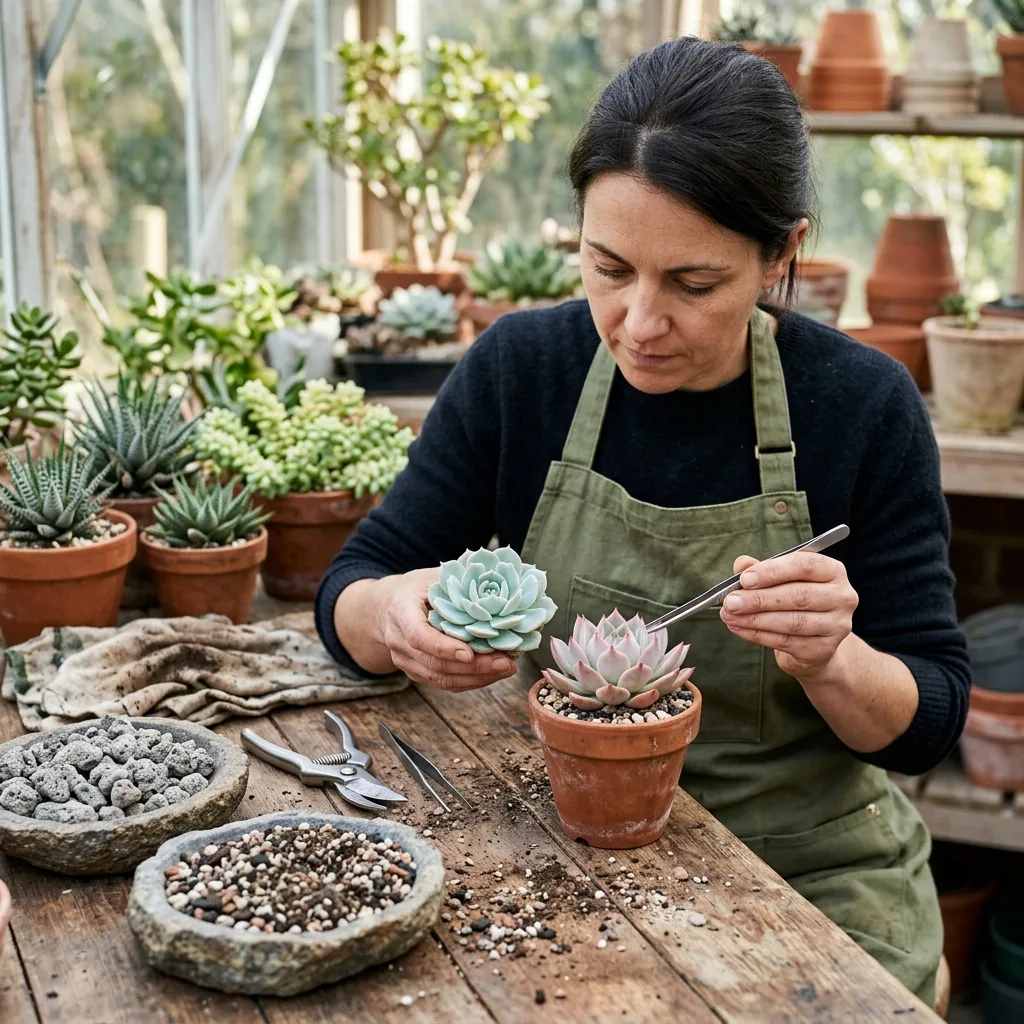
- Leaf Propagation (Sedum, Graptopetalum, Echeveria): Gently twist a mature, turgid leaf sideways until it detaches cleanly, ensuring the crescent-shaped meristematic junction remains intact on the petiole base. Allow the wound to suberize (callus) in dry shade for 3 to 4 days. Rest the leaf horizontally on dry succulent mix; withhold moisture entirely until adventitious roots and pink micro-rosettes emerge.
- Offset & Rhizome Division (Sempervivum, Haworthia, Aloe): Sever lateral offsets (pups) or stolons anchored to the mother plant using a sterile scalpel, preserving existing root initials where possible. Air-dry for 48 hours, pot into a gritty mix, and withhold water for the first 5 days to prevent subterranean infection.
- Terminal Stem Cuttings (Aeonium, Crassula): For decumbent, leggy, or overgrown specimens, excise the terminal rosette roughly 2 cm below the lower foliage. Dust the exposed wound with sulfur or ground cinnamon to discourage fungal spores. Once a firm callus forms, plant directly into semi-inorganic substrate.
6. Common Diseases, Pests, and Therapeutic Protocols
The primary banes of indoor collections are mealybugs (Pseudococcidae) and opportunistic fungal root rots. Mealybugs congregate within the sheltered apical recesses of Echeveria rosettes or beneath Crassula leaf axils, concealing themselves beneath white, hydrophobic cotton-like filaments. They puncture plant cells to ingest sap, draining vigor and vectoring systemic deformities.
Therapeutic Protocol: Eradicate localized outbreaks mechanically using a cotton swab dipped in 70% isopropyl alcohol, which dissolves the insects' waxy protective carapace on contact. For systemic or widespread infestations, spray thoroughly at dusk with cold-pressed neem oil or a potassium fatty-acid soap solution. Always keep treated plants sheltered from direct sunlight for 24 hours post-treatment to avoid phototoxic epidermal burns.
7. Seasonal Care Calendar and Phenological Insights
Succulent growth habits are fundamentally governed by photoperiod and temperature, splitting genera cleanly between summer and winter dormancy (dormancy rhythms):
- Spring and Summer (Active Growth Phase): Summer-active genera such as Echeveria, Sedum, and Kalanchoe flourish vigorously. Administer a low-nitrogen, high-potassium liquid succulent fertilizer monthly at quarter-strength. Water consistently once the potting medium runs dry.
- Autumn (Phenotypic Transition and Stress Coloration): As diurnal temperature fluctuations widen between cool nights and sunny days, plants ramp up anthocyanin synthesis. Greens shift brilliantly into ruby, amethyst, and coral tones.
- Winter (Dormancy and Cold Protection): While winter growers like Aeonium and certain Haworthia remain active in mild conditions, most summer growers slip into deep dormancy. Curtail watering strictly to once every 4 to 6 weeks (or solely when lower foliage shows visible dehydration wrinkling). Ensure ambient temperatures never drop below 5°C (41°F).


Reader Reviews & Comments 3 Reviews
Eleanor Vance
Marcus Sterling
Claire Montgomery
Leave a Review & Rating
Share your plant care tips, experiences, or questions with our succulent community.