






The moment you step into a garden, your sense of smell awakens long before your eyes register the scenery. A resinous citrus breeze filtering through foliage in the crisp morning air, or a honey-sweet fragrance rising from sun-warmed flagstones at dusk, instills a profound sense of serenity in the human mind. Most gardeners appreciate succulents purely for their sculptural architecture and geometric rosettes; yet nature has endowed many of these resilient survivors of arid landscapes with rich, complex aromatic oils. Establishing a scent garden is not merely about displaying blossoms—it is the art of orchestrating the aerial dance of volatile terpenes and essential oils stored within the specialized cellular chambers of leaves and stems.
From their native habitats across the arid Karoo plateau of South Africa to the sun-baked limestone slopes of the Mediterranean basin, many drought-adapted plants synthesize aromatic compounds to minimize transpirational water loss and deter grazing herbivores. Succulent aromatics such as Plectranthus neochilus (Smelly Spurflower) or succulent-stemmed Pelargonium species release lingering notes of mint, camphor, or bright citrus the instant their fleshy leaves brush against your fingertips. In this master guide, we explore the botanical foundations of olfactory garden design, demonstrate how to harmonize water-wise succulents within a sensory landscape, and break down precise cultivation strategies step by step.
1. Botanical Identity and Morphological Adaptations
A true scent garden (or sensory landscape) is a deliberately planned environment that transcends visual aesthetics by placing olfactory stimulation at its core. It is an intentional assembly of botanicals rich in phenolic compounds, monoterpenes, and volatile esters. Fragrant succulents and xeric aromatics produce these sensory molecules through two primary morphological structures: glandular trichomes (specialized epidermal secretory hairs) and floral nectaries.
Foliar perfumes are predominantly synthesized and held within microscopic glandular trichomes. For instance, Plectranthus tomentosa (commonly known as the Cuban Oregano or 'Vicks Plant') houses high concentrations of menthol and camphor analogs within its fleshy, velvet-textured leaves. When these leaves are touched, the fragile cellular heads rupture, instantly liberating volatile essential oils into the air. In contrast, floral scent pathways operate on a different rhythm: succulent climbers such as Hoya (Wax Plant) or nocturnal cacti like Epiphyllum oxypetalum (Queen of the Night) unleash intoxicating waves of vanilla, clove, and warm honey as evening temperatures plummet, deliberately targeting nocturnal pollinators. Understanding the diurnal timing and anatomical source of these scents is the architectural backbone of an enduring garden design.
2. Light Requirements and Strategic Microclimate Placement
The biosynthesis of complex volatile terpenes demands substantial metabolic energy from a plant. For the succulent aromatics in your sensory collection to attain their highest aromatic concentrations, they require a minimum of six hours of direct sunlight daily. In low-light environments, plants succumb to etiolation (weak, leggy growth stretching toward light sources), accompanied by a dramatic reduction in glandular trichome density and a faded aromatic profile.
When laying out your garden, leverage natural wind corridors to your advantage. Open spaces can cause delicate volatile oils to disperse prematurely; to prevent this, station aromatic succulents along the windward faces of stone walls, privacy fencing, or sheltered patio seating. Masonry and natural rock absorb thermal energy throughout the day, gradually radiating that stored heat as twilight arrives—a gentle thermal engine that sustains nocturnal essential oil vaporization. For balcony and terrace collections, place containers directly beside high-traffic paths where passing hands and clothes will naturally brush against the foliage.

3. Watering Discipline: Mastering the 'Soak and Dry' Protocol
The olfactory potency of aromatic succulents is intrinsically bound to their hydration cycle. An over-irrigated succulent hoards surplus water in its parenchymal tissue, which dilutes volatile terpene compounds and dulls its signature fragrance. The proven 'Soak and Dry' method safeguards sensitive root systems from anaerobic rot while stimulating peak essential oil biosynthesis.
When watering, thoroughly drench the substrate until water courses through the root zone and drains freely from the pot base. Never water again until the substrate has dried out completely down to the bottom of the container. A measured amount of mild drought stress engages the Crassulacean Acid Metabolism (CAM) pathway more deeply, stimulating higher internal concentrations of protective aromatic metabolites. However, preserve a careful balance—drought stress should never progress to the point where structural foliage permanently shrivels or drops.
4. Ideal Substrate Formulation and Container Selection
The root systems of aromatic succulents require abundant gaseous exchange. In heavy clay or moisture-retentive peat soils, glandular trichome productivity declines, and the tender root cortex collapses into soft decay. Whether planting in open garden beds or patio containers, an airy, highly porous substrate is non-negotiable.
For container cultivation, unglazed terracotta remains the gold standard. Its natural porosity allows moisture to evaporate laterally through the pot walls, cooling the root zone and complementing the warm, rustic ambiance of a Mediterranean scent garden.
| Substrate Component | Ratio (%) | Botanical Function |
|---|---|---|
| Pumice (3–6 mm) | 35% | Maximizes internal porosity, preserves air pockets, and drains excess water swiftly |
| Lava Rock (Red/Black 2–4 mm) | 25% | Provides mineral anchoring for root hairs and permanent structural integrity |
| Coarse Horticultural Sand / Zeolite | 15% | Creates micro-drainage channels and prevents compaction over time |
| Washed Coconut Coir (Coco Peat) | 15% | Provides a clean, fibrous, pH-neutral organic base with mild moisture holding |
| Aged Worm Castings | 10% | Supplies gentle macro/micronutrients essential for terpene biosynthesis |
5. Step-by-Step Propagation Techniques
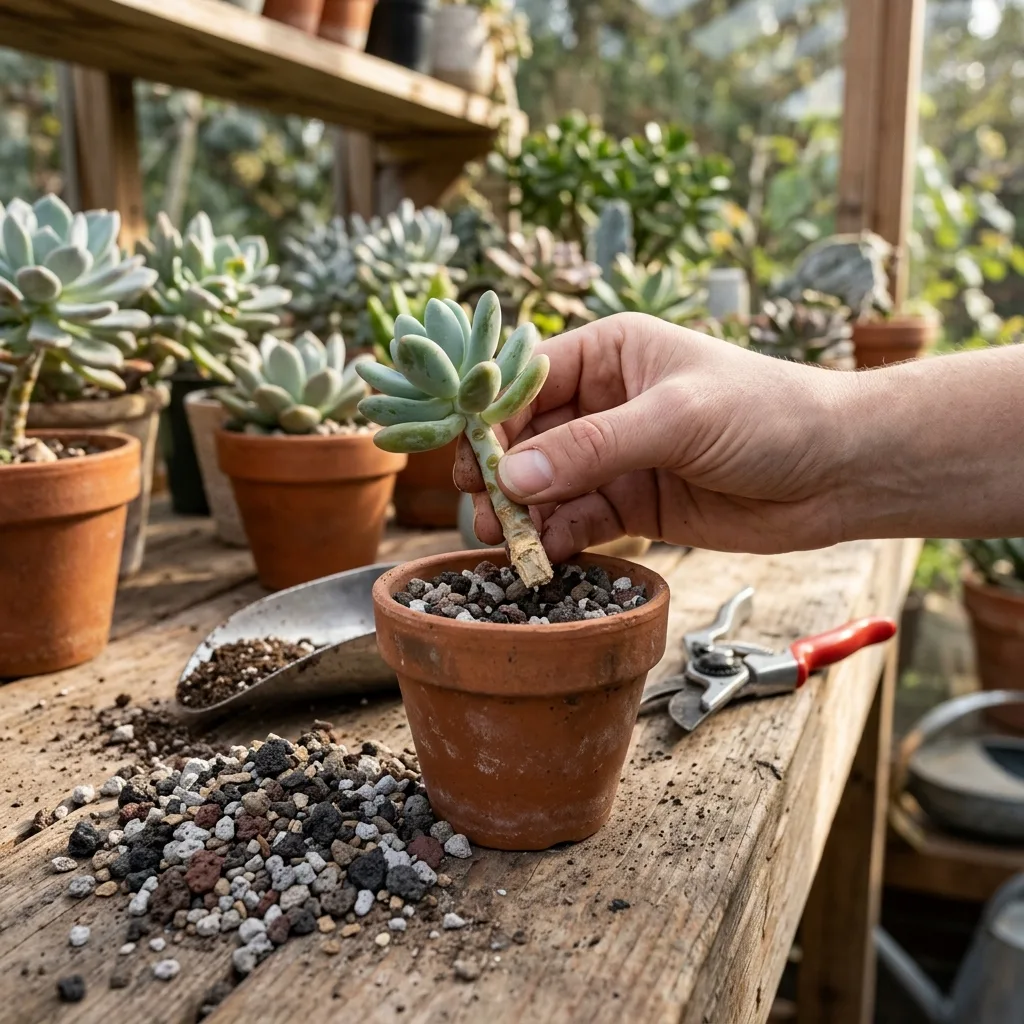
Propagating your favorite aromatic succulents allows you to weave consistent scent accents across multiple microclimates in your landscape without straining your budget. Most succulent aromatics root eagerly from softwood stem cuttings.
- Select a Vigorous Shoot: In spring or early summer, select a firm, healthy terminal stem with at least 3 to 4 leaf nodes exhibiting active growth.
- Make a Sterile Cut: Using a razor-sharp, alcohol-sterilized pruning knife or shear, make a clean diagonal cut approximately 0.5 cm beneath a leaf node.
- Strip Lower Foliage & Callus: Carefully peel away the lowest 2 or 3 leaves to expose bare stem nodes. Do not place the cutting into soil immediately; let it rest in a bright, shaded, dry location for 3 to 5 days until a firm, leathery callus seals the cut wound. This protective barrier eliminates up to 90% of fungal pathogens.
- Plant in Dry Substrate: Insert the callused stem 2 to 3 cm deep into the gritty, inorganic substrate mix outlined in our formulation table.
- Initial Moisture & Light: Withhold all water for the first 7 days. Once fragile adventitious roots initiate between days 7 and 10, mist or lightly hydrate the surface soil and relocate the cutting to bright, filtered morning sunlight.
6. Common Pathogens, Pests, and Botanical Remedies
Thanks to their concentrated volatile compounds, aromatic succulents possess natural defenses against many herbivorous insects. However, stagnant indoor air or poor ventilation can still trigger pest outbreaks:
- Mealybugs (Pseudococcidae): These sap-sucking pests congregate within the tight leaf axils of velvety-leaved aromatics. Dab individual cottony clusters directly with a cotton swab soaked in 70% isopropyl alcohol. For widespread infestations, apply cold-pressed horticultural neem oil diluted with mild castile soap during cool twilight hours.
- Root Rot (Fusarium / Pythium Complex): Triggered by sustained root-zone saturation and poor drainage. Symptoms include sudden leaf translucence, yellowing, and a soft, blackened stem base. Unpot the specimen immediately, excise all rotted tissues back to clean green pulp using a sterile blade, dust the wounds with activated charcoal powder or ground cinnamon, allow the cutting to air-cure for 2 days, and repot in fresh, bone-dry mineral grit.
- Solar Scorch: Abrupt relocation into scorching midsummer sunshine causes irreversible bleached or brown necrotic patches on succulent foliage. Always acclimate plants gradually over a two-week period (hardening off) when moving them outdoors.
7. Seasonal Maintenance Calendar and Expert Guidelines
Spring (Awakening): Active vegetative growth resumes. This is the optimal window for repotting, bed preparation, and taking fresh cuttings. Administer a diluted, low-nitrogen, high-potassium liquid fertilizer. Tip-prune leggy stems to stimulate multi-branched, compact, shrub-like growth.
Summer (Peak Aroma): Volatile oil production reaches its zenith under strong sunlight. Water thoroughly as soon as the potting mix dries out completely. On blistering midsummer afternoons, provide light shade fabric (30%) to protect sensitive foliage from thermal burn.
Autumn (Hardening Off): As night temperatures dip toward 10°C (50°F), systematically lengthen the intervals between waterings. Relocate frost-tender tender species indoors or into an unheated greenhouse before the first freeze.
Winter (Resting Phase): Succulents enter their winter semi-dormancy. Water sparingly—once every 4 to 6 weeks is typically sufficient just to prevent root desiccation. Wet, cold soil is fatal; maintain ambient overwintering temperatures between 8°C and 12°C (46–54°F).


Reader Reviews & Comments 3 Reviews
Julian Hayes
Clara Davenport
Eleanor Vance
Leave a Review & Rating
Share your plant care tips, experiences, or questions with our succulent community.