






Stretching from the sun-drenched rocky slopes of the Sonoran Desert to our domestic windowsills, cacti and succulents stand as nature's most resilient living sculptures. Yet, in home environments, inadequate light, leggy growth, or sudden tissue softening can compromise this architectural perfection. For many indoor gardeners, picking up a scalpel or shears to cut into a cactus feels like intimidating surgery; however, when timed correctly and executed with care, pruning acts as a revitalizing catalyst for cellular renewal.
Within the succulent world, pruning does far more than regulate physical height. It eases the metabolic burden of Crassulacean Acid Metabolism (CAM), breaks apical dominance to stimulate dense lateral branching, and serves as the ultimate defensive shield when combating fatal fungal infections like stem rot. Let us explore the science behind clean, deliberate cuts to restore your plant's aesthetic grace and biological balance without damaging its precious tissue.
1. Taxonomic Identity, Areole Structure, and Spine Morphology
Before making your first cut into a cactus, you must thoroughly understand its botanical blueprint. The defining morphological feature that separates the cactus family (Cactaceae) from all other fleshy-leaved succulents is the specialized structure known as the areole. Areoles are essentially condensed, highly modified lateral branch buds; spines, offsets (pups), and floral buds emerge exclusively from these specialized cushions. The spines themselves are hardened, non-photosynthetic foliar adaptations developed over millennia to minimize transpiration and deter herbivores.
Conversely, succulents such as those in the spurge family (Euphorbia) may display cactus-like thorns, but they lack areoles entirely and exude an irritant, toxic white sap called latex when incised. Classic rosette succulents (such as Echeveria, Crassula, and Sedum) harbor dormant meristematic tissues nestled in their leaf axils (the junction where the leaf attaches to the central stem). Your pruning placement depends entirely on this morphology: on columnar cacti, always cut cleanly between areole tiers or at natural joint constrictions; on standard succulents, cut at a slight angle roughly 2 to 3 mm above a healthy leaf node. Crushing cuts made at arbitrary locations destroy meristematic tissue and prevent healthy bud breaks.
2. Light Requirements, Sun Intensity, and Aeration Standards
The primary trigger that creates the need for pruning is insufficient lighting. When a plant stretches its internodes unnaturally toward a light source, sheds its rich chlorophyll coloration, and produces frail, pale stems, it is suffering from etiolation. An etiolated cactus or succulent cannot spontaneously revert to its original compact silhouette; the only restorative intervention is a decisive apical beheading.
Following surgical pruning, environmental lighting and ambient airflow become paramount to seal the wound and prevent pathogen colonization. Exposing freshly severed tissue directly to scorching midday sun causes severe tissue necrosis and cellular collapse, as the protective outer cuticle has yet to form. The ideal recovery environment provides bright, filtered sunlight (approximately 20,000 to 30,000 lux) complemented by gentle, continuous air circulation. Stagnant, humid microclimates invite opportunistic airborne fungal spores (notably Fusarium and Botrytis) to germinate directly on the moist wound.
3. Watering Cycles and the Critical Dormancy Phase
When is the right time to prune cacti and succulents? The golden rule is absolute: pruning must be performed during the active vegetative growth phase, specifically from early spring through mid-summer. During winter, lower temperatures and abbreviated photoperiods cause these plants to downregulate their cellular processes and enter winter dormancy. Pruning a dormant specimen multiplies the risk of systemic tissue rot because cellular regeneration and wound compartmentalization are virtually inactive.
There is also an intimate relationship between irrigation schedules and pruning timing. Water your candidate plant lightly 4 to 5 days before the scheduled procedure. Cellular turgor pressure must be balanced: avoid excessively engorged, brittle tissues prone to shattering, as well as severely dehydrated, shriveled cells under drought stress. Once the cut is executed, suspend all watering for both the mother stump and the harvested cuttings for at least 7 to 14 days until the wound callus has fully vulcanized. Never allow moisture to settle on an unhealed cut.
4. High-Mineral Cactus Substrates and Container Physics
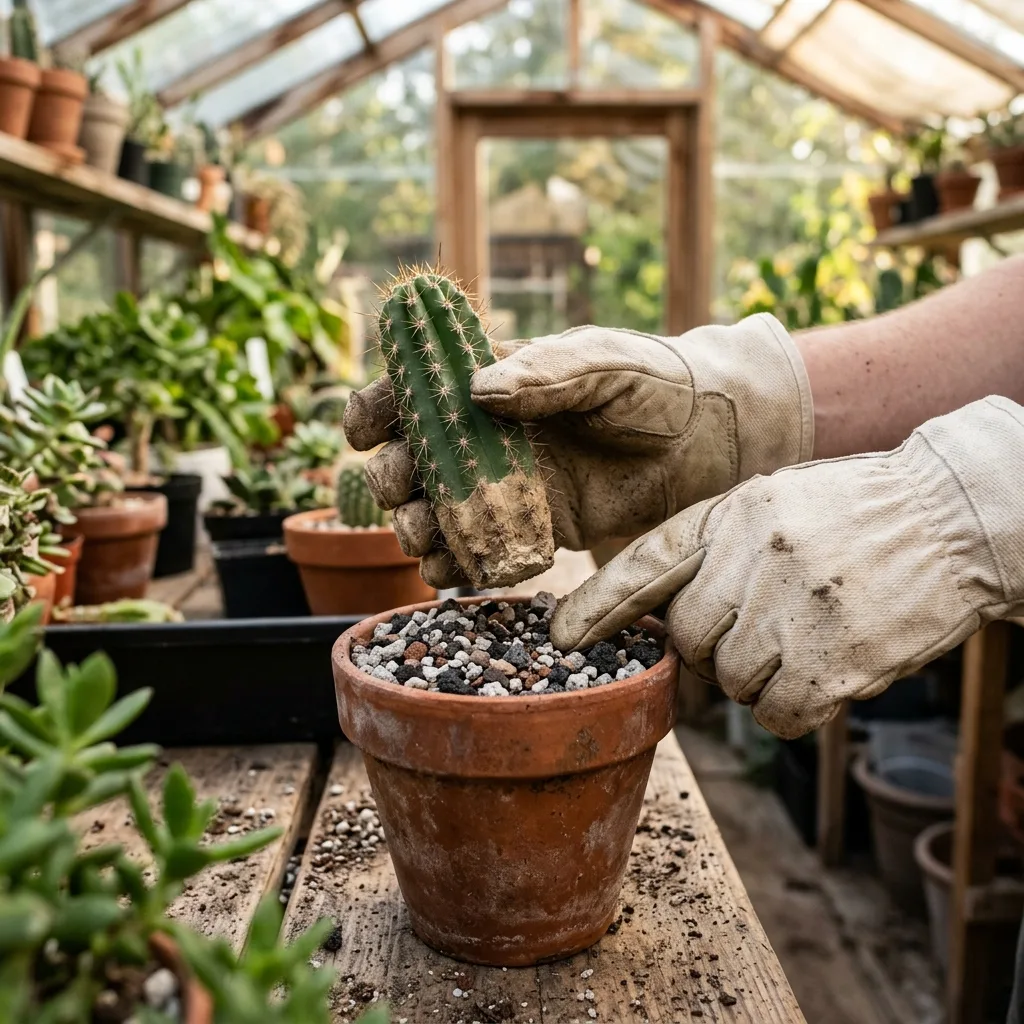
Pruning dramatically reduces total leaf surface area, which sharply decreases transpirational pull across the mother plant's root system; concurrently, severed apical cuttings must eventually be rooted into fresh media. Decreased transpiration means the residual soil stays wet far longer than before. To safeguard pruned specimens against collar rot, an ultra-porous, rapid-draining substrate is mandatory.
Organic peat content must be kept to an absolute minimum, allowing volcanic, inorganic minerals like pumice, scoria (lava rock), and zeolite to dominate the blend. The following table outlines the ideal mineral-to-organic ratio for root propagation and post-pruning recuperation:
| Substrate Component | Ratio (%) | Botanical Function |
|---|---|---|
| Horticultural Pumice (3-6 mm) | 40% | Creates stable macropores, encouraging oxygenation and fine root hair branching. |
| Crushed Lava Rock / Zeolite | 25% | Enhances cation-exchange capacity (CEC), absorbs metabolic toxins, and guarantees rapid drainage. |
| Coarse Horticultural Grit / River Sand | 15% | Provides dense structural ballast, preventing compaction and root suffocation. |
| Buffered Coconut Coir (Cocopeat) | 20% | Provides modest, moisture-retentive organic matter; fibrous texture avoids blocking drainage channels. |
For container selection, prioritize unglazed terracotta pots fitted with generous basal drainage holes. The microporous clay walls allow moisture to evaporate laterally, protecting vulnerable root systems from chronic wetness during post-pruning recovery.
5. Encouraging Floral Initiation and Post-Pruning Nutrition
Strategic pruning can actively enhance flowering potential in both cacti and succulents. Many desert cacti (such as Mammillaria, Rebutia, and Echinopsis) develop floral buds exclusively from areoles formed during the previous season's growth. Clearing away aging, heavily suberized, or misshapen terminal shoots in early spring redirects vascular energy toward younger areoles primed for floral differentiation.
Applying fertilizer immediately after pruning is a frequent and damaging misstep. Supplying high-nitrogen nutrients to a freshly pruned, stressed specimen can scorch tender feeder roots and induce bloated, fragile tissue growth at the wound margins. Delay fertilization for at least 4 to 6 weeks. Once you observe vigorous new offsets emerging from the areoles or stem nodes, introduce a dilute, low-nitrogen, high-potassium and phosphorus fertilizer (such as an NPK 4-10-10 or 5-15-10 formulation). Potassium is vital here, as it reinforces cell wall thickness and boosts pest resilience in developing shoots.
6. Propagation, Taking Cuttings, and Grafting Techniques
Pruning is never just maintenance; it is an exceptional gateway to propagation. Follow this surgical protocol for clean cuts and viable stem cuttings:
- Sterilize Your Instruments: Disinfect your scalpel, craft blade, or specialized pruning knife with 70% isopropyl alcohol, or pass the metal through an open flame and allow it to cool completely. Never use dull household scissors or anvil pruners; blunt tools crush vascular bundles, inducing immediate tissue necrosis.
- Execute the Cut: For standard succulents, make a single, decisive stroke at a 45-degree angle just above a leaf node. The slope ensures that ambient moisture slides off rather than pooling on the exposed surface. For columnar cacti, make a flat horizontal cut across the stem, then bevel the outer ribs downward like a pencil; this prevents the center core from shrinking inward and cupping water as it dries.
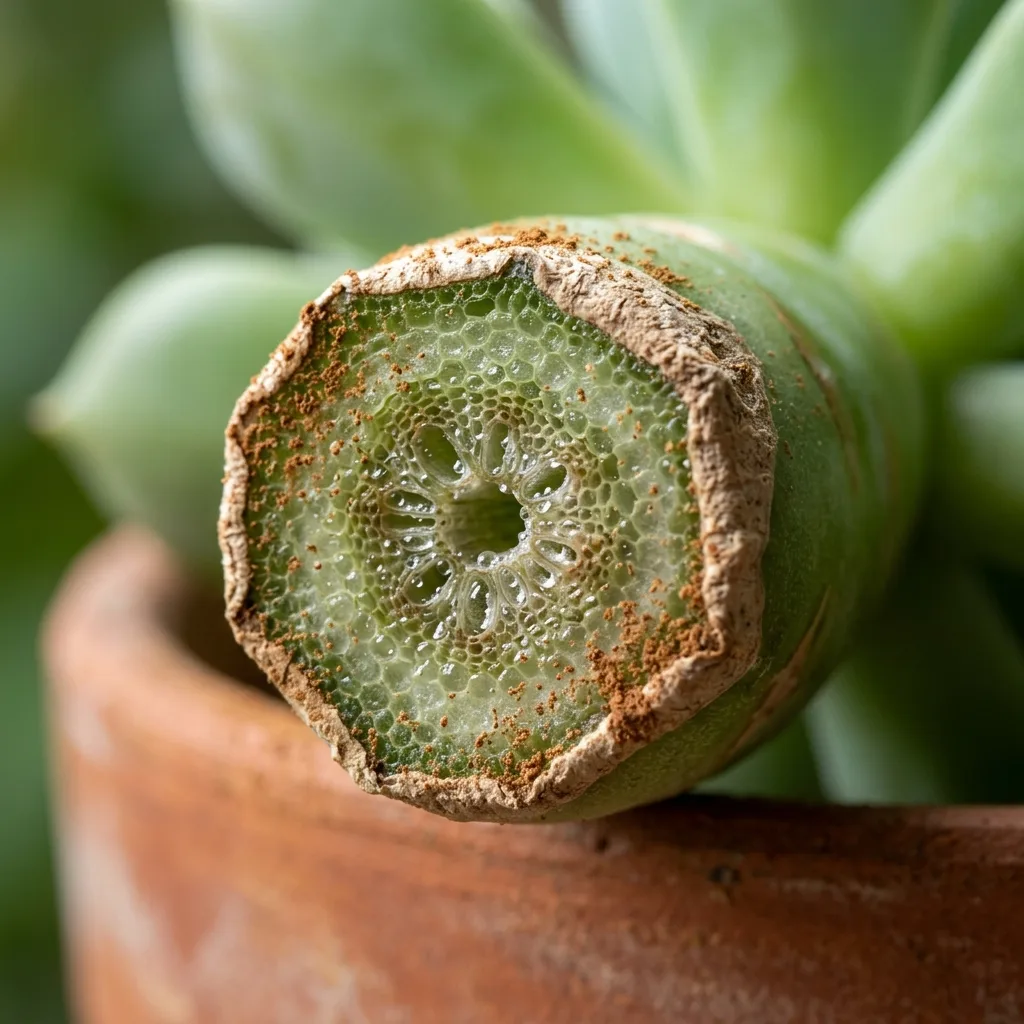
- Curing the Callus: Do not place fresh cuttings straight into soil! Rest the severed cutting in a dry, shaded, and well-ventilated spot until the cut end hardens into a firm, pale, corky layer (the callus). Thin-leaved succulents callus within 3 to 4 days, whereas thick-stemmed columnar cacti may require 2 to 3 weeks depending on stem diameter.
- Rooting Media Transfer: Position the fully callused cutting onto the dry mineral mix detailed above. Withhold all water for the first 10 days; provide only light morning misting near the container base to create subtle ambient humidity. You will know roots have established when the cutting resists a gentle upward tug.
For chlorophyll-deficient cultivars (such as variegated or ruby-red mutations) that cannot survive on their own root systems, newly pruned apical shoots can be united with a vigorous rootstock (commonly Hylocereus undatus or Trichocereus) via flat-surface grafting, secured firmly with sterile elastic bands until vascular union takes place.
7. Defending Against Fungal Pathogens and Basal Rot
Occasionally, pruning shifts from an aesthetic choice to an urgent rescue operation. If you detect dark discoloration, a mushy texture, or an unpleasant odor at the base of your plant, you are dealing with aggressive collar or root rot (typically induced by Phytophthora or Pythium species). Here, immediate salvage pruning is your only option.
To save the healthy crown, cut through the stem at least 2 to 3 centimeters above the visible margin of rot, well into pristine green tissue. Examine the cross-section carefully, focusing on the central vascular ring. If you notice even pinpoint specks of orange, brown, or black, the fungal hyphae have already traveled upward through the vascular bundles. Re-sterilize your blade with alcohol after every slice and continue taking thin cross-sections upward until the vascular cylinder is completely clean and pale green-white throughout. Only uncompromised, pathogen-free tissue has the capacity to form a protective callus and strike healthy new roots.


Reader Reviews & Comments 3 Reviews
Julian Vance
Clara Higgins
Marcus Sterling
Leave a Review & Rating
Share your plant care tips, experiences, or questions with our succulent community.