






Many plant enthusiasts envision cacti exclusively against the backdrop of scorching Sahara Desert sand dunes; however, this is one of the most pervasive misconceptions in the botanical realm. In reality, almost the entire family Cactaceae is native strictly to the New World—specifically the North, Central, and South American continents. They have conquered an astonishing geographical mosaic, thriving everywhere from the calcareous limestone canyons of Oaxaca, Mexico, to Chile's hyper-arid Atacama Desert, and even perching high upon tree branches within Brazil's humid tropical rainforests.
That little spiny companion you carefully nurture on your living room windowsill is the living legacy of millions of years of evolutionary resilience and extraordinary cellular architecture. Grasping precisely where cacti flourish in nature, how they master these demanding ecosystems, and how you can faithfully recreate these wild environmental dynamics within a simple pot will do far more than merely keep your cactus alive—it will reward you every spring with an breathtaking crown of radiant flowers.
Let us unfold the geographical map where cacti first cast their roots. Together, we will dissect their microclimatic secrets, cellular water management principles, and the exact botanical protocols required to cultivate these remarkable plants at home with absolute joy and confidence.
1. Taxonomic Identity, Areole Architecture, and Spine Morphology
The definitive morphological boundary separating the family Cactaceae from all other succulent plant groups on Earth is the presence of the 'areole'. Those thorny, succulent plants you might encounter in African deserts that superficially resemble cacti are actually members of the spurge family (Euphorbiaceae); this physical similarity is a classic demonstration of 'convergent evolution'. In a true cactus, every single spine, hair, lateral offset, and floral bud originates without exception from specialized, highly modified, condensed short-shoot structures called areoles.
Cactus spines are, from an evolutionary perspective, meticulously modified leaves. This radical transformation fulfills two indispensable physiological roles: first, by eliminating foliar surface area, it virtually halts cellular water loss via transpiration; second, it casts microscopic networks of shade across the epidermis beneath the blistering desert sun, reducing surface tissue temperatures by 5 to 10 degrees Celsius. Furthermore, nocturnal spines serve as hydraulic condensers, capturing atmospheric fog and dew to channel life-giving droplets directly down to the root collar. The delicate, silvery or glaucous farina (epicuticular wax coating) gracing the stem functions as the plant's proprietary botanical sunscreen—never wipe or rub this precious powdery layer away with your fingertips.
2. Light Requirements, Solar Intensity, and Air Circulation
In their native ranges, desert cacti are exposed to an average of 6 to 10 hours of unfiltered, full-spectrum sunlight every single day. These specialized succulents utilize Crassulacean Acid Metabolism (CAM) photosynthesis, a diurnal adaptation wherein stomata remain clamped tightly shut throughout scorching daylight hours to conserve internal moisture, opening only under cover of darkness to sequester carbon dioxide. For this biochemical machinery to operate at peak thermodynamic capacity, the plant demands an intense photon bombardment during daytime hours.
The most devastating indoor placement mistake is tucking a cactus into a dim bookshelf alcove or a windowless bathroom. Starved of essential photons, the stem stretches desperately toward available ambient light, becoming pencil-thin, frail, and deformed—a botanical condition known as 'etiolation'. Etiolated tissue permanently loses its dense chlorophyll density, taking on a pale green or sickly yellowish hue, and structurally can never regain its robust original form. Always position your cacti directly adjacent to unobstructed south- or west-facing windows. Additionally, providing continuous ambient ventilation mimics the breezy mountain plateaus and open canyons of their origin, effectively preventing pathogenic fungal spores from settling on the epidermis.

3. Irrigation Dynamics and the Critical Winter Dormancy Period
In native desert habitats, long stretches of severe drought are punctuated by sudden, torrential downpours. The root xylem of a cactus is biologically primed to react immediately: within minutes of moisture penetrating the mineral soil, it generates a network of microscopic, highly absorbent feeder roots. As the surrounding ground dries back out, the plant strategically sloughs off these delicate rootlets, insulating its primary anchoring roots behind thick, suberized cork layers. Watering your cacti lightly and frequently is not a token of affection—it simply suffocates the root system in stagnant dampness, leading directly to subterranean rot.
Always adhere strictly to the fundamental 'soak and fully dry' protocol. Never reintroduce water until the deepest subterranean quadrant of the potting mixture has dried out completely. However, the quintessential secret to longevity lies in the winter rest period (dormancy). From November through March, desert cacti should be maintained in a cool environment (ideally 5–10°C / 41–50°F) with irrigation suspended almost entirely. A cactus deprived of this crisp physiological rest—coaxed into forced metabolic activity by domestic radiators and warm indoor winter conditions—will stubbornly refuse to differentiate floral buds come springtime.
4. Highly Mineralized Substrates and Porous Potting Essentials
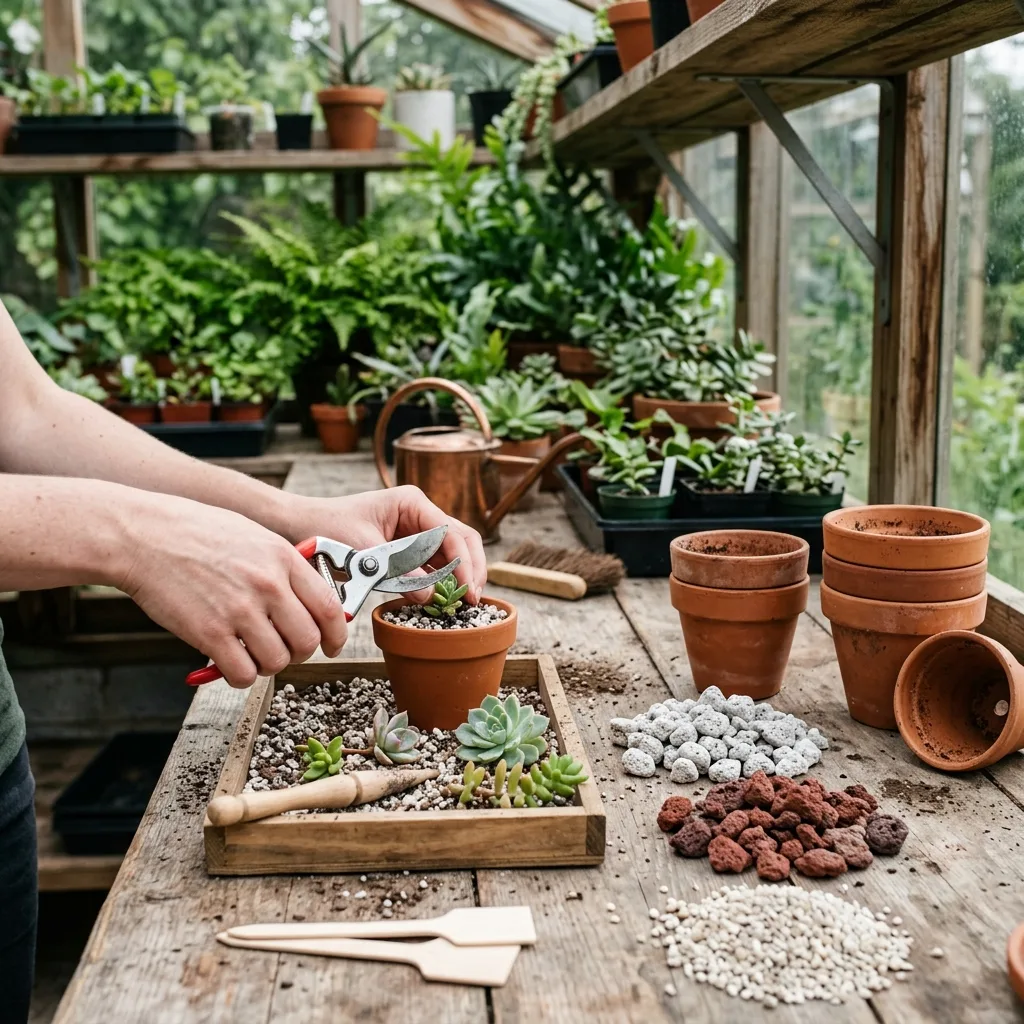
Along the volcanic plateaus of Central Mexico and the rocky scree of the Andean foothills, cacti never grow in dense, moisture-trapping organic peat. Their root filaments breathe freely within limestone fissures, deep pumice beds, and porous volcanic scoria. Your home substrate formulation must reflect this exact geological reality, keeping water-retentive organic matter to a strictly controlled minimum.
| Mineral Component | Ratio (%) | Substrate Function and Natural Analogue |
|---|---|---|
| Pumice Stone (3–6 mm) | 40% | Optimal macroporosity, capillary aeration, and continuous root oxygenation |
| Lava Rock / Zeolite | 25% | Anti-pathogenic mineral reservoir, cation exchange, and rapid gravity drainage |
| Coarse River Grit / Quartz Sand | 15% | Prevents compaction, provides structural stability, mimics stony scree |
| Fine Coir (Sifted Coco Peat) | 20% | Minimal organic matrix for initial root anchorage (thoroughly sifted) |
Regarding container selection, unglazed, breathable terracotta pots are unequivocally superior to all alternatives. Glass terrariums and non-porous glazed or plastic containers trap moisture against root walls; unglazed terracotta features porous ceramic walls that permit excess moisture to evaporate laterally, authentically reproducing the micro-aeration found in natural rocky crevices.
5. Inducing Vibrant Blooms and Nutritional Protocols
The sudden, brilliant flowering of a desert cactus is never a happy accident; it is the definitive biological culmination of surviving seasonal stress followed by environmental renewal. In early spring, the convergence of increasing diurnal temperatures and the initial resumption of water signals to the plant that the harsh, dry winter is over and it is time to reproduce. To successfully induce flowering:
- Ensure an unbroken 8- to 10-week dry, cool dormancy period throughout the depth of winter.
- As temperatures warm in spring, initiate watering and incorporate a specialized cactus fertilizer with a low-nitrogen, high-phosphorus, and high-potassium ratio (such as NPK 4-10-10). Heavy nitrogen formulations will merely inflate vegetative stem volume while systematically aborting floral meristems.
- Once microscopic flower buds begin to swell along the areoles, never alter the pot's orientation or distance relative to the light source; sudden shifts in photoperiod often cause the plant to drop its sensitive buds.
6. Propagation, Stem Cuttings, and Specialized Grafting
In nature, stem segments detached by foraging animals or rockslides naturally take root wherever they come to rest on mineral ground. When harvesting stem cuttings at home, always wield a razor-sharp, alcohol-sterilized horticultural knife. Crucially, freshly severed tissue must never be set directly into damp soil. The cut cutting must rest in a warm, shaded, well-ventilated location for 5 to 10 days to produce a tough, protective callus layer. Inserting an uncallused cutting into the soil exposes open vascular bundles directly to opportunist soil-borne pathogens, inviting rapid infection.
Strikingly colorful, chlorophyll-deficient 'Moon Cacti' (pigment mutations of Gymnocalycium mihanovichii) cannot survive autonomously in nature because they lack the chlorophyll necessary for photosynthesis. To sustain life, they are grafted onto a vigorous green host cactus (typically Hylocereus undatus). Grafting is the delicate botanical art of aligning and fusing the vascular cambium rings of two separate plants into a singular, functioning fluid highway.
7. Defending Against Fungal Pathogens and Basal Rot
The most mortal adversaries of indoor cacti are not insect pests, but opportunist soil-borne fungal pathogens—principally Fusarium, Pythium, and Phytophthora—spawned by chronic overwatering and compacted, airless potting soils. If you observe localized softness, blackening tissue, or a translucent, yellowish mush spreading from the soil line upward into the basal stem, your intervention must be swift.
Unpot the specimen immediately and thoroughly inspect the root system. Using a flame- or alcohol-sterilized surgical blade, slice away all compromised, discolored tissue until you reveal completely clean, pristine green vascular rings without a speck of brown discoloration. Dust the exposed wound generously with micronized elemental sulfur or activated charcoal powder. Allow the salvaged cactus to dry unpotted in a shaded, well-ventilated space for 7 to 10 days to establish a robust callus, then repot into fresh, bone-dry mineral substrate. Wait at least two full weeks before introducing the slightest drop of moisture.


Reader Reviews & Comments 3 Reviews
Julianna Reed
Eleanor Vance
Marcus Sterling
Leave a Review & Rating
Share your plant care tips, experiences, or questions with our succulent community.