






Sprouting from the sheer limestone precipices of Tamaulipas, Mexico, under scorching winds and relentless sunlight, Graptopetalum paraguayense—popularly known as the Ghost Plant—stands as one of nature's most resilient living sculptures. Its fleshy leaves, bathed in iridescent hues of grey, silver, and subtle lavender, look like a wisp of morning mist suspended between the rocks. When welcoming this ancient survivor into our homes, we often overlook an essential physiological reality: this succulent evolved a sophisticated Crassulacean Acid Metabolism (CAM) photosynthetic pathway and expansive intracellular water vacuoles strictly to endure extreme aridity. However, when subjected to stagnant indoor air and well-intentioned overwatering, this stalwart botanical companion can spiral into a silent, catastrophic collapse within hours.
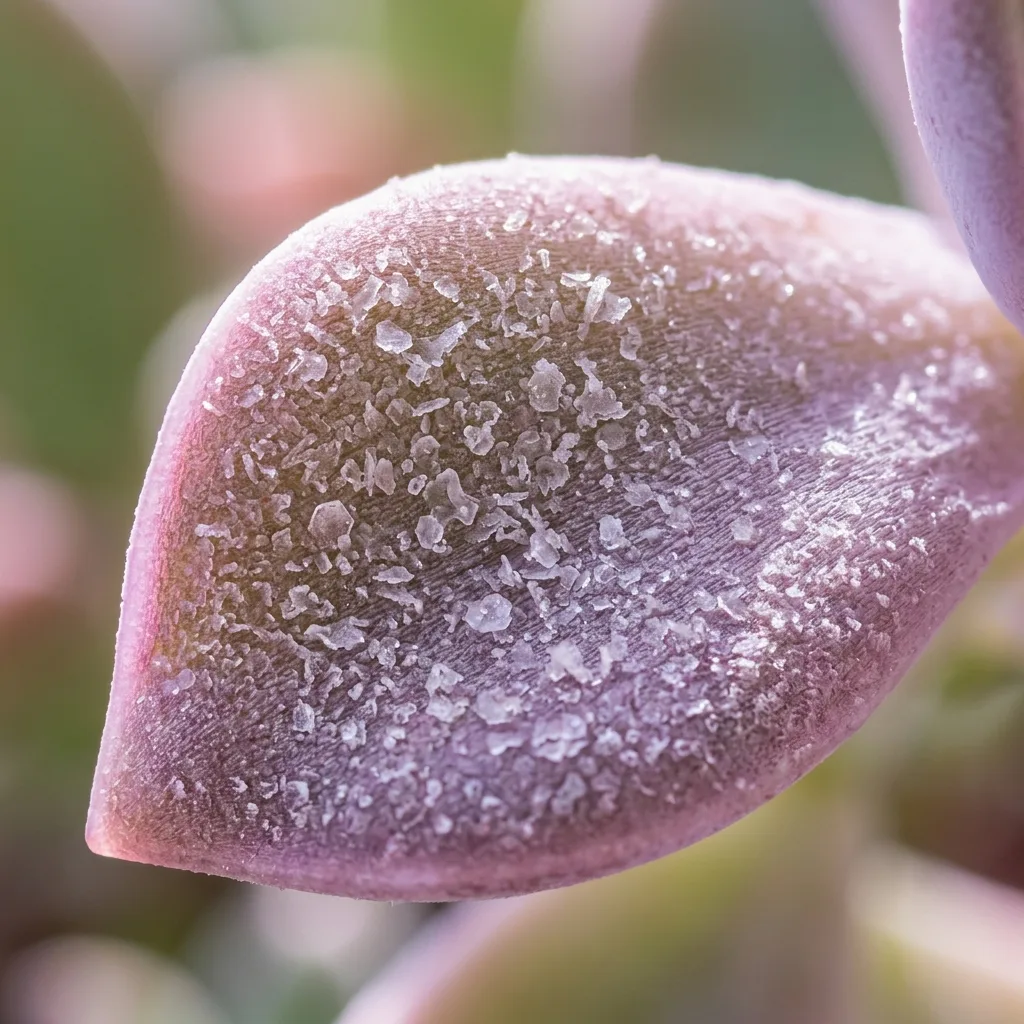
The most anxious question enthusiasts ask me in the greenhouse is invariably: 'Master Rıfat, it looked radiant yesterday, but the moment I touched it this morning, all its leaves dropped onto the soil—where did I go wrong?' Drenching succulents on a routine schedule is not an act of devotion; it suffocates root hairs by depriving them of gas exchange. Furthermore, that powdery, silvery film adorning each leaf is the plant's endogenous sunscreen—epicuticular farina. Never smudge it off with your fingers, because once that hydrophobic barrier is stripped, opportunistic pathogens are invited directly onto the delicate cellular epidermis. In this guide, we will analyze your Ghost Plant's cellular distress calls and apply precise horticultural interventions to restore specimens on the brink of death.
1. Early Diagnostic Symptoms and Microscopic / Visual Clues
When a Graptopetalum paraguayense enters physiological distress, it signals cellular instability primarily through abnormal turgor pressure and pigmentation changes within the foliar parenchyma. A healthy Ghost Plant leaf feels exceptionally firm, exhibiting a velvety matte texture sealed by intact farina. The very first pathological breakdown manifests when lower leaves become translucent, taking on the squishy consistency of a gelatin gummy bear.
For rigorous early diagnosis, examine your specimen weekly across these three critical anatomical sectors:
- Vitreous (Glassy) Foliage: When intracellular water vacuoles absorb moisture beyond structural elasticity, the plant cells undergo lysis. The leaf turns pale yellow, semi-transparent, and feels uncharacteristically watery. If leaves drop at the gentlest tap, vascular root rot is already progressing upward.
- Stem Necrosis and Blackening: Ascending brown-to-black striations advancing from the root collar indicate that fungal hyphae from Fusarium oxysporum or Pythium species have blocked the xylem conduits. Microscopic cross-sections of such stems expose vascular bundles clogged with necrotic, oxidized fluid.
- Etiolation (Light-Deprived Elongation): Characterized by abnormal internodal stretching, loose and flattened rosettes, and downward-curving leaves. As the plant desperately expands its surface area to capture scarce photons, cell walls thin, dramatically lowering systemic resistance against fungal spores.
- Cottony White Lesions: Small, fluffy white deposits clustered in leaf axils or deep in the apical meristem are direct proof of a Pseudococcidae (mealybug) infestation actively siphoning internal sap.
2. Underlying Pathological Triggers and Environmental Vectors
Fully 90% of the physiological and parasitic failures seen in the Ghost Plant originate in the subterranean rhizosphere. In its native habitat, precipitation drains instantly down stone crevices; root systems never sit in saturated sludge. In domestic container cultivation, the following factors spark immediate decline:
The foremost driver of collapse is an anaerobic root zone. Peat-heavy commercial potting soils hold water like a sponge. When micropores remain waterlogged, root hairs cannot execute cellular respiration, inducing rapid root asphyxiation. The resulting dead tissue becomes a smorgasbord for opportunistic, soil-dwelling oomycetes such as Phytophthora.
The secondary culprit is stagnant, dim air paired with mechanical abrasion of the farina layer. When the epicuticular wax is wiped away, micro-condensation beads directly on the exposed cell walls, creating the ideal nursery for grey mold spores (Botrytis cinerea) to germinate and penetrate foliar tissue.
3. Organic and Biological Remediation Protocols
If an infestation or fungal spotting is identified in its earliest stages, biological balance can be restored without resorting to harsh synthetic chemicals. For mealybugs and early epidermal lesions, the following organic methods yield outstanding results:
- 70% Isopropyl Alcohol Spot Treatment: Dip a precision cotton swab into 70% isopropyl alcohol and apply it directly to mealybug clusters. The alcohol instantly dissolves the insect's protective waxy cuticle, desiccating it on contact. Take care not to wipe the natural farina off surrounding healthy foliage, and keep the plant out of direct sun until the alcohol has fully volatilized.
- Cold-Pressed Neem Oil Emulsion: Mix 5 ml of pure, cold-pressed horticultural neem oil with 1 liter of lukewarm water, adding 2–3 drops of pure potassium castile soap as an emulsifier. Shake thoroughly and mist onto leaf undersides and stem fissures during the evening. The active compound, Azadirachtin, disrupts ecdysone, halting insect feeding and molting cycles.
- Cinnamon and Activated Charcoal Dusting: Dust freshly excised stem tissue with pharmaceutical-grade ground cinnamon or powdered activated charcoal. Cinnamon contains cinnamaldehyde, a potent natural antifungal agent that suppresses spore germination while accelerating wound suberization and callus development.
4. Chemical and Systemic Pesticide Protocols
When parasitic colonies burrow deeply into the dense leaf rosettes or vascular fungal rot ascends the stem axis, topical home remedies are often outmatched. Systemic intervention is required to circulate active agents throughout the internal vascular network. The following table provides scientifically validated application rates tested on Graptopetalum paraguayense without causing foliar phototoxicity:
| Active Compound | Target Pathogen / Pest | Dosage (Per Liter of Water) | Application Frequency | Mode of Action |
|---|---|---|---|---|
| Acetamiprid | Mealybugs, Scale Insects | 0.5 - 0.8 g | Every 10-14 days (Max 2 cycles) | Systemic neonicotinoid neurotoxin absorbed into the plant sap. |
| Propamocarb HCl | Pythium, Basal Root Rot | 1.5 ml | Soil drench (Twice, spaced 14 days apart) | Inhibits phospholipid and fatty acid synthesis in fungal membranes. |
| Copper Oxychloride | Fungal Leaf Spotting, Botrytis | 1.0 - 1.5 g | Single foliar mist (Cool evening hours) | Broad-spectrum preventive surface fungicide with multisite contact activity. |
| Imidacloprid | Advanced Root Mealybugs | 0.5 ml | Substrate saturation (Every 21 days) | Systemic uptake targeting subterranean pests feeding on root hairs. |
When applying foliar chemical sprays, avoid heavy droplets that pool in the rosette center. Use an ultra-fine atomizing sprayer to preserve the structural integrity of the farina layer and prevent chemical burn marks.
5. Quarantine and Sanitation Protocols
The total success of your salvage operation depends on isolating the infection before it migrates to adjoining Echeveria, Sedum, or Crassula collections. The second an anomaly is verified, activate this quarantine procedure:
- Strict Physical Isolation: Relocate the diseased plant at least 3 meters away from all other succulents, into a well-ventilated room with no direct air currents blowing toward the main collection. Maintain quarantine for at least 21 days.
- Root Scrubbing and Soil Disposal: Never compost or reuse substrate extracted from an infected or rotted root ball. Seal it inside a heavy-duty trash bag and discard it immediately.
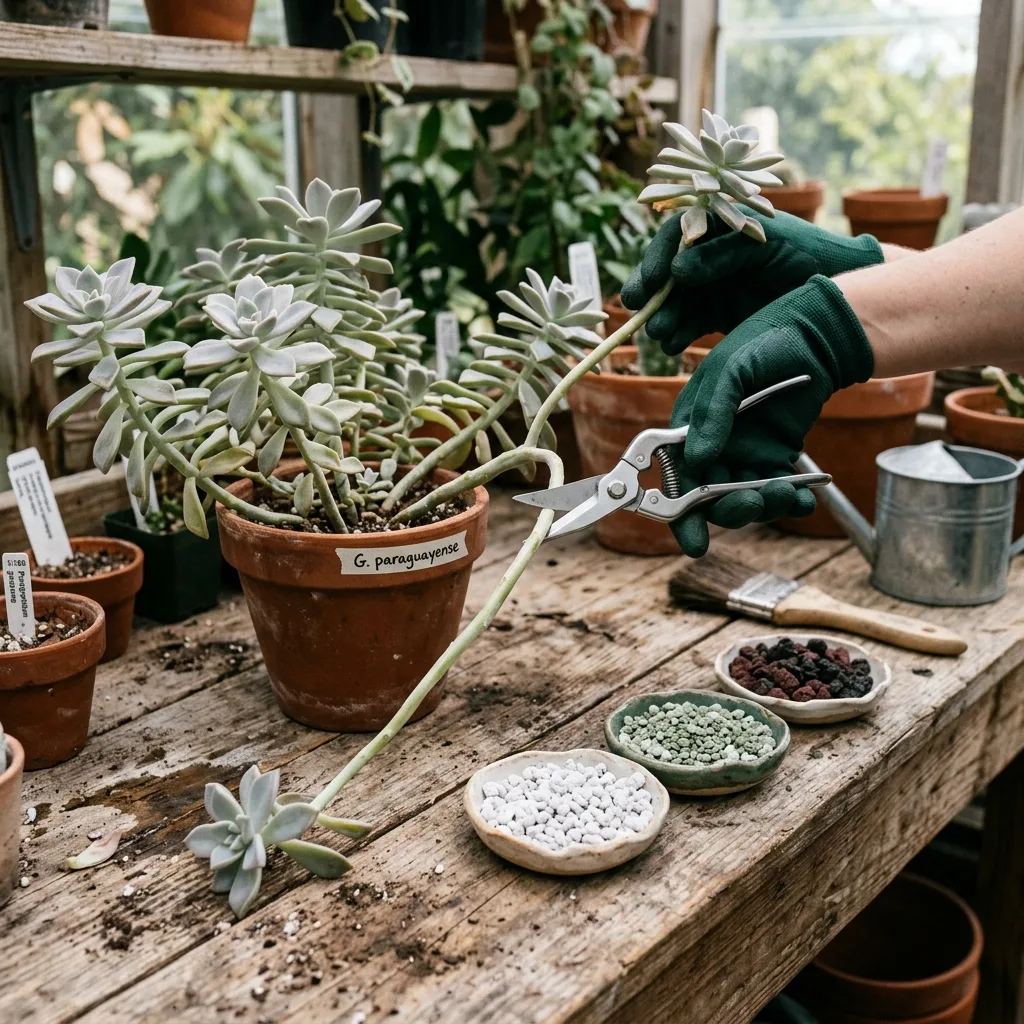
- Tool Sterilization: Disinfect all surgical shears, scalpels, and tweezers with 70% alcohol or a direct butane torch flame between every single cut. Pruning healthy tissue with a contaminated blade inoculates fungal spores directly into exposed vascular bundles.
- Pot Decontamination: If reusing unglazed terracotta or ceramic pots, submerge them in a 10% bleach solution (1 part sodium hypochlorite to 9 parts water) for 30 minutes, rinse thoroughly with fresh water, and allow them to bake bone-dry in full sun.
6. Plant Rehabilitation and Post-Operative Care
You have excised all soft, dark, and compromised tissue with a sterile scalpel until encountering clean, lime-green xylem. The surgical intervention was a success. Now begins the careful process of regenerating your Ghost Plant:
1. Callus Formation (Suberization): Never plant freshly severed stem cuttings or salvageable leaves directly into moist soil! Place them in a dry, bright location protected from direct sun for 4 to 7 days. It is crucial that the cut surface becomes completely dull and seals with a firm, leathery callus. This suberized layer acts as an impermeable shield against subterranean soil bacteria.
2. The Ideal Inorganic Substrate Formulation: Graptopetalum paraguayense cannot survive in standard potting soil. During rehabilitation, use an open, gritty, highly inorganic substrate consisting of:
- 40% Horticultural pumice (2–4 mm grain size)
- 25% Clinoptilolite Zeolite (promotes robust cation exchange and healthy root morphology)
- 15% Crushed volcanic lava rock (maintains permanent macroporosity)
- 20% Screened, low-tannin coconut coir or sterile leaf mold
3. Dry Rooting and Initial Hydration: Insert the callused stem cutting roughly 2 cm deep into this dry mineral mix. Do not provide a single drop of water for the first 10 to 12 days. Because the stem has no root system, it cannot absorb water; in fact, a gentle dry period triggers the natural release of auxin, stimulating the search for moisture. Once fine pinkish-white root tips emerge around week two, administer a small amount of water around the edge of the pot using a needleless syringe.
Gradually reintroduce your recovered Ghost Plant to filtered morning sunlight for 5 to 6 hours daily. Within a few months, those formerly dull, stressed leaves will yield to a tight, luminous rosette shimmering with hues of rose, silver, and lavender.


Reader Reviews & Comments 3 Reviews
Julian Hayes
Eleanor Vance
Clara Higgins
Leave a Review & Rating
Share your plant care tips, experiences, or questions with our succulent community.