






Spanning the rugged rocky bluffs of Southern Africa to the dry forest floors of Madagascar, the genus Plectranthus (alongside species reclassified under current taxonomy into Coleus) hosts some of the most captivating succulent forms in the family Lamiaceae. The pungent, herbaceous burst of essential oils released the moment you brush against their leaves is not mere perfume; it is an evolutionary cellular shield engineered to deter herbivores and scatter intense solar radiation in arid native niches. When cultivating these distinctive plants indoors or on sheltered balconies, the most prevalent misstep is treating them either like common herbaceous culinary mints by drowning their root systems, or like desert cacti by denying them hydration entirely.
Succulent species of Plectranthus hoard significant water reserves within their fleshy foliar parenchyma while simultaneously exhibiting a semi-shrubby, sprawling architecture. This dual morphology allows rapid vegetative vigor while imposing an acute vulnerability to root-zone hypoxia. Dousing a succulent with water on a rigid calendar is not a gesture of devotion—it suffocates delicate feeder roots by depleting dissolved oxygen. Fostering sustained vitality requires learning to interpret foliar turgor pressure correctly, ensuring deep cellular hydration without compromising vascular xylem integrity.
1. Botanical Biology and Physiological Foundations
Examine a cross-section of a succulent Plectranthus leaf under a microscope, and you will observe a protective waxy cuticle shielding swollen, water-storing spongy mesophyll cells. This specialized succulent tissue allows the specimen to maintain carbon fixation and cellular metabolic integrity through extended drought spells. Like many desert-adapted plants, Plectranthus species employ Crassulacean Acid Metabolism (CAM) or an opportunistic C3-CAM intermediate pathway. Under moisture stress, they open their stomata during the cool night to sequester carbon dioxide as malic acid within vacuoles, sealing their stomata tightly during daylight hours to drastically diminish transpirational moisture loss while processing that stored carbon.
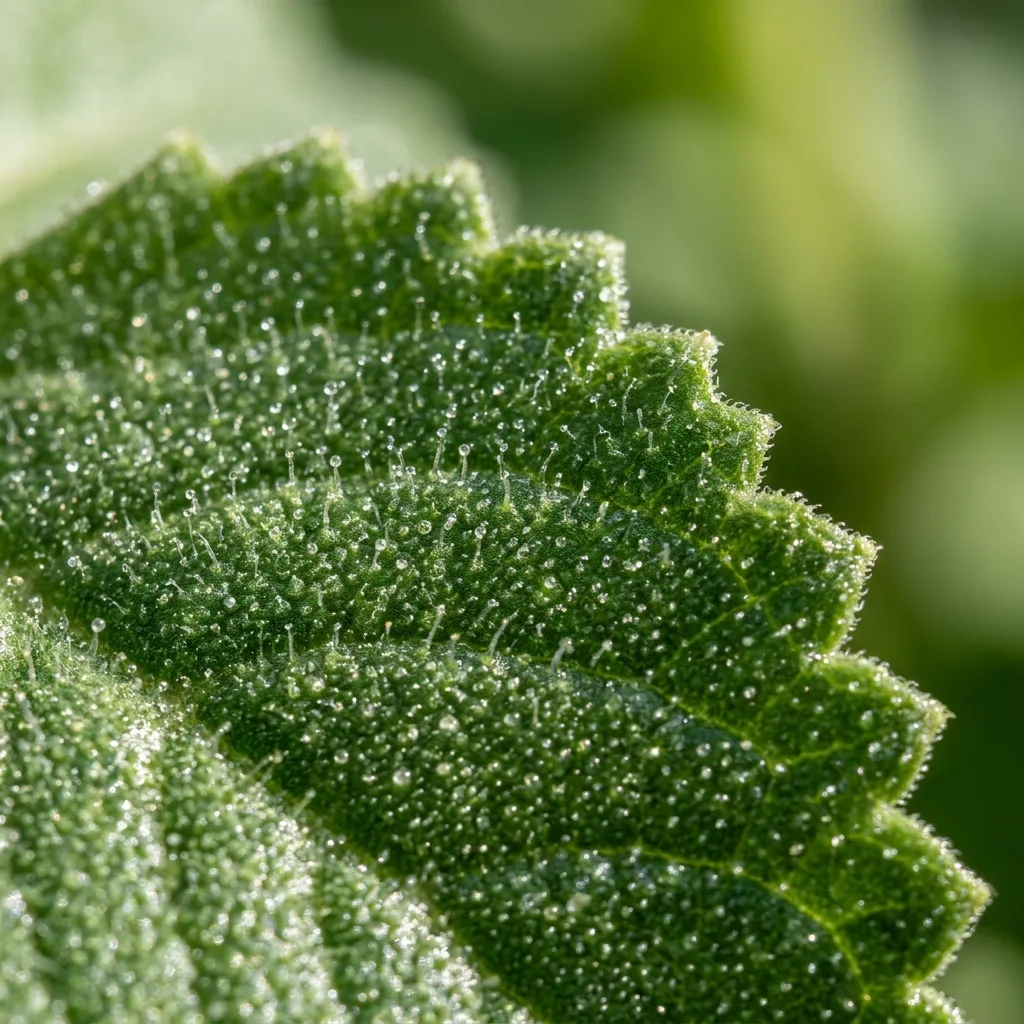
Distributed across the foliar epidermis are specialized glandular trichomes (microscopic hair-like structures) that biosynthesize complex terpenes and phenolic compounds. These trichomes perform two vital protective roles: they trap a microscopic boundary layer of humid air against the leaf surface to suppress evaporation, and they diffuse high-intensity ultraviolet rays. When these plants are potted in dense, hyper-organic potting media, the root zone quickly turns anoxic. Without soil oxygen, root cells cannot drive aerobic respiration, ATP synthesis halts, cellular membranes lose selective permeability, and opportunistic pathogens such as Pythium and Fusarium promptly infiltrate the vulnerable root cortex, sparking lethal root rot.
2. Accurate Diagnosis and Stress Symptoms
The dividing line between optimal physiological vigor and chronic environmental distress in Plectranthus is distinct. Accurately deciphering variations in shoot and foliar morphology is vital for timely remedial action:
- Etiolation (Insufficient Light): Elongated, weak internodes accompanied by pale, undersized foliage as stems lose structural rigidity and flop over under their own weight.
- Overwatering and Root Anoxia: Lower foliage turning chlorotic, translucent, and spongy; moist, blackish-brown necrotic lesions erupting at the base of the stems; and a distinctly sour, anaerobic odor rising from the potting mix.
- Chronic Dehydration: Mature lower leaves losing their natural sheen, curling inward along their margins, adopting a tough, leathery texture, and eventually desiccating and dropping prematurely.
- Thermal Shock and Excessive Insolation: Bleached or crisped brown necrotic patches along leaf margins, coupled with an overproduction of trichomes that gives foliage a silvery, chalky cast as vegetative growth abruptly stalls.
3. Step-by-Step Cultivation Protocol
To cultivate compact, dense, and remarkably vibrant succulent Plectranthus specimens indoors or under greenhouse conditions, execute this 5-step horticultural protocol:
- Strategic Placement and Photoperiod Balance: Provide a minimum of 4 to 6 hours of bright, dappled sunlight daily. Gentle morning rays maximize photosynthetic carbohydrate synthesis, whereas unmitigated midday summer sun can scorch succulent cuticles. An unobstructed eastern exposure or a sheer-filtered south-facing window offers the ideal light spectrum.
- Porous Substrate Preparation: Aeration is paramount to prevent root suffocation. Avoid straight peat-based potting soils, which retain moisture far too long and collapse over time. Construct a mineral-rich medium bolstered with coarse pumice, porous lava rock, and perlite to guarantee an abundance of macropores for unhindered gas exchange.
- Turgor-Guided Deep Drenching Protocol: Once the substrate has dried through its entire depth and the leaves exhibit a slight loss of rigid turgor, water the root ball thoroughly until water cascades freely through the container's bottom drainage holes. Discard any effluent gathered in the saucer within 15 minutes; roots must never linger in stagnant standing water.
- Apical Pinching and Structural Pruning: Plectranthus naturally exhibits an energetic, semi-woody branching pattern that can become lanky. Throughout the spring and summer active growth cycles, pinch back the apical meristems of elongating stems using clean fingernails or sterilized pruning snips. Suppressing apical dominance disrupts auxin flow and triggers cytokinin release in lateral buds, resulting in an extraordinarily dense, mounded growth habit.
- Atmospheric Ventilation and Airflow: The dense coat of trichomes on the leaves can trap moisture in still, humid rooms, creating an environment ripe for airborne fungal spores such as powdery mildew. Ensure consistent, gentle ambient air circulation around the foliage at all times.
4. Equipment, Materials, and Metric Parameters
Securing the optimal growth rate and root health in succulent Plectranthus requires balanced physical and environmental metrics:
| Parameter / Component | Recommended Standard / Ratio | Botanical Rationale and Mechanism |
|---|---|---|
| Substrate Formulation | 40% Coarse Pumice (3-5 mm) + 30% Coco Coir + 20% Crushed Lava Rock + 10% Zeolite | Maximizes structural macroporosity, eliminates root suffocation risks, and preserves high cation-exchange capacity. |
| Container Type | Unglazed, breathable terracotta with drainage | Promotes evaporative moisture dissipation through porous pot walls, accelerating even root-zone drying. |
| Luminous Intensity | 10,000 - 25,000 Lux (Bright, indirect/filtered sun) | Stops etiolation, fuels glandular trichome development, and stimulates essential oil biosynthesis. |
| Thermal Range | 16°C - 28°C (Absolute minimum threshold: 8°C) | Sustains enzymatic efficiency for CAM/C3 pathways; succulent cellular tissue lacks frost resilience. |
| Irrigation Rhythm | Allow ~90% dry-down (Every 5-7 days in summer; 14-20 days in winter) | Protects fine root hairs and vascular xylem vessels from pathogenic maceration. |

5. Five Common Pitfalls and Remedial Actions
- Mistake 1: Relying on Dense Garden Loam or Pure Peat Moss. Standard garden dirt compacts into an impenetrable slab, while peat moss turns intensely hydrophobic when dried out, suffocating root structures. Remedy: Gently unpot the specimen, wash compacted soil cleanly from the root system with lukewarm water, and repot into the mineral-dominant substrate outlined above.
- Mistake 2: Overhead Misting and Wetting Foliage. The fine trichomes on Plectranthus leaves trap suspended water droplets. Lingering surface moisture invites fungal spores and creates optical focal points that scorch foliage under direct sun. Remedy: Cease foliar spraying immediately. Water strictly at soil level and bolster ambient airflow around the container.
- Mistake 3: Reluctance to Prune Regularly. Left unpruned, Plectranthus stems drop lower foliage, lignify, and produce unsightly, untidy canes. Remedy: Perform a firm rejuvenation cut in mid-spring, trimming stems back by up to one-third. Root the excised healthy tip cuttings to replenish the container and stimulate vigorous basal budding.
- Mistake 4: Heavy Fertilization Under Sub-Par Light. Pumping an under-lit plant with high-nitrogen fertilizers forces loose, cellular elongation, yielding weak stems that readily succumb to sap-sucking pests. Remedy: Suspend feeding immediately, reposition the pot to an area with brighter ambient light, and only resume feeding during active growth with a balanced, low-nitrogen succulent fertilizer diluted to half strength.
- Mistake 5: Winter Placement Beside Central Heating Radiators. High, desiccating convective heat dries out foliar tissue rapidly and invites destructive spider mite infestations. Remedy: Relocate the plant at least 1.5 meters away from artificial heat vents or radiators into a bright, cool spot.
6. Seasonal Management Calendar and Long-Term Results
To maximize the longevity of your Plectranthus and ensure an increasingly dense, lush profile year after year, synchronize your routine with the natural seasonal cycle:
Spring (Regeneration and Propagation): As day lengths expand across March and April, dormant meristems reawaken. This window is ideal for root pruning, repotting into fresh mineral substrate, structural pinching, and propagating tip cuttings. Feed once a month with half-strength cactus and succulent fertilizer.
Summer (Active Growth and Ventilation): Higher temperatures accelerate transpirational water loss, increasing hydration demand. Sheltered outdoor verandas, balconies, or airy patios with morning sun and light afternoon shade offer ideal conditions. Shield foliage from harsh, unbuffered midday sun.
Autumn (Inflorescence and Hardening): Many succulent Plectranthus varieties respond to autumn's shortening photoperiod by pushing delicate terminal spikes of pale blue, lavender, or purple blooms. Maintain an even watering rhythm throughout flowering, and snip spent flower spikes cleanly at the base once blossoms fade to preserve energy reserves.
Winter (Vegetative Quiescence): In cooler indoor environments maintained around 10-15°C, metabolic rates slow considerably. Widen your watering intervals significantly, allowing the potting mix to dry out almost completely between waterings. Discontinue all fertilizer applications until spring returns.


Reader Reviews & Comments 3 Reviews
Clara Davenport
Julian Vance
Marcus Sterling
Leave a Review & Rating
Share your plant care tips, experiences, or questions with our succulent community.