






Picture a miniature, bronze disc embedded almost flush with the mineral-rich earth, camouflaged within the rock crevices of the windswept pampas bridging southern Brazil and northern Uruguay. Frailea castanea (frequently cataloged in older literature as Frailea asterioides) stands as one of the most mesmerizing dwarf species in the entire succulent and cactus domain. With its depressed, chestnut-like silhouette, impeccably geometric ribs, and velvety dermis that deepens under bright sunlight, this exquisite geophyte serves as living proof of nature’s minimalist botanical sculpting.
While the vast majority of cacti ascend toward the sky as columnar pillars or swollen globes, the Chestnut Cactus adopts a cryptic, subterranean lifestyle, striving to remain level with the surrounding pedosphere. During prolonged dry spells, cellular water depletion draws its body flush against—or even slightly below—the substrate line. When provided with an authentic microclimate indoors, this botanical marvel will captivate you with both its architectural form and its peculiar cleistogamous flowering habit, producing viable seed pods without ever formally opening its petals.
1. Botanical Identity and Morphological Characteristics
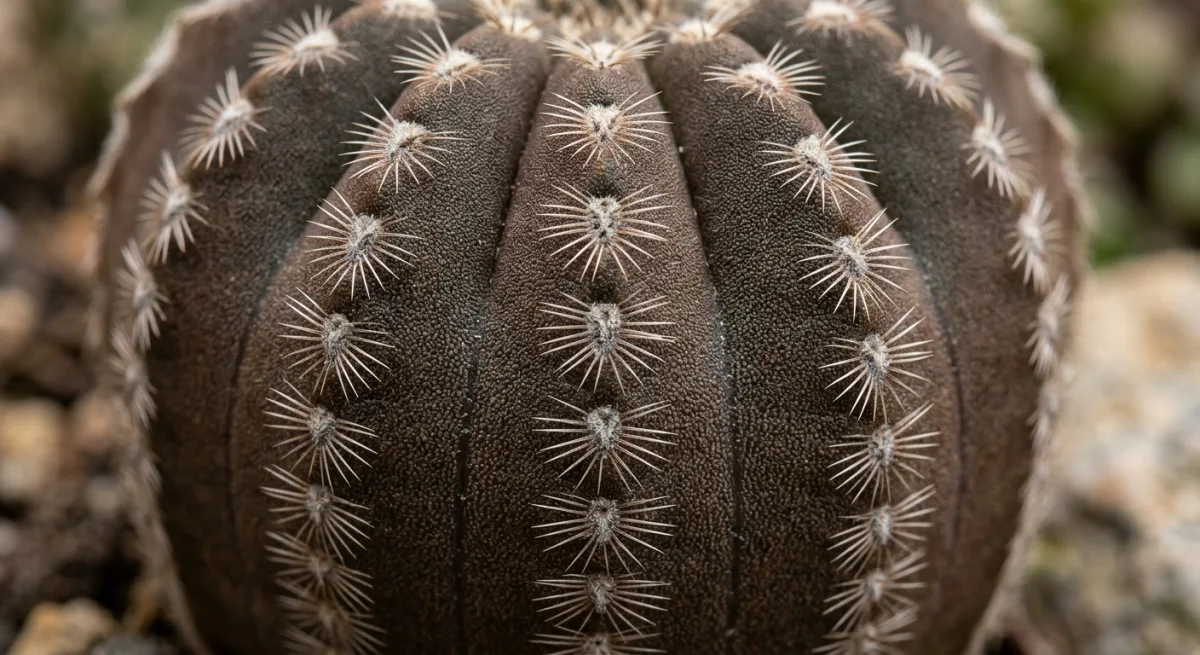
Classified under the family Cactaceae, genus Frailea, Frailea castanea exhibits a solitary (rarely clustering or offsetting from the base) dwarf habit with a depressed, button-like stem. In its native habitat, adult specimens rarely exceed 3 to 5 cm in diameter, maintaining this compact footprint under domestic cultivation as well. The epidermis displays shades ranging from dark olive-green to rich chocolate-brown and burnt bronze; this deep coloration is driven by protective anthocyanin pigmentation synthesized within epidermal cells to shield underlying tissues from intense solar irradiance.
The stem is symmetrically divided by 8 to 15 low, flat, and broad ribs separated by subtle vertical furrows. Arranged along these ribs are minute areoles bearing 3 to 8 tiny, downward-curving, appressed radial spines of a dark brown or near-black hue. Lying flush against the epidermal surface, these pectinate spines act as microscopic windbreakers that deflect airborne dust and reduce boundary-layer convective moisture loss. Beneath the soil, the plant develops an extensive, fleshy taproot (napiform root system) designed for subterranean moisture storage—an anatomical feature that dictates every nuance of pot selection and irrigation strategy.
2. Light Requirements and Indoor Positioning
In its native grasslands, Frailea castanea nestles among quartz gravel or beneath the broken dappled shade of low-lying shrubs. Indoors, unfiltered and scorching midday summer sun—especially the magnified 12:00 PM to 3:00 PM exposure through double-glazed window glass—can cause irreversible epidermal blistering and photo-oxidative stress. Conversely, chronic low-light conditions dismantle the plant's signature geophytic habit, triggering unsightly etiolation (abnormal vertical elongation) and washing out its deep bronze patina into a dull, diluted green.
The ideal exposure is an unobstructed east- or west-facing windowsill that provides direct gentle morning or late-afternoon sunlight, coupled with abundant, bright ambient light throughout the day. If placed in an intense south-facing window during peak summer, diffuse the midday rays using a sheer linen curtain. Given sufficient optical energy, your Chestnut Cactus will maintain its compact, flattened disc profile and proudly display its deep chocolate-chestnut tones.
3. Watering Discipline: The 'Soak and Dry' Method
The succulent taproot of Frailea castanea is a masterclass in moisture storage, yet it possesses zero tolerance for prolonged, stagnant dampness around the root collar. The single most destructive misstep in cactus cultivation is watering on a fixed calendar schedule, particularly when the specimen is semi-dormant or waking sluggishly. In succulent care, frequent shallow watering is never an act of affection; it suffocates the root hairs by displacing essential soil oxygen.
Throughout the active vegetative window from mid-spring to late summer, implement a rigorous 'soak and dry' approach: drench the substrate thoroughly until water drains freely from the base, then wait until the potting medium has dried out completely down to the bottom before irrigating again. When watering, avoid splashing water into the depressed apical crown of the plant; the dense fleece in this depression traps moisture, creating an entry point for crown rot. As autumn transitions toward winter dormancy, taper irrigation to a near-complete stop. For specimens overwintered in a cool room (8–12°C), offer only a minimal surface splash once a month to prevent the taproot from desiccating entirely or pulling the stem too deeply into the gravel.
4. Ideal Substrate Mix and Pot Selection
The health of Frailea castanea is intrinsically tied to oxygen diffusion and rapid hydraulic transit in the rhizosphere. High-organic, peat-heavy commercial potting soils are virtually a death sentence for this species, retaining excess moisture and promoting anaerobic root decay. While the vertical taproot requires adequate depth, using an oversized pot introduces a broad volume of unused, damp soil that takes too long to dry out.
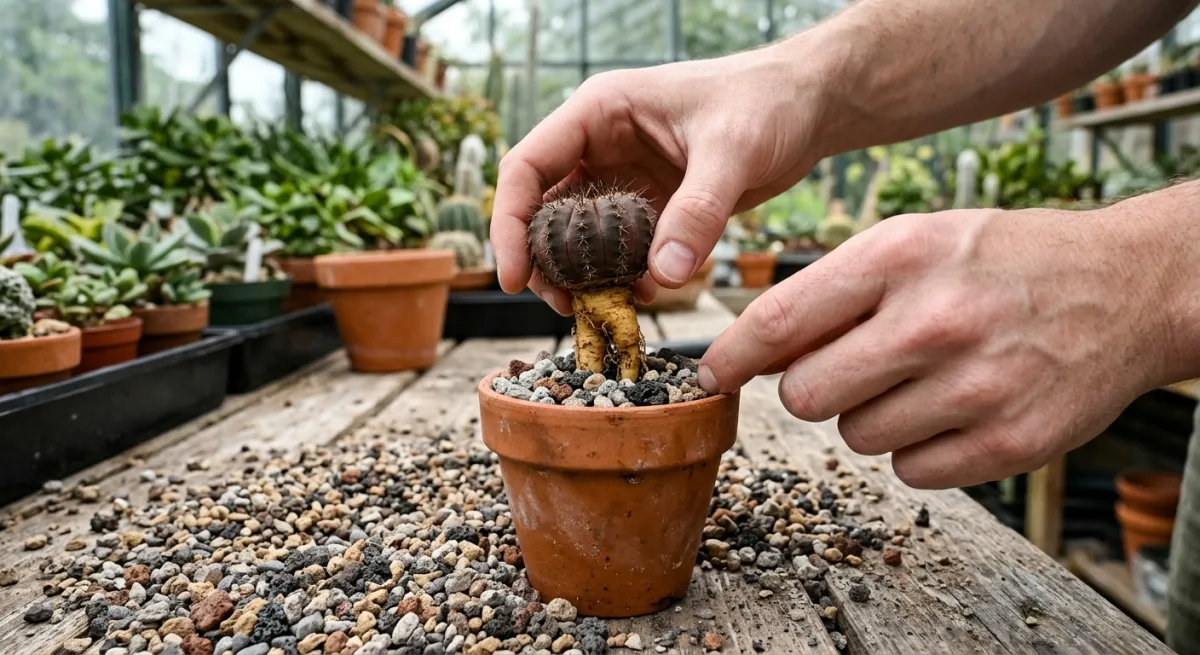
Select an unglazed, breathable terracotta container or a ceramic pot with generous drainage holes. Terracotta is particularly advantageous because its porous walls facilitate rapid lateral evaporation, keeping the root core well-aerated.
| Component | Proportion (%) | Agronomic & Botanical Function |
|---|---|---|
| Pumice (2–4 mm) | 40% | Provides structural macroporosity, aerates the root zone, and anchors the taproot. |
| Lava Rock (Scoria) (2–5 mm) | 25% | Maintains long-term granular integrity and slowly supplies trace mineral elements. |
| Zeolite or Hard Akadama | 15% | High cation-exchange capacity (CEC), absorbs excess nitrogen, and buffers soil moisture. |
| Coarse Quartz Sand / Grit | 10% | Enhances internal drainage velocity and prevents particle compaction. |
| Sterilized Leaf Mold or Coir | 10% | Maintains a slightly acidic pH balance and provides baseline organic nutrients. |
Place a finger-thick layer of pure coarse lava rock at the base of the pot for drainage. After positioning the plant and backfilling with the mineral mix, apply a generous top-dressing of crushed quartz or river gravel around the root collar. This dry collar acts as a moisture-impermeable barrier, ensuring the base of the stem never sits against damp soil during watering.
5. Step-by-Step Propagation Techniques
Because Frailea castanea grows predominantly as a solitary disc and rarely produces basal offsets, stem cuttings are seldom an option. Fortunately, seed propagation is exceptionally rewarding, reliable, and straightforward thanks to the plant's prolific cleistogamic nature.
- Seed Harvesting: Monitor the crown of the cactus. When the seed capsule dries out, turns papery, and naturally detaches, carefully harvest it. Break open the pod to collect the large, helmet-shaped, glossy dark brown seeds. Seed viability diminishes after 12 to 18 months, so sow them fresh for maximum germination rates.
- Substrate Preparation: Fill a shallow, transparent plastic nursery container with a finely sifted, sterilized mixture of pumice, perlite, and a pinch of coir. Moisten the substrate from below using clean, distilled water until evenly damp.
- Sowing: Scatter the seeds across the surface. Do not bury them; at most, dust a razor-thin layer of fine quartz sand around them, as Frailea seeds are photoblastic and require light cues to break dormancy.
- Humidity Dome: Close the clear container lid or seal it inside a zip-lock bag. Position the setup in a bright location shielded from direct sunlight at temperatures between 22°C and 26°C. Germination typically commences within 7 to 14 days.
- Hardening Off: Once the seedlings form tiny green spheres with visible microscopic spine clusters, begin cracking the lid open incrementally over several weeks to acclimatize the youngsters to lower ambient humidity.
6. Common Pests, Diseases, and Treatments
The primary threats to this miniature gem are root mealybugs, crown-dwelling scale insects, and soil-borne fungal pathogens. The tight furrows between the ribs and the dense apical wool provide prime concealment for sap-sucking pests.
- Mealybugs (Pseudococcidae): If you spot cottony white tufts within the areoles or along the ribs, dip a fine artist's brush into 70% isopropyl alcohol and physically remove them. For systemic infestations involving the root system, drench the substrate with an appropriate systemic insecticide (such as acetamiprid) during the active growing season.
- Taproot Rot: If the cactus abruptly discolors, softens, or loses its turgidity, unpot the specimen immediately to inspect the taproot. Excise any darkened, decayed tissue using a sterile scalpel back to clean, creamy-white flesh. Dust the cut surface liberally with sulfur or activated charcoal powder, allow it to callus in a dry, shaded area for 7 to 10 days, and replant in completely dry, 100% mineral substrate.
- Spider Mites (Tetranychidae): In hot, overly dry indoor air, microscopic mites can cause rust-colored, sandpaper-like scarring on the epidermis. Counter them by increasing air circulation and treating with insecticidal soap, cold-pressed neem oil solutions, or an approved miticide.
7. Seasonal Care Calendar and Expert Tips
The physiological clock of Frailea castanea is tuned to the rhythm of the seasons. Aligning your cultivation habits with these natural phenological cycles is the key to longevity:
- Spring (March – May): Awakening from winter dormancy. When ambient temperatures reliably surpass 18°C, initiate the season with a light bottom-watering. In mid-spring, apply a very dilute, low-nitrogen cactus fertilizer (e.g., NPK 4-8-12) to stimulate root elongation.
- Summer (June – August): Peak metabolic activity and seed formation. Water thoroughly as soon as the potting mix dries out, but never let water linger in the central crown on overcast days. Provide bright, filtered sunlight to encourage deep bronze coloration and compact growth.
- Autumn (September – November): Space out watering intervals significantly. Discontinue all fertilizer applications by late September. As night temperatures cool, allowing the plant to naturally lose some internal water content concentrates its cell sap, protecting the cell membranes from winter chilling injury.
- Winter (December – February): Full dormancy. Maintain the plant in a bright, bone-dry spot at 8–12°C. Withhold irrigation entirely, save for an occasional surface misting if the body shrinks drastically into the soil mix.
Approached with patience and a respectful, minimalist hand, this timeless dwarf cactus will bring the sculptural grace and wild ruggedness of South America's pampas straight to your windowsill.


Reader Reviews & Comments 3 Reviews
Julian Vance
Marcus Thornton
Clara Bennett
Leave a Review & Rating
Share your plant care tips, experiences, or questions with our succulent community.