






Hailing from the moist floodplains, fertile riverbanks, and ancient woodland clearings of North America to prestigious botanical collections worldwide, the Cutleaf Coneflower (Rudbeckia laciniata) is a towering herbaceous perennial of the Asteraceae family renowned for its monumental silhouette. Yet, when gardening enthusiasts witness its deeply divided, massive foliage suddenly soaring 2 to 3 meters within a single season, a persistent dilemma inevitably arises: 'Is this unchecked Cutleaf Coneflower an unruly, invasive weed, or a prized botanical treasure worthy of conservation?'
In the horticultural discipline, the label 'weed' is not a biological taxon; rather, it is purely an anthropological designation given to any plant flourishing vigorously where humans did not explicitly intend it to be. In reality, Rudbeckia laciniata holds profound collector value. It boasts centuries of ethnobotanical history—serving Indigenous peoples as both a nourishing spring green and medicinal root tonic—and includes legendary historic heirloom cultivars such as the fully double Victorian favorite 'Hortensia' (often called Wild Goldenglow). When properly channeled with balanced mineral nutrition and disciplined structural pruning, this vigorous native transforms into the most dramatic, sculptural architectural pillar of your landscape.
1. Taxonomy and Distinguishing Morphological Traits
Belonging to the genus Rudbeckia within the vast Asteraceae (daisy) family, Rudbeckia laciniata takes its specific epithet from the Latin laciniatus, meaning 'deeply slashed' or 'fringed,' referencing its distinctly pinnatifid foliage. The clear morphological markers that separate this species from standard garden coneflowers (such as Rudbeckia fulgida or Echinacea purpurea) include:
- Root and Rhizomatous Architecture: A robust, fibrous root crown anchored by vigorously spreading horizontal rhizomes. The primary reason amateur growers label this species an 'invasive weed' is the unchecked expansion velocity of these underground stems in fertile, unconstrained garden soils.
- Floral Capitulum: Unlike the deep chocolate-brown or obsidian-black central cones typical of common black-eyed Susans, the floral disc of Rudbeckia laciniata is distinctly greenish-yellow and dome-shaped upon opening, elongating into a pronounced cylindrical column as seeds mature. The surrounding ray florets are brilliant chrome-yellow, reflexing downwards in a graceful shuttlecock flare.
- Rare Genetic Cultivars: While the wild botanical type bears a single whorl of ray florets around an open center, discerning collectors seek out Rudbeckia laciniata var. hortensia ('Golden Glow'). This treasured Victorian mutation produces densely doubled, pom-pom-like blooms reminiscent of heritage chrysanthemums or dahlias. In addition, select dwarf hybrids and subtle variegated clones are zealously maintained by specialty nurseries.
2. Precise Light and Temperature Requirements
Cutleaf Coneflower is an obligate sun enthusiast relying on the C3 photosynthetic pathway, finely tuned to high solar radiation levels. Given at least 6 to 8 hours of direct, unfiltered sunlight daily, cellular turgor pressure peaks, driving the rapid biosynthesis of structural cellulose and lignin throughout the hollow stems. This physiological reinforcement keeps the towering stalks proudly erect against wind and heavy rain.
When subjected to insufficient light or dense shade, severe etiolation occurs. The internodes elongate unnaturally, the stem walls become dominated by thin, spongy parenchyma cells rather than dense lignified fibers, the floral discs diminish in diameter, and the plant collapses under its own weight (lodging). In terms of thermal hardiness, the species is remarkably resilient. Fully acclimated across USDA Hardiness Zones 3 through 9, its dormant rootstock easily survives winter lows of -35°C (-31°F), while tolerating sweltering summer heat waves exceeding 38°C (100°F), provided subterranean moisture reserves remain stable.

3. Root Physiology and Irrigation Discipline
Because its evolutionary niche centers around riparian corridors, alluvium terraces, and damp deciduous river bottoms, Rudbeckia laciniata is not a drought-hardy, succulent xerophyte. However, the most destructive misstep committed in cultivated environments is suffocating the root crown in stagnant, poorly drained muck.
The extensive xylem architecture of the plant demands sustained moisture transport; its massive, deeply lobed leaf surface area releases substantial water vapor through transpiration during peak summer afternoons. If the soil profile dries completely, the turgor pressure of the petioles drops abruptly, causing dramatic flagging and foliage collapse. Conversely, in dense, anaerobic clay lacking gas exchange, opportunistic oomycetes such as Pythium and Phytophthora proliferate rapidly, decimating the root cortex. The horticultural golden rule for this species is: 'Never waterlogged; consistently aerated, cool, and evenly damp.'
4. Engineered Mineral Substrate for Collector Specimens
To curb unchecked rhizomatous invasion, encourage dense and stocky nodal growth, and prevent root rot in contained plantings, use a custom, high-porosity mineral substrate. Rather than utilizing heavy, peat-choked potting soils, build an aggregate-rich medium incorporating porous volcanic gravels and high-CEC clays.
| Substrate Component | Volume Ratio (%) | Particle Calibration | Functional Botanical Purpose |
|---|---|---|---|
| Hard Akadama (Double-Fired) | %30 | 3 - 6 mm | Provides structural macro-pores, buffers cations, and optimizes root respiration. |
| Horticultural Pumice | %25 | 4 - 8 mm | Facilitates rapid drainage while preventing medium compaction over seasons. |
| Clinoptilolite Zeolite | %15 | 2 - 5 mm | Significantly raises Cation Exchange Capacity (CEC) and absorbs mineral salts. |
| Sterilized Coir Fiber / Aged Pine Bark | %20 | Fine to Medium Shred | Maintains resilient organic moisture retention and supports beneficial mycorrhizae. |
| Aged Worm Castings (Vermicompost) | %10 | Fine Sift | Supplies steady humic and fulvic acids alongside gentle, slow-release bio-nutrients. |
5. Propagation Complexities and Reliable Protocols
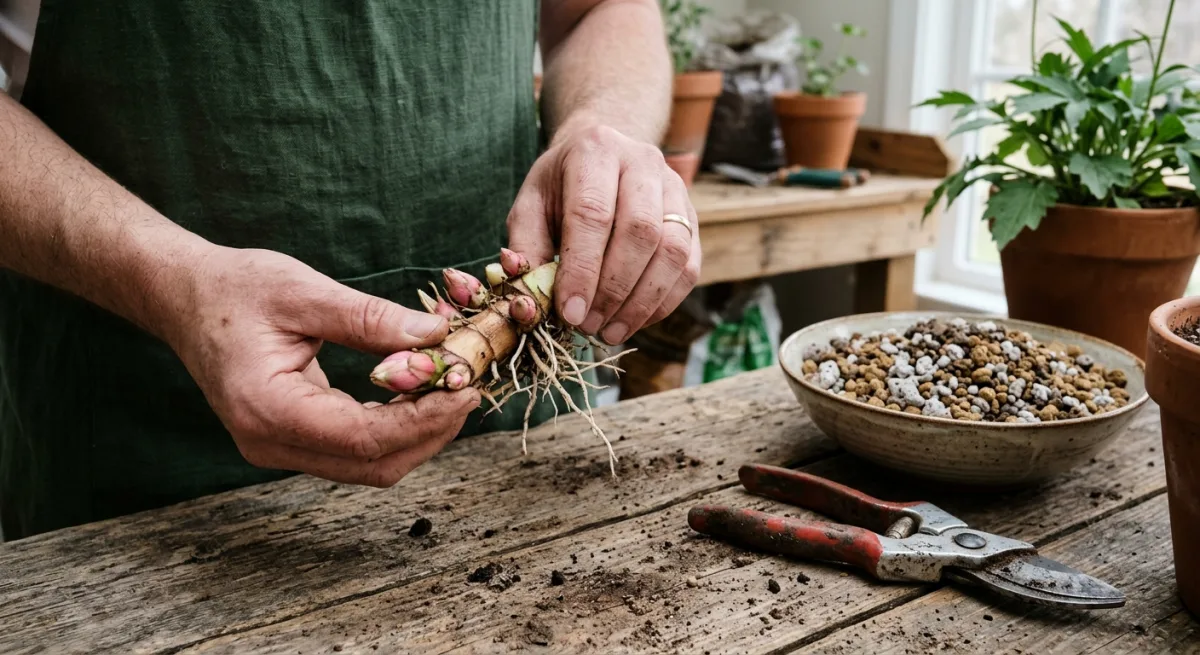
Propagating the Cutleaf Coneflower typically takes two pathways: seed germination and vegetative crown division. To maintain the purity of rare selections, compact forms, or the double pom-pom phenotype of 'Hortensia', vegetative division is strictly required, as seed-grown offspring consistently revert to the wild single-whorled form.
Rhizome Division Protocol (The Gold Standard):
- Perform this procedure during dormancy in early spring (just as crown buds show signs of swelling) or in late autumn after the blooming cycle has concluded and stems have died back.
- Carefully excavate the primary root mass. Rinse away adhering soil using a gentle jet of water to clearly map the interlinked rhizome nodes and dormant crown eyes.
- Using a flame-sterilized scalpel or grafting knife, divide the crown into stout 8–10 cm rhizome segments, ensuring each piece possesses at least two prominent, healthy buds and an ample cluster of fibrous anchor roots.
- Coat the raw cut surfaces with powdered elemental sulfur or micronized activated charcoal to bar pathogen entry, then rest the divisions in a shaded, well-ventilated location for 2 hours to initiate protective callusing.
- Plant horizontally into the prepared mineral substrate, burying the dormant crown eyes approximately 2 to 3 cm below the surface, and saturate gently with an initial watering.
Seed Propagation and Cold-Moist Stratification:
The achenes of the wild botanical species exhibit endogenous embryo dormancy. Sowing raw seed directly into warm soil results in sporadic germination rates below 15%. To overcome this dormancy, blend the achenes with damp silica sand or vermiculite inside a sealed polyethylene bag and subject them to cold-moist stratification at +4°C (39°F) in a refrigerator for 6 to 8 weeks. This chilling regimen mimics natural winter conditions, degrading internal abscisic acid (germination inhibitor) concentrations. Once transferred to an environment of 20–22°C (68–72°F), uniform emergence follows within 10 to 14 days.
6. Collector Best Practices: Containment, Sizing, and Pathogen Prevention
To integrate Rudbeckia laciniata harmoniously into a curated perennial border or botanical pavilion without it overwhelming its neighbors, apply these high-level horticultural disciplines:
- Rhizome Barrier Installation: When establishing this species in garden beds, sink a heavy-duty, high-density polyethylene (HDPE) root barrier at least 40 cm deep around the perimeter of the clump. This barrier arrests lateral underground runners, preventing the plant from wandering into adjacent plantings and channeling its energy into towering central bloom stalks.
- The Chelsea Chop (Stature & Lodging Management): If you want to bypass the need for exterior staking and keep stems well under 2 meters, practice the 'Chelsea Chop' in late May or early June by cutting all vegetative stems back by one-third. This deliberate pruning shocks the apical dominance, stimulating lateral branching, producing sturdier stems, and multiplying terminal flower heads.
- Powdery Mildew (Erysiphe cichoracearum) Defense: Like many members of the Asteraceae, Cutleaf Coneflower can fall prey to powdery mildew during stagnant, humid weather with poor air circulation. Avoid overhead evening irrigation, strip affected lower foliage cleanly, and apply preventative foliar sprays of dilute potassium bicarbonate (3 g/L) or cold-pressed organic neem oil emulsions every 14 days.
- Systematic Deadheading: As primary blooms fade, excise spent flower heads down to the nearest leaf axil before seed set occurs. This simple step prevents unwanted self-seeding while redirecting metabolic resources into a continuous flush of late-season secondary blossoms.


Reader Reviews & Comments 3 Reviews
Julian Montgomery
Hannah Sterling
Dr. Beatrice Vance
Leave a Review & Rating
Share your plant care tips, experiences, or questions with our succulent community.