






Across the vast plains of Namaqualand and the Great Karoo along the border of South Africa and Namibia, all that meets the eye under the scorching sun at first glance is a sea of white quartz stones. Yet, if you kneel down and peer closely at the desert floor, you will discover tiny tentacles cloaked in silvery scales expertly camouflaged among the pebbles, anchored by an imposing subterranean tuber. This ancient marvel is Avonia quinaria (recently reclassified under Anacampseros quinaria), one of the most extraordinary caudiciform gems in the succulent kingdom. Welcoming this desert jewel into a pot at home is far more than routine indoor gardening—it is serving as guardian to a masterpiece of evolutionary adaptation millions of years in the making.
When most succulent enthusiasts encounter Avonia quinaria for the first time, they liken it to a miniature sea anemone or a cluster of silvery hatchling serpents. Surviving in its natural habitat by keeping up to ninety percent of its body safely nestled beneath the earth, this remarkable plant holds the delicate equilibrium of bone-dry winters and blistering summers within its cells. If you hope to nurture this prized specimen in your collection without succumbing to rot, preserving its compact silhouette and coaxing out its breathtaking, silky blossoms, you must listen closely to the whispers of the Karoo's stony soils.
1. Botanical Identity and Morphological Characteristics
Belonging taxonomically to the family Portulacaceae (or Anacampserotaceae under modern revisions), Avonia quinaria is primarily divided into two celebrated subspecies: subsp. quinaria, which unfurls blooms in luminous pink and magenta tones, and subsp. alstonii, renowned for its pristine white to pale ivory blossoms. The plant's most striking morphological feature is its depressed, flattened caudex (a woody water-storing tuber) hidden below the soil surface, reaching anywhere from 5 to 10 centimeters in diameter. In habitat, this caudex functions as a vital subterranean fortress, securely storing moisture and metabolic nutrients through periods of relentless, prolonged drought.
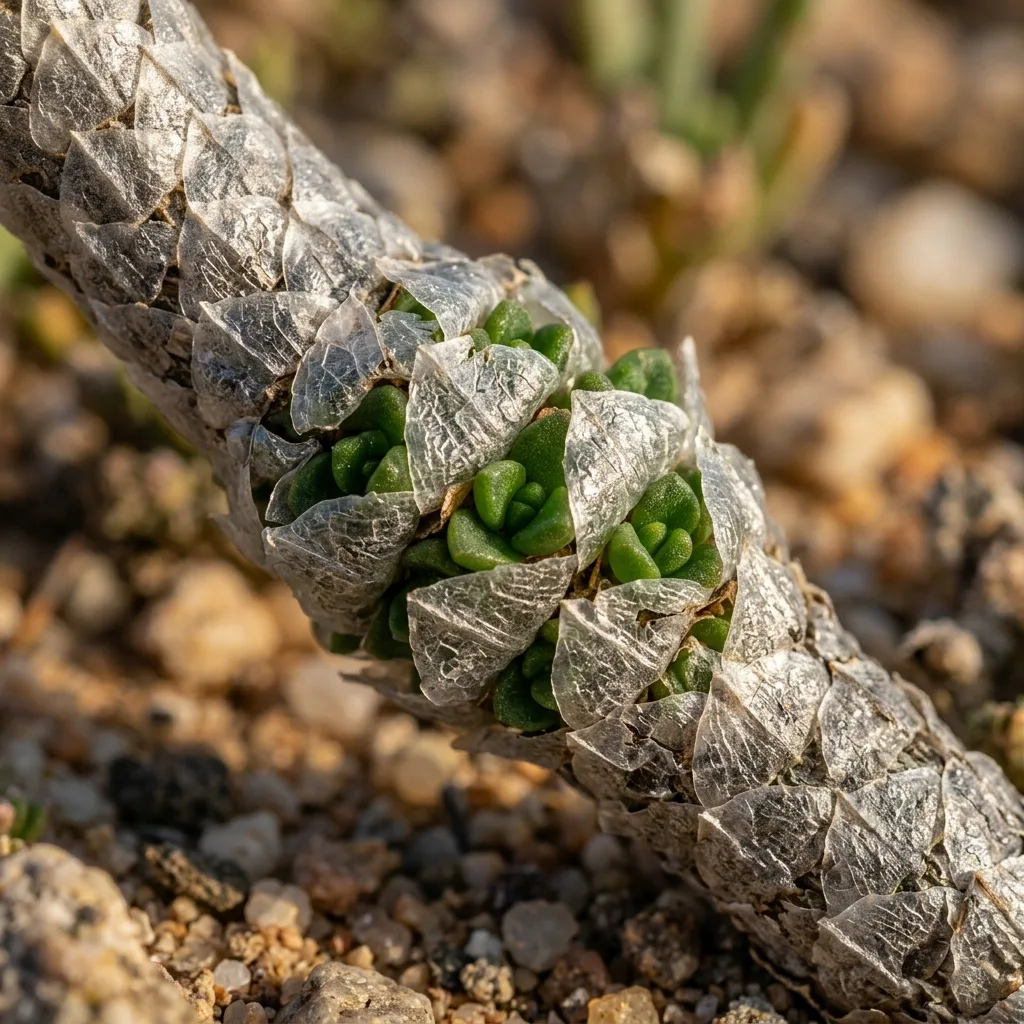
The slender shoots radiating from the apical crown of the caudex are an authentic wonder of nature. Rarely exceeding 2 to 3 centimeters in length, these miniature branches are entirely shingled with papery, parchment-like silvery stipules (modified scale-like leaves). These reflective scales act as a sophisticated biological shield, defending the microscopic, chlorophyll-rich true green leaves concealed beneath from punishing UV radiation. Much like the protective farina wax coating found on other desert succulents, these stipules form the plant's bespoke sunscreen and thermal insulation blanket. By drastically curbing transpiration even under unrelenting sun exposure, the plant optimizes its Crassulacean Acid Metabolism (CAM) photosynthetic pathways without squandering a single drop of hydration.
2. Light Requirements and Indoor Positioning
Avonia quinaria is an uncompromising sun worshipper with zero tolerance for deep shade. It evolved in shadeless desert sweeps, cradled among stark quartzite gravel beds. Deprived of adequate solar radiation, an Avonia will stretch unnaturally between its papery scales (etiolation), losing its innate compact geometry as its silvery branches turn frail, thin, and disfigured.
Indoors, the premier placement for this species is right up against an unblocked south- or southwest-facing window sill that basks in abundant direct morning and afternoon sunlight. During the most blistering afternoons of midsummer, ensuring gentle, open-air ventilation is essential to avoid the greenhouse glass acting as a magnifying lens that overheats the caudex. Keep in mind: this desert gem craves not just luminous brightness, but buoyant, moving fresh air. In the winter months, a cool yet intensely bright window perch gently nudges the specimen into its restorative physiological dormancy.
3. Watering Discipline: The 'Soak and Dry' Protocol
The single most lethal mistake an Avonia quinaria grower can commit is treating it like a standard houseplant on a rigid calendar schedule. Pouring water onto succulents at frequent intervals is not an act of devotion; it suffocates the root system, essentially drowning delicate capillary hairs. Avonia's swollen caudex consists of parenchymatous, sponge-like water storage tissues that can fall prey to opportunistic fungal pathogens within hours of being waterlogged.
Our baseline rule is categorical: never water until the substrate has completely dried out from top to bottom. During the active growing periods of spring and early autumn, the tactile resilience of the caudex is your most reliable barometer. When the caudex feels slightly yielding to gentle side pressure, or the branch tips take on a subtle, puckered look, soak the pot deeply until water runs freely through the drainage holes. Promptly empty any standing water from the saucer underneath. Allowing the roots to remain surrounded by damp soil for more than 24 hours is an open invitation to irreversible root rot.
In the sweltering zenith of summer (above 35°C / 95°F) and during the chilling depths of winter, the plant slips into semi- or full dormancy. During these intervals, suspend deep watering almost entirely. Limit moisture to a sparse, targeted spoonful around the outer root perimeter once a month simply to prevent the caudex from completely shriveling or desorbing its root tips.
4. Ideal Soil Substrate and Pot Selection
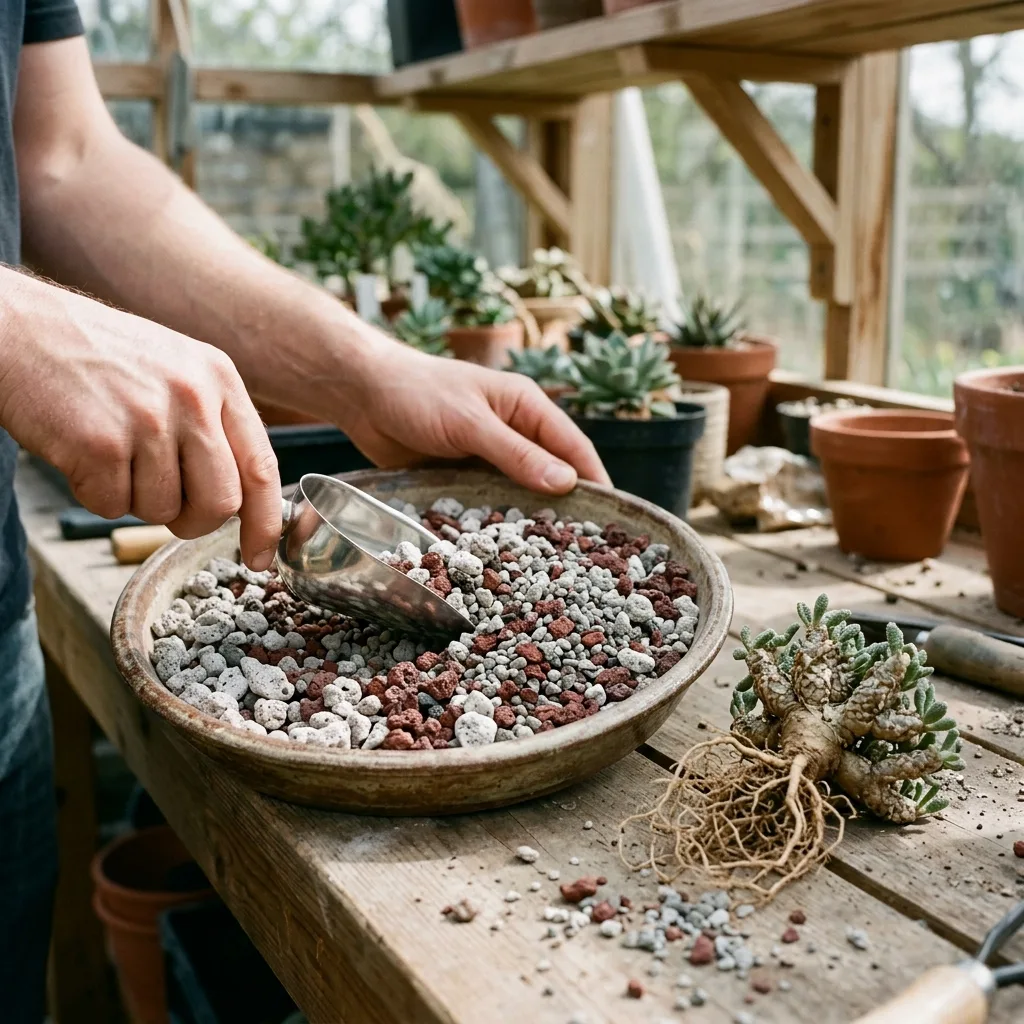
Commercial cactus and succulent potting mixes right out of the bag are utterly unsuitable for Avonia quinaria; they harbor far too much moisture-retentive peat and dense organic matter. We must deliberately recreate the barren, fast-draining matrix of quartz and granite gravel typical of its native Karoo ecosystem. At least 80% to 90% of your potting medium must consist purely of coarse, porous, inorganic minerals.
| Component | Ratio (%) | Botanical Function |
|---|---|---|
| Pumice (2-4 mm grit) | 40% | Creates air-filled porosity and maximizes root respiration. |
| Crushed Lava Rock (Scoria) | 25% | Delivers structural mineral trace elements; sheds water rapidly. |
| Zeolite or Calcined Clay | 20% | Boosts cation exchange capacity (CEC) and absorbs metabolic toxins. |
| Coarse Quartz Sand / Grit | 10% | Emulates natural habitat gravel; accelerates downward drainage. |
| Screened Organic Cactus Soil | 5% | Provides minimal organic grip and micro-nutrients (keep strictly low). |
Regarding containers, unglazed terracotta is the undisputed champion thanks to its porous, breathable walls that allow moisture to evaporate laterally. Shallow ceramic staging pots with multiple large drainage holes are also excellent. Although Avonia's caudex is almost entirely subterranean in the wild, home cultivation demands a crucial safety adjustment: leave the upper third to half of the caudex exposed above the soil level, and encircle the neck entirely with dry quartz top-dressing to prevent collar moisture accumulation.
5. Step-by-Step Propagation Techniques
Unlike fleshy Crassulaceae, Avonia quinaria cannot be propagated from leaf cuttings; its microscopic true green leaves lack the requisite meristematic tissue capable of organizing adventitious root initials. Propagation is achieved primarily through seed, and on exceedingly rare occasions, through specialized apical micro-grafting. Seed propagation remains the most rewarding and structurally sound method.
- Pollination: Blooms typically open in late spring or early summer, remaining receptive for just a fleeting few hours in the mid-to-late afternoon. Use a fine, soft sable paintbrush to delicately transfer powdery pollen from the anthers to the receptive stigma lobes.
- Seed Harvesting: If fertilization is successful, tiny seed capsules will mature amidst the stipules within several weeks. Once the capsule turns dry and papery, collect the minuscule seeds immediately and sow them promptly, as Avonia seed viability declines rapidly over time.
- Seedbed Preparation: Prepare a sterilized flat containing fine, sifted pumice and quartz sand. Scatter the dust-like seeds across the surface; do not bury them under soil, as they require light to break dormancy and trigger germination.
- Moisture and Heat Management: Cover the propagation dish with a clear humidity dome, sustaining around 70% relative humidity and steady temperatures between 22°C and 26°C (72°F-79°F). Tiny emerald spheres will emerge within 4 to 8 days. Once germinated, gradually ventilate the container to eliminate fungal damping-off risks.
6. Common Pathogens, Pests, and Treatments
The foremost threat to this species is overzealous care—namely, overwatering. Caudex rot, caused by fungal pathogens such as Fusarium or Phytophthora, typically begins silently beneath the soil line. If you gently touch the caudex and detect a spongy softness, collapse, or foul discoloration, act without delay: unpot the plant, excise every trace of decayed tissue with a flame-sterilized scalpel, dust the exposed flesh generously with sulfur powder or ground cinnamon, and allow it to callous in dry shade for a full week before setting it into pure dry pumice.
Among insect pests, mealybugs (Pseudococcidae) represent the most insidious menace. Their white, waxy secretions blend seamlessly into the plant's silvery papery scales, making infestations hard to spot with the naked eye. Regular inspections with a jeweler's loupe are paramount. If discovered, isolate the specimen and spot-treat the pests using a fine artist's brush dipped in 70% isopropyl alcohol, keeping the plant out of intense sunlight until dry. For systemic infestations, apply a root-drench systemic insecticide during the active growth flush.
7. Seasonal Care Calendar and Horticultural Notes
Avonia quinaria's annual growth rhythm is tied closely to the turn of the seasons. In spring, when ambient temperatures consistently rise above 18°C (64°F), the specimen wakes from rest. This is the moment to administer the season's first deep soak, supplemented once a month with a dilute, quarter-strength, low-nitrogen, high-potassium cactus fertilizer.
During the scorching heart of midsummer, the plant naturally downshifts its cellular respiration to preserve internal fluids; cease all fertilization during this brief summer slowdown and space out waterings cautiously. Autumn brings a brisk secondary growth flush as daytime heat mellows. By winter, relocate the plant to a crisp, bright, dry conservatory or cool indoor room held at around 8°C to 12°C (46°F-54°F). This chilly, arid winter rest is the physiological catalyst that triggers vigorous flower bud differentiation come spring.


Reader Reviews & Comments 3 Reviews
Julian Vance
Arthur Pendelton
Clara Hensley
Leave a Review & Rating
Share your plant care tips, experiences, or questions with our succulent community.