






On their evolutionary journey from the blistering sands of the Sonoran Desert to our living room windowsills, cacti have engineered some of the most fascinating defense architectures in the plant kingdom. Over millions of years of adaptation, sacrificing broad foliage to forge sharp, geometric suits of armor, these ancient botanical marvels inspire equal parts awe and trepidation. When a rogue spine pricks your finger during routine watering or repotting, triggering hours of throbbing irritation and erythema, the immediate question arises naturally: 'Could this cactus spine be poisonous?'
Whenever I chat with fellow growers walking through our greenhouses, this question comes up time and time again. The answer reveals a captivating story resting at the crossroads of plant morphology and phytochemistry. Are these sharp sentinels linked to biological venom glands like a bee's stinger or a scorpion's tail, or is our body's sharp reaction an entirely mechanical and microbiological ordeal? Pour yourself a cup of coffee, and let us peer into the microscopic realm of cactus spines to uncover how to protect your skin while nurturing resilient, thriving plants.
1. Taxonomic Identity, Areole Anatomy, and Spine Morphology
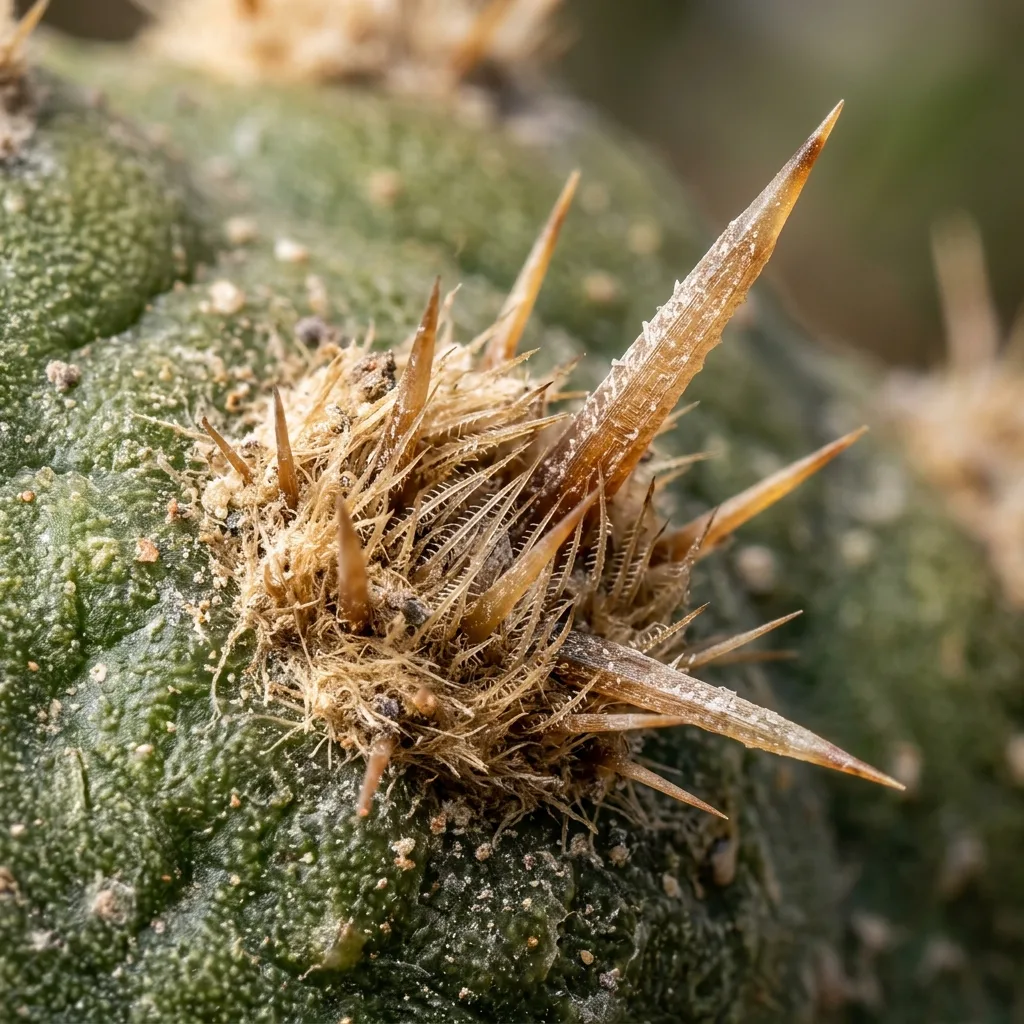
The single definitive botanical signature setting the family Cactaceae apart from all other succulents is the presence of specialized vegetative growth centers called areoles. For a specimen to be scientifically classified as a true cactus, it must possess areoles; it is from these miniature, felted cushions that spines, floral buds, and new offsets emerge. Morphologically, cactus spines are deeply modified, dormant leaves that underwent millions of years of evolutionary metamorphism to reduce transpiration (water loss via stomata) to virtually zero while shielding the green photosynthetic stem from solar UV radiation.
Now for the foundational botanical reality: Members of the true Cactaceae family possess absolutely zero venom glands, toxin ducts, or chemical poisons within their spines. Spines are primarily biologically inert, mechanical structures constructed of hardened cellulose, structural lignin, and microcrystalline silica deposits. However, two significant pitfalls frequently confuse collectors. The first is found in the genus Opuntia (prickly pears), which produce microscopic, hair-like barbed bristles known as 'glochids.' When glochids penetrate human epidermis, their backward-facing micro-barbs anchor deep into the dermis and snap off readily, sparking an aggressive foreign-body granuloma that feels precisely like a stinging, venomous burn. The second pitfall involves succulent lookalikes from the spurge family (Euphorbiaceae), such as Euphorbia trigona (African milk tree). While often called cacti, Euphorbias bleed a milky white latex sap when nicked, rich in phorbol esters and complex diterpenes that induce severe chemical dermatitis, blistering, and potential corneal ulceration.
2. Sunlight Exposure, PAR Levels, and Air Circulation
Developing rigid, dense, and heavily lignified protective spines requires immense photosynthetic energy and high levels of photosynthetically active radiation (PAR). In their native habitats, desert cacti evolve under 6 to 8 hours of intense, direct, unfiltered sunlight daily. When grown in dim settings, a cactus stretches desperately toward the nearest light source—a stress-induced deformation known in botany as etiolation. Etiolated cacti develop pale, spindly stems with sparse, soft, malformed spines and unnaturally wide areole spacing.
Indoors, an unobstructed south- or west-facing window is the undisputed gold standard for sun-loving species. However, during the height of summer, ambient thermal build-up behind unvented window glass can scald cellular plant tissue if airflow remains stagnant. Desert conditions are not merely hot; they are defined by persistent, drying breezes. Providing a gentle ambient air current in your indoor growing space keeps relative humidity from stagnating and encourages the plant to open its stomata comfortably at night to assimilate carbon dioxide via Crassulacean Acid Metabolism (CAM).
3. Watering Rhythms and the Indispensable Winter Dormancy Period
Flooding cacti and desert succulents with frequent watering is never an expression of love; it deprives the root rhizosphere of oxygen, systematically drowning delicate feeder roots. The thick, mucilaginous parenchyma tissue inside cactus stems retains water reserves engineered to sustain the plant across extended drought cycles. The golden irrigation guideline is absolute: never rewater until the entire substrate column has dried completely down to the bottom drainage holes. Insert a wooden skewer or moisture meter to the pot base; if you detect even a hint of moisture, postpone watering.
Equally vital to cactus physiology is honoring their natural winter dormancy. From November through late February, when daylight hours shorten, relocate your collection to a cooler room maintained around 8–12°C (46–54°F) and virtually suspend all watering. Forcing a cactus to remain in an overly heated, artificially lit room while continuing to water it prevents metabolic rest. The plant will produce weak, stretched winter growth and fail to initiate flower buds come spring. A cool, dry winter rest allows cell walls and spine tissue to fully mineralize and lignify, fortifying the plant against seasonal insect pests.
4. High-Porosity Mineral Substrates and Planter Physics
When a puncture wound from a cactus spine leads to a secondary bacterial infection, the primary culprit is rarely the sterile spine tissue itself. Instead, the real culprits are anaerobic bacteria, micro-fungi, and organic contaminants coating the spine from swampy, decomposed soil mixes. Dense potting soils high in uncomposted peat hold excessive water, suffocating root xylem vessels, instigating basal rot, and turning the lower areoles into petri dishes for pathogens. An authentic cactus substrate must not retain standing water; it must rapidly channel water through while locking in restorative oxygen pockets.
The potting formulation detailed below establishes the optimal horticultural balance of structured drainage and mineral aeration for home cultivation:
| Substrate Component | Recommended Ratio (%) | Horticultural Function |
|---|---|---|
| Horticultural Pumice (3–6 mm) | 40% | Maximum macroporosity, root aeration, and moisture regulation |
| Crushed Lava Rock / Zeolite | 25% | Trace mineral release, high cation exchange capacity (CEC), drainage structure |
| Coarse Quartz Sand / Grit | 15% | Prevents compaction and increases water percolation speed |
| Sifted Quality Peat / Leaf Mold | 20% | Baseline nutrient buffer and minimal organic moisture holding |
Regarding container choices, unglazed terracotta remains peerless. The natural micro-porosity of unglazed clay allows root balls to breathe and moisture to evaporate evenly through the pot walls. Non-porous plastic or decorative glazed containers trap moisture indefinitely, creating a prime environment for pathogenic root decay.

5. Nutrition Schedules and Inducing Spectacular Blooms
Too many casual growers assume cacti are merely static, prickly green cylinders. In truth, under precise cultivation, they produce some of the most vibrant, iridescent blooms on earth. The primary trigger for floral initiation is the cold, arid winter rest period discussed earlier. Once spring arrives and temperatures rise in March, wake the plant with a thorough watering paired with a specialized low-nitrogen, high-phosphorus, and high-potassium fertilizer (such as an NPK 5-10-10 or 4-8-12 formulation diluted to half-strength).
Standard houseplant fertilizers packed with high nitrogen are disastrous for desert cacti. Excessive nitrogen sparks sudden, bloated, watery cell elongation. The cellular walls stretch thin, spines turn papery and soft, and the epidermis becomes highly susceptible to micro-fissures and opportunistic fungi rather than setting flower buds. Robust spine development and durable bloom stalks depend directly on ample potassium and bioavailable silicates.
6. Propagation, Sterile Cuttings, and Grafting Techniques
Multiplying your cactus collection without injuring yourself or your mother stock requires surgical discipline. When detaching vegetative offsets (pups) or taking stem cuttings, always use a high-carbon steel blade or scalpel sterilized with 70% isopropyl alcohol. Rather than grasping spines with bare hands or thin gloves, cradle the plant using silicone kitchen tongs, thick leather welding gauntlets, or multiple layers of folded newspaper strips.
The non-negotiable step in rooting cactus cuttings is allowing complete 'callus' formation. Never plant a freshly cut stem directly into moist soil. Rest the cutting horizontally in a warm, dry, shaded spot with good airflow for 5 to 14 days until the exposed cut develops a firm, leathery, whitish cork layer. Planting uncallused tissue exposes the moist, sugary storage parenchyma to damp soil microbes, leading to systemic rot within hours. Chlorophyll-deficient mutant specimens, such as the vibrant red Gymnocalycium mihanovichii (Moon Cactus), must be apical-grafted onto a vigorous, photosynthetic Hylocereus rootstock to survive long-term.
7. Mitigating Rot and Managing Puncture Infections
When a deep puncture from a cactus spine develops an inflamed pustule or abscess on your hand, the biological cause is usually introduced microflora such as Staphylococcus aureus, environmental Clostridium tetani, or opportunistic fungal inoculants like Sporothrix schenckii. These soil-dwelling organisms also pose immense danger to the plant itself. If fungal water molds like Fusarium or Phytophthora enter the cactus stem via overwatering wounds or broken areoles, they trigger a rapid, gelatinous collapse that spreads from the vascular cylinder upward.
If you discover a soft, discolored, translucent patch near the base of your cactus, immediate emergency surgery is required. Using a flame-sterilized blade, slice the stem cleanly 1 to 2 inches above the rotten zone into completely healthy tissue. Inspect the cross-section to confirm there are no brown or orange vascular staining streaks. Dust the clean wound generously with sulfur powder or ground cinnamon (a natural antifungal), allow it to callus thoroughly, and re-root it in our mineral-heavy potting mix. If you suffer a spine puncture yourself, immediately wash the area thoroughly with warm water and antibacterial soap, dislodge every spine fragment under bright light using fine tweezers, and apply an antiseptic ointment.


Reader Reviews & Comments 4 Reviews
Eleanor Vance
Marcus Holloway
Clara Sterling
Julian Thorne
Leave a Review & Rating
Share your plant care tips, experiences, or questions with our succulent community.