






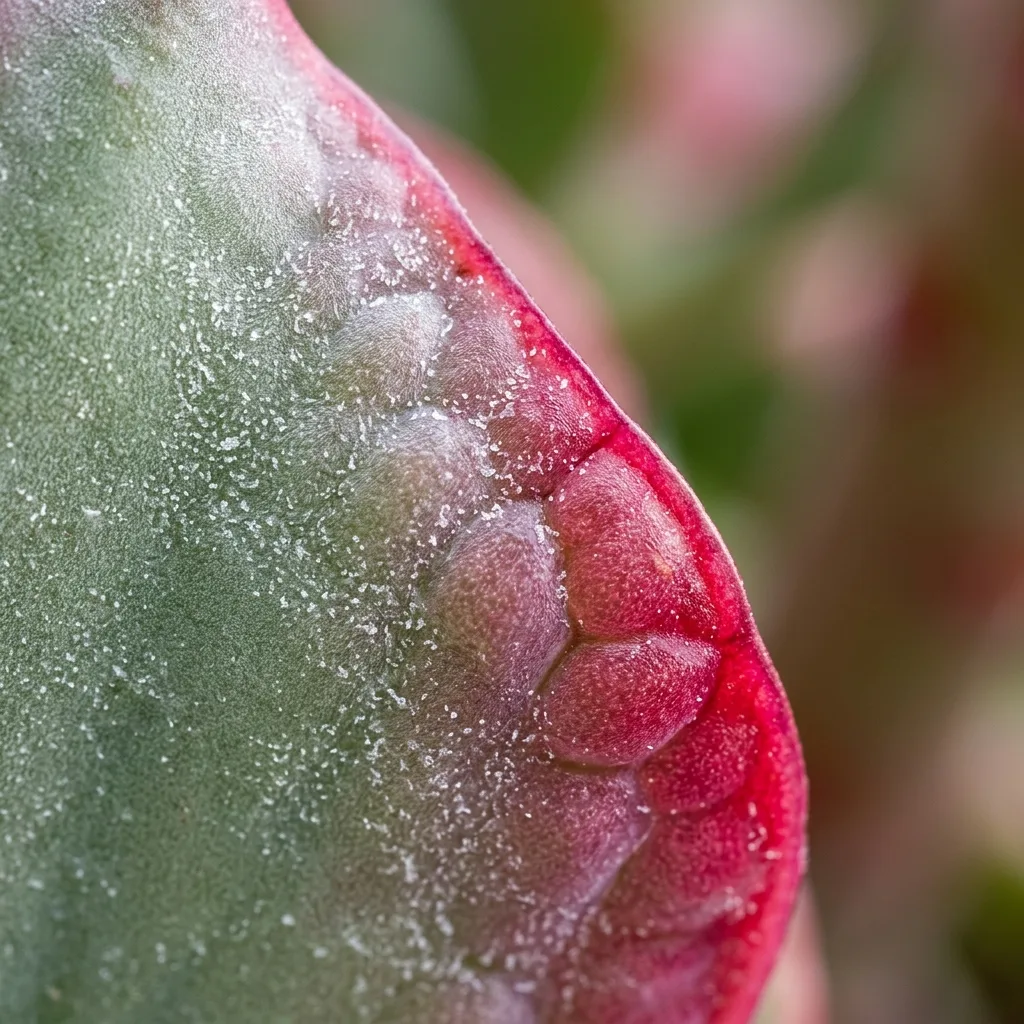
Have you ever brought home a succulent that gleamed innocently with emerald-green foliage, only to watch it metamorphose over the following months into ruby crimson, dusky lavender, or fiery bronze? This striking explosion of pigment is not a symptom of disease; rather, it is one of the plant kingdom's most brilliant cellular defense and adaptation mechanisms. Developed over millenia by their wild ancestors across the unforgiving expanse of South Africa's Karoo Desert or the sheer canyon cliffs of Mexico, this living shield transforms your sunny windowsill into an ever-changing canvas of organic art.
Succulents deploy an ingenious biochemical strategy to safeguard their delicate internal water reservoirs beneath scorching sunlight and relentless drought. When the serene green of chlorophyll steps back to reveal the smoldering hues of anthocyanins, your succulent is effectively donning its own bespoke cellular sunglasses. As a greenhouse grower and horticulturist, I have monitored this breathtaking metamorphosis across hundreds of diverse taxa. Let us part the botanical curtain together and explore the science governing this kaleidoscopic transformation.
1. Botanical Identity and Morphological Characteristics
Color shifts in succulents depend upon the dynamic redistribution and synthesis of plastidial and vacuolar pigments at the cellular level. During standard, vegetative growth phases, the prevailing intracellular pigment is chlorophyll, occupying the heart of the photosynthetic apparatus. However, the moment the plant detects external stressors—such as high-flux photon irradiance, significant diurnal temperature drops, or acute water withholding—endogenous cytoprotective cascades immediately kick into gear.
Throughout this adaptive shift, three primary pigment groups command the stage:
- Anthocyanins: These water-soluble flavonoid pigments, sequestered within the cell vacuole sap, synthesize pink, scarlet, deep purple, and rich burgundy hues. They serve as photo-protective optical filters, shielding sensitive chloroplasts from photoxidative damage under high UV radiation.
- Carotenoids: Stored within specialized plastids, these compounds yield vibrant yellows, brilliant oranges, and warm amber undertones. Typically masked beneath dominant green wavelengths, they emerge into view as chlorophyll synthesis decelerates.
- Chlorophyll Degradation: When a succulent enters seasonal dormancy or deliberately slows down light-harvesting operations under excessive irradiation, its green pigment fades, allowing underlying warm hues to radiate through.
This morphological response is exceptionally pronounced in genera such as Echeveria, Sedum, Crassula, and Kalanchoe. The structural volume of their fleshy, water-storing leaves lends these pigments genuine three-dimensional depth, displaying mesmerizing, luminous color gradients.
2. Light Requirements and Indoor Positioning
The primary environmental catalyst needed to stimulate radiant reds, pinks, and purples is direct, full-spectrum sunlight. In under-lit, ambient indoor environments, a succulent responds by maximizing chlorophyll concentrations to capture whatever meager photon energy is available. As a result, the plant turns entirely uniform green and begins to etiolate—stretching upward awkwardly on weak, elongated stems and entirely forfeiting its compact rosettes.
To activate true chromatic transformation (scientifically referred to as controlled stress pigmentation), your succulent needs an absolute minimum of 5 to 6 hours of unfiltered or lightly sheer-filtered morning-to-midday sunlight every day. South-facing and east-facing windowsills represent premier microclimates for this purpose. However, take care: sudden, abrupt transfers from dim rooms into scorching direct sun can cause permanent, chalky-white or scorched-brown sunburn lesions. Always acclimatize your plants gradually over two to three weeks.
3. Watering Discipline: The 'Soak and Dry' Method
Irrigation frequency and vibrant epidermal coloration stand in a strict, inverse relationship. A succulent indulged with perpetual soil moisture and constant root hydration stays comfortably locked in active vegetative growth, pumping its cells full of lush chlorophyll and remaining flatly green. Constantly saturating a succulent is not an act of kindness; it effectively suffocates delicate root hairs by depriving the rhizosphere of oxygen.
For a specimen to unveil those jaw-dropping magenta, wine-red, and lavender undertones, it must experience moderate, controlled moisture depletion. Implement the rigorous 'Soak and Dry' protocol: once the substrate has dried out completely from the top crust down to the drainage holes, resist the urge to water right away. Wait until the lowest leaves lose their firm turgidity and show a faint, flexible softness (typically 4 to 7 days post-dryout). Then, thoroughly soak the root zone until water streams generously from the pot's bottom drainage holes. This calculated drought stress significantly concentrates intracellular sugars and anthocyanins.
4. Ideal Soil Formulation and Pot Selection
Applying controlled stress safely demands an exceptionally porous, rapidly draining substrate. Heavy, peat-laden commercial soils retain persistent pockets of water, turning what was intended as gentle conditioning stress into a swift outbreak of fungal root rot. An open, mineral-dense root matrix allows rapid moisture evacuation and lets outdoor day-to-night temperature drops communicate directly with the root ball.
| Substrate Component | Ratio (%) | Botanical Function & Horticultural Benefit |
|---|---|---|
| Pumice (3-5 mm grain) | 40% | Creates aerated macropores, preventing root suffocation and rot. |
| Lava Rock / Zeolite | 25% | Releases vital trace minerals and enhances structural pigmentation. |
| Coarse Horticultural Grit / Perlite | 15% | Ensures instantaneous drainage and rapid excess water exit. |
| Organic Succulent Compost / Coir Peat | 20% | Provides minimal, non-burning nutrient retention and structural anchorage. |
When selecting containers, always favor unglazed, high-fired terracotta pots over plastic or glazed ceramics. The porous clay walls naturally evaporate moisture outward through their sides, re-creating a semi-arid, breathable desert micro-climate.
5. Step-by-Step Propagation Techniques
Propagating intensely colored, healthy succulents is straightforward when approached with scientific precision:
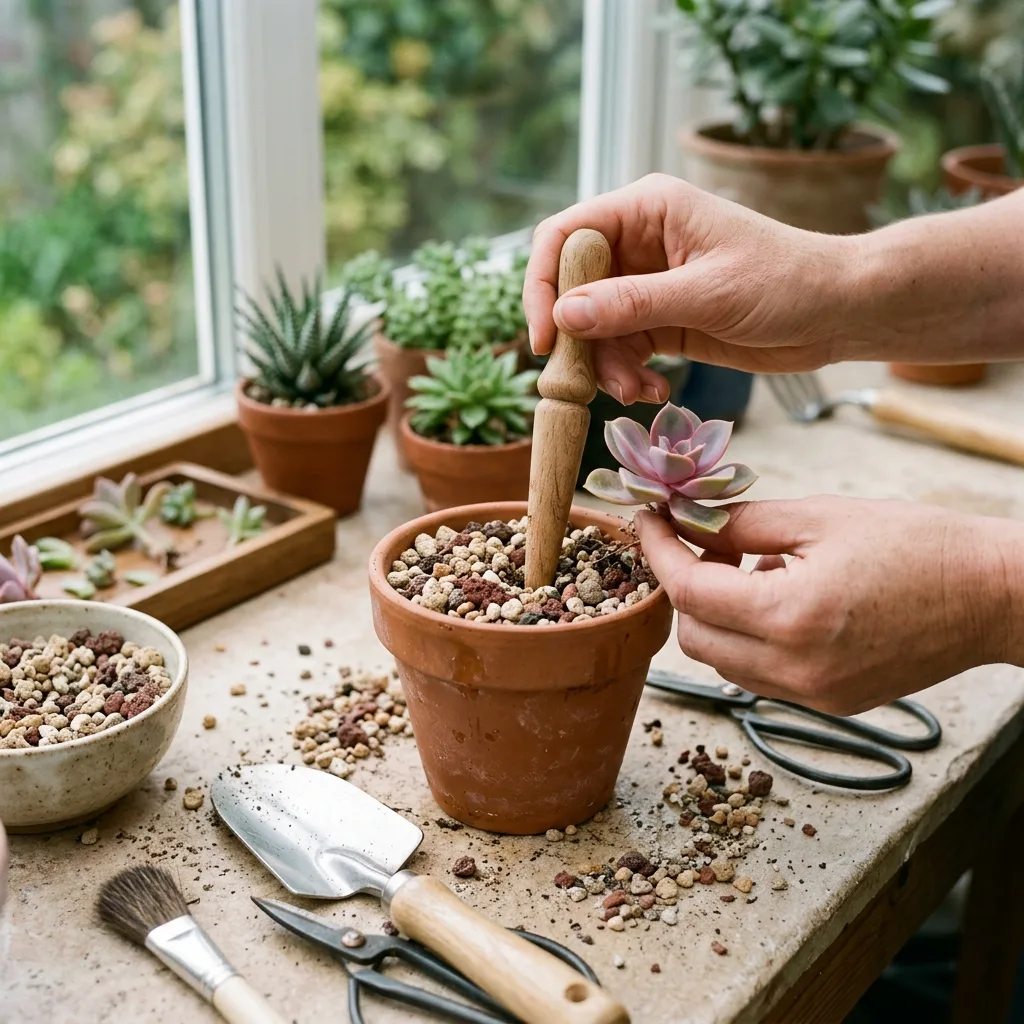
- Leaf Selection: Identify a healthy, plump, well-pigmented leaf along the lower-to-middle tier of the rosette. Gently cradle the leaf and twist laterally back and forth until it snaps away cleanly. The base must remain entirely intact; jagged or torn leaf tissues will fail to form callus tissue.
- Callus Formation: Rest harvested leaves on a dry, breathable surface in an airy, brightly lit room shielded from scorching direct midday sun for 3 to 4 days. Planting before the wound has developed a protective, suberized callus invites soil-borne pathogenic fungi directly into the vascular tissue.
- Surface Placement: Lay the callused leaves flat on top of a lightly moistened, mineral-heavy rooting substrate without burying them beneath the surface.
- Rooting and Pigment Emergence: Within 2 to 3 weeks, microscopic pink rootlets and miniature, richly tinted rosettes will sprout from the leaf base. The emerging pup will draw all its hydration and structural nutrients directly from the mother leaf until the parent tissue naturally withers away.
6. Common Diseases, Pests, and Treatments
A vital skill when caring for stress-colored succulents is discerning natural chromatic changes from the early stages of disease:
- Sunburn (Thermal Necrosis): Manifests as dull, bleached-white or harsh, leathery-brown crusts exclusively on sun-facing leaf planes. This bears no structural resemblance to natural anthocyanin flushing. Treatment: Immediately relocate the plant to dappled or indirect light. Do not tear off the damaged leaves; allow the plant to reabsorb what resources it can.
- Root Rot (Pythium / Phytophthora): Identified by translucent, yellowing, water-logged leaves that feel jelly-soft and drop at the slightest touch, often accompanied by a blackened stem base. Treatment: Unpot the plant immediately, amputate all soft, rotted root and stem matter using a sterile blade, air-dry for 3 days, and repot into fresh, bone-dry mineral soil.
- Mealybugs (Pseudococcidae): Look for cottony, white, web-like nests tucked deep within rosette crevices or along root-stem nodes. Treatment: Spot-treat mechanically with cotton swabs dipped in 70% isopropyl alcohol, followed by an organic horticultural neem oil drench or targeted systemic insecticide if infestations persist.
7. Seasonal Care Calendar and Horticultural Insights
Succulents consistently achieve their most breathtaking, vibrant pigmentation during autumn and early winter. The horticultural driver here is the daily diurnal temperature swing: shifts spanning 10°C to 15°C (18°F to 27°F) between day and night. Sunny, temperate daylight followed by brisk, chill night temperatures down to 8°C–10°C (46°F–50°F) temporarily suppresses chlorophyll replenishment while maximizing anthocyanin production.
- Spring: The season of awakening. Color intensity may soften slightly as fresh green vegetative growth emerges. Gradually increase hydration and supply a diluted, low-nitrogen liquid cactus fertilizer.
- Summer: Guard plants against intense, stagnant midday heatwaves. During prolonged scorching spells, many varieties enter summer dormancy (estivation); reduce watering to prevent warm-weather fungal pathogens from attacking the root system.
- Autumn: The onset of the color show. Keep plants outdoor on balconies or patios where they can absorb cool night temperatures, provided there is zero risk of sub-zero freezing.
- Winter: Curtail watering significantly (once a month or hold off entirely for dormant varieties). Keep indoor plants immediately adjacent to your brightest, coolest windowpane so clear light and chilly glass keep their colors saturated.




Reader Reviews & Comments 3 Reviews
Eleanor Vance
Marcus Thorne
Clara Higgins
Leave a Review & Rating
Share your plant care tips, experiences, or questions with our succulent community.