






I can still hear that perennial question echoing through my greenhouse, asked almost without exception by friends stepping inside for the very first time: 'Rıfat, aren't succulents desert plants? Why did their leaves turn scorched and black under the direct midday sun?' This is precisely where botanical science parts ways with popular urban mythology. The term succulent does not designate a single plant species; it encompasses plants hailing from dozens of distinct botanical families and hundreds of microclimates, united merely by their capacity to store water within their tissues. An Echeveria clinging to limestone cliffs in the Mexican highlands and a Haworthia sheltered deep inside shaded rock crevices in South Africa cannot possibly react the same way to identical angles of solar radiation.
Direct sunlight is unfiltered irradiance that strikes plant tissue head-on, delivering intense photon flux density paired with penetrating infrared thermal waves. If the chloroplasts nestled within a succulent's cellular matrix are unconditioned for such an energetic onslaught, cellular degradation known as photo-oxidative stress immediately takes hold. In this guide, we will delve deeply into whether your succulent genuinely requires direct sunlight, unpack the magnifying lens effect of window panes, and teach you how to fluently decipher your plant's subtle light language.
1. Botanical Identity and Morphological Adaptations
To comprehend how succulents interact with light, we must first examine their evolutionary adaptations. The overwhelming majority of these plants perform CAM (Crassulacean Acid Metabolism) photosynthesis. This means they keep their stomata (microscopic epidermal pores) hermetically sealed throughout the blistering heat of the day to prevent transpirational water loss. They open them exclusively during the cool respite of the night to capture carbon dioxide, storing it safely as malic acid within their vacuoles. Once daylight returns, they break down this acid internally to complete the photosynthetic cycle behind closed doors.
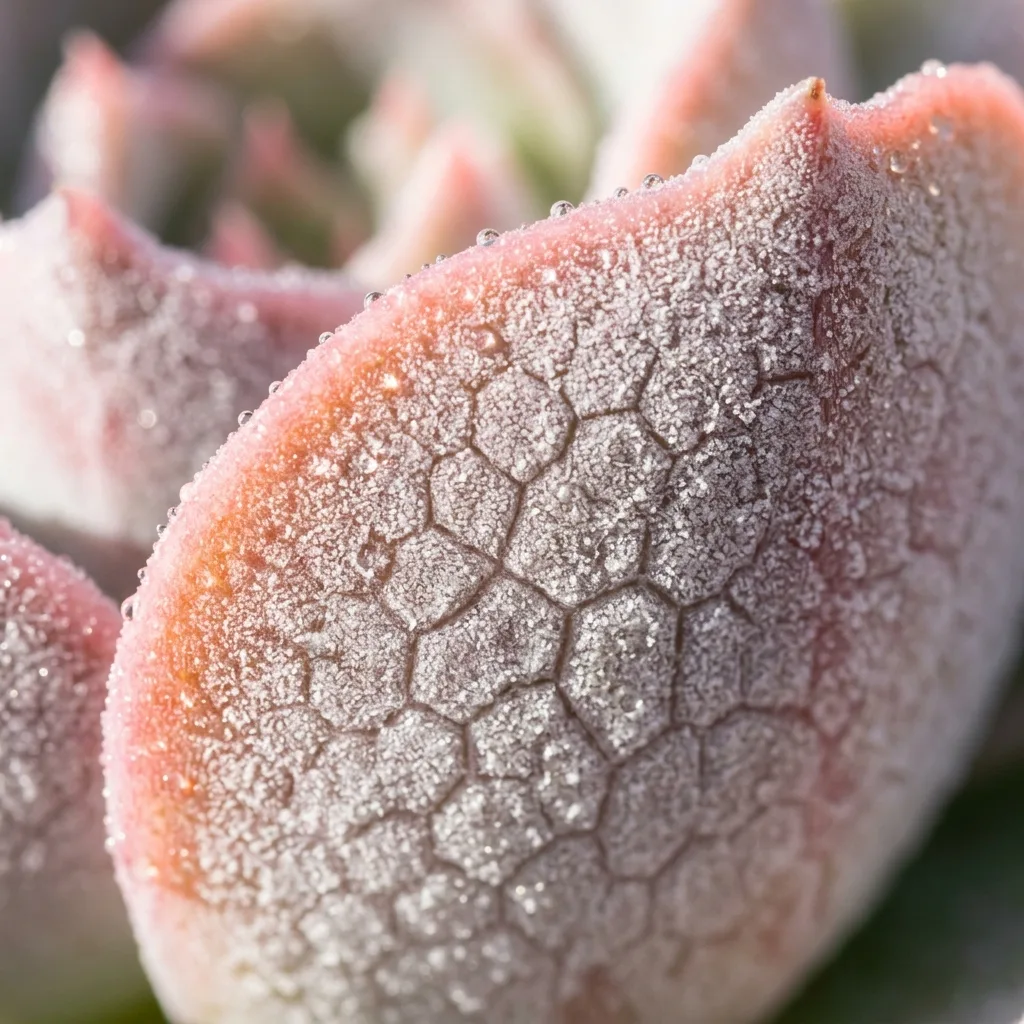
However, direct solar exposure delivers far more than raw energy for photosynthesis; it brings extreme surface heat. To disperse this thermal load and shield vulnerable cell membranes from ultraviolet radiation, certain genera produce a specialized epicuticular wax layer known as farina. Appearing as a silvery, glaucous, or powdery bloom, this coating is literally the plant's biological sunscreen. Other species deploy anthocyanin and carotenoid pigments, flushing their foliage with vibrant scarlet, deep violet, or bronze hues—an ingenious cellular defense mechanism engineered to reflect excess photons rather than absorb them.
2. Light Requirements and Indoor Placement Strategies
When categorizing succulent illumination levels, botanists rely on three baseline thresholds: Full Direct Sun (at least 6 hours of unobstructed outdoor sunlight daily), Bright Filtered Light (diffused sunlight filtered through sheer curtains or bright, open shade), and Partial Shade (gentle, low-angle early morning light). Indoors, south-facing windows offer the highest foot-candle and lux values, whereas unobstructed north-facing exposures often function as dim, energy-depleted dungeons for desert succulents.
A critical horticultural distinction must be drawn: an indoor spot right behind a glass pane is fundamentally different from unfiltered open-air sunshine. While modern double-glazed windows screen out a substantial portion of UV radiation, stagnant ambient air can turn the glass threshold into an inadvertent thermal trap, driving foliar temperatures to lethal extremes. Here is how common succulent genera break down by solar tolerance:
- Direct Sun Devotees (Require 5–6 hours of direct sun daily): Sedum, Graptopetalum, Sempervivum, and most columnar and desert cacti.
- Bright Filtered Light Seekers (Prone to intense solar scorching): The majority of cultivated Echeveria hybrids, Crassula ovata (Jade Plant), and Kalanchoe.
- Shade and Dappled Light Dwellers (Averse to direct midday rays): Haworthia, Gasteria, Sansevieria (Snake Plant), and epiphytic jungle cacti such as Schlumbergera (Holiday Cactus).
3. Watering Discipline: The 'Soak and Dry' Protocol
Light intensity and hydration kinetics are inextricably linked. Under direct, warm sunlight where CAM photosynthesis and metabolic processes accelerate, a succulent draws soil moisture through its vascular bundle into the stem to maintain cellular turgor and facilitate evaporative leaf cooling. Conversely, in deficient light, the plant's metabolic engine slows to a crawl; applying water during this dormant state deprives root hairs of oxygen, rapidly setting off anaerobic fungal rot.
The golden rule is straightforward: confirm that the potting substrate is bone dry all the way down to the base of the container before saturating the root ball thoroughly until water flows freely from the drainage holes. Never practice frequent, shallow sipping. Dribbling tiny amounts of water onto the soil surface does not demonstrate love; it starves root systems of atmospheric oxygen and slowly suffocates the plant. While direct summer sun demands regular deep drenchings, cloudy winter months or shaded placements necessitate spacing irrigations weeks apart.
4. Ideal Substrate Formulation and Container Dynamics
A succulent receiving optimal photon energy demands a root zone capable of rapid gas exchange. Dense, clay-heavy, organic-rich potting soils act like a thermal mud bath under hot sun, suffocating and parboiling fine root networks. Consequently, a porous, predominantly inorganic mineral substrate engineered for lightning-fast percolation is non-negotiable. Regarding containers, unglazed porous terracotta pots excel above all others: their breathable walls permit radial moisture evaporation, keeping the subterranean root zone cool even during high-heat spells.
| Substrate Component | Ratio (%) | Botanical Function & Root Health Contribution |
|---|---|---|
| Pumice (3–6 mm) | 40% | Creates continuous capillary oxygen pockets; resists compaction indefinitely. |
| Lava Rock / Zeolite | 25% | Micropores retain trace minerals while maintaining structural drainage paths. |
| Coarse Perlite | 15% | Reduces bulk density and facilitates unimpeded feeder root expansion. |
| Aged Cactus Peat / Coco Coir | 20% | Provides baseline organic cation exchange capacity and minimal root anchorage moisture. |
5. Step-by-Step Propagation Techniques
Managing light exposure is equally decisive during vegetative propagation. When propagating succulents via single leaf cuttings or terminal stem tip cuttings, tender embryonic cells must be strictly shielded from direct solar bombardment:
- Leaf Harvesting: Gently wiggle a healthy, turgid basal leaf from side to side until it snaps cleanly away from the stem axis with an audible click. The crescent-shaped leaf base must remain completely intact.
- Callus Formation: Rest harvested cuttings across a clean paper towel in a warm, dry, shaded spot with good airflow for 3 to 4 days. Planting raw, open wounds directly into moist substrate invites systemic bacterial invasion.
- Rooting in Dappled Light: Lay callused leaves flat on top of a shallow mineral mix. Keep them out of direct sunlight; provide bright, warm, diffused light until adventitious pink rootlets and tiny micro-rosettes sprout.
- Gradual Solar Introduction: Once the new plantlet has drawn down the mother leaf's reserves and established its own independent root network, slowly introduce it to mild early morning sun.
6. Common Physiological Disorders, Pests, and Remedies
Improper lighting conditions trigger two classic, diametrically opposed physiological disorders in succulents:
- Etiolation (Light Starvation): When light falls below compensatory thresholds, succulents elongate unnaturally, internodal spacing widens along anemic stems, rosette architecture collapses, and leaves turn dull pale green. Solution: Behead the stretched apex using a sterile razor blade to create a clean stem cutting, relocate the rooted stump to a higher-light position, and watch as compact lateral pups break along the bare nodes.
- Sunscald (Solar Sunburn): Unacclimated leaves exposed to sudden, ferocious sunlight exhibit bleached, chalky yellow patches that rapidly turn into dry, brown, or blackened necrotic lesions as cell walls collapse. Solution: Scorched epidermal tissue cannot regenerate; immediately move the specimen into dappled shade and care for it patiently until fresh, unaffected growth replaces the scarred leaves.
- Mealybugs (Pseudococcidae): Opportunistic pests prey on succulents weakened by extreme light stress, nesting in leaf axils as cottony white clusters. Dab them individually using cotton swabs dipped in 70% isopropyl alcohol and apply cold-pressed neem oil during evening twilight.
7. Seasonal Light Calendar and Expert Horticultural Rhythms
Spring (The Awakening): Beginning in March, start gently reintroducing indoor specimens to outdoor morning sun. As plants emerge from their winter dormancy, their cellular photosynthetic apparatus ramps up to peak efficiency. This is the optimal window for root pruning, repotting, and balanced micro-nutrient fertilization.
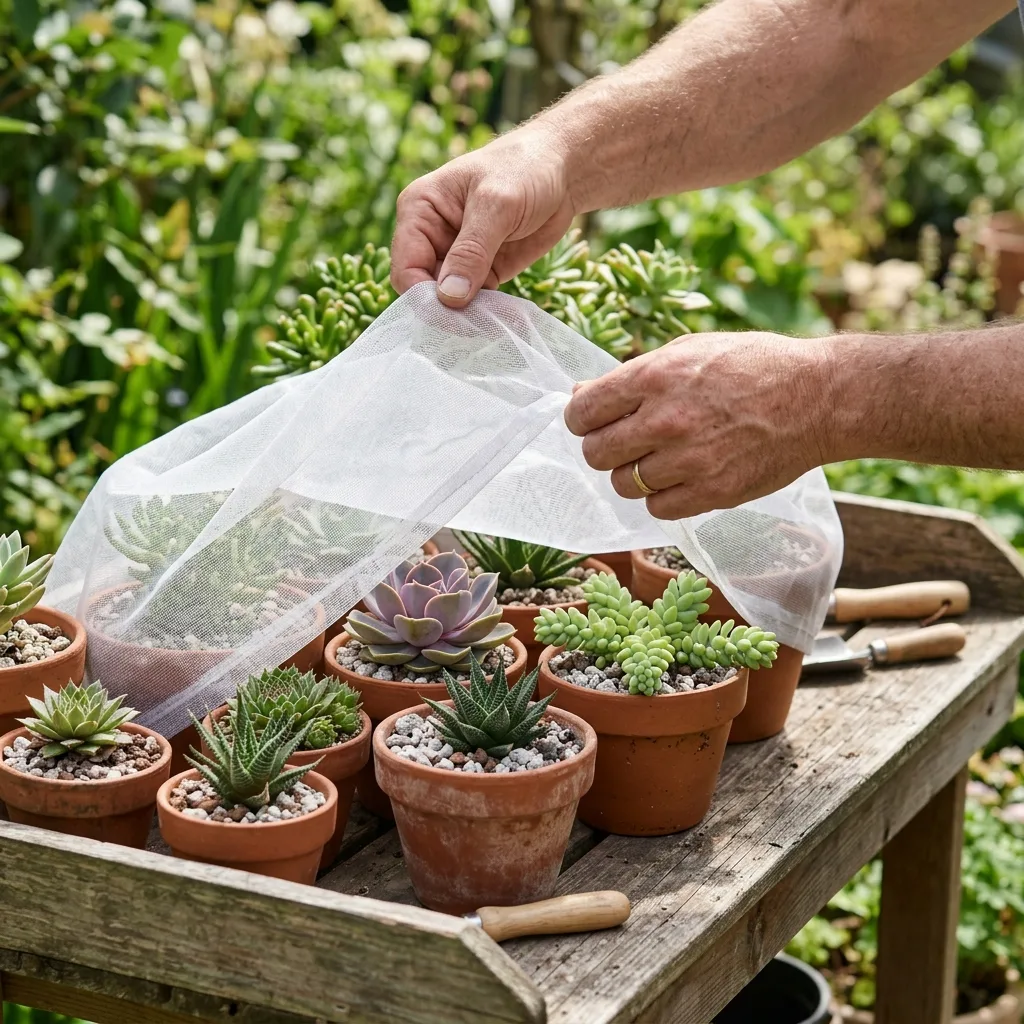
Summer (Protection & Ventilation): During the sweltering heat of midsummer, shield vulnerable genera from ferocious vertical sun between 11:00 AM and 4:00 PM. On exposed terraces, deploy a 30% to 40% shade cloth. In unventilated sunrooms or enclosed glass balconies, plants do not merely burn from photons—they boil from ambient thermal buildup. Maintain strong air movement using open cross-breezes or oscillating fans.
Autumn (The Art of Stress Coloration): As the solar trajectory lowers and diurnal temperature swings widen by 10–15°C (18–27°F), you can leave your hardened succulents in full direct sunshine throughout the day. This cool, sunny shift sparks a dramatic surge in anthocyanin synthesis, painting the foliage with breathtaking shades of coral, amethyst, and crimson.
Winter (Chasing Photons): When natural photoperiods dwindle to seasonal minimums, move your collection directly onto your brightest south-facing windowsill. If natural daylight falls below 8 hours, prevent unsightly etiolation by supplementing with high-PAR, 6500K full-spectrum LED horticultural grow lights positioned 15–25 cm above the canopy for 12 hours daily.




Reader Reviews & Comments 3 Reviews
Marcus Sterling
Eleanor Vance
Clara Higgins
Leave a Review & Rating
Share your plant care tips, experiences, or questions with our succulent community.