





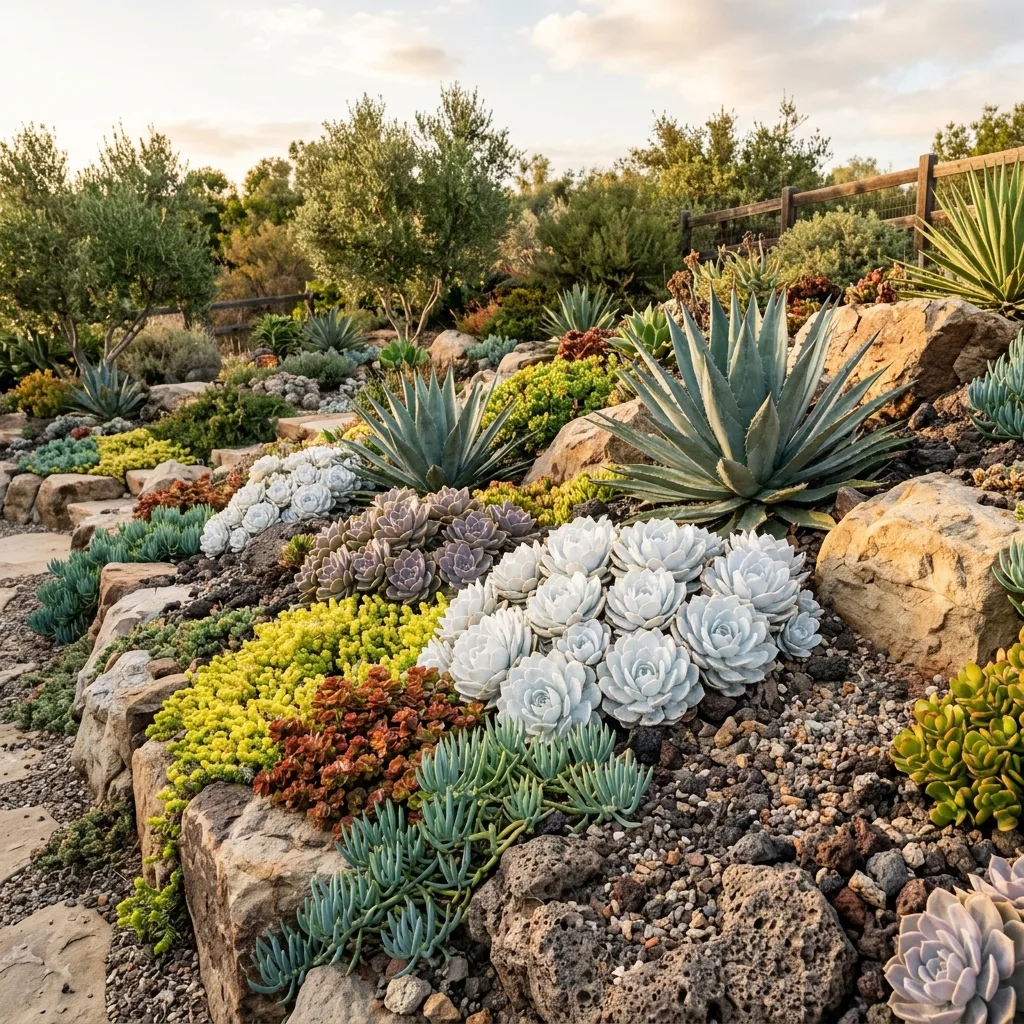
The dream of establishing an outdoor succulent garden almost always ignites amid nursery corridors, dazzled by sculptural agaves, velvety rosettes of echeverias, and cascading sedums. Yet when these specimens are introduced to native ground without foresight, enthusiasm can quickly give way to heartbreak: within months, inadequate sun exposure, poorly graded drainage slopes, or overlapping canopies induce severe etiolation (stretching and weakening from low light) and lethal root rot. This is precisely where modern digital horticulture intervenes. Virtual garden design and landscape planning software empower you to simulate solar trajectories, calculate millimeter-accurate subterranean soil profiles, and situate every succulent within its ideal microclimate before turning the very first shovel of dirt.
Having evolved across the rocky bluffs of Oaxaca, the arid expanses of the Karoo desert plateau, and the sheer volcanic ridges of the Canary Islands, succulents thrive on delicate balances of light, moisture, and airflow. Dedicated landscape platforms (such as SketchUp, Gardena MyGarden, Shoot Gardening, or iScape) function as far more than mere aesthetic drafting canvases; they serve as living botanical simulators that forecast mature canopy dimensions, crown spread, and dynamic seasonal cast shadows. From the comfort of your desk with a warm cup of coffee, every deliberate adjustment made in the virtual realm preserves dozens of prized botanical specimens in the actual landscape.
1. Botanical Identity and Morphological Layering
The single most widespread horticultural misstep when inputting plant palettes into landscape software is designing around juvenile nursery stock sizes. In resilient xeriscape and succulent arrangements, selections must be stratified methodically according to their architectural roles:
- Architectural / Specimen Plants (Structural anchors): Large-scale icons such as Agave americana, Yucca rostrata, or arborescent Aeonium arboreum. These botanical anchors should be modeled in your software with a projected mature spread and height of 1.5 to 3 meters.
- Mid-Tier Rosettes (Texture and Form builders): Hybrid Echeveria, clustered Haworthiopsis, and structural Kalanchoe varieties. Model these with an expected mature cushion spread of 20 to 50 cm.
- Living Groundcovers and Substrate Stabilizers: Sedum album, Phedimus spurius, Delosperma cooperi, and hardy Sempervivum colonies. These should be rendered as continuous ground mats engineered to serve as living erosion barriers.
Succulent parenchymal water-storage tissues and Crassulacean Acid Metabolism (CAM) physiology dictate that their stomata open primarily under nocturnal darkness and remain tightly sealed under daytime heat. When configuring digital wind corridors and atmospheric circulation in your layout, always factor in generous morphological buffers between crowns to prevent stagnant leaf-surface moisture and fungal colonization.
2. Solar Exposure Modeling and Landscape Siting
Among the most scientifically empowering modules within advanced landscape software is the Sun Path & Shadow Analysis engine. By entering your property's precise geographic coordinates, you can visualize exact solar trajectory vectors and shadow lengths across both the summer solstice (June 21) and the winter solstice (December 21).
The powdery, glaucous farina coating (epicuticular wax) dusting succulent foliage serves as an endogenous botanical sunscreen. Varieties that synthesize dense farina layers (such as Echeveria cante and Pachyphytum oviferum) must be assigned in the software to full-sun southern and southwestern exposure zones receiving 6 to 8 hours of uninterrupted solar irradiance. Conversely, windowed or shade-tolerant taxa adapted to understory light regimes—such as translucent Haworthia and Gasteria—should be digitally placed in the northeast shadow corridors cast by rock ledges, masonry retaining walls, or commanding columnar cacti.

3. Irrigation Regimes: Digital Hydrozoning and Deep-Soak Principles
The most frequently neglected design facet in digital planning—yet the primary determinant of long-term xeriscape vitality—is Hydrozonal Mapping. Dousing succulents on a uniform, frequent schedule is never an act of care; it systematically suffocates root hair cells through rhizosphere hypoxia. In your software canvas, compartmentalize your beds into three distinct irrigation zones:
- Hydrozone 1 (The Arid Core - Minimal Water): Giant Agave, cold-hardy Trichocereus, and mature Ferocactus specimens that remain dormant during cold snaps and require moisture only once every 3 to 4 weeks during peak summer. Set software drip emitters to a low 2 L/hr delivery rate.
- Hydrozone 2 (Balanced Succulent Belt): Actively vegetating spring-and-autumn cultivars—including sprawling Echeveria, Crassula, and Graptopetalum—that demand a thorough, deep soaking followed by complete substrate desiccation before repeating.
- Hydrozone 3 (Semi-Succulent / Transition Matrix): Fast-draining moisture-tolerant groundcover sedums and delicate caudiciforms that accommodate slightly richer, lightly damp organic beds.
Simulate subterranean drip irrigation lines so that micro-tubing routes water toward the perimeter of the root zone rather than spraying directly onto the crown or leaf rosettes. Trapped moisture droplets inside leaf centers act as miniature magnifying lenses, causing irreversible sun scorch and lethal apical rot.
4. Engineered Substrate Formulations and Raised Bed Typologies
When sculpting your 3D digital topography, never grade your xeriscape flat. Model a deliberate positive slope of 2% to 5% across native ground, or incorporate 25 to 40 cm elevated stone borders to create raised crevice beds or rockeries. Succulent root xylem tissue trapped within dense, unamended clay loam will succumb to anaerobic collapse within hours of rainfall.
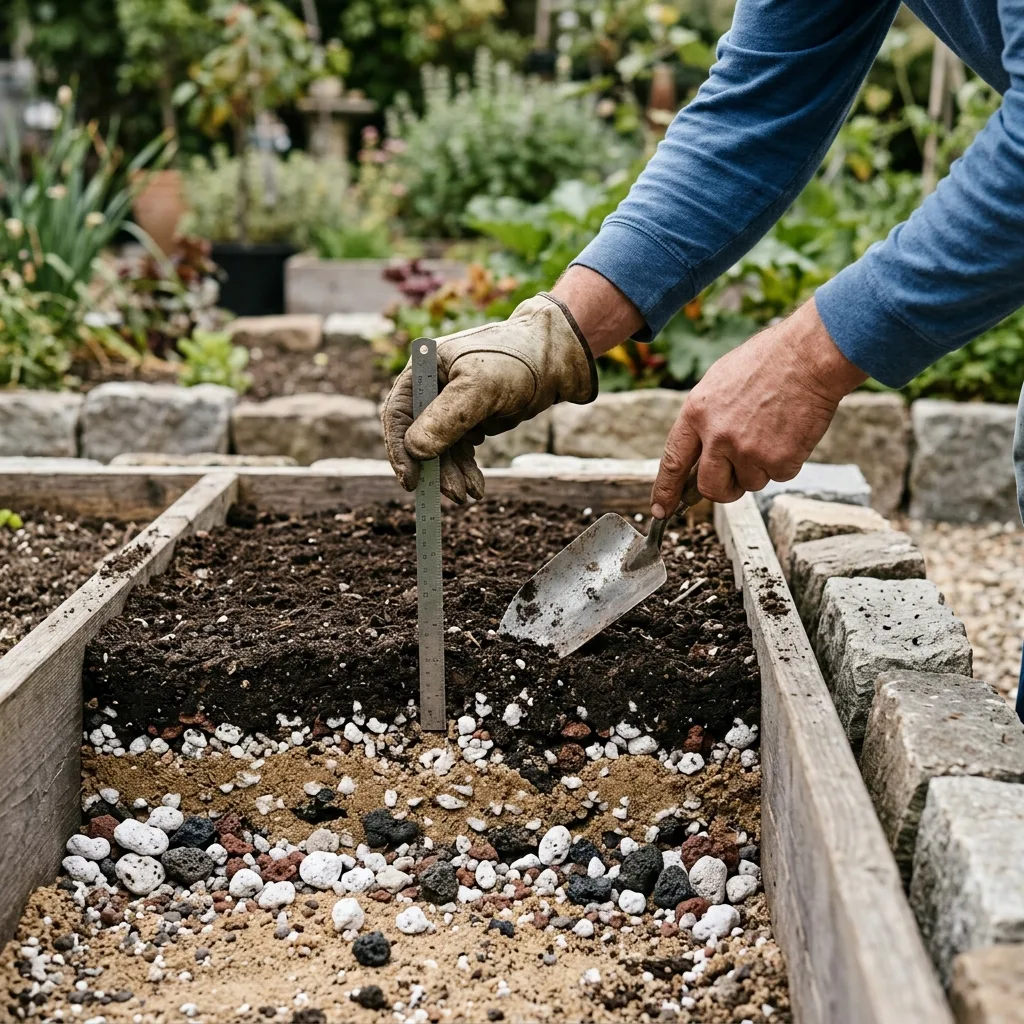
When translating your virtual blueprint into physical landscape soil, utilize this engineered mineral substrate formulation for native backfills and raised beds:
| Substrate Component | Volumetric Ratio (%) | Particle Size & Grading | Botanical & Physical Function |
|---|---|---|---|
| Horticultural Pumice | 40% | 3 - 8 mm porous fractions | Rhizosphere aeration, gas exchange, and moisture-shedding micropores |
| Crushed Lava Rock (Scoria) | 20% | 4 - 6 mm angular | Iron and trace mineral release; permanent macro-drainage channels |
| Clinoptilolite Zeolite | 15% | 2 - 5 mm screened | Enhances Cation Exchange Capacity (CEC) and buffers excess salts |
| Coarse Horticultural Quartz / River Grit | 10% | 2 - 4 mm washed | Prevents substrate compaction and maintains soil skeletal framework |
| Aged Coconut Coir / Decomposed Leaf Compost | 15% | Low electrical conductivity (EC < 0.5) | Minimal organic matrix for fine capillary root anchoring |
For container-based garden accents embedded in the 3D model, specify breathable unglazed terracotta, porous stoneware, or dressed volcanic andesite stone troughs equipped with generous basal drainage holes. Never incorporate non-draining vessels into your virtual layout.
5. Step-by-Step Propagation and Bed Expansion
If your digital plan covers an expansive square footage, populating it does not require purchasing hundreds of mature potted plants at retail. You can integrate a staged nursery timeline directly into your software project using systematic vegetative propagation:
- Offset and Basal Pup Division: During early spring, sever basal offsets from mother plants of Sempervivum, Agave, and clustering Echeveria using an ultra-sharp, sterilized scalpel. Rest the cuttings in dry, indirect shade for 3 to 5 days to allow exposed parenchymal cells to suberize and form a firm, protective callous.
- Stem and Apical Cuttings: Behead elongated, leggy, or etiolated branches of Aeonium approximately 5 cm beneath the terminal rosette. Strip away lower leaves and set the cutting directly into pure, dry mineral grit without watering for 10 days. Once adventitious root nubs emerge, commence light perimeter misting.
- Single-Leaf Propagation: Gently rotate a plump, turgid leaf side to side until it snaps cleanly from the mother stem with its basal meristem collar fully intact. Lay the leaves horizontally atop dry pumice; shelter them from intense direct sun until bright pink capillary roots and juvenile rosettes spontaneously form.
6. Common Pathogens, Insect Vectors, and Integrated Pest Management
In virtual garden modeling, positioning plants too densely without modeling ambient air currents creates stagnant micro-pockets that turn outdoor beds into an inviting feeding ground for common pests:
- Foliar Mealybugs (Pseudococcidae): Cottony white masses that wedge themselves into the tight junctions of inner leaf axils. Treatment: Selective spot eradication using fine artist brushes dipped in 70% isopropyl alcohol; severe infestations require applications of cold-pressed horticultural neem oil and potassium-based insecticidal soaps.
- Root Mealybugs (Rhizoecus): Subterranean colonies appearing as chalky, white powdery coatings across primary root hairs. Treatment: Bare-root the plant, discard the infected soil medium, submerge root masses in a targeted systemic insecticidal bath, and replant in sterile mineral grit.
- Crown and Stem Rot (Fusarium and Phytophthora): Fatal fungal pathogens spurred by lingering standing water and compacted soils. Lower stems turn black, soft, and translucent. Treatment: Amputate all compromised tissue cleanly well into healthy green tissue; dust the exposed wound with elemental sulfur or pure cinnamon, cure for 7 days, and reroot from scratch.
7. Seasonal Maintenance Calendar and Expert Protocols
To successfully orchestrate the biological lifecycle of your installed succulent garden, anchor these maintenance checkpoints into your seasonal calendar:
- Spring (Awakening & Active Vegetative Surge): Administer the season's first deep soak as root systems reawaken from winter dormancy. Feed once with a low-nitrogen, high-potassium liquid succulent fertilizer diluted to quarter strength. Transplant new nursery specimens into their pre-mapped software coordinates.
- Summer (Heat Protection & Estivation Management): When ambient daytime temperatures exceed 35°C (95°F), numerous genera (notably Aeonium, Dudleya, and certain Crassula) enter defensive summer estivation. Scale back watering dramatically and simulate or deploy 30% shade cloth overhead to deflect scorching noon heat.
- Autumn (The Second Growth Window): As diurnal temperatures settle between 20°C and 25°C, root metabolism surges again. Foliar farina waxes thicken and vibrant anthocyanin marbling peaks. Complete all outdoor pruning, stem propagation, and offset dividing by mid-autumn.
- Winter (Cold Hardiness & Moisture Withholding): Completely suspend irrigation for outdoor ground beds when ambient temperatures approach 0°C (32°F); concentrated cell sap acts as a natural antifreeze against cellular rupture. Shield tender species from unexpected hard frosts with breathable woven frost-cloth covers.


Reader Reviews & Comments 3 Reviews
Marcus Sterling
Julian Vance
Clara Henderson
Leave a Review & Rating
Share your plant care tips, experiences, or questions with our succulent community.