






Dwelling high upon the mossy barks of majestic rainforest canopies across tropical Central and South America, Guzmania lingulata stands as an exquisite monument of exotic grace when welcomed into our homes as a gift. Yet, when confronted with the harsh winter environments of continental interiors—where radiator heat drives indoor relative humidity down to a parched 25% and hard, alkaline tap water is the norm—this delicate epiphytic beauty quickly spirals into a critical stress cycle. Arriving at your doorstep in an elegant gift box from a friend, a loved one, or our Sukulentler.com greenhouses, this tender forest dweller will readily abort its breathtaking scarlet bracts and collapse if its fundamental physiological needs are misunderstood.
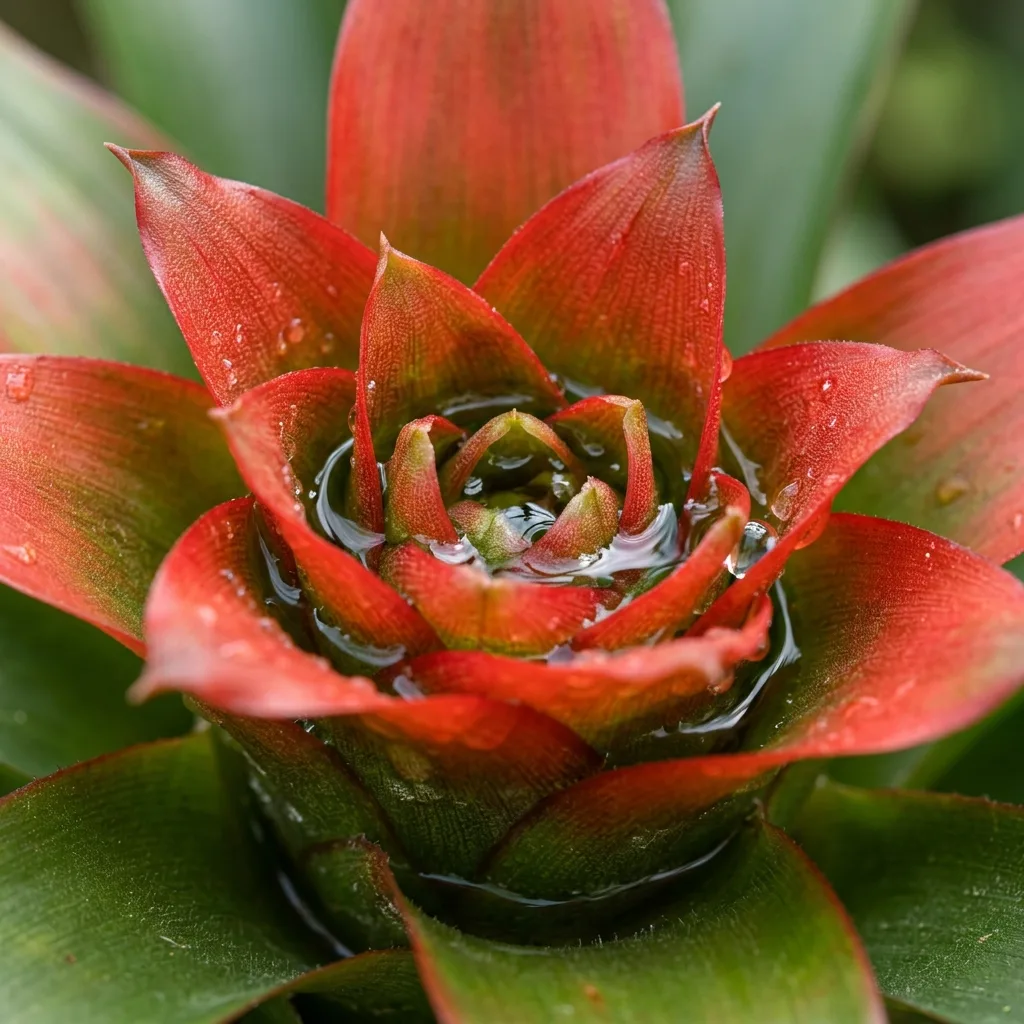
At our Sukulentler.com workshops and Ankara greenhouse research station, the question we encounter most frequently from frantic plant parents is precisely this: 'My gift Guzmania is wilting, the central cup turned black and mushy, what should I do?' Successfully rescuing a Guzmania begins with grasping its evolutionary adaptations: its central foliar urn is designed to trap pristine rainwater, its minimal root network evolved strictly for mechanical anchorage rather than terrestrial nutrient uptake, and specialized foliar trichomes drink moisture directly from the ambient mist.
If the leaf tips of your gift Guzmania have turned papery and straw-like, if the base feels unnervingly soft, or if mealybugs have entrenched themselves within the tight folds of the bracts, all hope is not lost. Through methodical scientific diagnosis and the exact rehabilitation protocols we implement in our professional greenhouses, you can arrest cellular decay, restore systemic vigor, and harvest a thriving generation of basal offsets (pups) before the mother plant completes its natural life cycle.
1. Early Diagnostic Symptoms and Microscopic / Visual Clues
Guzmania lingulata is an epiphytic Bromeliad, meaning its cellular anatomy and vascular transport mechanisms differ fundamentally from conventional potted house plants. Catching physiological distress in its incipient stages is the only reliable way to prevent irreversible tissue collapse:
- Central Tank Necrosis and Odor: The central rosette reservoir exhibits dark brown to water-soaked black lesions. A faint or pronounced scent of rotting vegetables or stagnant marsh water indicates an opportunistic invasion by Erwinia carotovora (bacterial soft rot) or Phytophthora water molds colonizing the foliar cup.
- Bract Discoloration and Premature Senescence: The vibrant red, orange, or yellow inflorescence bracts lose cellular turgor pressure, appearing puckered and faded. This denotes severe xylem occlusion, either from subterranean root necrosis or systemic vascular shutdown.
- Foliar Tip Scorch (Salinity and Mineral Toxicity): Distal leaf margins turning crisp, brittle, and straw-brown point directly to mineral salt precipitation. The fluorides, chlorine, and dissolved carbonates in hard municipal tap water accumulate around the hydathodes and stomatal apertures, exacerbated by extremely low atmospheric humidity.
- Mealybug (Pseudococcidae) Infestation: Dense, white cottony webbing and sticky honeydew secretions appear wedged deep within the narrow axils where leaves meet the central axis. These sap-sucking insects pierce phloem conduits, depleting essential assimilates and precipitating systemic chlorosis.
2. Root Causes and Environmental Triggers
In dry continental regions like Ankara, the primary adversaries of gifted tropical epiphytes are fundamentally misguided hydration habits and desolately arid indoor air:
- Conventional Soil Over-Drenching: Guzmania roots evolved to clasp aerated tree bark, not suffocate in dense, moisture-retentive potting peat or garden loam. When subjected to repetitive bottom-drenching in compacted substrates, root hairs quickly become anoxic, prompting rapid anaerobic decay within a matter of weeks.
- Stagnant, Hard Water in the Foliar Cup: In habitat, daily tropical deluges flush the central reservoir continuously while convective breezes maintain airflow. Indoors, allowing lime-rich municipal tap water to stand undisturbed for weeks creates an anaerobic breeding ground for phytopathogenic bacteria and water molds.
- Forced-Air Heating and Severe Hydric Deficit: Continental winters often lower indoor relative humidity below 20–25%. Guzmania requires an ambient humidity of 60–70% to sustain cellular respiration through its foliar absorbing scales (trichomes). Prolonged dryness triggers protective stomatal closure, which inadvertently halts photosynthetic carbon assimilation.
3. Natural and Organic Remediation Protocols
For early-stage foliar deformations, minor physiological stress, or incipient pest presences, non-phytotoxic organic protocols should be deployed to prevent systemic shock:
- Reservoir Evacuation and Hydrogen Peroxide Flushing: Completely draw out any stagnant, tainted water from the central tank using a clean mechanical syringe or rolled absorbent paper. Dilute 3% food-grade or pharmaceutical hydrogen peroxide with distilled water at a 1:3 ratio and gently wipe the inner leaf crevices with a sterile cotton swab. This oxidizes anaerobic bacterial colonies on contact without damaging foliar cuticles.
- Cold-Pressed Pure Neem Oil Protocol: Emulsify 5 ml of cold-pressed pure neem oil and 2 drops of gentle organic potassium soap in 1 liter of lukewarm distilled water. Agitate vigorously into a stable emulsion and mist thoroughly beneath leaf axils and into non-flowering bract folds every 3 days. Azadirachtin disrupts the hormonal molting and feeding behavior of mealybugs effectively.
- Microclimatic Humidity Trays: Place the nursery pot over a broad pebble tray filled with water, ensuring the bottom drainage holes rest securely above the waterline. As ambient warmth evaporates the water, a localized tropical vapor shield envelops the foliage, elevating immediate relative humidity by 15–25%.
4. Chemical and Systemic Treatment Protocols
When fungal pathogens (such as Phytophthora or Fusarium) have penetrated the base of the bracts or mealybug colonies have invaded the deepest basal sheaths, immediate systemic chemical intervention becomes mandatory. The following protocol reflects the precise dosages utilized within our controlled greenhouse facilities:
| Pathogen / Pest Target | Active Ingredient | Dosage (Per 1 Liter Distilled Water) | Application Frequency | Critical Safety Note |
|---|---|---|---|---|
| Crown & Tank Rot (Phytophthora) | Fosetyl-Al (80%) | 2.0 grams | 2 applications, 14 days apart | Apply as a fine aerosol targeted directly into leaf axils and root collar. |
| Vascular Wilt (Fusarium) | Thiophanate-Methyl | 1.5 grams | 2 applications, 10 days apart | Translocates acropetally through vascular bundles to arrest internal hyphae. |
| Recalcitrant Mealybugs | Acetamiprid (20%) | 0.5 grams | 3 applications, 7 days apart | Spray in late afternoon directly onto sheltered colonies; avoids phototoxicity. |
| Bacterial Soft Rot Complex | Copper Oxychloride | 1.0 gram | Single application | Can stain delicate bract tissue; restrict application strictly to green foliage. |
5. Quarantine and Disinfection Procedures
The instant an infectious vector or pest colony is detected on your Guzmania, an uncompromising quarantine sequence must be executed to safeguard adjacent succulents and tropical specimens:
- Spatial Segregation: Relocate the compromised specimen at least 2 meters (6 feet) away from other houseplants into a bright room with gentle air movement, completely removed from convective heating currents.
- Targeted Mechanical Eradication: Dip cotton-tipped applicators into 70% isopropyl alcohol and individually swab away visible mealybug egg sacs and honeydew deposits nested inside the bract folds. Allow the alcohol to evaporate fully under indirect light.
- Container and Ambient Sanitation: Cleanse outer pot walls, saucers, and immediate table surfaces with a 1:10 diluted sodium hypochlorite (household bleach) solution to neutralize dormant fungal spores and opportunistic micro-arthropods.
- Tool Sterilization: Never prune or sample tissue without sterilizing your botanical scalpels, tweezers, or shears under direct flame or via immersion in 96% denatured alcohol between cuts.
6. Plant Rehabilitation and Long-Term Recovery Care
It is vital to understand that Guzmania lingulata is a monocarpic organism: each individual rosette is botanically programmed to flower only once in its life cycle. Once the vivid inflorescence finishes its months-long display, the primary rosette naturally initiates senescence. Real success lies in channeling the declining plant's resources into the vigorous development of vegetative basal offshoots, known as pups:
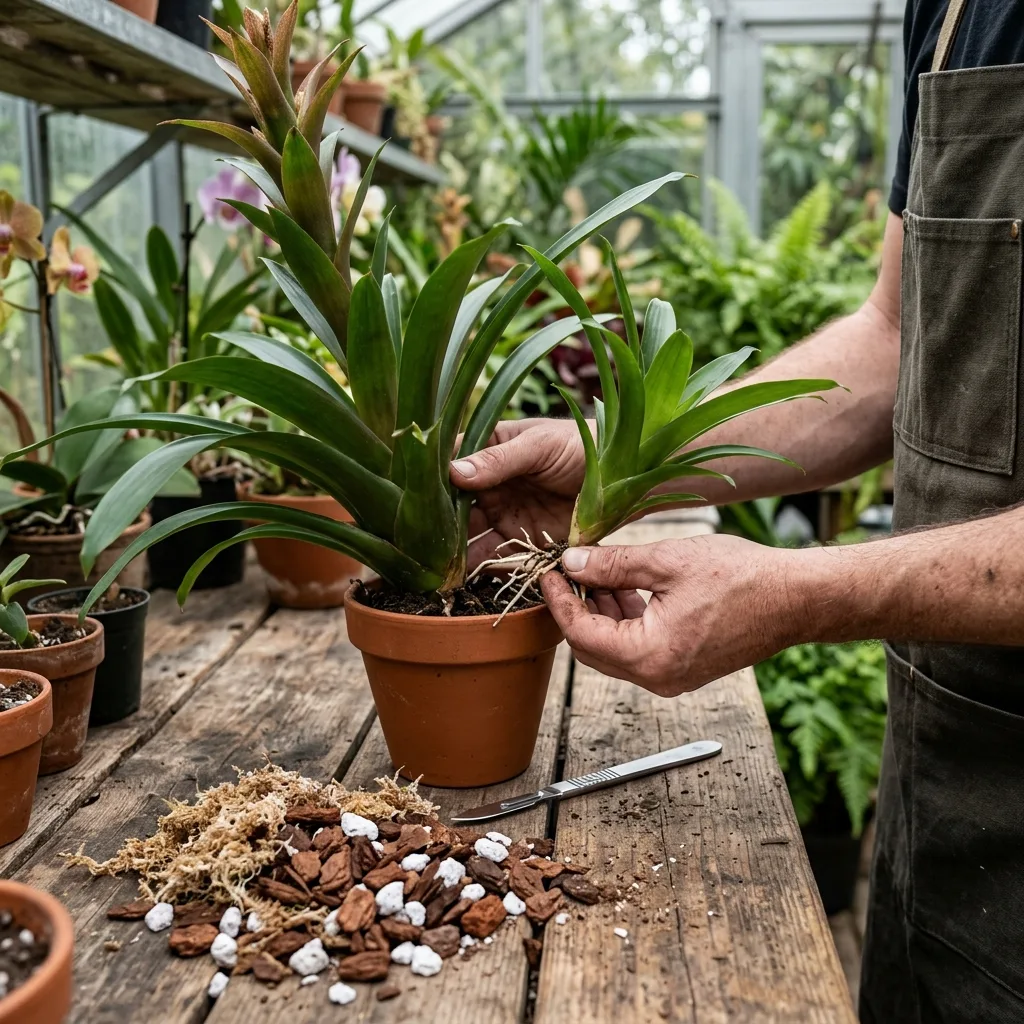
Substrate Overhaul: Gently free the fragile root cluster from dense, stagnant nursery peat by rinsing it under lukewarm water. Re-pot exclusively into a bespoke, ultra-coarse epiphytic blend: 40% aged pine bark (fine-to-medium orchid grade), 30% volcanic pumice (3–6 mm), 20% coarse horticultural perlite, and 10% long-fiber sphagnum moss. This architecture guarantees high gas exchange around the root interface.
Harvesting and Nurturing Basal Pups: Allow the lateral offsets emerging from the lower stem to attain at least one-third to one-half the size of the parent plant, ensuring they have formed several independent rootlets. Using a sterile surgical blade, slice downward close to the mother axis. Dust the clean excision wound with horticultural sulfur or organic cinnamon powder to seal vascular cuts against fungal spores, then pot the pup into the airy bark mixture. With moderate indirect light and balanced ambient humidity, your gifted legacy will thrive and reward you with fresh, brilliant blooms in subsequent seasons.


Reader Reviews & Comments 3 Reviews
Eleanor Vance
Clara Higgins
Julian Hayes
Leave a Review & Rating
Share your plant care tips, experiences, or questions with our succulent community.